Children's Day
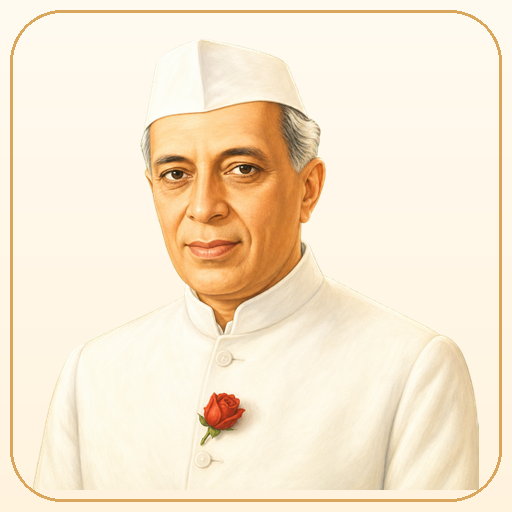
In India, Children's Day is observed every year on 14 November — the birthday of Pandit Jawaharlal Nehru, India's first Prime Minister. This day is distinct from the United Nations' Universal Children's Day (20 November). This year (2026), 14 November falls on a Saturday.
This year's dates (2026)
Pandit Nehru was very fond of children, who affectionately called him "Chacha Nehru" (Uncle Nehru) — his birthday is observed in India as Children's Day. This is a fixed-Gregorian-date school/social observance, not a public holiday.
History & significance
Pandit Jawaharlal Nehru was born on 14 November 1889. In 1951, V. M. Kulkarni proposed the idea — inspired by England's "Flag Day" — of observing Nehru's birthday to raise funds for child welfare. The day was first observed as "Children's Day" in 1954, and in 1957, a special government order officially declared 14 November as India's Children's Day.
Some sources instead state that this changed in 1964, after Nehru's death, shifting the observance from Universal Children's Day (20 November) to 14 November.
India's Children's Day vs. the UN's Universal Children's Day
This is a common point of confusion — two different days, for two different reasons:
- India's Children's Day — 14 November: marks Pandit Nehru's birthday; a national observance specific to India.
- Universal/World Children's Day — 20 November: the United Nations, through Resolution 836(IX) on 14 December 1954, recommended that all countries observe this day. 20 November was chosen because the General Assembly adopted the Declaration of the Rights of the Child on that date in 1959, and the Convention on the Rights of the Child in 1989. UNICEF runs global child-rights awareness programmes on this date every year.
Because both days share the name "Children's Day," they are often mixed up in online searches — in India, 14 November is the one predominantly observed.
How it is observed
Schools organise a variety of programmes, games, competitions, and cultural events for children on this day. Teachers arrange special activities, and children are given gifts and sweets. Some schools give students a holiday, while some private schools organise fairs. Schools in Maharashtra follow this same general national pattern for Children's Day.
Children's Day is not a universal government holiday — schools decide individually whether to give a holiday or organise programmes.
Like Maharashtra Day and Chhatrapati Shivaji Maharaj Jayanti, Children's Day is also a fixed-date civic observance — though it is a school/social observance rather than a public holiday.
Good to know
- Don't confuse India's Children's Day (14 November) with the UN's Universal Children's Day (20 November) — two different days, two different reasons.
- This is not a universal holiday — schools decide individually whether to give a holiday or hold programmes.
- Sources differ slightly on the exact year of the official declaration (1957 vs. an alternative 1964-shift claim).
- This is a fixed Gregorian date — it falls on 14 November every year, unlike tithi-based festivals that shift.
FAQ
- Why is Children's Day celebrated on 14 November in India?
- 14 November 1889 is the birthday of Pandit Jawaharlal Nehru, India's first Prime Minister — the day is observed as Children's Day in memory of his special affection for children.
- What is the difference between Children's Day and Universal Children's Day (20 November)?
- India's Children's Day (14 November) marks Nehru's birthday. Universal/World Children's Day (20 November) is an international day observed by the United Nations to mark the adoption of the Declaration of the Rights of the Child (1959) and the Convention on the Rights of the Child (1989) — two distinct, easily confused days.
- Is there a public holiday for Children's Day?
- No, it is not a universal government holiday — schools decide individually whether to give a holiday or organise programmes.
- How is Children's Day celebrated?
- Schools hold games, competitions, and cultural programmes; teachers organise special activities, and children are given gifts and sweets.