Good Friday
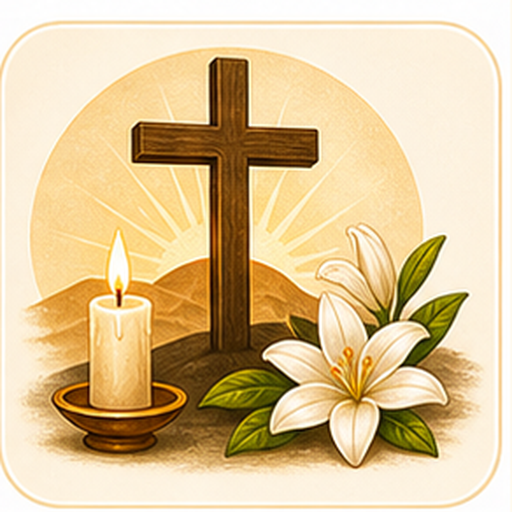
Good Friday is a solemn holy day in Christian tradition — Christians mark it as the day Jesus Christ was crucified. It falls on the Friday before Easter Sunday; in 2026, Easter Sunday is 5 April, so Good Friday falls on Friday, 3 April. In India, Good Friday is a gazetted public holiday at both the central government and Maharashtra state levels.
This year's dates (2026)
The date of Good Friday changes every year because it is set not by tithi or nakshatra, as in the Hindu panchang, but by "computus" — a centuries-old calculation method used by Western churches.
Religious significance (in Christian tradition)
Christians believe Good Friday marks the day Jesus Christ was crucified and gave his life. Christian tradition holds that this sacrifice was made for the forgiveness of humanity's sins — a central belief in Christian theology concerning salvation. It falls within Holy Week and is observed with mourning, prayer and reflection.
Different Christian denominations fast and observe penance on this day — Catholic practice generally allows one full meal plus two smaller meals, while some Orthodox Christians abstain from food and water entirely. In Catholic tradition, a special service called the "Celebration of the Passion of the Lord" is held around 3 PM, which includes the Veneration of the Cross and the Stations of the Cross.
Exact service timings vary by church and city — the time given above (around 3 PM) is a general pattern; check with your local church for the exact schedule.
On the origin of the name "Good": there are three separate things to note here, and they should not be blended together. The Oxford English Dictionary-backed linguistic explanation is that in Old English, "good" also carried the sense of "holy" — that is the meaning intended here. Separately, a popular but linguistically unsupported folk belief holds that "Good" is a corruption of "God's" — linguists say there is no etymological link between the two words. There is also a devotional reflection (not an etymology): because Jesus's sacrifice is believed to have opened the way to forgiveness, the day is called "good" despite being a day of grief — this is a meaning drawn from faith, not a linguistic origin, and the three should be kept distinct.
How it is observed in India
In India, Good Friday is observed mainly by the Christian community through church services, fasting and prayer, though the form varies by region. In Kerala, the Syrian Christian tradition reads the Passion in Syriac and Malayalam, with long, reflective prayer services. In Goa, Portuguese-influenced churches (such as Se Cathedral and the Basilica of Bom Jesus) hold "Way of the Cross" processions, with some devotees walking barefoot. In Mumbai, the Goan and East Indian Catholic communities hold citywide processions and well-attended church services (for instance, at Mount Mary Basilica).
Regional observance can vary by local tradition and parish; check with your local church for exact details.
Public holiday status
Good Friday is a gazetted holiday for central government offices in India — it appears on the Government of India's DoPT list as one of the 17 gazetted holidays for 2026. The Maharashtra state government has also included the same day in its 2026 public holiday calendar.
By law, India has only three "national holidays" — Republic Day, Independence Day and Gandhi Jayanti. Good Friday is not one of them; it is a gazetted public holiday (at both central and state level) — this distinction matters and should be stated precisely.
This year's date
| Date | Day | Rule |
|---|---|---|
| 3 April 2026 | Friday | The Friday before Easter Sunday (5 April 2026) |
Good Friday's date changes every year — it is set by computus (the first Sunday after the first Paschal Full Moon on or after 21 March = Easter), not by direct observation of the moon.
Good to know
- The date changes every year (computus calculation) — do not assume the previous or next year's date carries over; each year needs a fresh calculation.
- Avoid calling it a "national holiday" — "gazetted public holiday" is the accurate term.
- Eastern Orthodox churches use the Julian calendar and may observe a different date — the date here follows the Western tradition, which most churches in India follow.
- Christmas is the other major Christian observance — a fixed date every year, 25 December.
FAQ
- When is Good Friday in 2026?
- Friday, 3 April 2026 (the Friday before Easter Sunday, 5 April).
- Why is it called "Good" Friday?
- Linguistically, "good" carried the older sense of "holy"; "God's Friday" is a popular but linguistically unsupported belief. There is also a devotional reflection — that the sacrifice opened the way to forgiveness — but that is a meaning, not an etymology.
- How are Good Friday and Easter related?
- Good Friday is the Friday two days before Easter Sunday, which Christian tradition holds as the day of Jesus's resurrection.
- Why does the date of Good Friday change every year?
- Easter's date is set by computus, a lunisolar calculation method (the first Sunday after the first Paschal Full Moon on or after 21 March) — so it shifts every year.
- Is Good Friday a public holiday in India?
- Yes — it is a gazetted public holiday at both the central government and Maharashtra state level (though it is not among India's three official "national holidays").
- How is Good Friday observed in India?
- Through church services, fasting, prayer and reflection — with regional variation, for example in Kerala, Goa and Mumbai.