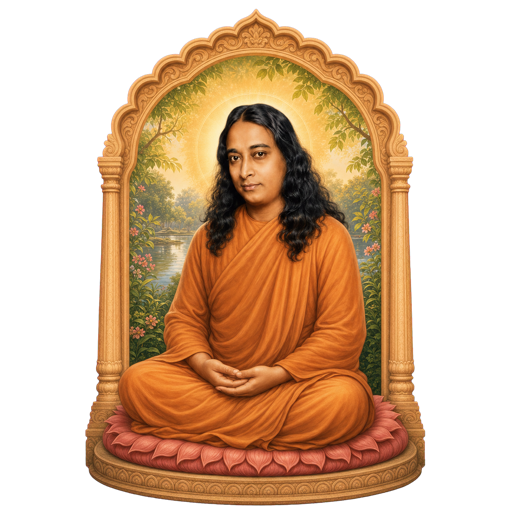
Lahiri Mahasaya Jayanti
Shri Lahiri Mahasaya (Shyama Charan Lahiri) is regarded as the modern reviver of Kriya Yoga, a meditation technique — an ideal householder-yogi who pursued deep spiritual practice while raising a family and holding a job. His Jayanti (birth anniversary) is observed every year on the fixed date of 30 September, which is not tithi-based — in 2026, that falls on Wednesday, 30 September. His disciple Sri Yukteswar Giri went on to become the guru of Paramahansa Yogananda, and it is through this guru-lineage that Kriya Yoga spread worldwide.
This year's dates (2026)
Lahiri Mahasaya's birth anniversary is observed every year as "Avirbhav Divas" by the Yogoda Satsanga Society (YSS) in India and the Self-Realization Fellowship (SRF) internationally. The panchang shows Bhadrapad Krishna Chaturthi as the tithi on this date, but that is simply an incidental note for this particular year — the Jayanti's recurrence rule is not the tithi but the fixed Gregorian date of 30 September.
Significance
- Reviving Kriya Yoga: According to tradition, in 1861 CE, in the Himalayas near Ranikhet, a yogi known as Mahavatar Babaji is said to have initiated Lahiri Mahasaya into Kriya Yoga and instructed him to open this practice to sincere seekers.
- The householder-yogi ideal: Without taking sannyasa, and while working as an accountant and raising a family, he showed through his own life that deep spiritual practice is possible — this is considered the core of his teaching.
- Place in the guru-lineage: Mahavatar Babaji → Lahiri Mahasaya → Sri Yukteswar Giri → Paramahansa Yogananda — this chain is regarded as the foundation of Kriya Yoga's worldwide spread. It became world-famous through Yogananda's "Autobiography of a Yogi."
Biography (brief)
Most details of Lahiri Mahasaya's biography rely on Yogananda's autobiography and retellings based on it — a single-origin account, not independently corroborated history. The details below should therefore be understood as traditional, not as settled fact.
He was born Shyama Charan Lahiri on 30 September 1828, in Ghurni village, Nadia district, Bengal; his family later settled in Varanasi. At around age 33 (1861), he is believed to have met Mahavatar Babaji in the Himalayas near Ranikhet, where he received initiation into Kriya Yoga. On returning to Varanasi, he taught Kriya Yoga quietly to disciples while continuing his job — he founded no formal organisation, though disciples later formed the "Arya Mission." His disciples included Sri Yukteswar Giri (Yogananda's guru), Panchanan Bhattacharya, Keshavananda Brahmachari, and his own wife, Kashimoni. He attained mahasamadhi on 26 September 1895 in Varanasi — a day observed separately by YSS/SRF as "Mahasamadhi Divas."
The historical existence of Mahavatar Babaji rests mainly on the description in Yogananda's autobiography — this figure has no independent historical corroboration outside that account. So the meeting with Babaji and the initiation should be understood as legend/tradition, not as verified history.
Who observes it
Mainly followers of the Yogoda Satsanga Society (YSS) in India and the Self-Realization Fellowship (SRF) internationally, along with Kriya Yoga practitioners and their ashrams/centres. No distinct Maharashtra-specific custom for this Jayanti is documented — this is a Bengal-Varanasi-rooted guru tradition that today reaches across India and the world through YSS/SRF, with programmes varying by local centre.
Observance
There is no fixed household vrat or puja vidhi for this day. The following general practices are found at YSS/SRF ashrams and centres:
- Special group meditation sessions (both online and in person).
- Discourses and remembrance gatherings on Lahiri Mahasaya's life and teachings.
- Kriya Yoga initiation programmes are sometimes organised around this time as well.
Regional customs
This is not a household or public festival in Maharashtra. YSS centres exist in major Indian cities, where group meditation programmes may be held — but this is not a distinct Maharashtrian custom; it is part of a pan-India/global guru tradition, and specifics vary by local YSS/SRF centre.
Good to know
- The date is 30 September every year (fixed) — the tithi is different each year and is not the Jayanti's rule.
- The meeting with Mahavatar Babaji and the initiation should be understood as legend/tradition.
- There is no household vrat or puja vidhi — it is mainly institutional meditation and remembrance.
- No distinct Maharashtra custom exists — this is a pan-India/global guru-tradition platform.
FAQ
- When is Lahiri Mahasaya Jayanti in 2026?
- Wednesday, 30 September 2026 — the fixed date of 30 September every year.
- Who was Lahiri Mahasaya?
- The modern reviver of Kriya Yoga, and a householder-yogi. Born 30 September 1828 in Bengal.
- What is Kriya Yoga?
- A meditation technique believed to have been taught to Lahiri Mahasaya by Mahavatar Babaji — regarded as a means to moksha.
- Who initiated Lahiri Mahasaya?
- By tradition, Mahavatar Babaji, in the Himalayas in 1861.
- What is the connection between Lahiri Mahasaya and Paramahansa Yogananda?
- Lahiri Mahasaya's disciple Sri Yukteswar Giri was the guru of Paramahansa Yogananda — this is the guru-lineage chain.
- How is the Jayanti observed?
- With group meditation and remembrance programmes at YSS/SRF ashrams and centres — there is no household vrat.