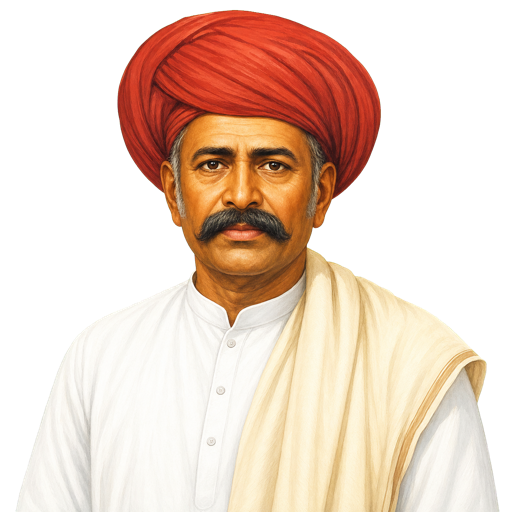
Raja Ram Mohan Roy Janmadin
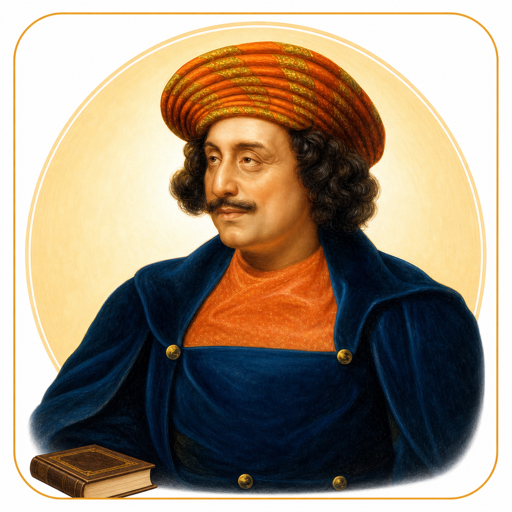
Raja Ram Mohan Roy Janmadin is celebrated every year on 22 May — the birthday of Bengal's social and religious reformer Raja Ram Mohan Roy (born 22 May 1772, in Radhanagar, Bengal). He is widely regarded as the "father of the Indian Renaissance." In 2026, the day falls on a Friday.
This year's dates (2026)
In 1828, he founded the Brahmo Sabha (later the Brahmo Samaj), and he was a leading figure in the campaign against Sati — largely due to his efforts, a law making Sati illegal was passed in 1829. He has no direct, documented personal connection with Maharashtra. The date is fixed every year, independent of the panchang's tithi or nakshatra, and it is not a public holiday.
Significance
Raja Ram Mohan Roy is regarded as one of the first generation of social and religious reformers in modern India. Drawing on both Western education and a deep study of Indian scriptures, he championed monotheism and opposed idol worship and polytheism, which he considered forms of superstition. His fight against Sati is a significant chapter in the history of Indian social reform. He also made effective use of newspapers as a tool for public awareness — which is why he is regarded as an ideological model for many Indian reformers of later generations.
History & background
Birth and early life
Raja Ram Mohan Roy was born on 22 May 1772 in the village of Radhanagar (Hooghly district, Bengal). The title "Roy" had already been granted to his family earlier by the Nawab of Bengal.
The Brahmo Samaj (1828)
With the cooperation of Dwarkanath Tagore, he founded the Brahmo Sabha in 1828 — which later became the Brahmo Samaj. The movement championed monotheism, rejected rituals it considered based on superstition, fought social evils such as Sati and polygamy, and supported women's property-inheritance rights.
The fight against Sati
Ram Mohan Roy used newspaper writing and public campaigning to build wide awareness against the practice of Sati. Largely due to his efforts, Governor-General William Bentinck made the practice illegal in 1829 through the Bengal Sati Regulation.
The "Raja" title and the journey to England (1830)
In 1830, the Mughal emperor bestowed on him the title "Raja" and sent him to England as his envoy — to petition for an increase in the emperor's allowance and to prevent the repeal of the law banning Sati.
Death
He died of meningitis on 27 September 1833 in Bristol, England. He was initially buried there, and later reinterred in 1843 at Arnos Vale Cemetery (Bristol) — Dwarkanath Tagore funded the memorial canopy. The memorial is preserved there to this day.
Public holiday status
Raja Ram Mohan Roy Janmadin is not a public holiday in Maharashtra (or anywhere in India). The day is mainly observed with commemorative programmes in educational and cultural institutions, particularly in West Bengal.
How it is observed
Lectures, discussions, and memorial gatherings are mainly held in West Bengal and in institutions connected with the Brahmo Samaj. Educational institutions run programmes based on his social and religious reform work.
Connection with Maharashtra
No direct, personal connection between Raja Ram Mohan Roy and Maharashtra can be found. His entire life and field of work were centred in Bengal (Radhanagar, Calcutta) and later in England (Bristol) — there is no evidence that he ever visited any place in Maharashtra or corresponded/collaborated directly with any Maharashtrian person.
The one connection worth noting is ideological, not personal: the Prarthana Samaj in Mumbai (founded 31 March 1867) was inspired by the Brahmo Samaj's monotheistic philosophy. But this was an entirely independent Maharashtrian organisation, founded 34 years after Ram Mohan Roy's death (1833) — he had no personal connection with it, only a philosophical influence on it.
Good to know
- Raja Ram Mohan Roy has no direct connection with Maharashtra — only a broad ideological influence via the Prarthana Samaj can be noted.
- Ram Mohan Roy and Mahatma Phule were not contemporaries (Roy died in 1833; Phule was born in 1827) — no direct personal relationship between the two should be claimed; both were simply 19th-century Indian social reformers.
- His views on idol worship and monotheism were part of the broader religious-reform thinking of that era.
FAQ
- When and where was Raja Ram Mohan Roy born?
- On 22 May 1772, in the village of Radhanagar, Hooghly district, Bengal.
- Why is Raja Ram Mohan Roy called the "father of the Indian Renaissance"?
- His pioneering work for monotheism, the abolition of Sati, women's rights, and educational reform is credited with laying the foundation of modern Indian social reform.
- When and why was the Brahmo Samaj founded?
- Raja Ram Mohan Roy founded the Brahmo Sabha (later the Brahmo Samaj) in 1828 — to champion monotheism and oppose superstition.
- Where did Raja Ram Mohan Roy die?
- He died on 27 September 1833 in Bristol, England, while there as the Mughal emperor's envoy.
- Does Raja Ram Mohan Roy have any connection with Maharashtra?
- No direct personal connection with Maharashtra can be found. Only a broad ideological influence can be noted — the Prarthana Samaj in Mumbai (1867) was inspired by Brahmo Samaj philosophy, but it was an independent organisation founded after Roy's death.