Sant Rohidas Punyatithi
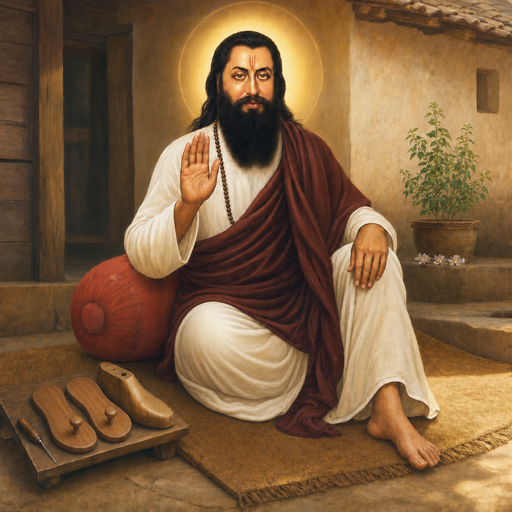
Sant Rohidas (Sant Ravidas) was a bhakti-movement sant-poet of the 15th-16th century — born into the Chambhar (Charmakar, leather-working) community, and a teacher of social equality free of caste distinction and of nirguna bhakti (devotion to the formless). This date (Margashirsh Shukla Saptami) is his punyatithi (remembrance day) — in 2026, that falls on Wednesday, 16 December.
This year's dates (2026)
An important clarification — do not confuse two separate dates: this (Margashirsh Shukla Saptami, December) is a punyatithi — it is entirely separate from Guru Ravidas Jayanti (Magh Purnima, February), the date widely observed across North India and much more broadly known. Also, "Rohidas" and "Ravidas" are two names for the very same historical sant — "Rohidas" is the regional form used in Maharashtra, Karnataka, and Gujarat, while North India uses "Ravidas"/"Raidas." These are not two different sants.
Significance
- Social equality and nirguna bhakti: Sant Rohidas taught spiritual equality, rejecting caste and gender distinction. His concept of "Begampura" — an ideal, sorrow-free, casteless city — is regarded as central to his philosophy.
- Literary legacy: 41 of his compositions are included in the Guru Granth Sahib, the Sikh scripture; his verses are also preserved in the Dadupanthi tradition. Some compositions may have been attributed to him later, out of reverence, by other poets.
- Place in the bhakti movement: medieval texts suggest he was a contemporary of Sant Kabir and a disciple of Ramananda — regarded as a leading voice of the nirguna bhakti tradition.
- Contemporary social significance (neutral, fact-based): Sant Rohidas/Ravidas is still regarded today as an important source of inspiration, especially for the Charmakar/Chambhar community. Maharashtra's Department of Social Justice and Special Assistance runs a scheme named after him, the "Sant Rohidas Charmodyog v Charmkar Vikas Mahamandal" (LIDCOM), for the socio-economic development of the Charmakar community — this is a neutral, civic/institutional fact.
Biography (brief)
Born in the village of Sir Govardhanpur near Varanasi, into a Chambhar (Charmakar) family; his parents are named as Santokh Das and Mata Kalsi (some traditions give different names). Medieval texts suggest his guru was Ramananda, though this is not certain — it should be understood as tradition.
Scholars sharply dispute his birth and death years — some place him at 1377-1528 CE, others at 1267-1335 CE. The estimate most often cited rests on his disciple-relationship with Mirabai (1498-1547 CE), but even this is not conclusive — no year is presented here as settled fact.
The legend that Mirabai was his disciple appears across many traditions — a shrine marking his footprint is said to stand before the Mira temple at Chittorgarh. This is tradition/legend, not independently documented history.
A miracle legend appears in Maharashtrian retellings — a king demanded a thousand pairs of shoes overnight, and Vitthal is said to have appeared as a young boy to help complete the task. This is a regional (Maharashtrian) retelling — it should be understood as tradition/devotional belief, not history.
Death — he is believed to have died in Varanasi (the exact year is disputed).
Who observes it
Sant Rohidas/Ravidas is held in great reverence across India, especially in Uttar Pradesh, Punjab, Rajasthan, and among the Charmakar/Chambhar community. In Maharashtra too, the Chambhar community and students of the bhakti tradition observe this punyatithi. However, the main, large-scale national observance falls on Magh Purnima (Guru Ravidas Jayanti) — this December date is comparatively limited/local in scale.
Observance
Bhajan-kirtan, abhang recitation, and remembrance gatherings are held on this tithi; no detailed documentation of a fixed household vrat or puja vidhi was found.
Regional customs and the name
Regional variation also appears in how the deity/devotion is framed — Maharashtrian retellings connect him with devotion to Vitthal, while the broader North Indian tradition centres on nirguna/Ram-focused bhakti. Neither is "correct" and the other "wrong." It is also important to state clearly that Sant Rohidas was not a formal member of the Warkari sampradaya — Maharashtra embraces him with devotion, but he was not part of that specific sampradaya tradition.
As noted above, "Rohidas" and "Ravidas" are two regional names for the very same historical sant — this should not be mistaken for two different sants.
Good to know
- This punyatithi is entirely separate from Guru Ravidas Jayanti (Magh Purnima, February) — do not confuse the two.
- "Rohidas" and "Ravidas" are regional names for the same sant — not two different sants.
- His birth/death years are sharply disputed — no year should be taken as settled.
- There is regional variation in the deity-name and devotional style (Vitthal in Maharashtra, Ram/nirguna more broadly).
FAQ
- When is Sant Rohidas Punyatithi in 2026?
- Wednesday, 16 December 2026 — Margashirsh Shukla Saptami.
- Who was Sant Rohidas?
- A bhakti-movement sant-poet, born into the Chambhar community, who taught social equality free of caste and nirguna bhakti.
- Are Sant Rohidas and Sant Ravidas the same person?
- Yes, the same historical figure — "Rohidas" is the regional form used in Maharashtra, Gujarat, and Karnataka, while North India uses "Ravidas"/"Raidas."
- What is the difference between Sant Rohidas Punyatithi and Guru Ravidas Jayanti?
- This punyatithi falls on Margashirsh Shukla Saptami, while Guru Ravidas Jayanti falls on Magh Purnima — which is observed much more widely across North India. These are two separate dates.
- What did Sant Rohidas teach?
- Rejection of caste and gender distinction, spiritual equality, and nirguna bhakti; the concept of "Begampura," a sorrow-free city of equals.
- Was Mirabai a disciple of Sant Rohidas?
- By tradition, yes — but this is not independently documented as history; it should be understood as legend.