Apara Ekadashi
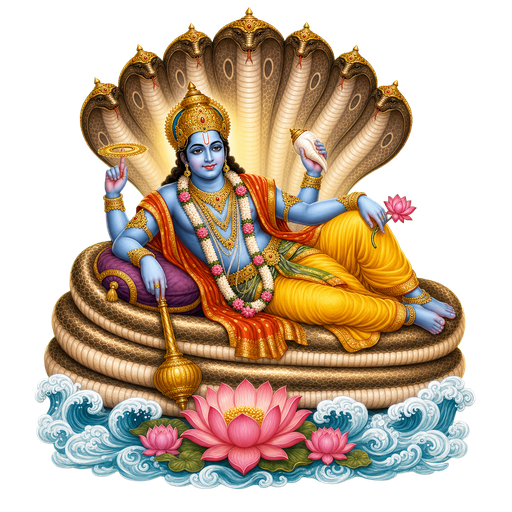
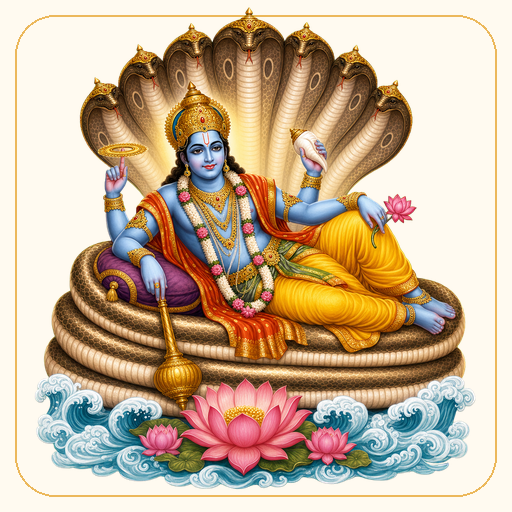
Apara Ekadashi is a Vishnu vrat observed on Vaishakh Krishna Ekadashi — also known as "Achala Ekadashi." The Padma Purana tradition links it to the legend of King Mahidhwaj's restless spirit being freed, while the Brahmanda Purana tradition instead describes the vrat's great merit directly. This year (2026): Wednesday, 13 May — with parana on Thursday, 14 May.
This year's dates (2026)
Significance
The name "Apara" means apar or amaryad — boundless — and the vrat is believed to bring boundless merit. Apara Ekadashi is dedicated to Vishnu. Observing this vrat is believed to erase great sins, free souls who died an untimely or troubled death, and bring well-being to one's ancestors (pitru). In Punjab, Jammu & Kashmir, and Haryana, this Ekadashi is also regionally known as "Bhadrakali Ekadashi," and in Odisha as "Jalakrida Ekadashi."
The legend
Two independent Puranic traditions exist around Apara Ekadashi — one narrative (the Padma Purana), the other purely a description of merit (the Brahmanda Purana).
The Mahidhwaj legend, in the Padma Purana tradition: King Mahidhwaj was deeply righteous and devoted to Vishnu. His younger brother Brajadhwaj (Vajradhwaj in some sources) murders him out of jealousy and buries his body beneath a peepal tree. Because of this violent, untimely death, the king's spirit finds no peace and remains at the tree as an unsatisfied ghost. One day, the sage Dhaumya, passing by, perceives this with his divine sight; he performs the Apara Ekadashi vrat and, on Dwadashi, dedicates its full merit to the king's spirit. Through this gift of merit, the king is freed from his ghostly state, granted a divine body and a celestial chariot, and ascends to Vaikuntha.
The account of merit, in the Brahmanda Purana tradition: this tradition carries no independent narrative — Krishna tells Yudhishthira directly what this vrat's fruits are. It erases even grave sins such as Brahmahatya (killing a Brahmin), cow-slaughter, causing a miscarriage, giving false witness, adultery, deserting a battle, and slandering one's guru. It also grants merit equal to bathing at Pushkar, Kurukshetra, Prayag, and the Gomati river, to performing Shivratri seva, pitru-tarpan, and donating cows, elephants, or gold.
The Padma Purana tradition's narrative and the Brahmanda tradition's account of merit are two sides of the same vrat.
Who observes it
Devotees of Vishnu, especially those seeking to atone for sin and bring peace to their ancestors, observe the Apara Ekadashi vrat.
Vrat vidhi
The sequence below is a general guide — not a fixed, single-correct ritual; it can vary by family and local custom.
- After a morning bath, Vishnu is worshipped — with tulsi leaves, flowers, incense, and a lamp.
- A fast (waterless or fruit-based) is observed through the day; the legend of Mahidhwaj is read or recited.
- At night, a vigil (jagaran) is kept, with bhajans, kirtan, or the chanting of Vishnu's names.
- The fast is broken (parana) at the proper time on Dwadashi.
Puja samagri
An image or murti of Vishnu, tulsi leaves, flowers, incense and a lamp, and fruit-based naivedya.
Fasting / dietary rules
It's widely held that rice, wheat, barley, and all lentils are avoided on Ekadashi. Some devotees observe a waterless fast, while most take a fruit-based diet instead — fruit, milk, sabudana, potato, peanuts, or rock salt; both are traditionally accepted. Chanting and satsang are part of the day, along with avoiding falsehood, anger, onion-garlic, oil, alcohol, and daytime sleep. Parana should be performed at the proper time on Dwadashi, avoiding the Harivasar period — the exact clock-time varies by location and year.
Mantra / aarti
The Vishnu mool-mantra "Om Namo Bhagavate Vasudevaya" is traditionally chanted during the vrat sankalp and puja — meaning: "Salutations to Lord Vasudeva (Vishnu)." Reciting the Vishnusahasranama is also a widespread custom on Ekadashi.
Regional customs
No distinct Maharashtra-specific custom for Apara Ekadashi is clearly documented — it's fundamentally a pan-India Vaishnav Ekadashi. Regional names include "Bhadrakali Ekadashi" in Punjab/Jammu & Kashmir/Haryana, and "Jalakrida Ekadashi" in Odisha.
Around this same time, Parner in Ahmednagar district observes the anniversary of Sant Parnerkar Maharaj, but this has no direct connection to Apara Ekadashi.
This year's date
| Date (2026) | Day | Tithi | Nakshatra | Note |
|---|---|---|---|---|
| 13 May | Wednesday | Vaishakh Krishna Ekadashi | Uttara Bhadrapada | Apara Ekadashi vrat; parana on Thursday, 14 May, avoiding Harivasar, before Dwadashi tithi ends |
In Maharashtra it's Vaishakh Krishna; in North India, Jyeshtha Krishna — the same tithi, a panchang-convention difference.
Future years: the tithi stays the same (Vaishakh Krishna Ekadashi); the Gregorian date follows that year's panchang and is only known once that year's panchang is published.
Good to know
- Two independent Puranic references — the Padma Purana's Mahidhwaj legend and the Brahmanda Purana's account of merit.
- "Achala Ekadashi" is a well-established alternate name; regional names (Bhadrakali, Jalakrida) also exist.
- Fast on Ekadashi, parana on Dwadashi — break the fast at the proper time.
- No Maharashtra-specific custom is documented — this is a pan-India Vaishnav Ekadashi.
- [Health] For elderly, pregnant, or medicated readers, the fruit-based (phalahar) option is the easier choice instead of a waterless fast.
FAQ
- When is Apara Ekadashi in 2026?
- Wednesday, 13 May 2026 (Vaishakh Krishna Ekadashi, Uttara Bhadrapada nakshatra); parana on Thursday, 14 May, avoiding Harivasar.
- Why is Apara Ekadashi also called Achala Ekadashi?
- "Achala Ekadashi" is a widely accepted alternate name for this vrat; some regions also call it "Bhadrakali" (Punjab/J&K/Haryana) or "Jalakrida" (Odisha).
- What is the legend of Apara Ekadashi?
- By the Padma Purana tradition, King Mahidhwaj's restless spirit — after being murdered by his brother — was freed when the sage Dhaumya performed this vrat; the Brahmanda Purana tradition instead carries no narrative, only a direct account of the vrat's great merit.
- What benefit comes from observing the Apara Ekadashi vrat?
- It's believed to erase great sins and bring peace to restless spirits and one's ancestors; the Brahmanda Purana tradition equates it to the merit of pilgrimage bathing and donation.
- How is the Apara Ekadashi vrat observed?
- Fasting and worship of Vishnu, a night vigil, and breaking the fast (parana) at the proper time on Dwadashi.
- Is there a Maharashtra-specific custom for Apara Ekadashi?
- No clear Maharashtra-specific custom is documented — it's a pan-India Vaishnav Ekadashi vrat.