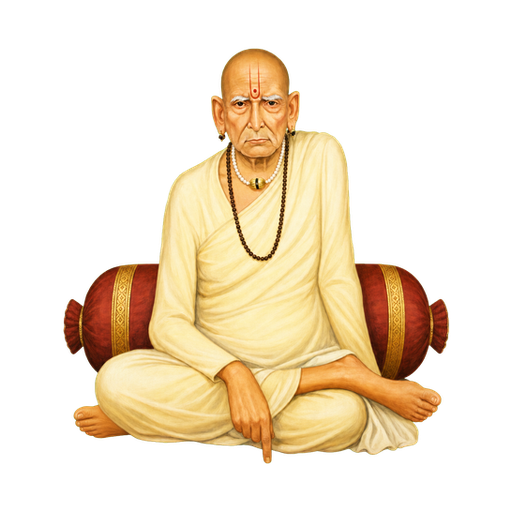
Shri Beedkar Maharaj Punyatithi
Shri Beedkar Maharaj Punyatithi isn't a deity's festival — it commemorates the death anniversary/samadhi day of Shri Ramanand Beedkar Maharaj, a 19th-century saint from Pune, on Phalgun Krishna Dashami. In 2026, this tithi falls on Friday, 13 March. He was a devoted disciple of Akkalkot's Shri Swami Samarth — originally a perfumer and gem-trader by profession, he later took up a renunciate life and founded a matha in Pune, spreading what came to be known as the Swaroop Sampradaya.
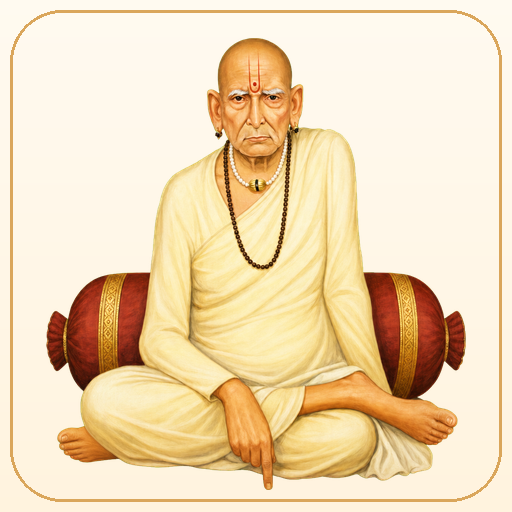
This year's dates (2026)
Significance
Beedkar Maharaj is an important name within the Akkalkot Swami Samarth tradition — tradition holds that Swami himself entrusted him with establishing a matha in Pune and spreading the Swaroop Sampradaya.
His life is regarded as an example of the journey from a wealthy trader to a renunciate saint — tradition holds that he gave up worldly prosperity (gem-trading, perfume business, alchemical knowledge) to take up rigorous austerities on his guru's instruction.
The guru lineage after him is believed to have continued — Swami Samarth to Ramanand Beedkar Maharaj to Vasudevanand Saraswati (Sadguru Baba Maharaj Sahasrabuddhe), as this tradition describes it.
Life and events
The episodes below are traditionally recounted ones.
Beedkar Maharaj was originally a gem-trader and perfumer, said to also be skilled in alchemy, and had accumulated wealth. He gradually grew detached from worldly life. Some versions mention Hanuman's guidance in this turn, while others mention only an inner prompting — either way, he travelled to Akkalkot to meet Swami Samarth. On his third visit, a slap from Swami is said to have sent him into a samadhi-like state for about twelve hours, from which, tradition says, he gained detachment (vairagya).
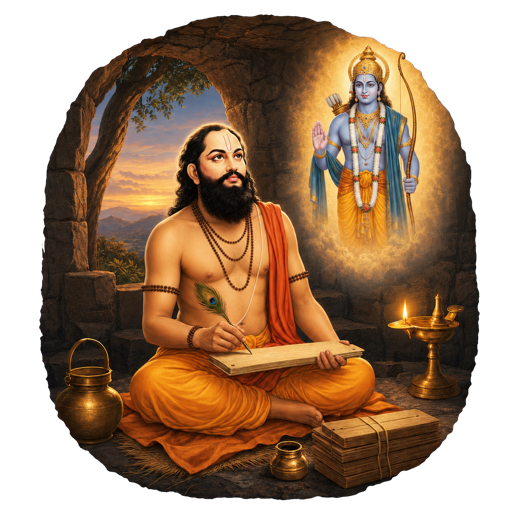
On Swami's instruction, he is said to have undertaken an arduous Narmada Parikrama lasting about two and a half years — wearing only two loincloths, enduring extreme heat and cold, walking barefoot on sand, and going without water for about forty-five days at a stretch. While at Maheshwar during the parikrama, he is said to have learned of Swami Samarth's mahasamadhi; he then returned to Pune, established a matha, and took up the responsibility of spreading Swami's teachings and the Swaroop Sampradaya.
Sources differ on his birth year and mahasamadhi year — some give his birth as 22 November 1839, others as 22 November 1838; his mahasamadhi year is given as 1913 by some sources and 1912 by others. Neither year is treated as settled here.
Who observes it
Followers of the Swaroop Sampradaya and Swami Samarth devotees chiefly observe this day in Pune. Pune residents and Swami devotees more broadly may visit the matha on this day.
Puja vidhi
The matha likely holds a special puja/remembrance program on the punyatithi — similar to other Sadguru punyatithi traditions (such as Ramdas Navami), this could plausibly include remembrance kirtan, naam-jap, and mahaprasad. The exact sequence and schedule aren't publicly documented; it would help to check directly with the matha/trust before visiting.
No distinct, settled list of punyatithi-specific puja items was found in any source. As with general saint-remembrance puja, a lamp, flowers or a garland, and incense are likely used.
No specific fasting/dietary rule for this punyatithi was found in any source.
Mantra
Swami Samarth of Akkalkot's well-known assurance — "Bhiu nakos, mi tujhya pathishi aahe" ("Don't be afraid, I am with you") — can be noted as a reference connected to Beedkar Maharaj's guru lineage. However, this is Swami Samarth's own utterance, not Beedkar Maharaj's — this distinction should not be blurred. No independent, widely used mantra or aarti specific to Beedkar Maharaj or the Swaroop Sampradaya is available.
Regional customs
This is a local, regional remembrance day within Pune, not a large city-wide or state-wide public festival.
Sources disagree on the exact location of the matha/samadhi site — one source places it in Shaniwar Peth, near Nene Ghat; another mentions the Shivajinagar area, but that appears to relate to the samadhi of one of Beedkar Maharaj's own disciples, rather than to Beedkar Maharaj's own samadhi site. It would help to confirm the exact address through local enquiry before visiting.
The matha/trust's official name, address, and contact details in Pune can change over time — it's worth confirming this information from a current source before visiting or for donations/contact purposes.
There is a guru-disciple relationship with Akkalkot's Swami Samarth — but Akkalkot itself is tied to Datta-sampradaya devotional belief (Swami Samarth is regarded by devotees as a return of Nrisimha Saraswati), while Beedkar Maharaj has his own, separate "Swaroop Sampradaya." Beedkar Maharaj himself is not regarded as a Dattatreya avatar — no source makes that claim; he is Swami Samarth's disciple and the founder of his own, independent lineage — the two should be kept clearly distinct, not blended.
Good to know
- Don't treat the birth/mahasamadhi year as settled — sources differ by one year (1838/1839 and 1912/1913).
- Swami Samarth (Akkalkot) and Beedkar Maharaj are different figures — there is a guru-disciple relationship, but Beedkar Maharaj himself isn't regarded as a Dattatreya avatar; he founded his own, separate Swaroop Sampradaya.
- Confirm the matha's exact address and program timings through local enquiry before visiting — sources disagree on these.
FAQ
- Who was Shri Beedkar Maharaj?
- A 19th-century saint from Pune, a disciple of Akkalkot's Swami Samarth; originally a perfumer and gem-trader, he later took up a renunciate life and spread the Swaroop Sampradaya.
- When is Beedkar Maharaj Punyatithi in 2026?
- Friday, 13 March 2026 (Phalgun Krishna Dashami).
- Who was Beedkar Maharaj's guru?
- Shri Swami Samarth of Akkalkot.
- Why did Beedkar Maharaj undertake the Narmada Parikrama?
- On Swami Samarth's instruction, as part of his vairagya (detachment) sadhana — an arduous pilgrimage on foot lasting about two and a half years, according to tradition.
- What is the Swaroop Sampradaya?
- The guru lineage/sect founded by Beedkar Maharaj in Pune — tradition holds that Vasudevanand Saraswati (Baba Maharaj Sahasrabuddhe) continued it afterward.
- Where is Beedkar Maharaj's matha in Pune?
- Sources mention Shaniwar Peth, near Nene Ghat — confirm the exact address through local enquiry before visiting.