Ramdas Navami / Das Navami
Ramdas Navami (Das Navami) isn't the birth-festival of a deity — it commemorates the death anniversary/samadhi day of Samarth Ramdas Swami (born Narayan Suryaji Thosar, in 1608 CE at Jamb, Jalna district), observed on Krishna (Vadya) Paksha Navami of the Magh month. In 2026, this tithi falls on Wednesday, 11 February. The main centre is Sajjangad (Satara district) — where Samarth took samadhi — where a multi-day festival draws thousands of devotees. This is a samadhi/death anniversary — Samarth's birth anniversary is observed separately, on Chaitra Shukla Navami (the same day as Ram Navami); the two shouldn't be confused.
This year's dates (2026)
Significance
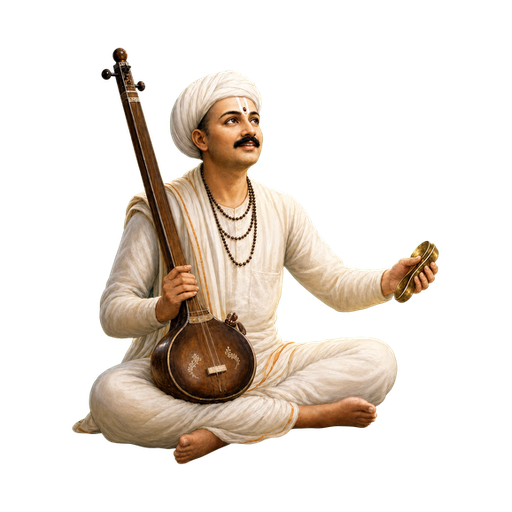
Samarth Ramdas Swami is a leading figure in Marathi devotional literature and social reform — the author of Dasbodh (his principal text), the Manache Shlok (roughly 205 verses on mental fortitude and right conduct), and aartis still sung in homes today such as Sukhkarta Dukhharta, Durge Durghat Bhari, and Lavathavati Vikrala.
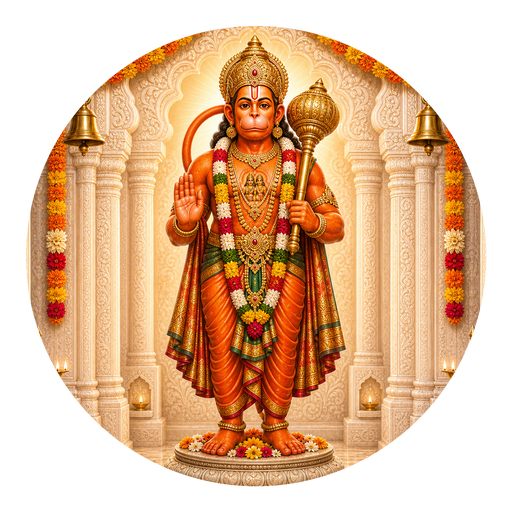
He is the founder of the Samartha Sampradaya (Ramdasi sect) — travelling across India, he is said to have established hundreds of mathas and 11 Maruti (Hanuman) temples (the exact count varies and is approximate across sources).
(Traditional belief) He is regarded as Chhatrapati Shivaji Maharaj's spiritual guide/guru — but historians disagree on the exact scope of this guru-shishya relationship; some scholars hold that solid contemporary evidence is lacking.
He is said to have taught a synthesis of physical strength (surya namaskar, the tradition of talim/gymnasiums) and devotion in society — "Prapancha with Paramartha" (worldly life alongside spiritual pursuit) is regarded as his central teaching.
Das Navami isn't a national/religious public holiday — it's a pilgrimage/remembrance day centred on the Samartha Sampradaya and Sajjangad — yet it remains a devotedly observed day within Maharashtra's saint tradition.
Life and the samadhi episode
Narayan Suryaji Thosar was born at Jamb (Jalna district) in Shake 1530 (1608 CE), on Chaitra Shukla Navami (the same day as Ram Navami) — this coincidence is cited within the Samartha tradition to show a special connection with Shri Ram. At age twelve, he left his own wedding mandap and spent about 12 years at Takli near Nashik, chanting Ram's name and performing austere tapasya (daily surya namaskar).
For roughly the next 12 years, he travelled in pilgrimage across all of India — one account mentions meeting the sixth Sikh Guru, Har Gobind, in Srinagar. During and after his travels, he established mathas at various places (traditionally said to be in the hundreds, though the exact number is uncertain) and built 11 Maruti temples.
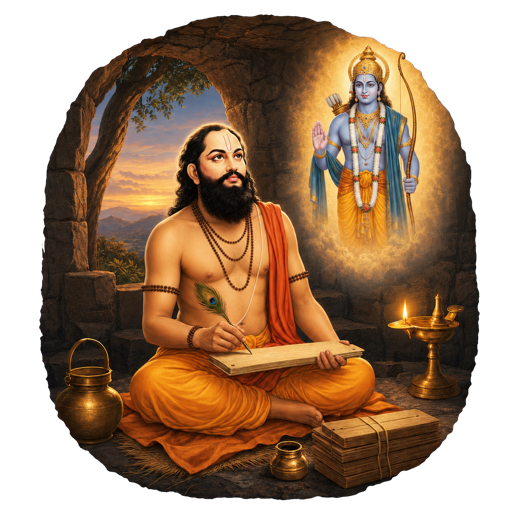
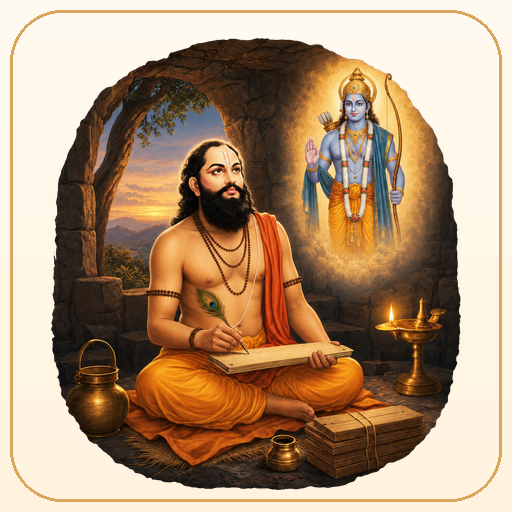
His principal text, Dasbodh, was composed in a cave at Shivtharghal (near Mahad, Raigad district) — while Samarth expounded, his disciple Kalyan Swami is recorded as having written it down as scribe.
From 1676, Samarth settled permanently at Sajjangad (originally named Parali fort — captured from the Adilshahi by Shivaji Maharaj in 1673, later renamed "Sajjangad" once it became Samarth's residence). In his final days, he took samadhi on Magh Krishna Navami, Shake 1603. (Sources differ on the corresponding CE year — some say 1681, others 1682.) At the samadhi site, Chhatrapati Sambhaji Maharaj is recorded as having later built a Ram temple, with a samadhi shrine in the basement below.
Who observes it
Followers of the Samartha Sampradaya (Ramdasi sect) and the mathadhish/mahants observe a special festival. Ram-Hanuman devotees across Maharashtra and devotees of Sajjangad broadly take part in the pilgrimage/darshan. Study circles for Dasbodh/Manache Shlok and school-level cultural programs are also organized on this day.
Puja vidhi
This is chiefly a Sajjangad-centred communal pilgrimage-festival — this form is far more prominent than any household vrat sequence:
- The festival generally runs from Magh Vadya Pratipada through Navami/Dashami, about 9-10 days.
- On the main (Navami) day, Kakad Aarti happens around 2 AM; the Samadhi Mahapuja around 4:30 AM.
- Around 6:30 AM, Sampradayik Bhiksha (sect-alms) — the matha's head himself begs alms, which devotees offer with devotion.
- Around 10:30 AM, 13 circumambulations around the samadhi shrine; through the day, Dasbodh parayan/reading, Sundarkand recitation, and kirtan-pravachan-bhajan.
- In the evening/night, Nirvana Kirtan (recounting Samarth's passing) and a closing kirtan, followed by Mahaprasad.
- Sub-branch mathas (e.g. Kivale-Pune) also observe parallel Kakad Aarti, Manache Shlok morning processions, and bhajan-pravachan — so the day isn't limited to Sajjangad alone.
The exact clock-time schedule can vary year to year per the trust's own announcements — this is only the general sequence.
What you need
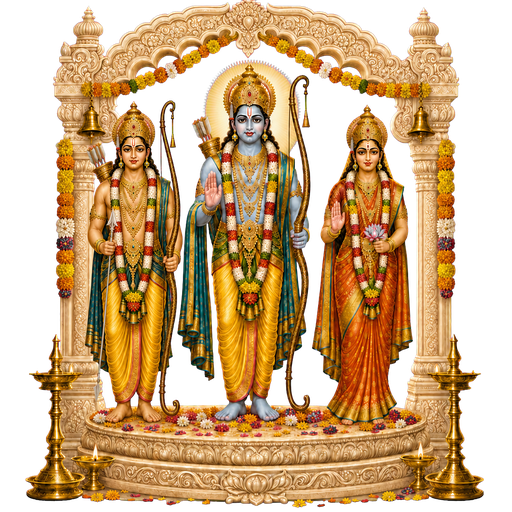
Since this is chiefly a public pilgrimage/remembrance day, there's no set tradition of household puja items. For home-based remembrance, the usual Ram-Hanuman worship items (an image, flowers, a lamp and incense, tulsi) can be used.
 Flowers
 Lamp
Lamp Incense
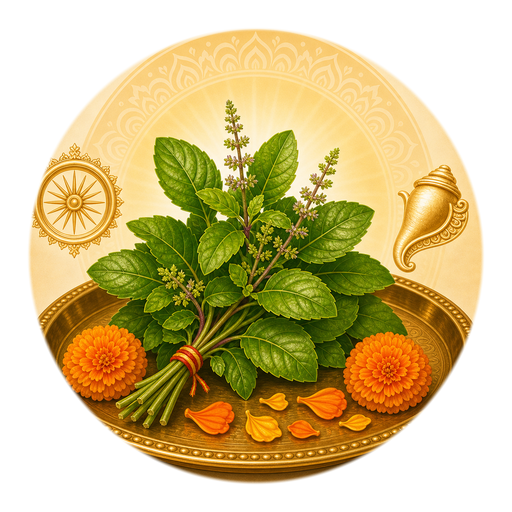 Tulsi
TulsiFasting
Some devotees are said to fast on this day, though it isn't treated as a strict or mandatory rule. The day's centre is Dasbodh recitation, kirtan, and the Sajjangad pilgrimage rather than fasting — fasting is regarded as optional and secondary.
Mantra
Tarak mantra: "Shri Ram Jai Ram Jai Jai Ram" — within the Samartha sect, this 13-syllable Ram-naam mantra is regarded as the tarak-mantra; meaning salutation/surrender to Shri Ram. Some traditions hold that Samarth also chanted this in his final moments.
Sect greeting/slogan: "Jai Jai Raghuvir Samarth" — used by Ramdasi followers as a mutual greeting and festival chant.
Manache Shlok (roughly 205 verses composed by Samarth): instructive verses on mental fortitude and right conduct. The popular opening verse (addressed to the mind):
Meaning: O virtuous mind, walk the path of devotion, and Shri Hari will naturally be attained.
Samarth Ramdas also composed many aartis sung in homes across Maharashtra, such as Sukhkarta Dukhharta — these are already given on the pages of the deities they address, and aren't repeated here.
Regional customs
Sajjangad (Satara) is the undisputed centre — the samadhi site, a multi-day festival, thousands of devotees, and special bus services from Satara.
Chafal (Satara district) — the first Ram temple and original matha established by Samarth; the second important site in the Ramdasi tradition.
Shivtharghal (near Mahad, Raigad district) — the site where the Dasbodh was composed; young trekkers/devotees are noted to visit even during the monsoon.
Sub-branch mathas (e.g. Kivale-Pune, Mahabaleshwar, Miraj) — parallel Kakad Aarti/bhajan-pravachan also take place outside Sajjangad — this day isn't confined to one site.
Good to know
- Climbing Sajjangad fort involves about 230 steps; thousands of devotees arrive during the festival — those travelling with elderly family or young children should plan for time and physical readiness.
- The pre-dawn Kakad Aarti in the Magh month happens during cold weather — devotees heading out early should carry warm clothing.
- Those fasting (optional, not mandatory) should take a medically advised exemption if diabetic, elderly, or pregnant.
- Avoid the name mix-up: this is the samadhi/death anniversary — Samarth's birth anniversary is different (Chaitra Shukla Navami, the same day as Ram Navami). Under the North Indian purnimanta system, this same tithi may also appear as "Falgun Krishna Navami" — under the Maharashtrian amanta system, always use "Magh."
FAQ
- What is Ramdas Navami?
- The remembrance of Samarth Ramdas Swami's (author of the Dasbodh, founder of the Samartha Sampradaya) death anniversary/samadhi day — on Krishna Paksha Navami of the Magh month. Also called Das Navami.
- When is Ramdas Navami in 2026?
- Wednesday, 11 February 2026 (Magh Krishna Navami, Anuradha nakshatra).
- What's the difference between Ramdas Navami and Ram Navami?
- Ram Navami (Chaitra Shukla Navami) is Lord Ram's birth festival; the same day is traditionally regarded as Samarth Ramdas Swami's birth anniversary too. Ramdas Navami/Das Navami (Magh Krishna Navami), however, is Samarth's death/samadhi tithi — the two are entirely separate occasions, falling in different months.
- Are Das Navami and Ramdas Jayanti the same?
- No. "Ramdas Jayanti" is the birth tithi (Chaitra, March-April); "Das Navami/Ramdas Navami" is the samadhi tithi (Magh, January-February).
- What happens at Sajjangad on Das Navami?
- A festival lasting roughly 9-10 days (Magh Vadya Pratipada to Navami/Dashami): pre-dawn Kakad Aarti, Samadhi Mahapuja, sect alms, 13 circumambulations, Dasbodh parayan, kirtan-pravachan, and on Navami itself, Nirvana Kirtan and Mahaprasad.
- Who was Samarth Ramdas Swami?
- A 17th-century Marathi saint-poet-philosopher; born Narayan Suryaji Thosar (born at Jamb, Jalna district, 1608); author of the Dasbodh and Manache Shlok; founder of the Samartha (Ramdasi) sect; traditionally described as having a guru-shishya relationship with Chhatrapati Shivaji Maharaj.
- Is Ramdas Navami a public holiday?
- No — per the panchang, it isn't a public holiday; it's a religious remembrance day centred on the Samartha Sampradaya and Sajjangad.
- Did Samarth Ramdas Swami give spiritual guidance to Chhatrapati Shivaji Maharaj?
- By traditional belief, yes — Samarth is regarded as his spiritual guide; but historians disagree on the exact historical scope of this relationship.