Akkalkot Swami Samarth
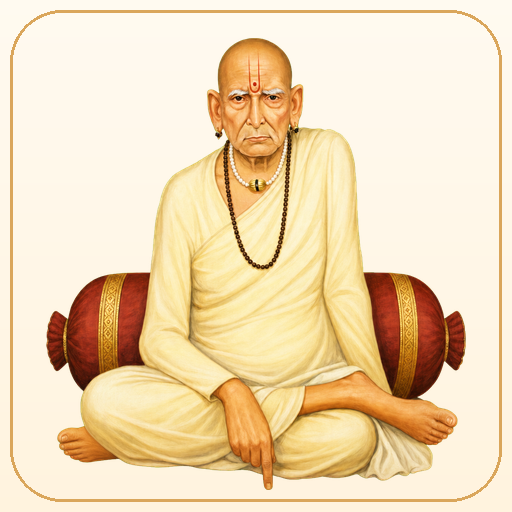
Shri Swami Samarth was a 19th-century sant/sadguru who lived in Akkalkot (Solapur district) for about 22 years, roughly from 1856 to 1878. Devotees regard him as an avatar of Lord Dattatreya — though exactly which incarnation, and in what form, is disputed across sources. He lived at and took mahasamadhi at the residence of his disciple Cholappa — now the Samadhi Temple — and the shade of the Vatavruksha (banyan tree) is the temple's central symbol. His best-known assurance — "Bhiu nakos, mi tujhya pathishi aahe" ("Don't be afraid, I am always with you") — is widely quoted. The temple's two main festivals, Prakat Din and Punyatithi, happen to fall in the same month of Chaitra (20 March and 15 April in 2026 respectively). Below is his life story, the shrine's history, the festival calendar, darshan timings, and travel details.
This year's dates (2026)
- Friday; Shri Swami Samarth Prakat Din20 Mar
- Wednesday; Shri Swami Samarth Punyatithi (the day's main label is Shivratri, Pradosh)15 Apr
- Thursday; main label Chhatrapati Shivaji Maharaj Jayanti — secondary entry 'Mahaparvani-Girgaon Chowpatty' (link to Akkalkot uncertain)19 Feb
Deity & significance
Swami Samarth is not a traditional Puranic deity — he was a 19th-century sant, yogi, and sadguru whom devotees regard as a divine incarnation. His birth details are uncertain — the English Wikipedia entry itself notes that his parentage and origins remain obscure. On one occasion, when asked, Swami is said to have replied that he was "born of a banyan tree"; on another occasion, he is recorded as saying his earlier name was "Nrusimha Bhan" and that he came from Kardali van near Shrishailya. These two accounts appear inconsistent with each other — Swami Samarth's exact origin remains uncertain.
By the broad devotional belief within the Datta tradition, three incarnations are held: Shripad Shrivallabh (the first) → Shri Narasimha Saraswati (the second) → Swami Samarth (the third). Some sources call him the "fourth, but third in physical form" incarnation — the counting method itself differs across sources. Another strand of belief holds that Swami Samarth was not a separate, new incarnation at all, but Narasimha Saraswati's own re-emergence (per the Kardali van legend below); one independent Datta-tradition-focused source also notes that some scholars consider this legend to lack firm historical evidence. No single version is universally accepted — some traditions hold this belief.
(For general background on Dattatreya and the twenty-four Gurus tradition, see Datta Jayanti — that story isn't repeated here.)
The banyan-tree thread appears twice — one version of his own origin story is tied to a banyan tree, and his actual 22-year residence and mahasamadhi at Akkalkot also happened in the shade of a banyan tree. This symbolic thread is at the core of the temple's identity.
Just as with Akkalkot, some devotees also regard Shirdi's Sai Baba and Shegaon's Shri Gajanan Maharaj as incarnations of Dattatreya — the same kind of devotional belief-claim applies there too; both, like Akkalkot, are known as sant/sadguru pilgrimage centres.
At the time, Akkalkot was the capital of a small princely state ruled by the Bhosale dynasty (descendants of Fatesinh Bhosale, adopted by Chhatrapati Shahu Maharaj in 1708) — Swami Samarth's residence is said to have transformed this regional town into a major pilgrimage centre.
History & legend (sthala-purana)
The main traditional source is believed to be "Shri Swami Charitra Saramrut" and similar modern devotional texts. Every version of this story appears to be a retelling of the same broad devotional tradition — this story is legend/belief, not established history.
Per the Gurucharitra, Shri Narasimha Saraswati went into meditative samadhi around 1458 CE at Kardali van, near Shrishailya. He remained in that state of samadhi for a long period (sources differ, giving 300 to 350 years); the legend describes an anthill forming around him. A woodcutter's axe accidentally struck the anthill — blood flowed, the yogi awoke, and declared that "the time has come to appear again." By many versions, an axe-scar is said to have remained permanently on his body. This is the core of the "Prakat Din" (day of divine appearance) story.
After this, by legend, followed a long period of wandering through China, Tibet, Nepal, and North India; he finally arrived in Akkalkot around 1856 CE, on the invitation of Chintopant (Appa) Tol, the mamlatdar (revenue official) of Solapur. (Most sources record the arrival year as 1856; one independent source's "170th Prakat Din" figure mathematically implies 1857 — a minor discrepancy, so the exact year cannot be pinned down; it is treated here as around 1856.)
At Akkalkot, he lived at the residence of his disciple Cholappa — that same spot is today's Samadhi Temple. After residing there for about 22 years (1856-1878), he took mahasamadhi on Chaitra Krishna Trayodashi (30 April 1878 CE) in the shade of the Vatavruksha.
The minor disagreements noted above — over the duration of the Kardali van samadhi, the incarnation count, and the arrival year — should each be taken as approximate, not a single settled figure; keep in mind that this whole narrative is legend/belief, not established history.
Architecture & layout
The main shrine is the Samadhi Temple — within Akkalkot town itself, built at the very spot where disciple Cholappa's residence once stood. The Vatavruksha (banyan tree) is the temple's central symbol, regarded as a witness to Swami's 22-year residence and his mahasamadhi; the site is also known as "Shri Vatavruksha Swami Maharaj Devasthan." The exact architectural details of the temple (the sanctum, entrances, construction period) could not be independently verified.
The temple complex runs a free-kitchen/food-service tradition — "Shri Swami Samarth Annadhara," started in 1988, is said by one source to serve roughly ten thousand devotees a free meal daily.
Also within Akkalkot town, outside the temple complex itself, are the old Akkalkot Palace, Taramati Baug, and Bhuikot Fort — heritage sites of the Bhosale dynasty.
Festivals & yatra
Akkalkot's two main, equally-prioritised festivals happen to both fall within the month of Chaitra.
| Festival | Tithi | 2026 date | In brief |
|---|---|---|---|
| Prakat Din | Chaitra Shukla Dwitiya | 20 March (Friday) | The day of Swami's divine "appearance" (not a birth). Early-morning kakad aarti, shodashopchar pujan, laghurudra, mahanaivedya, and a 2-3 hour palkhi procession, with shej aarti in the evening. |
| Punyatithi (mahasamadhi observance) | Chaitra Krishna Trayodashi | 15 April (Wednesday) | The mahasamadhi remembrance day (1878) — an external source independently notes this as the 148th Punyatithi. Devotees visit the Samadhi Temple/Vatavruksha for darshan. |
| Weekly Thursday worship | Every Thursday | (weekly) | As with many Datta/sadguru traditions, Thursday is generally considered special by Swami Samarth devotees too — a single-source indication, not a firm rule. |
| (Uncertain) Mahaparvani — Girgaon Chowpatty, Mumbai | Falgun Shukla Dwitiya | 19 February (Thursday) | This day's main label is Chhatrapati Shivaji Maharaj Jayanti; a secondary entry also appears on the same day, but its direct connection to the Akkalkot math could not be verified — it is likely an annual Mumbai gathering by some independent, modern Swami Samarth seva organisation. |
The Girgaon Chowpatty entry above is included for transparency — it should not be read as the Akkalkot math's own festival. In modern times, separate, later organisations inspired by Swami Samarth have also emerged — for example, "Shri Swami Samarth Seva Marg – Dindori Pranit," headquartered at Trimbakeshwar (Nashik), not Akkalkot. Many such independent "Swami Samarth Math" branches exist across the state; the Girgaon Chowpatty entry may belong to one such independent modern organisation. All yatra dates and schedules should be checked with the temple committee — the programme can change on festival days.
Darshan & aarti timings
Sources show major discrepancies, including internal inconsistencies within a single source group — no single "correct" schedule could be established. What follows is a rough outline only, not to be taken as exact timings; confirm with the temple committee before an actual visit.
- By one source group: darshan 6 AM to 12 PM and 4 PM to 9 PM.
- By another source group (internally inconsistent — treat with caution): the temple is open 5 AM to 10 PM; kakad aarti at 5 AM; abhishek 7-11 AM; mahanaivedya at 12 PM; closed 12-4 PM; shej aarti 8-8:45 PM.
- These two source groups conflict with each other — confirm current timings with the temple committee/local management before an actual visit.
- Darshan and free food are consistently described as entirely free, with no advance booking needed (special/VIP darshan services may differ).
No single organisation is named here as "the official trust" — at least four competing organisations were found (Shri Swami Samarth Annachhatra Mandal Trust, Shri Swami Samarth Sansthan, Shri Swami Samarth Samadhi Math, Shri Vatavruksha Swami Maharaj Devasthan), and two different names both claim to be the "fifth-generation successors of Cholappa" — whether this is a naming mix-up or an actual rival claim could not be established.
Special rituals here
- Palkhi procession: on Prakat Din, a decorated palkhi carrying Swami's image/padukas is taken out in a 2-3 hour procession, with music, bhajans, and flower showers.
- Shodashopchar pujan, laghurudra, and mahanaivedya: elaborate rituals said to be performed at the temple on the main festival days.
- Home-level abhishek: an abhishek using Ganga jal, cow urine, milk, honey, and ghee; naivedya of puran-poli, pithla-bhakri, and pineapple halwa; yellow flowers and ghee lamps — this is the detail given by one devotional source for home-level worship. It is a single-source description of a home ritual, and should not be taken as the Akkalkot temple's own official practice.
- Namajap: the six-syllable mantra "Shri Swami Samarth" is the primary form of worship; a specific chant count (e.g., eleven malas) is suggested by one source — not to be taken as a universal rule.
(For general Datta guru-mantra / twenty-four Gurus details, see Datta Jayanti; not repeated here.)
Mantra & aarti
The most widely quoted assurance — "Bhiu nakos, mi tujhya pathishi aahe" ("Don't be afraid, I am always with you") — is a promise of protection to devotees, consistently recorded across both the English and Marathi Wikipedia entries. A namajap mantra, "Om Abhaydata Shri Swamisamarthaya Namah," is also recorded as a remembered chant. Only the meaning of these two is given here; the exact compiled version and chanting practice should be confirmed with the temple committee or knowledgeable devotees.
The full aarti text is not reproduced here; only its essence is noted — praise of Swami Samarth and the devotee's act of offering aarti. The recognisable opening line can be confirmed against a trusted aarti collection or with the temple committee.
How to reach
Location: Akkalkot — Solapur district, Maharashtra; about 38-41 km southeast of Solapur city, near the Karnataka border.
By rail: Akkalkot Road station is about 13 km from the temple; Solapur Junction, the major station, is about 40 km away. Akkalkot station is said to have rail connections to several cities, but the exact list and frequency could not be verified against a single authoritative figure.
By road/bus: about a 1 to 1.5 hour journey from Solapur; state/private buses, taxis, and autos are available.
By air: no single nearest airport could be independently confirmed — Solapur airport may be taken as a general reference point.
Best season: October to March is noted as the more comfortable weather window for a visit.
Nearby places
- Tuljapur (Tulja Bhavani) — the kuldevata of Chhatrapati Shivaji Maharaj; about 47 km from Solapur, roughly a 3-hour drive from Akkalkot.
- Pandharpur (Vitthal-Rukmini) — about 110 km from Akkalkot via Solapur, 2.5-3 hours.
- Gangapur (Narasimha Saraswati, a Datta kshetra) — frequently mentioned as a companion pilgrimage site in the Datta tradition, since devotees connect both places through the same Dattatreya-avatar belief (the same incarnation caveat noted above applies here too); the exact distance is given on Gangapur's own page. Many devotees also visit Narsobawadi, another companion site in the Datta tradition.
- Solapur city — the Siddheshwar temple and other city sights.
- Akkalkot Palace, Taramati Baug, and Bhuikot Fort — Bhosale-dynasty heritage sites in the same town, outside the temple complex.
Travel tips (good to know)
- Darshan and food are consistently described as free — but stay or special-puja charges may differ; confirm locally.
- Expect large crowds on both Prakat Din and Punyatithi — plan ahead for traffic and parking along the palkhi procession route.
- Many devotees combine Solapur-Akkalkot-Gangapur-Tuljapur-Pandharpur into one regional pilgrim circuit — but the distances are considerable, so covering all of them in a single day isn't realistic; plan in advance.
FAQ
- Who was Swami Samarth of Akkalkot?
- A 19th-century sant/sadguru who lived in Akkalkot (Solapur district) roughly from 1856 to 1878. Devotees regard him as an avatar of Dattatreya (the exact incarnation number is disputed).
- When did Swami Samarth arrive in Akkalkot, and how long did he stay?
- He arrived around 1856 and resided for about 22 years, at the residence of his disciple Cholappa — the site of today's Samadhi Temple.
- When was Swami Samarth's Punyatithi/mahasamadhi?
- 30 April 1878 (Chaitra Krishna Trayodashi); in 2026 this tithi falls on 15 April (Wednesday) — externally noted as the 148th Punyatithi.
- Which incarnation of Dattatreya is Swami Samarth considered to be?
- By broad devotional belief, the "third" (after Shripad Shrivallabh and Narasimha Saraswati); but the exact count and form are disputed across sources.
- What is Swami Samarth's famous mantra or saying?
- "Bhiu nakos, mi tujhya pathishi aahe" ("Don't be afraid, I am always with you") is the most widely quoted assurance; "Shri Swami Samarth" is the six-syllable namajap.
- How far is Akkalkot from Solapur?
- About 38-41 km (roughly a 1 to 1.5 hour drive).
- What are the darshan timings at the Akkalkot temple?
- Sources vary — roughly early morning to late night, with a possible midday rest period; confirm exact timings with the temple committee.
- What is the connection between Akkalkot and Gangapur-Narsobawadi?
- Devotees connect all three sites through the Datta-avatar tradition; geographically, Akkalkot and Gangapur are about 70-100 km apart.
- What is Prakat Din, and how does it differ from a Jayanti?
- A Jayanti is a regular birth anniversary; Prakat Din refers to a great yogi/avatar's divine "appearance" in the physical world — believed, per the Kardali van legend, to be a supernatural manifestation rather than an ordinary birth.
- What other sightseeing places are near Akkalkot?
- Tuljapur (Tulja Bhavani), Pandharpur, Gangapur, Solapur city, and the Akkalkot Palace, Taramati Baug, and Bhuikot Fort.
Related Info
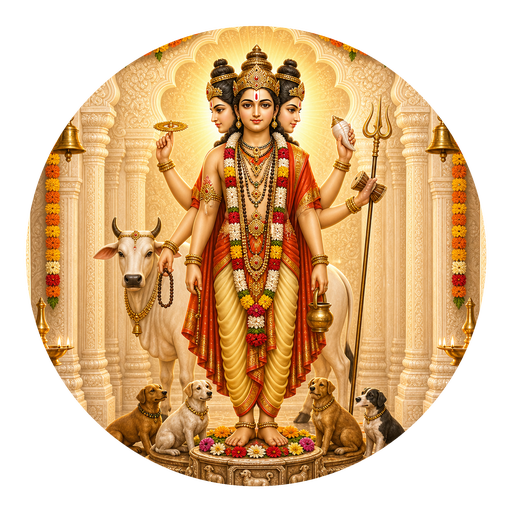 Gangapur Datta (Shri Narasimha Saraswati)2 Feb
- Narsobawadi (Narsobachi Wadi) Datta Temple29 Jul
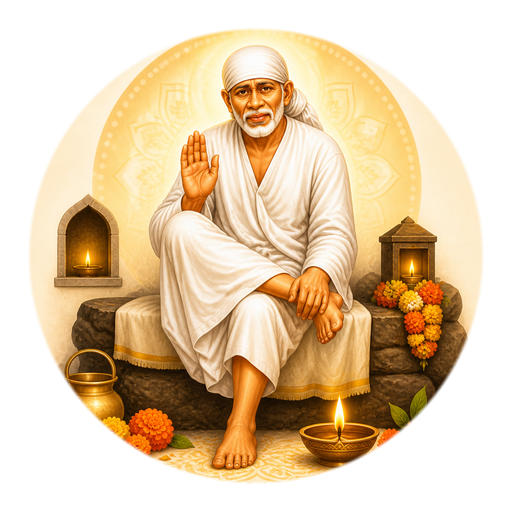 Shirdi Sai Baba26 Mar
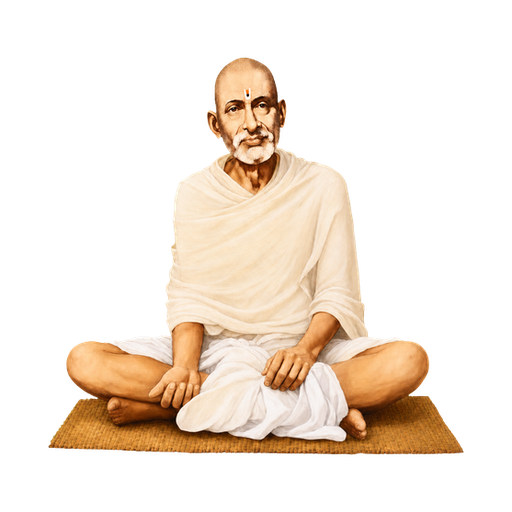 Shegaon Gajanan Maharaj8 Feb
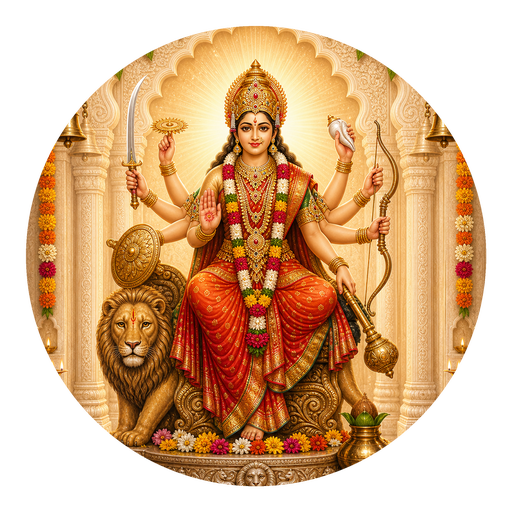 Tuljapur — Tuljabhavani3 Jan
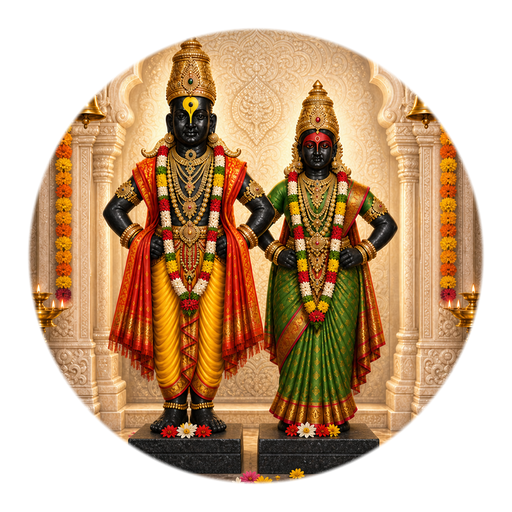 Pandharpur Vitthal-Rukmini Temple29 Jan
 Alandi Sant Dnyaneshwar Samadhi Mandir8 Jul
- Audumbar Datta (Shri Narasimha Saraswati)2 Feb
 Dehu — Sant Tukaram Maharaj5 Mar
 Paithan — Sant Eknath Maharaj Samadhi Mandir9 Mar
 Sajjangad — Samarth Ramdas Samadhi11 Feb
- Datta Jayanti (Shri Dattatreya Jayanti)23 Dec