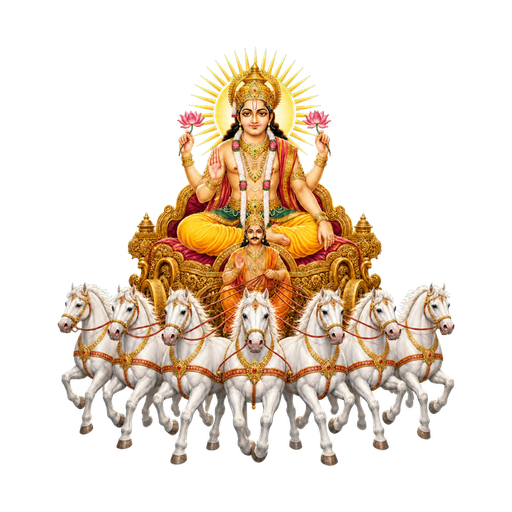
Bhanu Saptami
Bhanu Saptami is the auspicious coincidence of the Saptami tithi falling on a Sunday — in either Shukla or Krishna Paksha, in any month. Sunday (Surya's weekday, Bhanuvar) and Saptami (Surya's tithi) coinciding is regarded as a great yoga (mahayoga) for Surya worship. In 2026, this coincidence occurs three times — 25 January, 7 June, and 1 November, all Sundays.
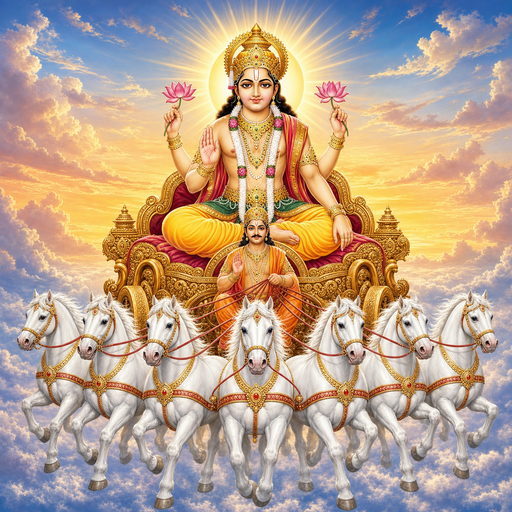
This year's dates (2026)
- Sunday; also coincides with Ratha Saptami/Surya Jayanti this year25 Jan
- Sunday; Krishna Paksha — 'Adhik Bhanu Saptami'7 Jun
- Sunday; Krishna Paksha1 Nov
Note: Bhanu Saptami is not Ratha Saptami. Ratha Saptami is a fixed annual festival on Magha Shukla Saptami (Surya Jayanti) — the seven-horse chariot and King Yashovarma's legend belong there. Bhanu Saptami and Ratha Saptami overlap only when Magha Shukla Saptami itself falls on a Sunday — which happens on exactly 25 January in 2026. Elsewhere, these are different days — the two festivals should be understood as distinct from each other.
Significance
The Saptami tithi is traditionally associated with Surya; Sunday is regarded as Bhanuvar (Surya's day). Since both fall under the same deity's rule, this day is considered especially fruitful for Surya worship — hence it is called a "mahayoga" (great auspicious combination).
By tradition, worshipping Surya on this day is believed to bring health, longevity, prosperity, self-confidence, and success in career/government service; some sources also mention the destruction of sin/relief from illness. This should be understood as religious belief, not as fact or medical advice.
The concept of a tithi-vaar (date-weekday) coincidence is significant in the panchang (e.g., Monday+Amavasya = Somvati Amavasya); by the same logic, Sunday+Saptami is regarded as Surya's auspicious combination.
The legend (katha)
Bhanu Saptami has no independent legend of its own. What appears online as "the Bhanu Saptami katha" is, in fact, Ratha Saptami's legend — a childless King Yashovarma blessed with an ailing son, whose illness was cured and sins destroyed through the Saptami vrat. This legend belongs to Ratha Saptami; Bhanu Saptami has not borrowed it.
So Bhanu Saptami should be understood as the concept of a tithi-vaar coincidence for Surya worship — the sun's chariot with seven horses, and King Yashovarma's legend, belong to Ratha Saptami, and can be found on that page. Some websites treat Bhanu Saptami, Ratha Saptami, Achala Saptami, and Surya Saptami as all the same — in reality, these are different festivals.
Who observes it
Devotees of Surya — especially those making a resolve for health, career/livelihood, and self-confidence. The vrat is voluntary — ranging from a strict fast to a fruit/milk diet, varying by tradition.
Puja vidhi
Bathe before sunrise and wear clean, preferably red, clothing. Take water in a copper vessel, add a red flower, akshata, and vermilion, and offer arghya to the rising sun. Follow this with chanting "Om Suryaya Namah" and/or reciting the Aditya Hridaya Stotra. Kheer or sweet rice (with jaggery and milk) is offered as naivedya, and grain is donated to Brahmins. Drawing a rangoli of the chariot and seven horses at the doorstep is a Ratha Saptami-specific custom — see the Ratha Saptami page for that.
There is no widely followed, distinct udyapan (closing ritual) specific to Bhanu Saptami.
The exact sunrise time varies by location and date — check that day's panchang page; only "offer arghya at sunrise" is given here generically.
What you need
A copper vessel (kalash/lota), clean water, red flowers, akshata, vermilion, sandalwood paste, a lamp/incense, jaggery-milk/kheer, and an optional rangoli.
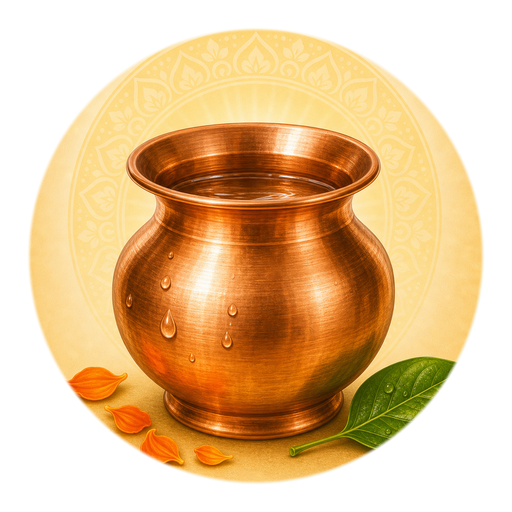 Copper vessel (kalash/lota)
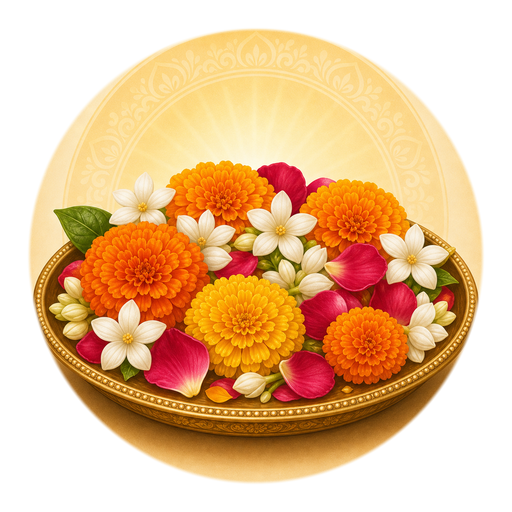 Red flowers
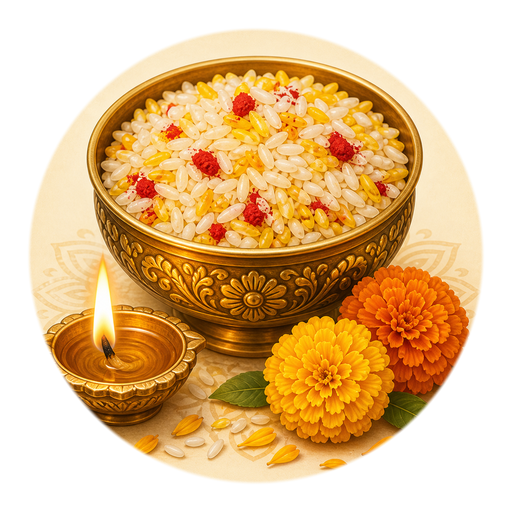 Akshata
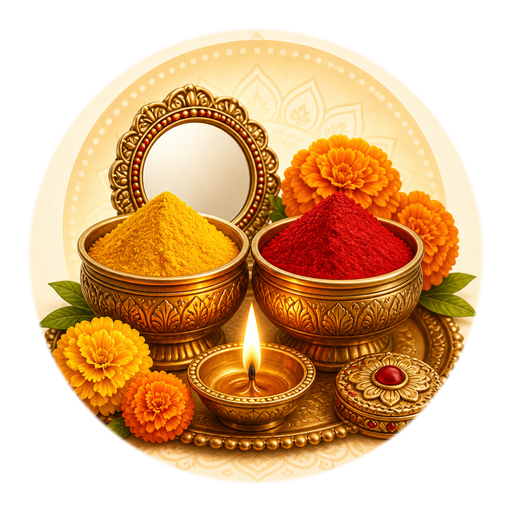 Vermilion (kumkum)
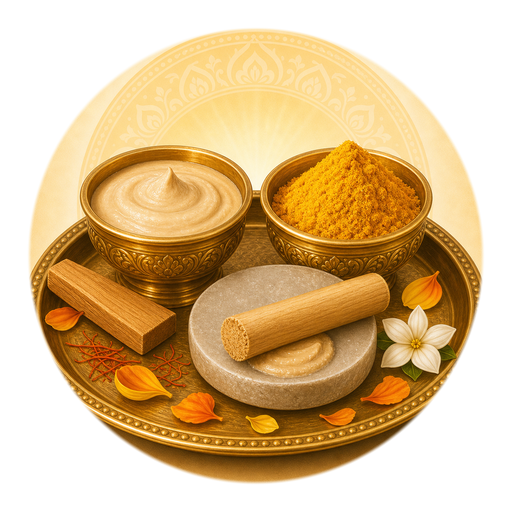 Sandalwood paste
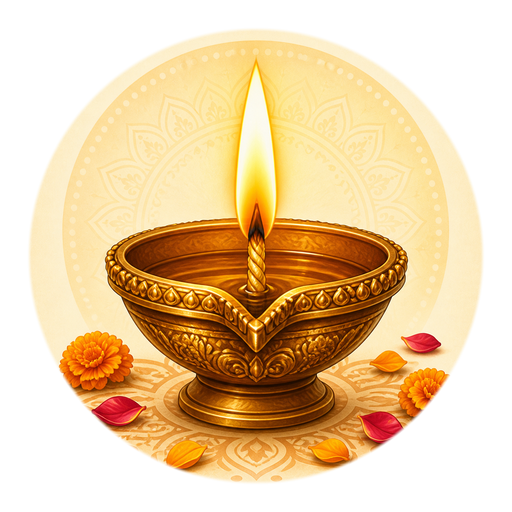 Lamp
Lamp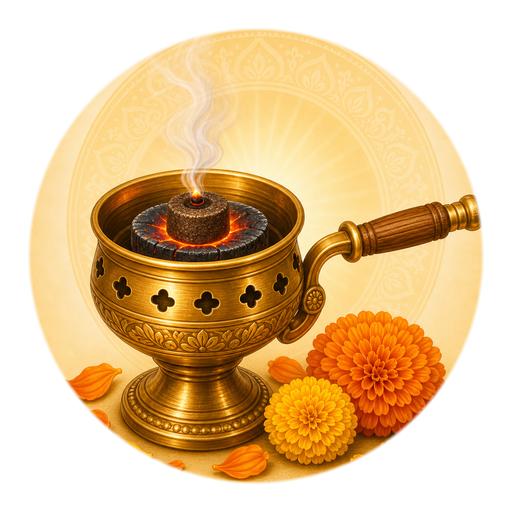 Incense
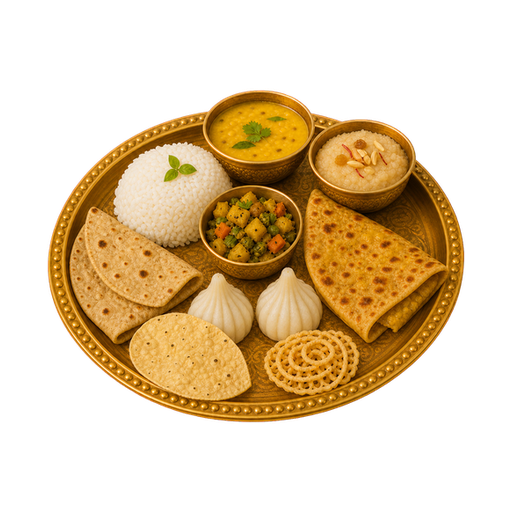 Jaggery-milk / kheer
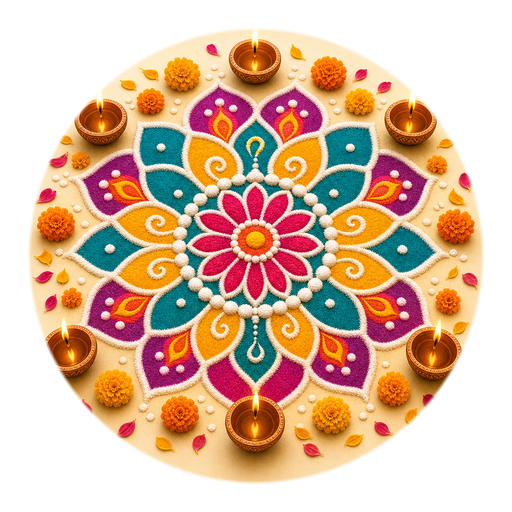 Rangoli (optional)
Fasting
The fast is voluntary and tradition-specific — waterless, fruit-only, or a single meal. The fast is broken after sunset or the next day, according to local custom.
Mantra
"Om Suryaya Namah" is Surya's well-known seed/name mantra — meaning, a salutation to the sun god; it is chanted while offering arghya to the sun. The Aditya Hridaya Stotra (a hymn to Surya from Valmiki's Ramayana) is traditionally recited for health and victory; its complete text is not given here.
Regional customs
In Maharashtra, Bhanu Saptami is not widely celebrated as a major independent festival on its own; it is primarily noted in the panchang as an auspicious tithi-vaar coincidence. The larger Surya festival is Ratha Saptami (Magha Shukla Saptami) — details are on that separate page.
Good to know
- Offer arghya at sunrise itself — the exact time varies by location, so check that day's panchang page.
- Claims about health/relief from illness are religious beliefs — not a substitute for medical advice.
- This is Bhanu Saptami (Sunday + Saptami), not Ratha Saptami — keep the difference between the two in mind to avoid confusion.
FAQ
- What is Bhanu Saptami?
- When the Saptami tithi falls on a Sunday, it is called Bhanu Saptami — an auspicious yoga for Surya worship.
- What is the difference between Bhanu Saptami and Ratha Saptami?
- Ratha Saptami is a fixed annual festival on Magha Shukla Saptami/Surya Jayanti; Bhanu Saptami is any Saptami falling on a Sunday (several times a year). They coincide only when Magha Shukla Saptami itself falls on a Sunday.
- When is it in 2026?
- 25 January, 7 June, and 1 November — all Sundays.
- How should arghya be offered?
- In a copper vessel, mix water with a red flower, akshata, and vermilion, and offer it to the rising sun while chanting "Om Suryaya Namah"; the exact time varies by location.
- What is the merit of this vrat?
- By tradition: health, longevity, prosperity, and self-confidence — understood as religious belief.