Ratha Saptami (Surya Jayanti)
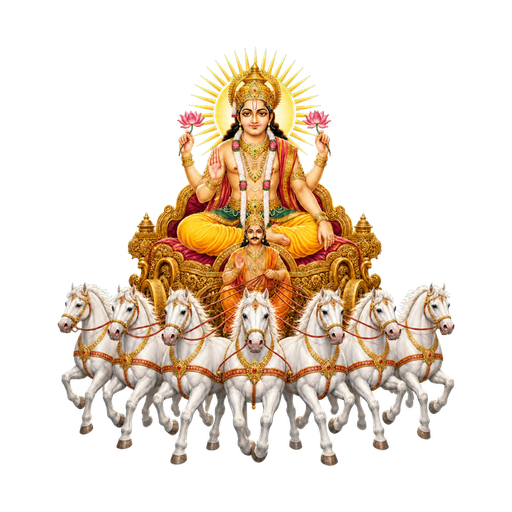
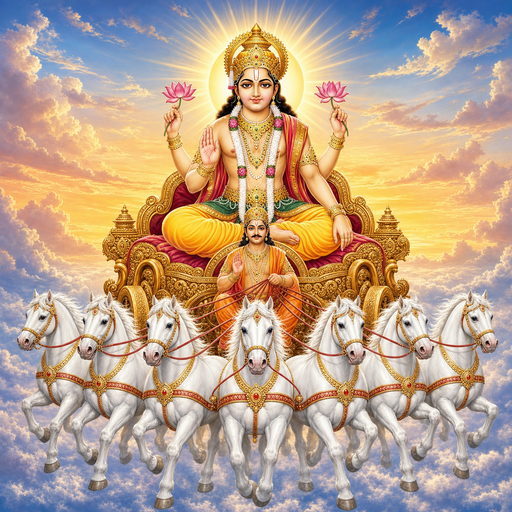
Ratha Saptami marks Surya's birthday (Surya Jayanti), celebrated on Magh Shukla Saptami — symbolising the day Surya's chariot, drawn by seven horses, turned northward. Surya is regarded as the son of sage Kashyapa and Aditi. In 2026, this tithi falls on Sunday, 25 January. The day is known for bathing during Arunodaya kaal, offering arghya to Surya, worshipping a Surya image, and kheer naivedya; in Maharashtra, some household/regional traditions treat this as a women's vrat, and hold that it also marks the end of the haldi-kunku season that began at Makar Sankranti.
This year's dates (2026)
Significance
Marathi Vishwakosh states that this tithi is called "Ratha Saptami" because Surya received his chariot on this day; the tithi is also regarded as the starting tithi of one of the fourteen Manvantaras. The festival goes by several other names too — Bhanu Saptami, Bhaskara Saptami, Achala Saptami, Arogya Saptami, Arka Saptami, and Maghi Saptami.
Surya's seven horses are held to symbolise the week's seven days (starting from Sunday) or the rainbow's seven colours; the chariot's twelve wheels represent the twelve zodiac signs, that is, one Samvatsara (year). The day is also given a pan-Indian association with the seasonal transition from Shishir to Vasant, and the start of the harvest season.
Surya is regarded as the presiding deity of health; there's a religious belief that worshipping him on this day brings health, longevity, and prosperity.
An important clarification — Ratha Saptami vs. Bhanu Saptami: Ratha Saptami is a permanent annual festival — it falls on a fixed Magh Shukla Saptami tithi every year. Bhanu Saptami, on the other hand, refers to any Saptami tithi that happens to fall on a Sunday — in any paksha or month, about 3-4 times a year. In 2026, the two coincide on 25 January simply because that year's Magh Shukla Saptami happens to fall on a Sunday — but they won't necessarily coincide every year.
The legend
Two separate legend traditions are found for Ratha Saptami.
A pan-Indian legend: a childless king of Kamboj — called "Yashovarma" in some sources, and "Yashodharma" in Marathi Vishwakosh — was blessed with a son through prayer, but the son was gravely ill. A sadhu advised that devotedly observing the Ratha Saptami vrat would destroy the sins of past lives and restore health. The son observed the vrat, recovered, and later ruled well.
A Marathi folk tale — "Adityaranubai's Tale": a poor Brahmin had two daughters — one married to a king, the other to a minister. The queen neglects listening to the Sunday (Surya) tale, while the minister's wife listens faithfully — poverty comes to the queen's house, and prosperity to the minister's. Eventually the queen listens properly, and herself tells the tale to four people in need (a merchant, a gardener, an old woman, and a disabled person) — all of them prosper. The traditional closing line is: "Satha uttarachi kahani, pacha uttari suphal sampurna."
This folk tale is associated with Ratha Saptami, but the very same tale is also told as a Shravan Sunday story — suggesting it may be a broader Surya/Sunday-worship storytelling tradition used on different occasions. Its exact connection to Ratha Saptami varies by tradition.
Bhishma Pitamah's passing is observed at Bhishmashtami (Magh Shukla Ashtami), which falls the very next day after Ratha Saptami (Magh Shukla Saptami).
Who observes it
Surya worshippers; in Maharashtra, this vrat is chiefly observed by women with devotion. Anyone seeking a vow for health and longevity can observe this vrat — this can vary by household/local tradition.
Puja vidhi
- Shashthi sankalp: the day before (Shashthi), a single meal is taken and the vrat's vow is made.
- Arunodaya-kaal bath: on Saptami, a bath is taken during the 1.5-hour Arunodaya period before sunrise. The exact sunrise/Arunodaya time varies by place and date — check the 25 January day page for these.
- Surya-arghya: water is taken in a copper vessel and offered to the rising sun, with mantra chanting.
- Surya-image worship: a Surya image drawn in the courtyard (or an idol/image) is worshipped — flowers, sandal paste, incense, and a lamp are offered.
- Naivedya: milk-kheer, cooked in the courtyard itself, is offered to Surya — the traditional practice includes letting the milk boil over.
- Haldi-kunku and vayan: in some Maharashtra household/regional traditions, haldi-kunku and vayan (gifts) are distributed on this day — regarded as the conclusion of the haldi-kunku season that began at Makar Sankranti.
No separate, standardised udyapan ritual specific to Ratha Saptami is recorded.
In South India, this bath includes the use of arka (Calotropis) leaves on the head, shoulders, knees, and feet — this is a South Indian practice, not Maharashtra's.
What you need
A copper vessel (for arghya), pure water, flowers (preferably red/yellow), sandal paste, unbroken rice, a lamp, incense, milk-kheer (jaggery/sugar), turmeric-kumkum, and rangoli/geru for drawing the sun image.
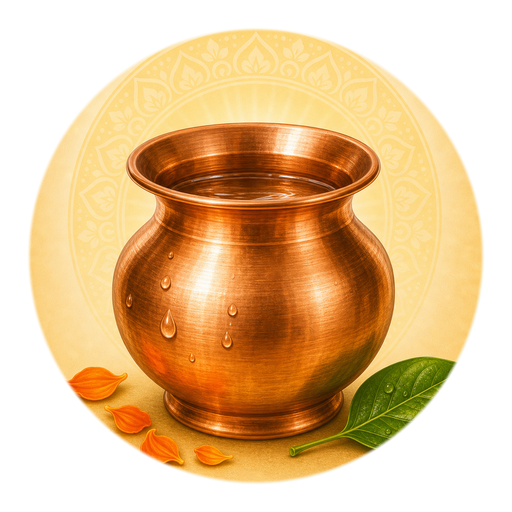 Copper vessel
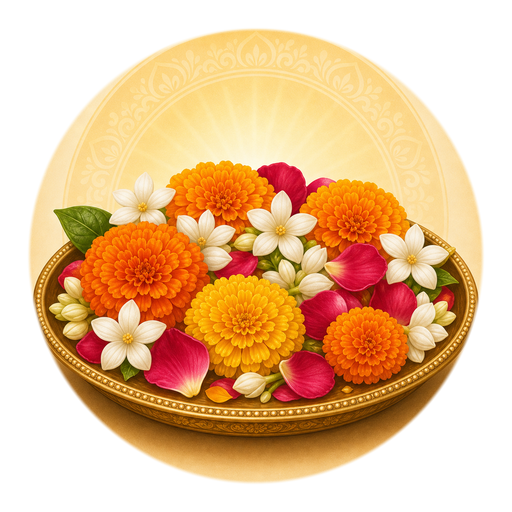 Flowers (red/yellow)
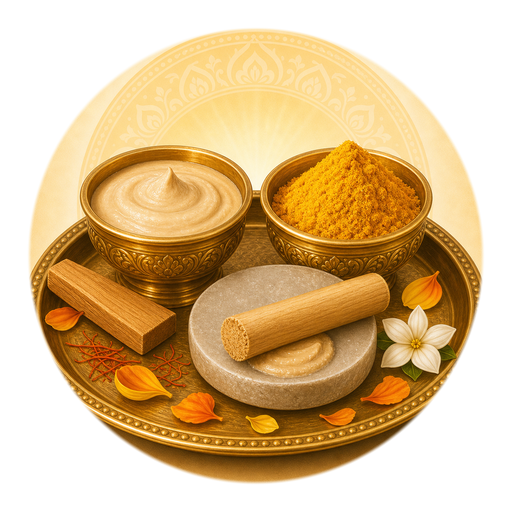 Sandal paste
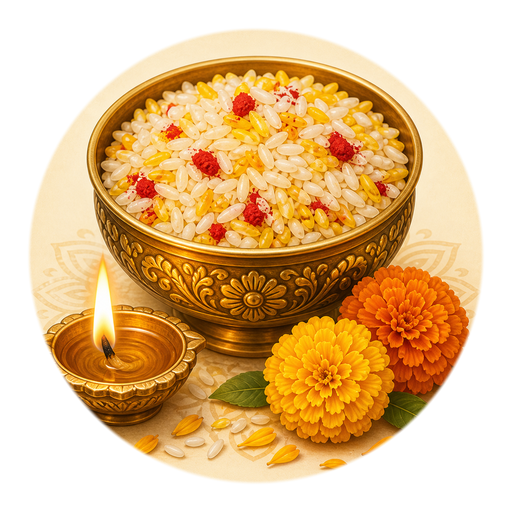 Unbroken rice (akshata)
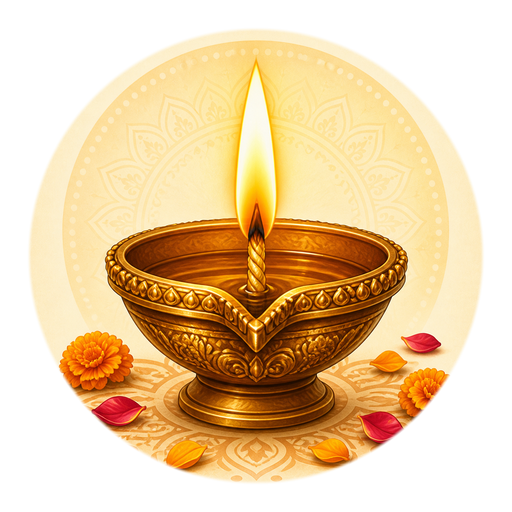 Lamp
Lamp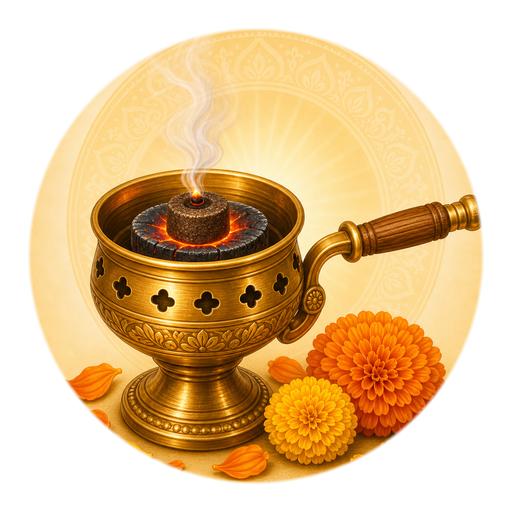 Incense
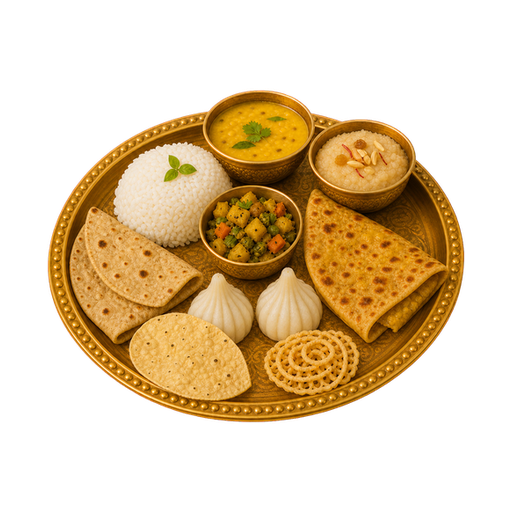 Milk-kheer
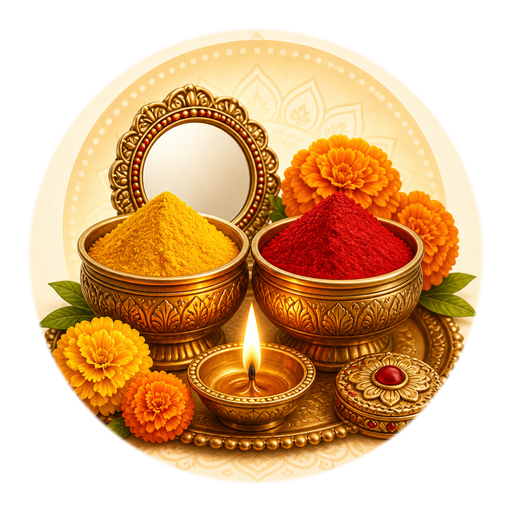 Turmeric-kumkum
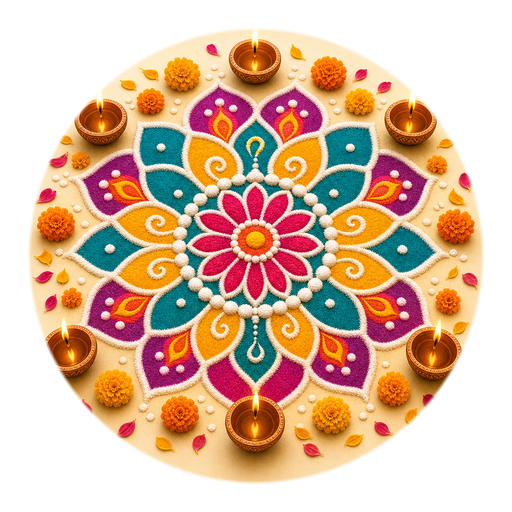 Rangoli / geru
Fasting
A single meal is taken on Shashthi, with vrat observance on Saptami — a simple sattvic diet is followed in many places instead of a strict waterless fast. This can vary by household/local tradition.
Mantra & stotra
A Surya-arghya mantra, along with various names of Surya, is recited while offering arghya. The Aditya Hridaya Stotra/Gayatri Mantra is also mentioned in some traditions as recited on Ratha Saptami — this appears to be part of the broader Surya-worship tradition, not specific to Ratha Saptami.
Regional customs
Maharashtra: in some Maharashtra household/regional traditions, the daily til-gul and haldi-kunku season for women that begins at Makar Sankranti is held to conclude at Ratha Saptami. In some places, this period is also considered favourable for spiritual practice, on the belief that offerings reach the goddess sooner.
South India: in Tamil Nadu, a kolam of the chariot and seven horses is drawn, a cowdung fire is lit to boil milk offered to Surya ("paramannam"), and arka-leaf bathing is practised. Mangalore holds the "Kodial Teru" chariot procession. Mysore/Melkote hold Surya Mandala processions. Tirumala holds a one-day Brahmotsavam. All of these are South Indian practices — not Maharashtra's.
Nationally famous for: Odisha's Konark Sun Temple (a UNESCO heritage site, built in the shape of a chariot) is regarded as the national centre for Ratha Saptami — not a Maharashtra-specific example.
Good to know
- Perform the arghya/bath during Arunodaya — the exact time varies by place; check the day page for these.
- Claims about health/skin-disease cures are religious belief, not a substitute for medical advice; avoid staring directly at the sun.
- This is Ratha Saptami, not Bhanu Saptami (even though the two coincide in 2026) — see the Bhanu Saptami page.
- Bhishmashtami (Magh Shukla Ashtami) falls the very next day after Ratha Saptami.
FAQ
- What is Ratha Saptami?
- Surya's birthday (Surya Jayanti), celebrated on Magh Shukla Saptami — symbolising his chariot, drawn by seven horses, turning northward.
- When is Ratha Saptami in 2026?
- 25 January 2026, Sunday.
- How should arghya be offered to Surya on Ratha Saptami?
- Bathe during Arunodaya kaal, then offer water from a copper vessel to the rising sun with mantra chanting — the exact time varies by place.
- What's the difference between Ratha Saptami and Bhanu Saptami?
- Ratha Saptami is a festival falling on a fixed Magh Shukla Saptami every year; Bhanu Saptami is any Saptami tithi that falls on a Sunday (several times a year). In 2026, the two coincidentally fall together on 25 January.
- What do Surya's seven horses symbolise on Ratha Saptami?
- They're held to represent the week's seven days (starting from Sunday), or the rainbow's seven colours.
- Why is Ratha Saptami regarded as Surya's birthday?
- By tradition, Surya is the son of sage Kashyapa and Aditi, and is believed to have been born on this very tithi.