Buddha Purnima
Buddha Purnima falls on Vaishakh Shukla Purnima — the most sacred day in Buddhism, internationally known as Vesak. By Buddhist tradition, it commemorates three events in Gautam Buddha's life: his birth, enlightenment, and mahaparinirvana (final passing). This year (2026), the date is Friday, 1 May.
This year's dates (2026)
This day carries special weight in Maharashtra, home to a large Ambedkarite/Navayana Buddhist community. The public holiday for Buddha Purnima in India was itself established by Dr. Babasaheb Ambedkar.
Significance
- All three events on one day (by Buddhist tradition): in the Theravada and broader South and Southeast Asian/Navayana tradition, Buddha's birth (at Lumbini), enlightenment (at Bodh Gaya), and mahaparinirvana (at Kushinagar) are all held to have occurred on this same Vaishakh Purnima. This is a matter of tradition and faith, not a historical claim — East Asian traditions (China, Japan) mark these three events on separate days instead.
- Buddhism's most sacred day: Vesak is the most sacred day in Theravada Buddhism, observed across India, Sri Lanka, Nepal, Thailand, Myanmar, Bhutan, Japan, and Tibet, among other countries.
- Public significance in India, and Ambedkar: the public holiday for Buddha Purnima in India was established by Dr. B.R. Ambedkar while he served as Law Minister; the first public Buddha Jayanti was held in Delhi on 2 May 1950 under his leadership. For Maharashtra, this day is tied not just to religious observance but to social justice, equality, and the Ambedkarite legacy.
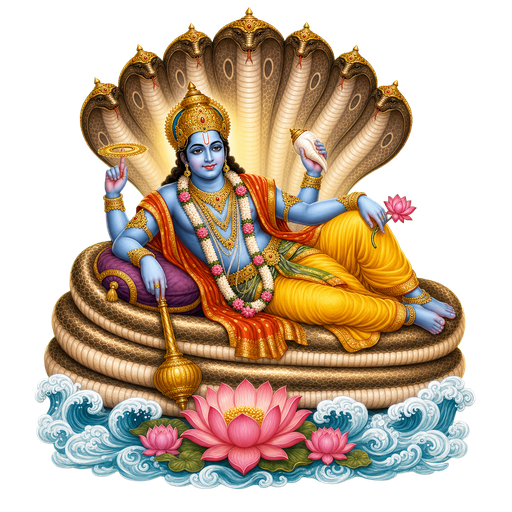
- The Hindu view: in the Hindu (Vaishnava) tradition, Buddha is regarded as the ninth avatar of Vishnu; some Hindus mark this Purnima with Vishnu puja or the Satyanarayan katha. However, Buddhist tradition does not hold Buddha to be an avatar of Vishnu — Dr. Ambedkar explicitly rejected this in the fifth of his twenty-two vows of 1956.
The Buddha's life story
This is Gautam Buddha's life story, as told by Buddhist tradition.
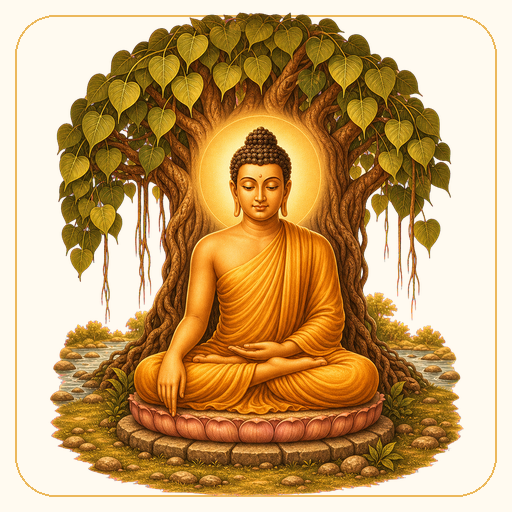
Prince Siddhartha Gautama is held to have been born at Lumbini, in present-day Nepal, on a Vaishakh Purnima. Seeking the root of suffering, he renounced his royal life and undertook rigorous ascetic practice. At Bodh Gaya, under the Bodhi tree, he attained enlightenment (bodhi) — from then on, he was known as "the Buddha" (the awakened one). He then gave his first teaching at Sarnath — the Four Noble Truths and the Eightfold Path. After many years of spreading the dhamma, he passed into mahaparinirvana at Kushinagar — by Buddhist tradition, this too is held to have fallen on the same Vaishakh Purnima.
The belief that "all three happened on the same day" is a South/Southeast Asian, Theravada, and Navayana tradition; East Asian tradition observes the birth, enlightenment, and passing on separate days. One account also tells of Sujata offering the Buddha kheer (a milk-rice dish) before his enlightenment — this is the story linked to kheer as a naivedya on this day.
Who observes it
Primarily Buddhists — Maharashtra's large Ambedkarite/Navayana community observes it with collective worship at viharas. Hindu devotees also regard this Purnima as sacred; some perform Vishnu puja or the Satyanarayan katha. Anyone drawn to the Buddha's teachings on peace, compassion, and mindfulness can observe it too. A secular observance is also common.
How it is observed
The general practice described below may vary by vihara tradition. The Buddhist way of observing this day differs from Hindu puja vidhi — the emphasis is on remembrance, precepts (shila), and meditation rather than devotional ritual.
- An early bath, followed by wearing white or clean clothes; flowers, a lamp, and incense are offered near a Buddha image at a vihara or at home.
- Taking the Panchashila or Ashtashila (five or eight precepts), reciting or listening to sutras, and joining in collective prayer/veneration.
- Meditation and reflection on the Buddha's words, remembering his teachings.
- Dana (charitable giving) — food and clothing to the poor, help to those in need — is regarded as an expression of compassion in practice.
- In some traditions, water is poured over a Buddha image (a ritual bath), vegetarian food is observed, and animals (caged birds) are released as an act of compassion.
- This observance is not a chain of vrats, so there's no separate udyapan (concluding rite) — it is a single-day remembrance.
What you need
A Buddha image or statue, white flowers, a lamp or candle, incense, clean water; kheer for naivedya (recalling the Sujata story); food and clothing for charitable giving. In the Buddhist approach, the emphasis is on precepts, giving, and meditation rather than elaborate materials.
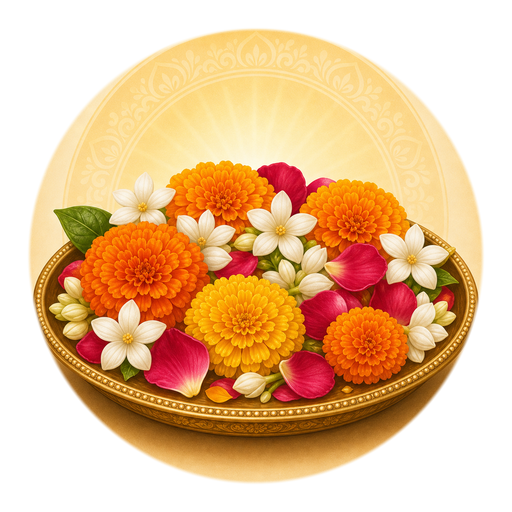 White flowers
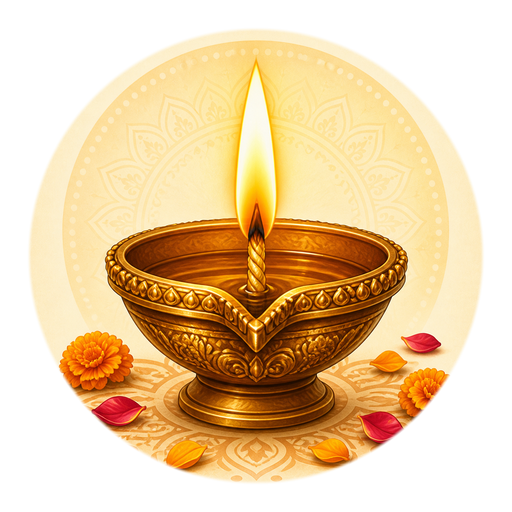 Lamp or candle
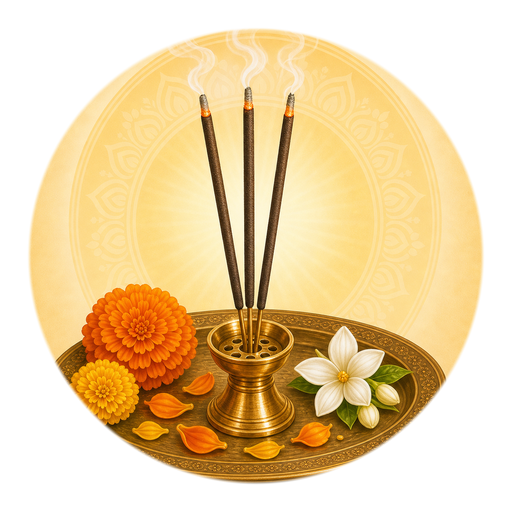 Incense sticks
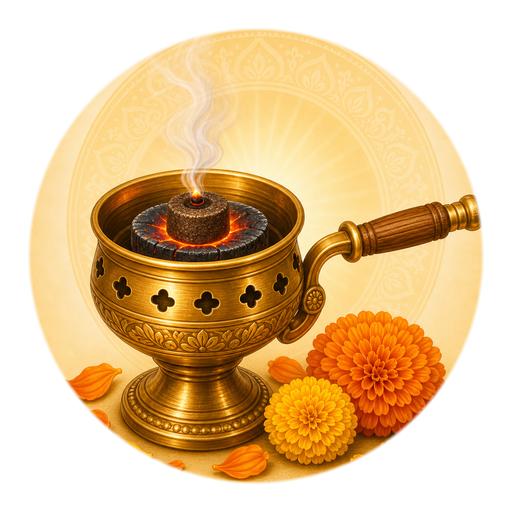 Dhoop (incense)
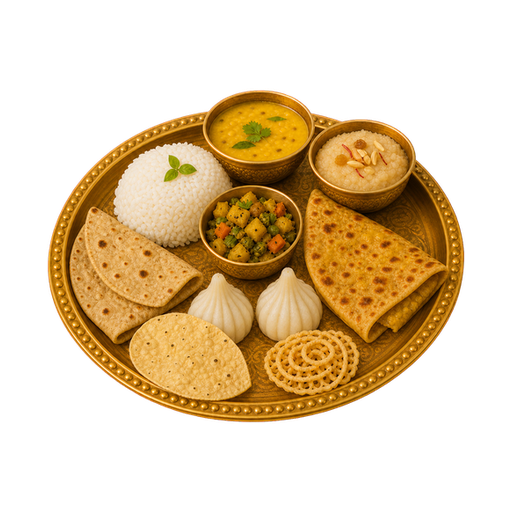 Kheer (naivedya)
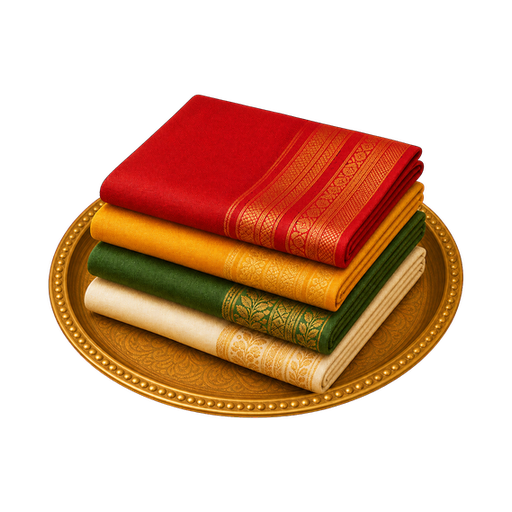 Cloth (for charity)
Fasting & food
In Buddhist tradition, a strict Hindu-style fast isn't required on Buddha Purnima; the emphasis is on precepts, giving, and meditation. Many observe vegetarian food on this day and avoid alcohol and meat. Kheer is the dish associated with this day. In Hindu tradition, a Purnima fast or the Satyanarayan katha remains an option for those who follow it — this varies by household and tradition.
Mantra & recitation
The well-known Threefold Refuge in Buddhist tradition opens with the recognizable lines "Buddham saranam gacchami, Dhammam saranam gacchami, Sangham saranam gacchami." The Panchashila (five ethical precepts — non-violence, non-stealing, and so on) are also mentioned on this day. In Hindu tradition, some chant Vishnu's names or perform the Satyanarayan katha.
Regional variations (Maharashtra)
- The Ambedkarite/Navayana legacy: Maharashtra is home to a majority share of India's Buddhist population. Dr. Ambedkar's conversion to Buddhism ties this day to equality, social justice, and humanity — not religious observance alone.
- Collective worship at viharas: across Maharashtra, Buddhist viharas hold Panchashila observance, sutra recitation, veneration, awareness lectures, and processions.
- Public holiday: it is a gazetted public holiday in India, established by Ambedkar.
- Avoid confusing it with Deekshabhoomi: Nagpur's massive Deekshabhoomi gathering happens on Dhammachakra Pravartan Din in October (Vijayadashami) — that is not Buddha Purnima. Maharashtra's Buddhists mainly observe Buddha Purnima at viharas.
Good to know
- The Buddhist meaning comes first: the Buddhist meaning (Vesak) is this day's primary significance; "an avatar of Vishnu" is a Hindu belief, and Buddhist tradition does not hold it — worth keeping in mind.
- Avoid the date mix-up: Buddha Purnima 2026 = Friday, 1 May; don't confuse it with Nagpur's Deekshabhoomi gathering (October).
- Respectful language: Buddha Purnima is a living day of faith — keep the message of equality and compassion at its centre.
FAQ
- When is Buddha Purnima in 2026?
- Friday, 1 May 2026 (Vaishakh Shukla Purnima; the tithi ends around 10:52 PM).
- Why is Buddha Purnima celebrated?
- By Buddhist tradition, Gautam Buddha's birth, enlightenment, and mahaparinirvana are all held to fall on this same Vaishakh Purnima — making it Buddhism's most sacred day.
- Did the birth, enlightenment, and mahaparinirvana all happen on the same day?
- Yes, according to Buddhist (Theravada/South Asian/Navayana) tradition; East Asian tradition observes them on separate days — this is a matter of faith, not a historical claim.
- What do people do on Buddha Purnima?
- Offering flowers and lamps to a Buddha image at a vihara, taking the Panchashila, sutra recitation, meditation, and charitable giving; many observe vegetarian food and wear white.
- Are Buddha Purnima and Buddha Jayanti the same?
- Yes — Buddha Purnima, Buddha Jayanti, and Vaishakh Purnima are all names for the same day; the international name is Vesak.
- Why is the Buddha regarded as an avatar of Vishnu, and do Buddhists accept this?
- In Hindu (Vaishnava) tradition, the Buddha is regarded as the ninth avatar of Vishnu; however, Buddhist tradition does not hold this — Dr. Ambedkar explicitly rejected it in his twenty-two vows of 1956.
- Are Buddha Purnima and Vaishakh Purnima the same?
- Yes — Buddha Purnima is the same day as Vaishakh Shukla Purnima.