Akshaya Tritiya
Akshaya Tritiya is a fully auspicious day that falls on Vaishakh Shukla Tritiya — one of the sade-teen muhurat (the three-and-a-half fully auspicious muhurats of the year). It is believed that on this day you need no separate dinshuddhi (day-purity check) or muhurat to begin any auspicious work. “Akshaya” means that which never decays; the belief is that daan (charity), puja and purchases made on this day give akshaya (never-ending) fruit. In 2026, Akshaya Tritiya falls on Sunday, 19 April (the Tritiya tithi begins at 10:49 AM).
This year's dates (2026)
Significance
What “Akshaya” means
The fruit of daan, jap (chanting), a ritual bath, havan and any auspicious act done on this tithi is believed to never decay — hence “Akshaya” Tritiya. This is why the day is regarded as auspicious for new beginnings, purchases and charity.
One of the sade-teen muhurat
In Maharashtra, three-and-a-half fully auspicious muhurats are counted in the year — Gudi Padwa, Akshaya Tritiya and Vijayadashami (Dasara) are the three full ones, and Diwali Padwa (Kartik Shukla Pratipada) is the half. On this day, weddings, a housewarming (vastu-pravesh), purchases and starting a business are believed to go through without obstacles; this is why people say you need not check a separate tithi-shuddhi.
Welcoming prosperity
Coming at the end of spring and the onset of summer, the festival is tied to prosperity. Because gold is associated with Lakshmi, buying gold on this day is popularly believed to welcome prosperity. In an agricultural context, some places also do a puja of Balram as a protector of the crops.
Claims like “gold bought on this day grows” or “do X and you get Y phal (fruit)” are mainly cultural beliefs — do not take them as a financial guarantee or investment advice.
The legend (katha)
Many puranic stories are tied to Akshaya Tritiya; there is no single “true” one. Different versions stress different events, but their common thread is the same — everything linked to this day is “akshaya”, never-ending.
By many versions, this tithi marks the end of the Krita Yuga and the start of the Treta Yuga. On this day, Vishnu's sixth avatar Parashuram was born — which is why the day is also kept as Parashuram Jayanti (the panchang, too, records Parashuram Jayanti on 19 April). It is also believed that the Ganga descended from the heavens to the earth on this day, so after winter the Gangotri and Yamunotri temples traditionally reopen on it.
The day is linked to the Mahabharata as well — Vyasa is said to have begun dictating the Mahabharata to Ganpati on this day. In another story, Krishna gave Draupadi the Akshaya Patra, a vessel whose food never ran out — a symbol of never-ending abundance. The story of poor Sudama, who went to meet his childhood friend Krishna at Dwarka and received a boon of boundless wealth, is also tied to this day. In some versions, Kuber was appointed treasurer of wealth on this day (in some versions it is also linked to Indra's restoration).
Divergences between versions: which version emphasizes which event varies — in some Parashuram and the Ganga's descent are central, in others Sudama-Krishna or Kuber.
Jain tradition (separate, but on the same tithi): the first Tirthankar Rishabhadeva (Adinath) broke a fast of about 400 days on this day with ikshuras (sugarcane juice) — offered into his hands by his grandson Shreyansha Kumar. This is regarded as the beginning of the Jain aahar-charya and the varshitap parana (the breaking of the year-long fast). Although this is mainly a Hindu festival in Maharashtra, the tithi is important for the Jain community too.
Who observes it
Akshaya Tritiya is an auspicious day for all Hindu families — especially those making a new purchase or starting new work, and devotees of Lakshmi and Vishnu. In Maharashtra, for the suvasinis (married women) who hold the Chaitragaur haldi-kunku, this is the closing day of their month-long observance. Those keeping the Jain varshitap do their parana (breaking the fast) on this day.
There is no strict age or eligibility rule — participation is decided by regional and family custom.
Puja vidhi (how to perform)
Below is the general shape of the puja vidhi; the details differ by household and region. Since this is a single-day auspicious muhurat and a day of daan, there is no separate udyapan (it is not part of a vrat series).
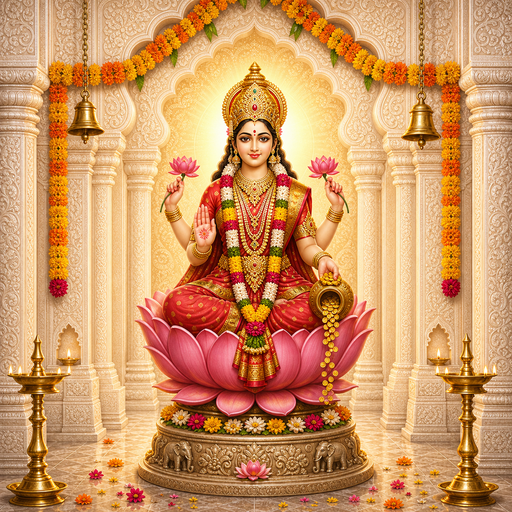
- Bath and puja — after a bath, Lakshmi and Vishnu are worshipped together with a calm mind. The belief is that Lakshmi is pleased when worshipped serenely.
- Purchase and offering — gold, silver or a new item is bought, placed before the deity and worshipped (as per one's belief).
- Daan (charity) — water, food, an earthen pot/ghagar, an umbrella, cloth and grain are given. Because of the April summer, jaldaan (giving water) is given special importance.
- Pitar tarpan — ancestors are remembered and offered tarpan; in some homes a naivedya of mango is offered to the ancestors (regional).
- Sending off Chaitragaur — in Maharashtra, Chaitragaur concludes on this day, with a naivedya of amras-puri (mango pulp with puri).
What you need (samagri)
(Varies by region and family custom):
- A gold/copper lamp, dhoop (incense), haldi-kunku, akshata.
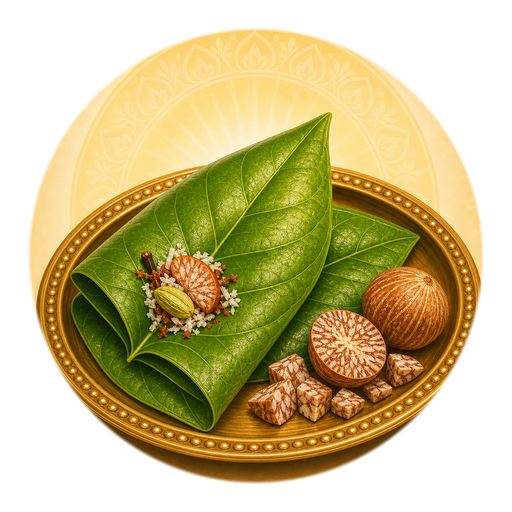
- Flowers (mogra/gajra), a coconut, betel leaves, jaggery/battase, gangajal.
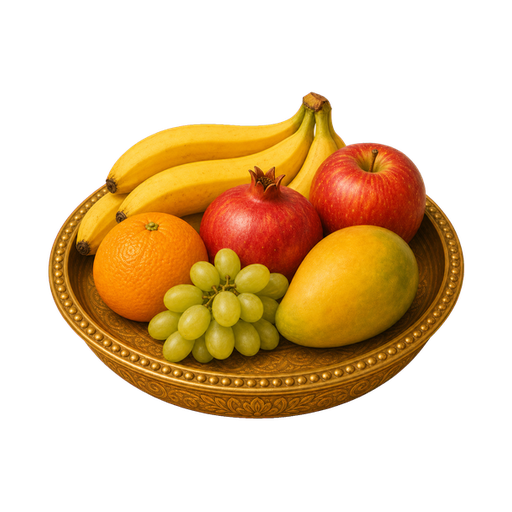
- Naivedya and seasonal items: kairichi dal (chana dal with raw mango), kairiche panhe (a raw-mango summer drink), fruit (watermelon), soaked harbhare (chana).
- Amras-puri for the Chaitragaur send-off.
 Gold/copper lamp
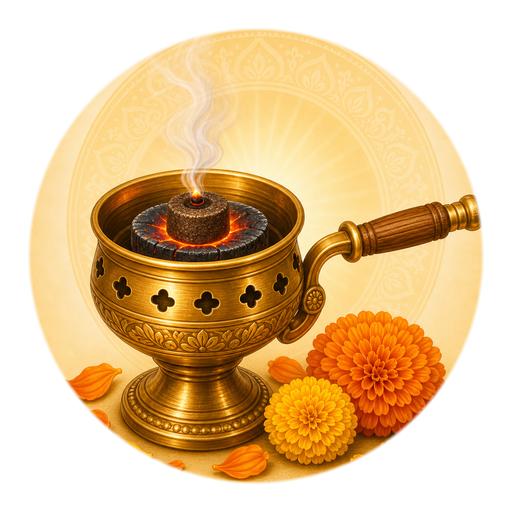 Dhoop (incense)
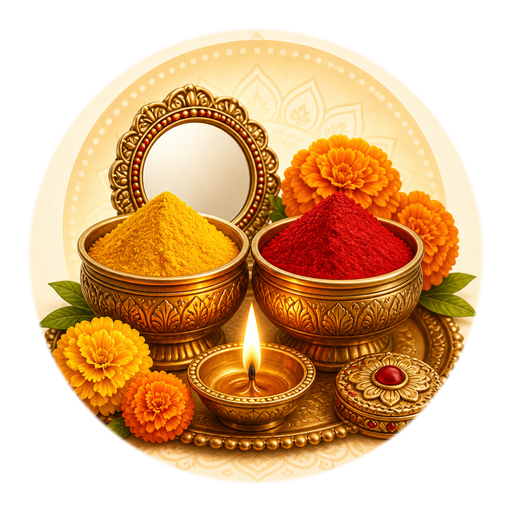 Haldi-kunku
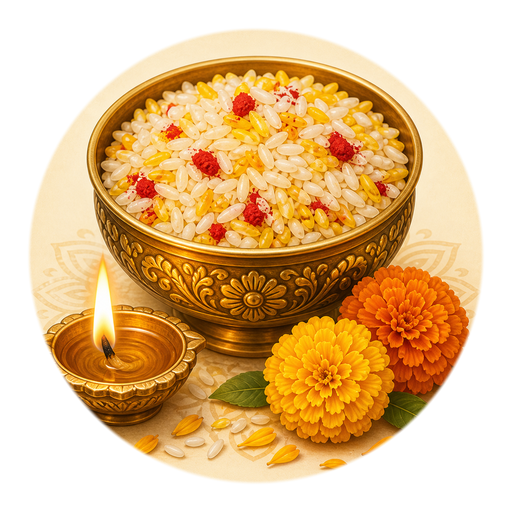 Akshata
 Flowers (mogra/gajra)
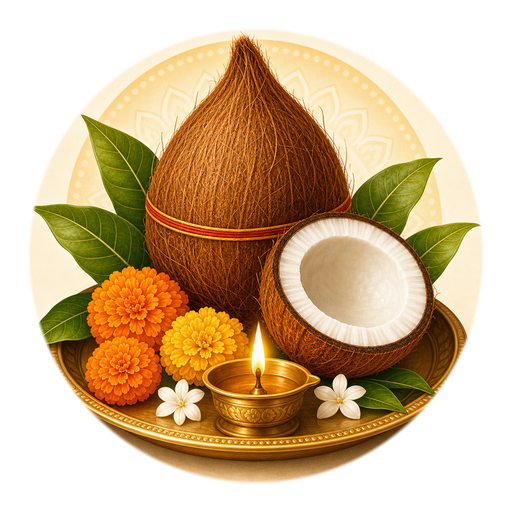 Coconut
 Betel leaves
 Gangajal
 Fruit (watermelon)
Fasting & food (upvas)
In Hindu tradition, Akshaya Tritiya is mainly a day of auspicious muhurat and daan; a strict upvas (fast) is not required (it varies by regional and home custom). The emphasis is on charity and good deeds.
In Maharashtra, seasonal cooling foods are made on this day — amras-puri, kairichi dal and kairiche panhe — which cool the body in summer. Those keeping the Jain varshitap, however, break a fast of about 400 days on this day with sugarcane juice.
Mantra & aarti
There is no single dedicated, standard aarti for Akshaya Tritiya; generally the daily puja, aarti and name-remembrance of Lakshmi and Vishnu is done.
- When to sing: at the close of the puja, after the naivedya is offered — the usual aarti of Lakshmi and Vishnu.
- Jap-mantra (traditional): Om Namo Bhagavate Vasudevaya (Vishnu) and Om Mahalakshmyai Namah (Lakshmi).
Regional variations
(This section is a Maharashtra-specific angle; it is usually missing from pan-India gold-buying pages.)
- Khandesh / North Maharashtra — “Aakhaji”: here Akshaya Tritiya is known as Aakhaji (or Akhaji) and is regarded as as big a festival as Diwali — remembering the ancestors and giving an earthen pot and cool water carry special importance.
- Chaitragaur close: the Chaitragaur installed in Chaitra is sent off on Akshaya Tritiya; this is the last haldi-kunku day of the month — suvasinis are given kairichi dal, kairiche panhe, amras-puri and fruit.
- Jaldaan and summer: because of the harsh April summer, giving a ghagar/pot and cool water is held to earn special merit; tarpan is offered for the contentment of the ancestors.
- Konkan / Parashuram: in the Konkan, the land of Parashuram, Parashuram Jayanti carries special importance; the panchang also records the “Dev Bhargavram Utsav — Kshetra Parashuram, Ta. Chiplun” on this same day.
Good to know
- Gold-buying = belief, not investment advice. The claim that “gold bought on this day grows” is mainly from jewellers/commercial sources — take it as a cultural belief, not a financial guarantee.
- Mind the summer: April is peak summer — take care of the heat when going for darshan or shopping; jaldaan and giving shade are valued.
- Avoid tithi-confusion: some panchangs may read differently from the sunrise tithi — but keep it clear that Akshaya Tritiya 2026 = Sunday, 19 April.
- Regional / tradition variation: puja vidhi, daan and naivedya change from home to home — assume “as per local/home custom.”
FAQ
- When is Akshaya Tritiya in 2026?
- Sunday, 19 April 2026 (Vaishakh Shukla Tritiya). On that day, the Shukla Tritiya tithi begins at 10:49 AM.
- What is Akshaya Tritiya and why is it celebrated?
- “Akshaya” means that which never decays. The belief is that auspicious work, daan and purchases done on this day give never-ending fruit; and it is one of the sade-teen muhurat — a fully auspicious day.
- Why do people buy gold on Akshaya Tritiya?
- Because gold is associated with Lakshmi, buying gold on this day is popularly believed to welcome prosperity. (This is a cultural sentiment — not an investment guarantee.)
- What are the sade-teen muhurat, and why is Akshaya Tritiya one of them?
- Gudi Padwa, Akshaya Tritiya and Dasara are the three full muhurats, and Diwali Padwa is the half. As these are fully auspicious days, it is believed you need not check a separate dinshuddhi on them.
- Which puja should be done on Akshaya Tritiya?
- Lakshmi and Vishnu are worshipped with a calm mind, along with daan and pitar tarpan (the exact vidhi as per home custom).
- Are Akshaya Tritiya and Parashuram Jayanti on the same day?
- Yes — Parashuram's birth is placed on this tithi; the panchang, too, records both on 19 April.
- What should be given as daan on Akshaya Tritiya?
- Water, food, an earthen pot/ghagar, cloth and grain are given; because of the summer, jaldaan (giving water) carries special importance.