Holika Dahan / Holi
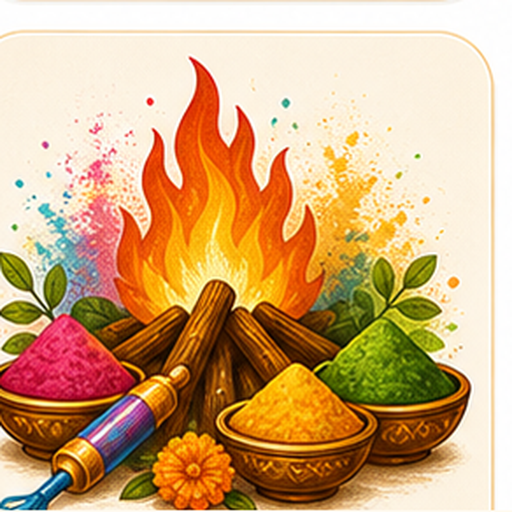
on the evening of Falgun Shukla Purnima, during the pradosh window, a bonfire is lit for Holika Dahan. This year (2026), the date is Monday, 2 March. It's also known as Hutashani Purnima, and as Shimga in Konkan and Goa. Holika, who tried to burn devotee Prahlad, was herself consumed by the fire — the victory of good over evil is at the heart of this festival. In Maharashtra, colours are played on Rang Panchami (Falgun Krishna Panchami, 8 March) — not the day after Holi, as in North India.
This year's dates (2026)
Significance
Holi is a major festival of Falgun (the last month of the Marathi lunar calendar) — a celebration of the arrival of spring after winter, and of the victory of good over evil. Since this is a festival of fire (a homa), the deeper sense is this: offering samidha (wood) into the fire to quell evil forces and disease, and to purify the surroundings — which is why this tithi is called "Hutashani" (hutashan meaning fire). On the social side, old feuds are symbolically burnt away in the Holi fire, and people come together in fellowship the next day — the spirit behind Dhulivandan and the colour festivities.
The legends (katha)
At least three separate story traditions are linked to Holi — these are not versions of one story, but three distinct legends.
Legend 1 — Prahlad, Holika, and Hiranyakashyapu (pan-Hindu; the origin of the name "Holika Dahan"). The demon-king Hiranyakashyapu received a five-fold boon from Brahma: he could not be killed by man or beast, by day or night, indoors or outdoors, by missile or hand-held weapon, or on land, water, or air. His son Prahlad, however, remained a devotee of Vishnu, and his father's many attempts to kill him failed. Hiranyakashyapu's sister Holika, who had a boon making her immune to fire, took Prahlad onto her lap and sat in a blazing bonfire — Prahlad, chanting Vishnu's name, survived unharmed, while Holika herself burned. Vishnu later took the form of Narasimha and slew Hiranyakashyapu at dusk, on the threshold, circumventing his boon. Two variants exist for how Holika died — in some, her own fire-immunity boon fails when used to burn another; in others, a fireproof garment given to her by Hiranyakashyapu blows onto Prahlad in the wind, so Holika burns instead.
Legend 2 — Dhundha/Dhundhi, the demoness (the origin of the shouting and mischief around Holi). A demoness named Dhundha (Dhundhi) troubled young children in King Prithu's realm. By Shiv's boon, she was immune to gods, humans, weapons, heat, cold, and rain — but vulnerable to the pranks and noise of boys. On Holi, boys gathered wood and grass, chanted, clapped, circled her three times, and drove her away with laughter and shouting — this is said to be the origin of the shouting ("bomb maarne") and mischief around the Holi bonfire.
Legend 3 — the burning of Kamadeva (in the South, "Kamadahan"). While Shiv was deep in penance, Kamadeva (the god of desire) shot a flower-arrow to disturb his meditation; the enraged Shiv opened his third eye and burnt Kamadeva to ashes. This same Falgun Purnima is observed in South India as Kamadahan, in memory of this event.
Who observes it
An entire neighbourhood, village, or housing society together — the public Holi bonfire is a community festival. In Konkan, the honour of lighting the first bonfire in front of the village deity's temple is significant; the whole village takes part in the palkhi (palanquin) procession. At the household level too, families build a small bonfire in the courtyard or building compound, perform a puja, and offer puranpoli as naivedya.
Puja vidhi (how to perform)
A general order (it varies by household and region):
- In the evening (during pradosh, once Purnima begins, and avoiding Bhadra), wood, cow-dung cakes, and dried branches are stacked in an open space, with a tall pole or coconut-frond at the centre.
- A raw cotton thread is wound around the bonfire, and turmeric-kumkum, water, and puja materials are offered; a coconut is offered too.
- The bonfire is lit while chanting mantras; people circle the burning fire and shout loudly ("bomb maarne").
- Naivedya is offered — puranpoli being the main item. In some places, a coconut is roasted in the fire as prasad.
Since Holi is an annual community festival, there's no fixed concluding rite the way a vrat has one; the next day's Dhulivandan (ash and mud play) is the following stage.
What you need
Wood, cow-dung cakes, or dried branches (for the bonfire), a central pole or coconut-frond, raw cotton thread, turmeric-kumkum, coconut, flowers, water, a copper pot, incense-lamp, and puranpoli (plus other sweets by household) for naivedya. The list varies by region.
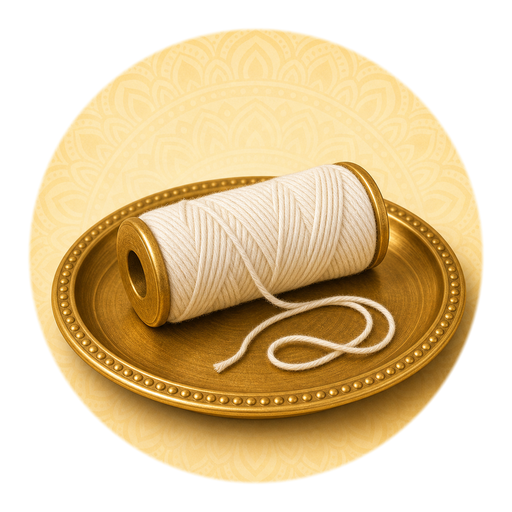 Raw cotton thread
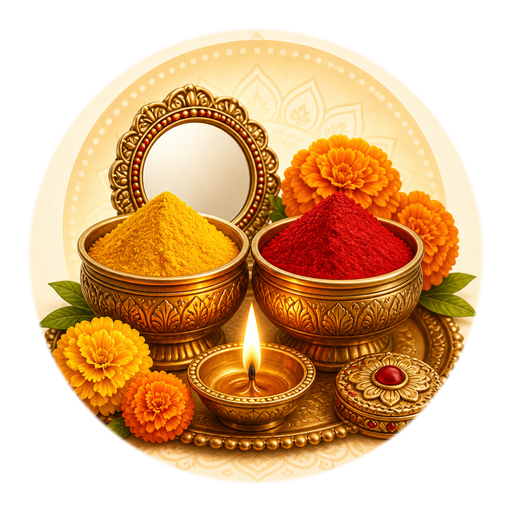 Turmeric-kumkum
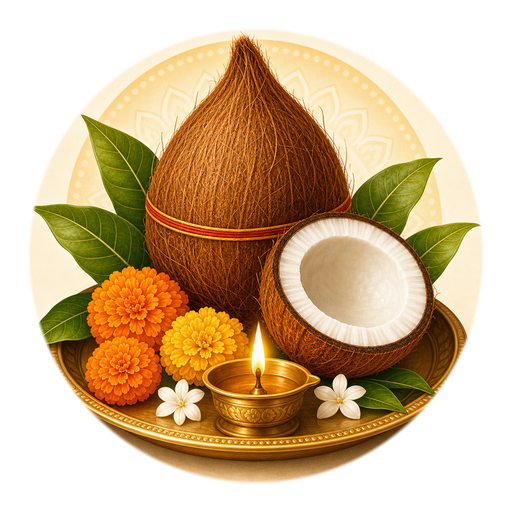 Coconut
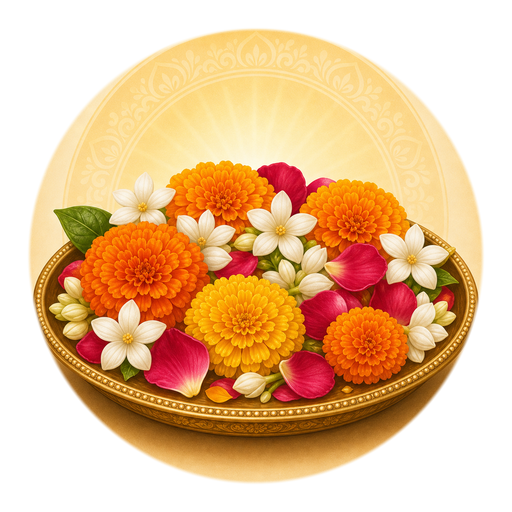 Flowers
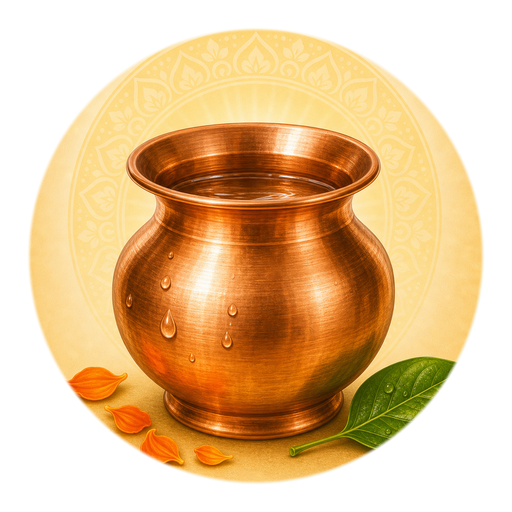 Copper pot
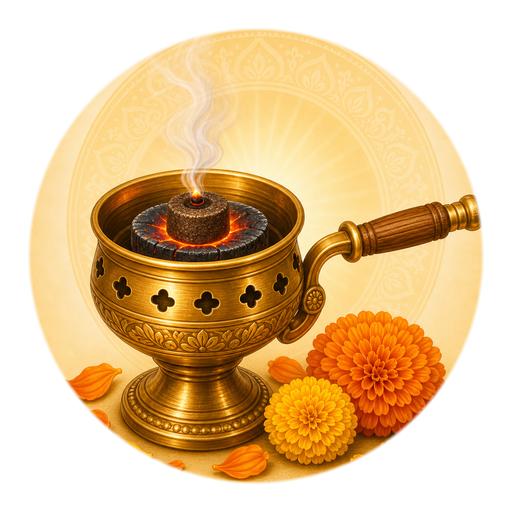 Incense
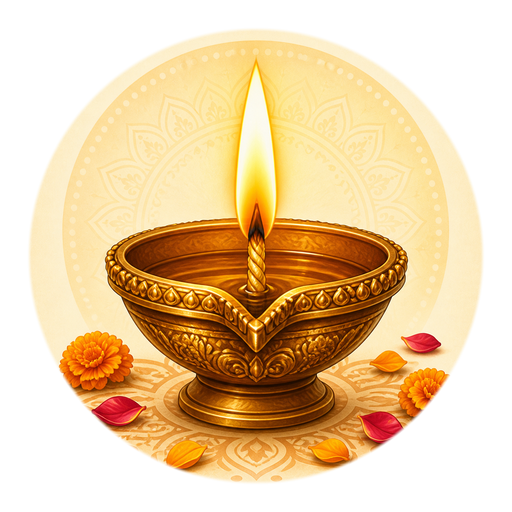 Lamp
Lamp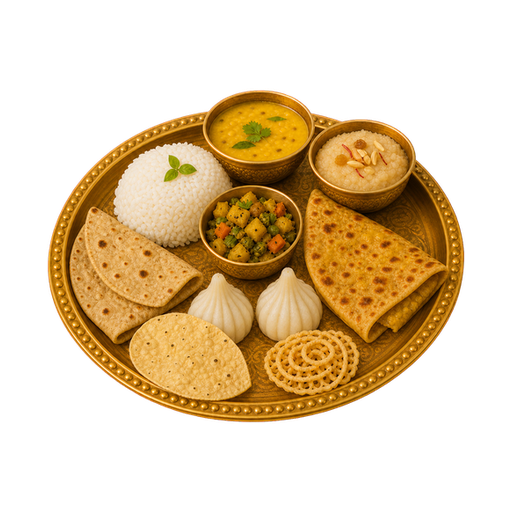 Puranpoli naivedya
Fasting & food
Holi is not mainly a day of fasting — it is a festival of community fire-worship and festive food, with puranpoli as the main sweet. Some families may observe a Purnima fast or custom, but this is a family tradition, not a universal rule.
Naivedya
Puranpoli is the signature Maharashtrian naivedya for Falgun-Holi (a sweet flatbread stuffed with a filling of chana dal and jaggery). Roasted coconut prasad and other sweets are also made by household. This puranpoli connection to Holi is a distinctly Maharashtrian touch, different from the gujiya more common in North India.
Mantra & aarti
Mantras are chanted while lighting the Holi bonfire (offering samidha to the fire); there is no single, universally recognized Holi aarti or stotra. The sense of it: invoking Agni/Holika, the destruction of evil forces, and a prayer for the protection of family and village.
Regional variations
- Shimga (Konkan) + palkhi: in the Ratnagiri-Sindhudurg region, Holi is called Shimga; from Falgun Shukla Panchami through Purnima, the village deity is carried in a palkhi from house to house, with a gaarhane (prayer) and naivedya at each home, alongside sogha (folk theatre). The festival runs anywhere from 5 days to more than 12, depending on the place.
- Colours on Rang Panchami: in Maharashtra, Dhulivandan (ash and mud on the body) traditionally follows the day after Holi, while colours are played on Falgun Krishna Panchami (Rang Panchami, 8 March) — not the day right after Holika Dahan, as in North India. These days, colours are also played the day after in many cities (a North Indian-style adoption) — this isn't universal.
- Shouting ("bomb maarne"): the tradition of shouting loudly around the Holi bonfire is linked to the Dhundha legend.
In other regions, North India observes "Holi"/Dolayatra with colours the next day (Dhulendi); the South observes Kamadahan.
Good to know
- Avoid synthetic colours, use natural ones (for Rang Panchami): synthetic colours may contain toxic chemicals and heavy-metal compounds (lead, copper, mercury-based) — causing skin problems, respiratory trouble, and chemical injury to the eyes. Natural colours from turmeric, beetroot, and flowers are a safer alternative.
- Use water sparingly: excess water use and the runoff of chemical colours pollutes water and harms aquatic life — dry or natural colours with less water make for an eco-friendlier Holi.
- Fire safety at the bonfire: the Holi fire burns large — take care around small children, clothing, and firecrackers; use dry branches and cow-dung cakes, and avoid burning plastic or tyres.
- Muhurat and Bhadra: tradition holds that Holika Dahan should be lit during the Purnima-pradosh window, avoiding Bhadra; see the day page for the exact muhurat and Bhadra window.
- The 3 March lunar eclipse falls after Holi — since Holika Dahan (the evening of 2 March) precedes the eclipse, the current panchang understanding is that the eclipse's sutak period doesn't apply to Holi; local tradition can differ, so check with your family's panchang or priest if you want to be sure. Eclipse timings are on the day page.
FAQ
- When is Holi in 2026?
- Monday, 2 March 2026 (Holika Dahan / Hutashani Purnima, Falgun Shukla Purnima). Colours are played on Rang Panchami — Sunday, 8 March.
- Why is Holika Dahan observed?
- Holika, who tried to burn devotee Prahlad, was herself consumed by fire — the victory of good over evil; the fire-offering carries the sense of quelling evil forces and disease, and purifying the surroundings.
- What does Hutashani Purnima mean?
- Another name for Falgun Purnima; "hutashan" means fire — the Purnima of the fire-offering (Holi).
- How should the Holi puja be performed?
- In the evening, during pradosh (avoiding Bhadra), a bonfire of wood and cow-dung cakes is built, a raw cotton thread is wound around it with turmeric-kumkum and coconut offered, it's lit while chanting mantras, followed by circling and shouting, and puranpoli as naivedya.
- What's the difference between Holi, Dhulivandan, and Rang Panchami?
- Holi (2 March) = the night bonfire of Holika Dahan; Dhulivandan (3 March) = ash and mud play the next day; Rang Panchami (8 March) = the day colours are played in Maharashtra.
- On which day are colours played in Maharashtra?
- Traditionally on Rang Panchami (Falgun Krishna Panchami) — not the day right after Holi as in North India, though these days colours are also played in cities the next day.
- What is the Shimga festival?
- Konkan's Holi festival — from Falgun Shukla Panchami through Purnima, the village deity is carried house to house in a palkhi, with sogha folk theatre and gaarhane prayers; it runs from 5 to more than 12 days.
- Why is Bhadra avoided for Holi?
- Tradition holds that Holika Dahan should be performed during the Purnima-pradosh window, avoiding the Bhadra period — not lighting it during Bhadra-mukh.
- What is the naivedya for Holi?
- Puranpoli is the main Maharashtrian naivedya; roasted coconut or other sweets are made by household.