Dhulivandan
Dhulivandan is the second day of Holi (Holika Dahan). "Dhuli" means dust/earth and "vandan" means salutation — a day of saluting the earth (and the sacred ash of the Holi fire), carrying a message of humility and treating everyone as equal. This year (2026) it falls on Tuesday, 3 March.
This year's dates (2026)
In Maharashtra this day is known as Dhulivandan/Dhulwad — the ash and earth of the previous night's Holi fire are applied to one another, followed by a bath. The main day for colours comes later, at Rangapanchami. In North India, this same second day is known as Dhuleti/Dhulandi (Rangwali Holi) — there, it is the main day for playing with colours.
Significance
Dhulivandan is the second stage in the Holi festival cluster (Holika Dahan → Dhulivandan → Rangapanchami) — a day to set aside quarrels and come together in fellowship, the day after negativity was burned away in the previous night's fire. The name itself carries this meaning — saluting even the dust/earth underfoot with respect embodies humility and treating all as equal; in one reading, this is understood instead as saluting the sacred ash of the Holi fire.
One cultural view links the three days of the Holi cluster to the three elements — Holika Dahan = fire, Dhulivandan = earth, Rangapanchami = water. This is treated as an interpretive, emotionally resonant reading rather than a strict classical classification.
Meaning — "Dhuli" + "Vandan"
The name Dhulivandan carries two shades of meaning — both refer to the same festival, just with a different emphasis.
Shade (a) — saluting the earth: "Dhuli" means dust/earth, "vandan" means salutation — saluting even the earth/dust underfoot with respect. The sentiment: humility, letting go of ego, treating everyone as equal; in an agrarian culture, a sense of gratitude toward the earth as mother.
Shade (b) — saluting the sacred ash of Holi: the ash of the previous night's Holi fire is regarded as sacred/worthy of salutation, applied to the body, followed by a bath — this is called "Dhulwad."
"Dhulwad" and "Dhulivandan" refer to the same day/festival; in everyday speech, "Dhulwad" emphasises the ash custom while "Dhulivandan" emphasises the sentiment of salutation — the two are used synonymously.
Mythological connection
Dhulivandan has no independent legend of its own. The Prahlad-Holika story of Holi itself (good triumphing over evil) is kept in the background as context — its full details are on the Holika Dahan page.
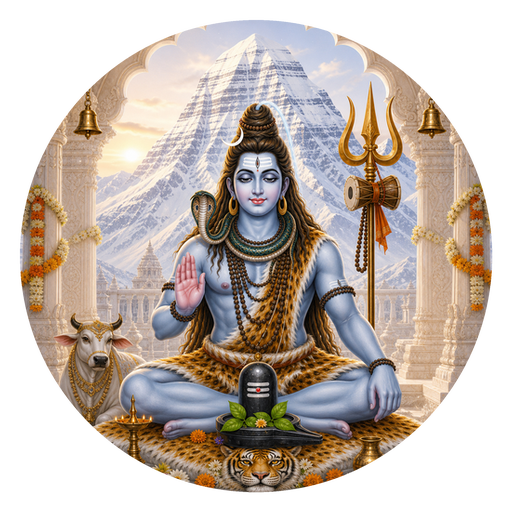
Some accounts say that around this time, Shiva's third eye burned Kamadeva to ash (Kamadahan) — according to one popular belief, this is why the day is associated with ash; this connection should not be treated as firm or universal.
Who observes it, and how
Families, neighbours, and villages/communities observe this day together — it is regarded as a light-hearted day of fellowship, the day after Holi. The Maharashtrian core is applying the ash/earth of the previous night's Holi fire to one another ("Dhulwad"), followed by a bath, along with sweets (puran-poli, gujiya) and a shared meal.
The strict traditional ash custom is now seen mainly in rural areas; in urban Maharashtra, colours/dry colours are increasingly played on this day too (following the North Indian custom). Colour-safety guidance applies here in brief as well — the full detail is on the Rangapanchami page.
The exact sequence of applying ash/earth to the body varies by family and regional tradition.
Regional customs and naming differences
Maharashtra: the second day of Holi is Dhulivandan/Dhulwad — an ash/earth day; the main day for colours comes later, at Rangapanchami (Falgun Krishna Panchami, 8 March).
North India: the same "day after Holi" is known as Dhuleti/Dhulandi (Rangwali Holi) — there, it is the main day for playing with colours. So in the north, colours come the very next day, while in Maharashtra colours come at Rangapanchami — but the "dust" root of the name is shared by both.
In some rural areas, it is said that farmers worship the Holi ash and earth for a good crop, and that women heat water at the site of the Holi fire and bathe children in the sun-warmed water — this is not a universal custom.
Good to know
- If you do use colours, choose natural, mild ones and use less water — chemical colours can harm skin, eyes, and breathing.
- When applying ash to the body, avoid the eyes and any wounds; don't apply ash from burnt plastic or tyres.
- A total lunar eclipse falls on 3 March 2026 — this is a real astronomical event, but whether it affects the morning Dhulivandan customs is unclear; eclipse timings and the sutak period vary by location — check that year's panchang.
FAQ
- What is Dhulivandan?
- The second day of Holi; "Dhuli" (dust/earth) + "vandan" (salutation) = saluting the earth or the sacred ash — a day of humility and equality. Ash/earth is applied to the body, followed by a bath.
- When is Dhulivandan in 2026?
- Tuesday, 3 March 2026 (Falgun Shukla Purnima, nakshatra Magha).
- Why is Dhulivandan celebrated?
- To set aside quarrels and come together in fellowship the day after evil was burned in the Holi fire; saluting the earth as a mark of humility and a fresh start.
- What is the difference between Holi, Dhulivandan, and Rangapanchami?
- Holi (2 March) = lighting the bonfire at night; Dhulivandan (3 March) = the second day, ash/earth applied to the body; Rangapanchami (8 March) = the main day for playing with colours in Maharashtra.
- Are Dhulwad and Dhulivandan the same thing?
- Yes, the same day/festival — "Dhulwad" emphasises the ash custom, "Dhulivandan" the salutation sentiment; both are used synonymously.
- Do people play with colours on Dhulivandan in Maharashtra?
- Traditionally this is an ash/earth day; colours are mainly played at Rangapanchami. But these days, colours are increasingly played on this day too in cities.