Maha Shivratri
Maha Shivratri is the biggest Shivratri of the year — “the great night of Shiv” — dedicated to Bhagwan Shiv (Mahadev). It falls on Magh Krishna Chaturdashi, and its defining feature is the puja held in the middle of the night (Nishita Kaal) with an all-night jagaran (vigil). In 2026 Maha Shivratri is on Sunday, 15 February 2026 — but the main puja is at midnight, so in practice it is the night of 15→16 February (dates from the site's panchang, in the table below).
This year's dates (2026)
Significance
Maha Shivratri is regarded as the greatest Shivratri of the year. The night is associated with turning inward, with sadhana (spiritual practice), and with clearing away negativity.
What truly sets this festival apart is its timing. Maha Shivratri is a night decided by a moment rather than by the sunrise tithi — it is believed that Shiv manifested (or was “incarnated”) at midnight (Nishita Kaal) on this night. So the most auspicious moment for the puja is not sunrise but midnight.
This is exactly why 2026 has a subtle point worth understanding. At sunrise on 15 February the tithi is still Trayodashi — Chaturdashi only begins that evening (at 5:04 PM). But because Chaturdashi is running at midnight (the night of 15→16), Maha Shivratri falls on the night of 15 February. This is not a mix-up; it is the Nishita Kaal rule itself. To understand how a tithi begins and ends, see the what is tithi and nakshatra pages.
A separate puja in each of the four watches of the night — the four-prahar puja (yaam puja) — is another signature of this night. Several legends are attached to the festival (below), but they are distinct stories, not one single tale.
The legends (katha)
Maha Shivratri is linked not to one story but to four distinct legends. They are separate tales and should not be merged. Each is given below as a short retelling in original words.
Legend 1 — Lingodbhava (Shiv as the infinite pillar of light). Brahma and Vishnu once argued over who among them was greater. Shiv then appeared before them as an endless pillar of light (jyoti). Vishnu went downward and Brahma upward to find its top and bottom, but neither could reach an end. From this, Shiv's formless, infinite nature was revealed — and the belief that “Shiv manifested on this night” ties directly to the importance of Nishita Kaal.
Legend 2 — Samudra Manthan / Neelkanth. When the devas and asuras churned the ocean (Samudra Manthan), a terrible poison, halahal, arose that could destroy all creation. To protect the world, Shiv drank the poison and held it in his throat; his throat turned blue, and he came to be known as Neelkanth (“blue-throated”). This same story also appears in the Shravan / Neelkanth context — see Shravani Somvar.
Legend 3 — the marriage of Shiv and Parvati. Through severe penance, Parvati won the heart of the ascetic Shiv. In some versions the marriage of Shiv and Parvati took place on this very night, while other versions treat the night as the union of Shiv and Shakti. Both versions remain part of the tradition, and neither is treated as the only accepted account.
Legend 4 — Lubdhaka (the hunter) and the belpatra. A poor hunter loses his way in the forest at night. To stay awake through the night he sits up in a bel (bilva) tree, and to fight off sleep he plucks and drops one leaf at a time while chanting Shiv's name. By morning he learns that he has unknowingly dropped thousands of bel leaves onto a Shiv lingam hidden beneath the tree — an unintended upvas, jagaran and belpatra puja all took place. This legend is said to be the origin of the custom of offering belpatra to Shiv (in some versions the hunter is named Gurudruha).
Who observes it
- Who: all devotees of Shiv — men and women, across all ages. Unmarried girls are traditionally said to keep this vrat for a desired husband, and married women for the well-being of their marriage.
- Temple darshan: many people go to a Shiv temple for darshan on this night; in Maharashtra the jyotirlingas draw huge crowds (see “Regional variations”).
Puja vidhi (how to perform)
The sequence below is given in a general form; it can vary by household and local custom.
- During the day, take a sankalp and keep the upvas (as per capacity: nirjala / phalahar / one satvik meal).
- In the evening, bathe and set up the Shiv lingam or a murti of Shiv and prepare for the puja.
- Abhishek — offer water, milk, curd, ghee, honey, panchamrut and Ganga-jal over the lingam.
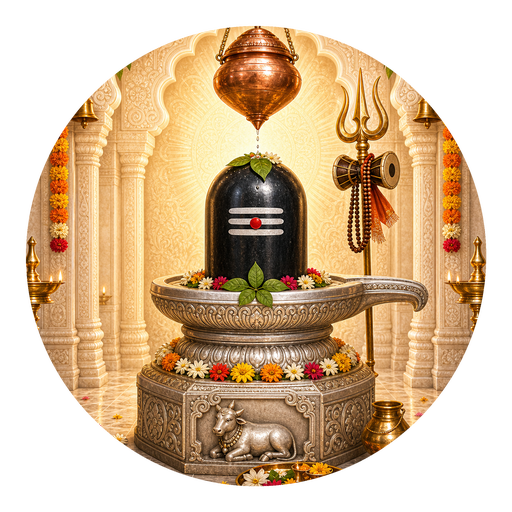
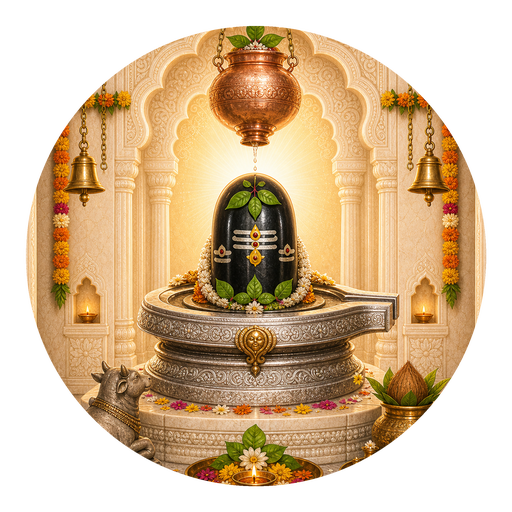
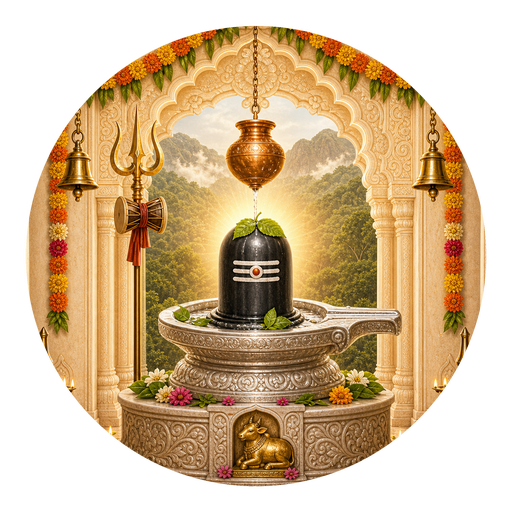
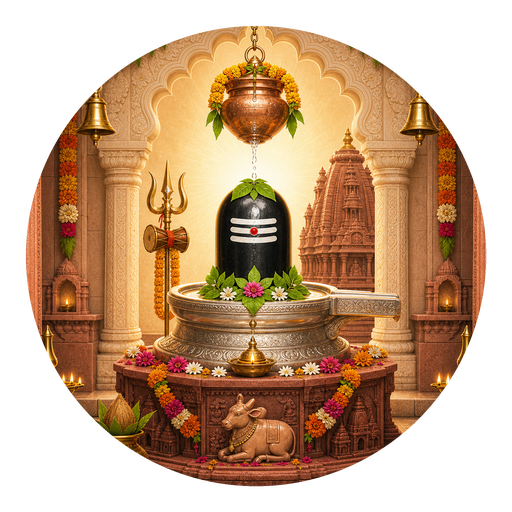
- Offerings — belpatra (bilva leaves), dhotra (datura), mango leaves, flowers, gandh, akshata, dhoop and a lamp.
- Four-prahar puja (yaam puja) — a puja, abhishek and jaap in each of the night's four watches, with an aarti in each prahar.
- Nishita Kaal (midnight) — the main puja, considered the most auspicious moment.
- Keep the jagaran through the night — bhajan and the recitation of the Shivlilamrit or a stotra.
- Parana — break the fast the next day after sunrise, following a bath and the morning Shiv puja, with light satvik food.
About the four-prahar puja: a separate puja is done in each of the four watches of the night — this is the signature of the night — but exactly what is offered in each prahar, and in what order, varies by tradition. So treat it as custom, not as a fixed rule.
⚠️ The exact clock time of Nishita Kaal varies by date and by city — it is not given here. For 2026 you can find the city-adjusted time on the day page for 15 February.
What you need (samagri)
Belpatra (bilva leaves), dhotra/datura, mango leaves, flowers, Ganga-jal, milk-curd-ghee-honey-sugar (panchamrut), bhasma/vibhuti, chandan, akshata, dhoop and a lamp, coconut and fruit, and a Shiv lingam or murti. (The list can vary by tradition.)
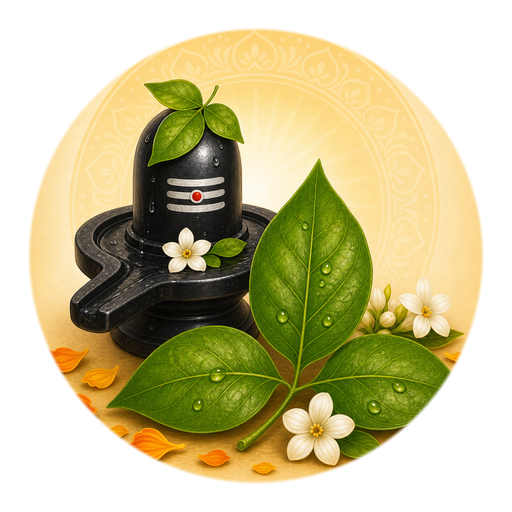 Belpatra (bilva leaves)
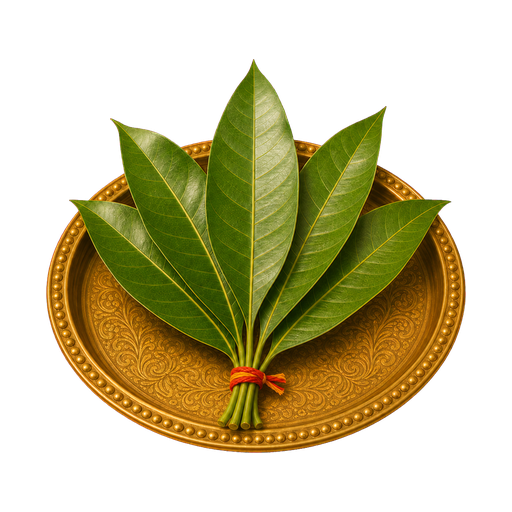 Mango leaves
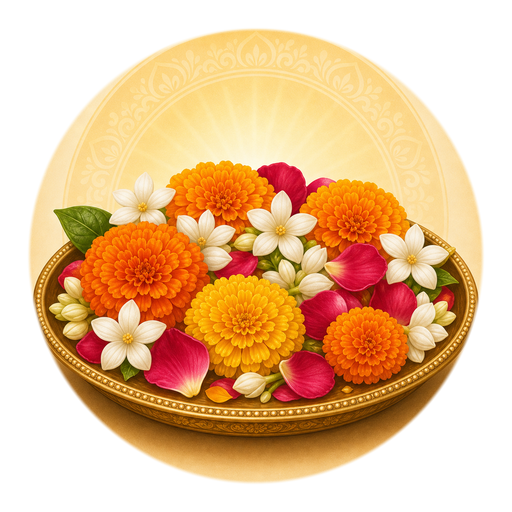 Flowers
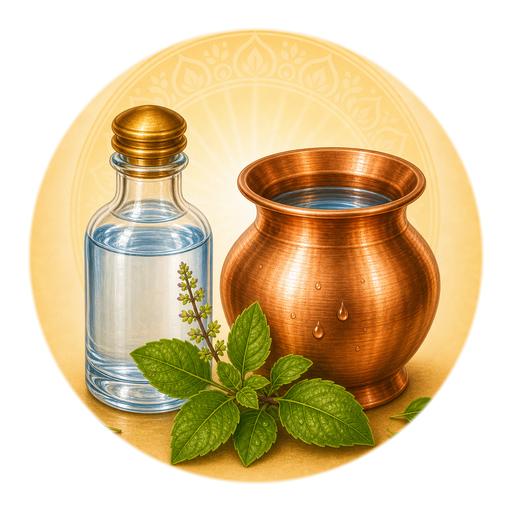 Ganga-jal
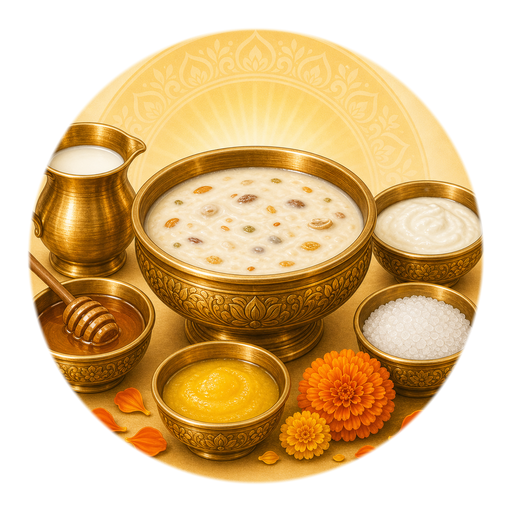 Panchamrut
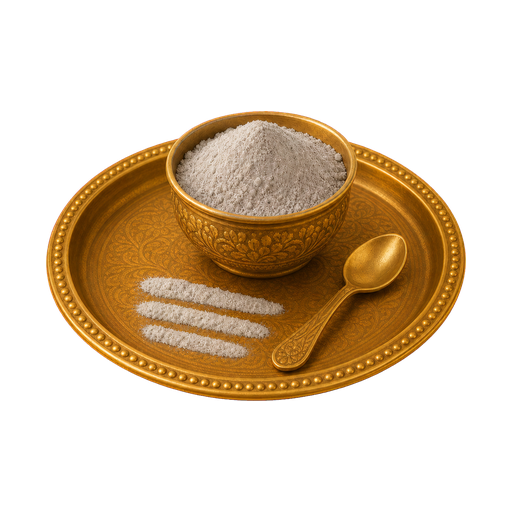 Bhasma/vibhuti
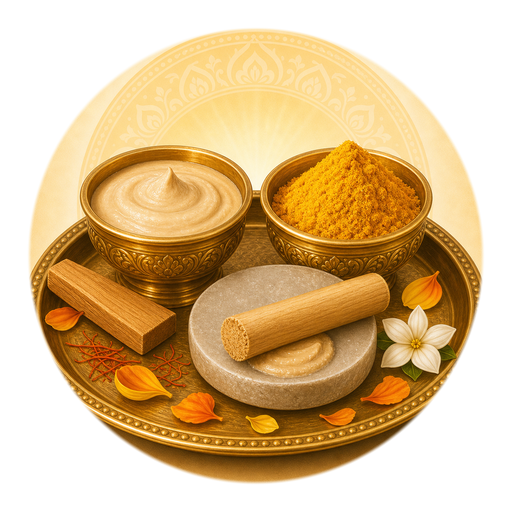 Chandan
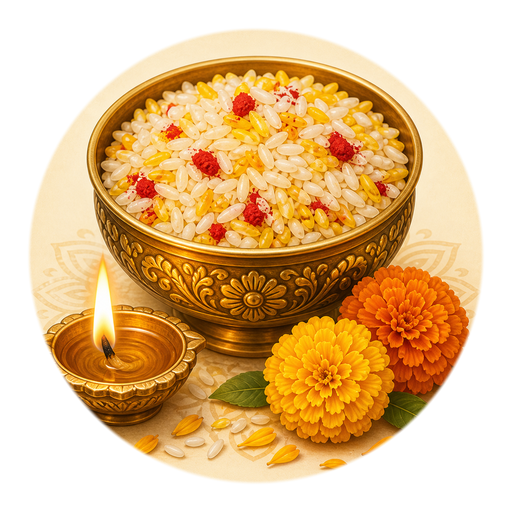 Akshata
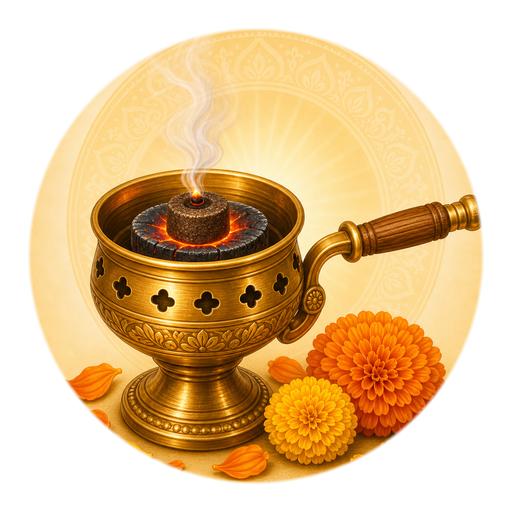 Dhoop
Dhoop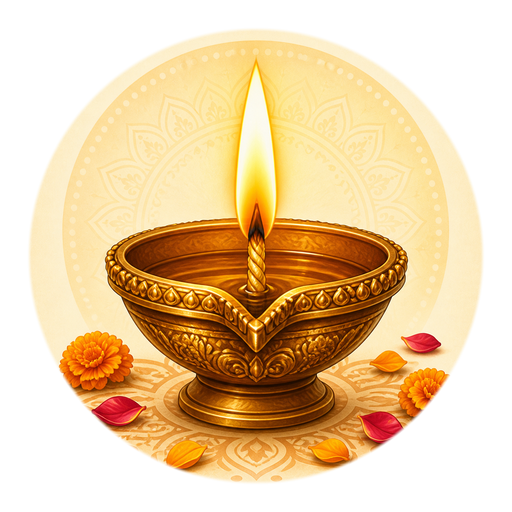 Lamp
Lamp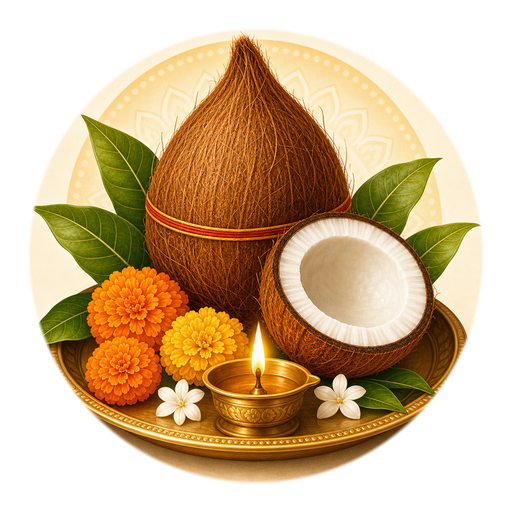 Coconut
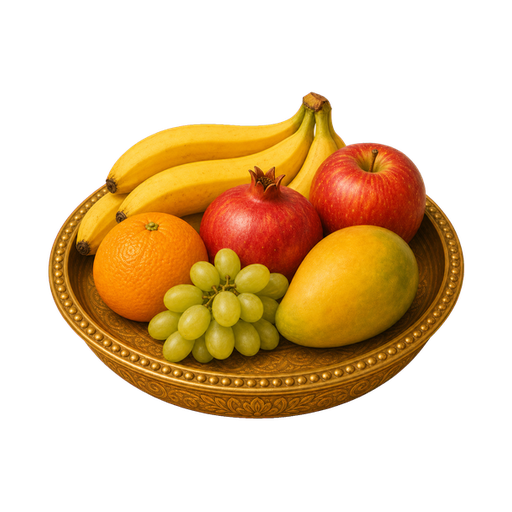 Fruit
Fruit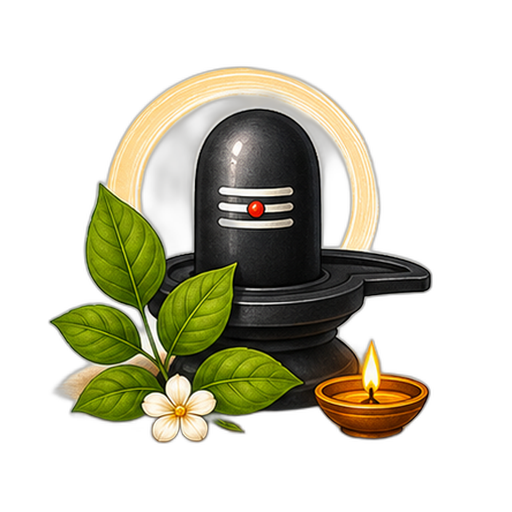 Shiv lingam
Fasting & food (upvas)
- Three styles (as per capacity): (a) nirjala — no food or water; (b) phalahar — fruit, milk, coconut water, makhana, groundnuts; (c) one satvik meal — for working people or those unable to keep a strict fast. The upvas is not compulsory.
- Avoid: rice, wheat, pulses, onion-garlic, non-vegetarian food and alcohol. If salt is needed, sendha (rock) salt is traditionally used rather than iodized salt.
- Parana: break the fast the next day after sunrise, following a bath and the morning Shiv puja, with light satvik food; avoid heavy or oily food immediately.
Mantra & aarti
- Panchakshari mantra — “Om Namah Shivaya” (meaning: “salutations to Shiv”). This is the core mantra of Shiv worship and is chanted continuously through this night.
- Mahamrityunjaya mantra — “Om Tryambakam Yajamahe Sugandhim Pushtivardhanam, Urvarukamiva Bandhanan Mrityor Mukshiya Maamritat.” This Vedic jap-mantra is addressed to Tryambaka-Rudra-Shiv and is traditionally recited as a prayer for well-being and freedom from the bondage of death.
The traditional Marathi Shiv aarti sung on this night is “Lavthavti Vikrala” (by Samarth Ramdas), whose refrain is “Jai Dev Jai Dev Jai Shri Shankara.” It praises Shiv — the blue-throated one who drank the poison of the Samudra Manthan, with Parvati at his side.
Regional variations (Maharashtra)
- Magh or Phalgun? (the key Maharashtra angle): Maharashtra uses the amanta system, so here Maha Shivratri falls on Magh Krishna Chaturdashi. North India uses the purnimanta system and counts the same night in Phalgun. It is the same night — only the month's name differs. (More on the month: Magh masa.)
- The Maharashtra jyotirlinga yatra: on Maha Shivratri the jyotirlingas of Maharashtra draw enormous crowds of devotees. Of these, Trimbakeshwar (Nashik), Bhimashankar (Pune) and Grishneshwar (Chh. Sambhajinagar) are regarded as uncontested among the twelve jyotirlingas. Aundha Nagnath and Parli Vaijnath are counted in Maharashtra, but their identity among the twelve is disputed. Check darshan timings and crowd plans with the temple committee in advance.
- Other regions (for comparison): the night is observed differently elsewhere — “Herath” in Kashmir, Pashupatinath in Nepal, Girivalam (around Arunachala/Annamalai) in Tamil Nadu, and “Siwaratri” in Indonesia. This is only for comparison, not the Maharashtra practice.
Good to know
- Health: a nirjala fast plus an all-night vigil is not for everyone — people with diabetes or high blood pressure, pregnant women and the elderly should choose the phalahar or satvik-meal option and drink plenty of water. The upvas is not compulsory.
- The “15 or 16” confusion: some places show “16 February” because Chaturdashi spans two days. But by the Nishita Kaal (midnight) rule, the vrat falls on the night of 15 February.
- Temple crowds: jyotirlingas and large Shiv temples see huge crowds and long queues — check darshan timings with the temple committee in advance.
- Times are place-specific: sunrise, sunset and Nishita Kaal vary by location — do not treat them as universal. When picking an auspicious time for the puja, you can plan around the Rahukaal window.
FAQ
- When is Maha Shivratri in 2026?
- Sunday, 15 February 2026. The main puja is at Nishita Kaal (midnight) — so in practice it is the night of 15→16 February. (Date from the site's panchang.)
- Is Maha Shivratri in Magh or in Phalgun?
- In Maharashtra (amanta system) it is on Magh Krishna Chaturdashi; in North India (purnimanta system) the same night is counted in Phalgun. It is the same night — only the month name differs.
- What is Nishita Kaal?
- Nishita Kaal is the middle of the night (the midnight window), considered the most auspicious time for Shiv worship. The exact time varies by city — see the day page.
- How do you keep the Maha Shivratri vrat?
- Fast during the day, keep a jagaran at night with the four-prahar puja, offer abhishek and belpatra on the Shiv lingam, and chant “Om Namah Shivaya” — as per your capacity.
- What can you eat during the fast, and what should you avoid?
- You can have fruit, milk, coconut water, makhana and groundnuts, and use sendha salt. Rice, wheat, pulses, onion-garlic and non-vegetarian food are traditionally avoided.
- Which legends are told on Maha Shivratri?
- Mainly four — Lingodbhava (the pillar of light), Samudra Manthan / Neelkanth, the marriage of Shiv and Parvati, and Lubdhaka and the belpatra. These are separate stories (see “The legends”).
- When should the fast (parana) be broken?
- The next day after sunrise, following a bath and the morning Shiv puja, with light satvik food.