Satyanarayan Pooja
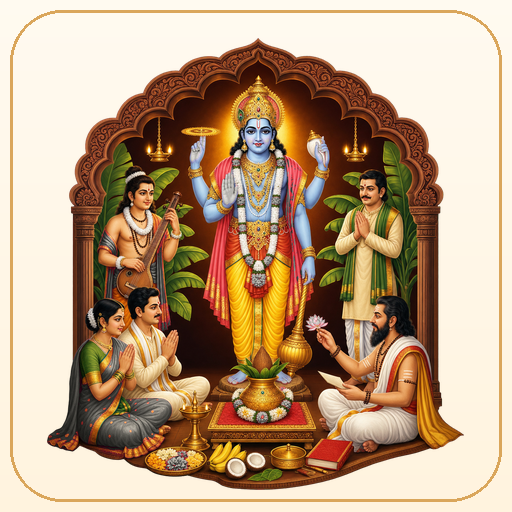
Satyanarayan means the "true form" of Shri Vishnu — regarded as his form for the Kali Yuga. This is a home puja for Vishnu, centred on the puja itself, listening to the five-chapter vrat katha, and distributing shira prasad. This puja isn't tied to any fixed date — it can be performed on any auspicious day or occasion (a housewarming, a wedding, a birthday, a new undertaking, or the fulfilment of a wish). Even so, Purnima is the most-recommended tithi (especially Kartik, Vaishakh, and Chaitra Purnima); Ekadashi and Sankrant are also considered auspicious. The evening or the pradosh period on a Purnima is regarded as especially fitting.
This year's dates (2026)
- Maghi Purnima — one of the auspicious days for Satyanarayan1 Feb
- Chaitra Purnima evening — the evening-puja day; the next day (2 April, Purnima at sunrise) brings Chaitri Purnima/Hanuman Jayanti. The exact evening-puja day can vary by tradition/panchang1 Apr
- Buddha Purnima — regarded as auspicious for Satyanarayan1 May
- Vat Purnima29 Jun
- Guru Purnima (Vyas Purnima)29 Jul
- Tripurari (Kartik) Purnima — regarded as the most auspicious for Satyanarayan24 Nov
By tradition, there is no restriction of caste or gender — anyone can perform it, with their family.
Significance
This "Satya"-Narayan puja underscores the importance of truth, honouring a vow once made, and devotion. By belief, performing this vrat with faith brings relief from hardship, prosperity, and peace of mind. It is an extremely popular home puja in Maharashtra (and in Bengal too) — performed by families and relatives together on occasions like a new home, a wedding, a birthday, an achievement, or the fulfilment of a vow; distributing the prasad is regarded as part of the community's shared gratitude.
The puja is not just ritual — listening to the five-chapter vrat katha is regarded as its centre. The lesson of each chapter: once a wish is granted, don't forget or break the vow made for it, and don't disrespect the prasad. The insistence that "everyone should take the prasad" is also held to carry an underlying purpose of feeding those in need.
The legend (katha)
Sage Suta narrates this katha to the sages led by Shaunak at Naimisharanya; within it is a dialogue between Narada and Bhagwan Vishnu — Narada, seeing the sorrow on earth, asks Vishnu for a remedy, and Vishnu teaches the "Satyanarayan vrat."
The common thread across the five chapters:
- The vrat's origin: in the Narada-Vishnu dialogue, Vishnu explains the significance and method of the Satyanarayan vrat — performed with faith, it destroys sorrow, brings prosperity, and ultimately liberation.
- The poor Brahmin and the woodcutter: a poor Brahmin in Kashi, troubled by hunger, is inspired to perform the vrat with whatever he can manage, and gains prosperity. Seeing this, a woodcutter also performs the vrat and benefits too.
- The merchant forgets his vow: a wealthy merchant (called Sadhu Vani in the Marathi version) takes a vow to perform the vrat, wishing for a child; once his wish is granted, however, he keeps postponing the vow — bringing hardship and imprisonment upon himself. Eventually, his wife (Leelavati) completes the vrat, and he is freed.
- Disrespecting the prasad: the merchant's daughter (Kalavati) and wife rush to meet their father/husband without taking the prasad first — the merchant's ship, laden with goods, sinks or vanishes; it resurfaces only once the prasad is accepted.
- The proud king: a king (called Tungadhwaj in some versions, Angadhwaj in others) sees cowherds performing the Satyanarayan puja in the forest; out of pride, he refuses the prasad, and loses his kingdom — realizing his mistake, he returns, performs the puja properly, accepts the prasad, and everything is restored.
Character names vary across versions — the king is called Tungadhwaj, Angadhwaj, or Ulkamukh in different sources; the merchant is called Sadhu Vani or Sahukar. No single name should be treated as the standard one.
There's also disagreement over the katha's scriptural origin — it's traditionally linked to the Skanda Purana (Reva Khanda) and the Bhavishya Purana; but some scholars regard it as a later addition — originating from the 17th-18th century Bengali "Satyapir" tradition, with printed ritual instructions dating to the 19th-20th century.
Who observes it
By tradition, there is no restriction of caste, gender, or purity — anyone, or any family, can perform it; often a couple performs it together with family and relatives. It's performed for a new home (housewarming), a wedding, a birthday, the start of a new business or undertaking, the fulfilment of a wish or a vow, an anniversary — or simply on a regular basis, every Purnima or month.
Puja vidhi (how to perform)
The order varies by tradition, guru, and priest; the following is a researched general form, not a fixed universal one.
- Sankalp and purification: the host takes a bath and wears clean clothes; the puja space is cleaned, a rangoli drawn, and the sankalp (resolve) taken.
- Ganesh puja and kalash installation: Shri Ganesh is remembered and worshipped first, followed by installing a kalash (with water, a mango sprig, and a coconut).
- Invoking the deity: Satyanarayan (Vishnu) is invoked in the form of an idol, image, or betel nut; the Navagraha and Ashtadikpal are also worshipped.
- Shodashopachar and panchamrut abhishek: sandalwood paste, akshata, turmeric-kumkum, flowers, and tulsi (dear to Vishnu) are offered along with incense and a lamp, followed by an abhishek with panchamrut (milk, curd, ghee, honey, sugar).
- Naam-smaran and listening to the katha (the core): the 108 names or the sahasranama of Vishnu are recited, and everyone sits together to listen to the five-chapter vrat katha.
- Naivedya and aarti: shira (the sawa-prasad) and fruit are offered as naivedya, followed by the aarti.
- On a Purnima, the puja concludes with an offering (arghya) to the moon in the evening or at moonrise — check the moonrise time for that day on the day page.
- Distributing prasad: everyone present is given, or fed, the prasad — this is regarded as essential.
Since this is a regular or occasion-based puja, it doesn't have a single concluding rite the way Gudi Padwa does.
What you need
An idol or image of Satyanarayan, a low seat or wooden platform with banana-stem pillars (makhar), a kalash, coconut, a mango sprig, sandalwood paste-turmeric-kumkum-akshata-ashtagandha, flowers-garlands and tulsi leaves, incense-camphor-lamp, betel leaves and nut, almonds, coins or dakshina, panchamrut (milk, curd, ghee, honey, sugar), and for the prasad: banana, wheat rava, sugar, ghee, and milk (the sawa measure, below).
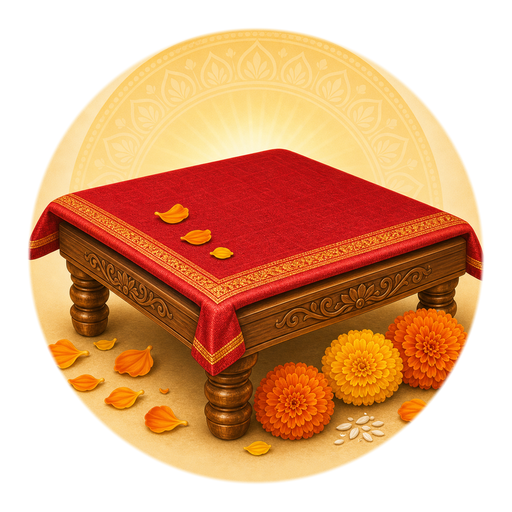 Low seat / wooden platform
 Banana-stem pillars (makhar)
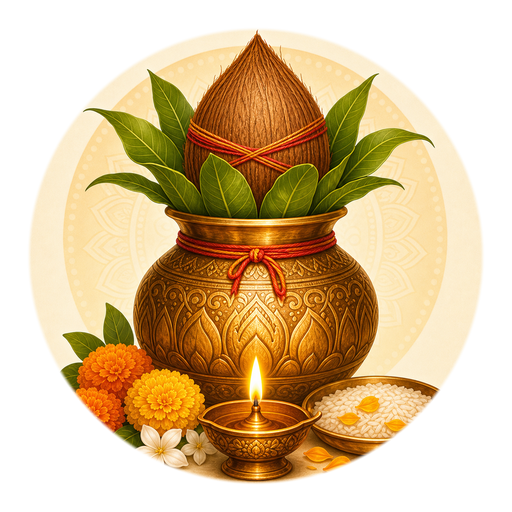 Kalash
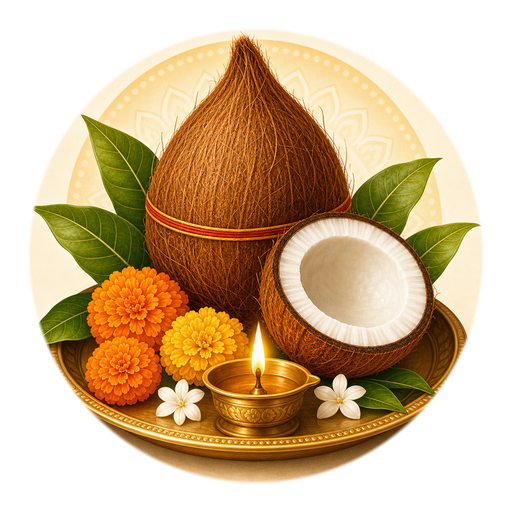 Coconut
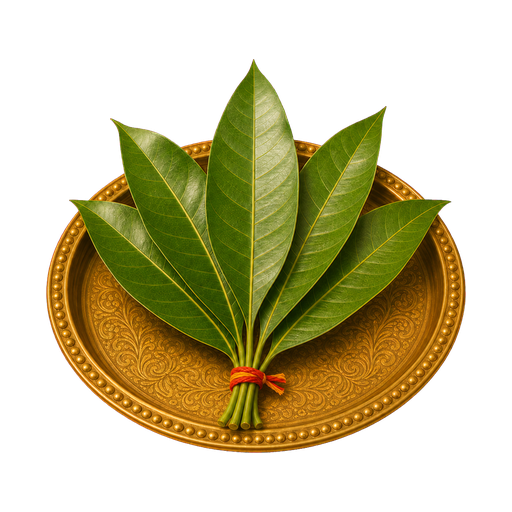 Mango sprig
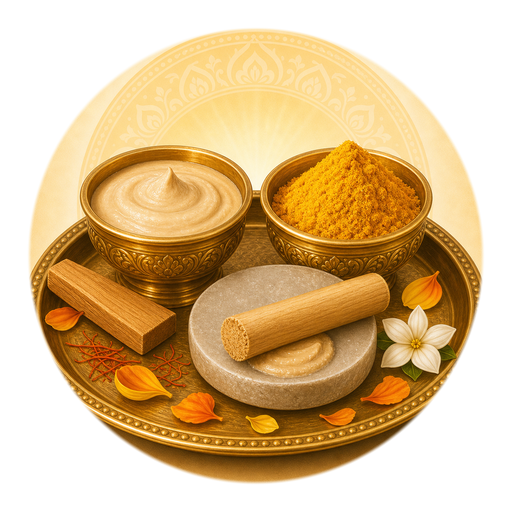 Sandalwood paste / ashtagandha
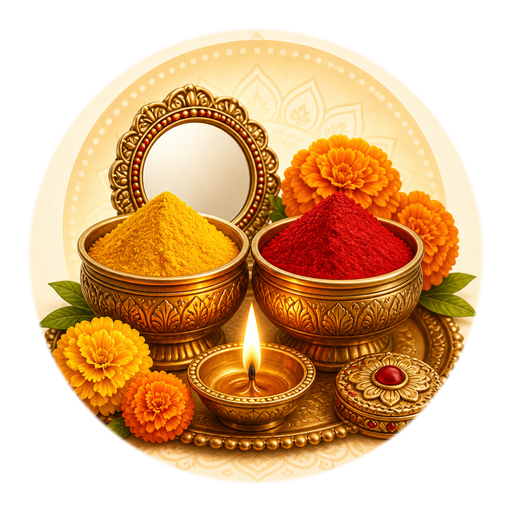 Turmeric-kumkum
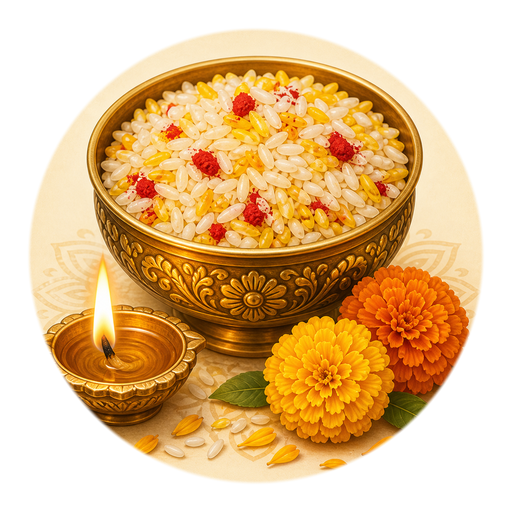 Akshata
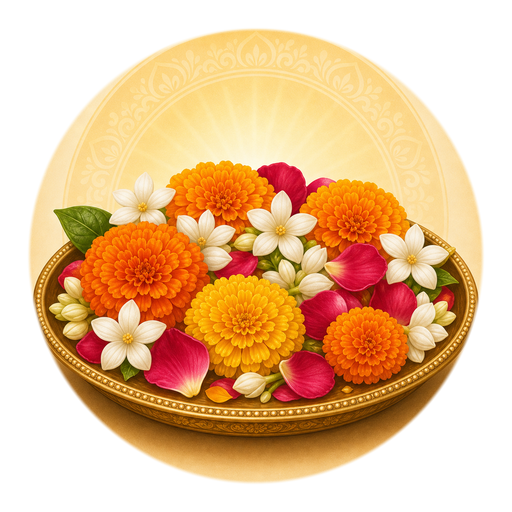 Flowers
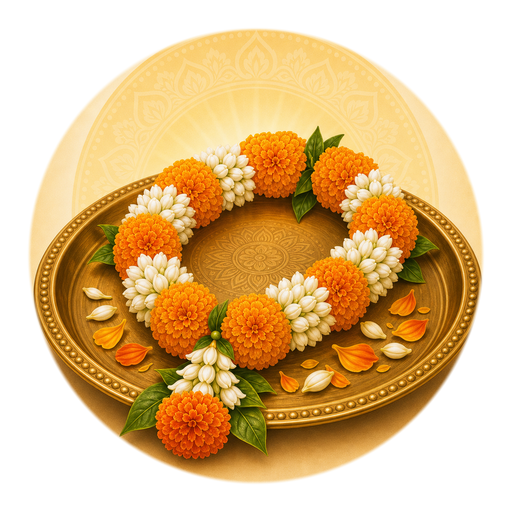 Garlands
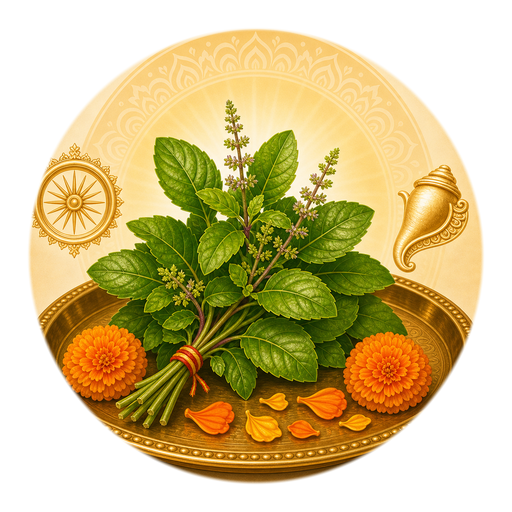 Tulsi leaves
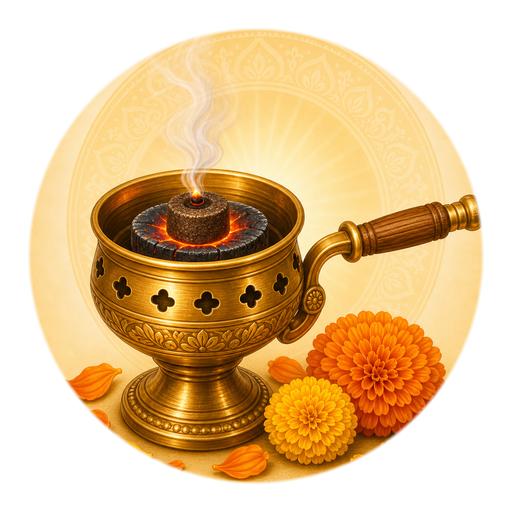 Incense
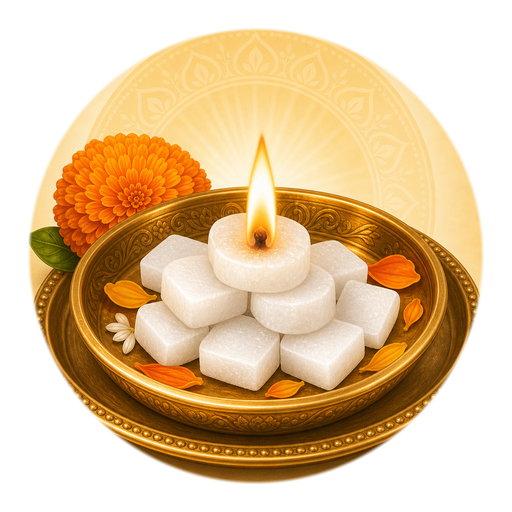 Camphor
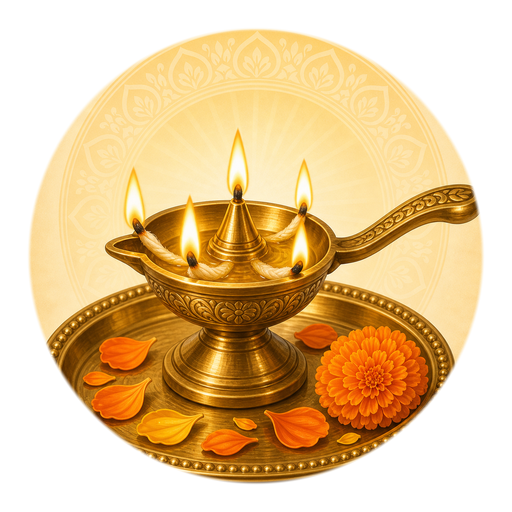 Lamp (niranjan)
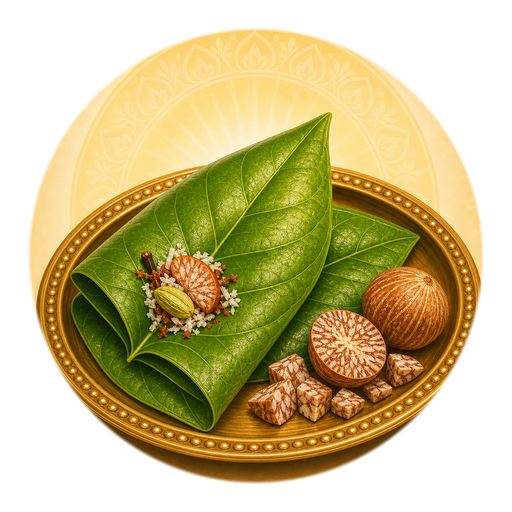 Betel leaves and nut
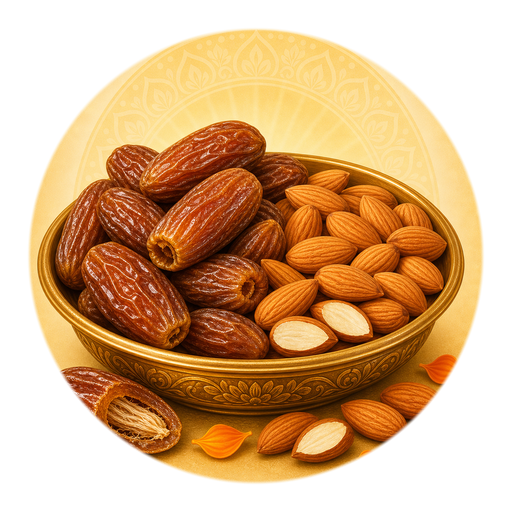 Almonds
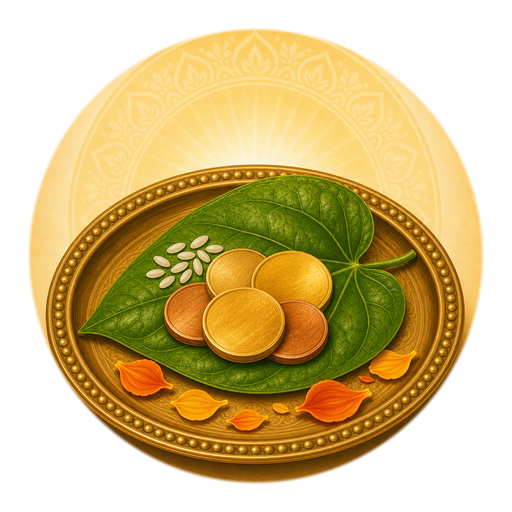 Coins / dakshina
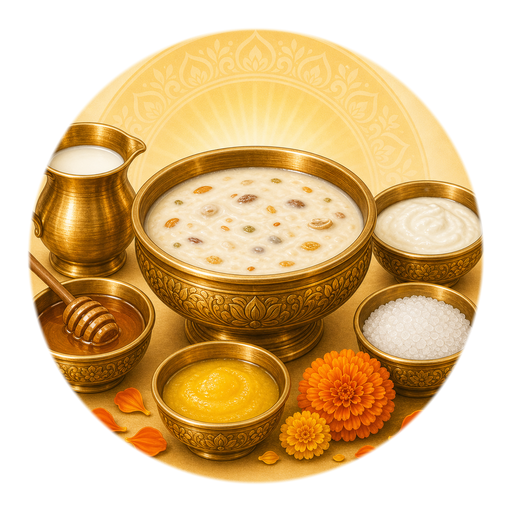 Panchamrut
Fasting & food
Fasting is optional and tradition-dependent — some sources hold that Satyanarayan carries no strict fasting requirement, though in some traditions the host fasts through the day and breaks it after moonrise (on a Purnima). Fasting isn't compulsory — some families or individuals follow this custom, and others don't. Where a fast is kept, it's usually sattvic or fruit-based; a shira-prasad meal and shared eating follow the puja.
Prasad — shira and the sawa measure
Satyanarayan's signature prasad is shira (a semolina sweet) — rava roasted in ghee, with milk and sugar added, along with ripe banana, cardamom, cashews, and raisins. By tradition, the prasad's ingredients are measured in sawa (1.25) proportions — a sawa bowl of rava, a sawa bowl of sugar, a sawa bowl of ghee (rice rava can substitute for wheat rava, and jaggery for sugar). All the prasad is combined and given, or fed, to everyone present — carrying the katha's lesson about not disrespecting the prasad.
Mantra & aarti
An aarti is sung at the end of the puja; two common opening lines are found — (Hindi/pan-India) "Om Jai Lakshmi Ramana, Swami Jai Lakshmi Ramana…" (meaning: "victory to you, O Lakshmi's consort") and (Marathi) "Jai Jai Deenadayala Satyanarayan Deva…" (meaning: "victory to you, Satyanarayan, merciful protector of the humble") — these vary by version and region. The Vishnu Namavali or Sahasranama is also recited. Only the meaning and opening line are given here, not the full aarti text.
Regional variations
In Maharashtra, the home Satyanarayan puja is extremely common — performed for a new home, a wedding, a birthday, or the fulfilment of a vow; the shira prasad (sawa measure) and the banana-pillar makhar are its signature features. The Marathi vrat-katha's names — Sadhu Vani, Leelavati, Kalavati — are commonly used, and the aarti "Jai Jai Deenadayala…" is sung.
In Bengal, this tradition is especially popular and was originally linked to the "Satyapir" tradition — this inter-community (Hindu-Muslim) heritage is a notable, separate note. Variations in the prasad — how moist the shira is, wheat versus rice rava, sugar versus jaggery — also occur by region and family.
Dates — some notable Purnimas in 2026
Satyanarayan Puja isn't date-locked; but since Purnima is the most-recommended tithi, a few notable 2026 Purnimas are listed below — this isn't a complete list, since the puja can be performed on any Purnima.
| Date (2026) | Purnima | Note |
|---|---|---|
| 1 February | Maghi Purnima | Auspicious for Satyanarayan |
| 1 April | Chaitra Purnima (evening-puja day) | The next day (2 April) brings Chaitri Purnima/Hanuman Jayanti — a notable day with a Satyanarayan mention |
| 1 May | Buddha Purnima | Auspicious for Satyanarayan |
| 29 June | Vat Purnima | — |
| 29 July | Guru Purnima | — |
| 24 November | Tripurari (Kartik) Purnima | Regarded as the most auspicious for Satyanarayan |
Whether Satyanarayan should also be performed on the Purnima of an adhik (leap) month varies by tradition. Some Purnimas span two Gregorian dates, in which case the exact evening puja day can vary by tradition and panchang — for instance, Chaitra Purnima's evening puja falls on 1 April, while Purnima at sunrise and Hanuman Jayanti fall on 2 April; the exact day is best chosen by family tradition or the panchang.
Future years: Purnima dates for 2027 and beyond are set by that year's panchang.
Good to know
- It can be performed on any day — there's no need to search for a specific "muhurat date"; it can be done on any auspicious occasion or Purnima.
- Purnima timings vary each year and by location — check that year's panchang or the day page.
- The prasad rule: the shira prasad should be shared with, and eaten by, everyone; the puja is regarded as incomplete without hearing the full katha.
- Fasting and health: fasting is optional; if observed, those with diabetes, who are pregnant, or elderly should do so only on a doctor's advice.
FAQ
- When should Satyanarayan Puja be performed?
- On any auspicious day or occasion (a housewarming, wedding, birthday, new undertaking, or wish fulfilled); there's no fixed-date requirement. Even so, Purnima (especially Kartik-Vaishakh-Chaitra), Ekadashi, and Sankrant are considered auspicious; the evening on a Purnima is fitting.
- What samagri is needed?
- An idol or image of Satyanarayan, a low seat with a banana-pillar makhar, a kalash and coconut, sandalwood paste-turmeric-kumkum-flowers-tulsi, incense-lamp-camphor, betel leaves-nut-dakshina, panchamrut, and banana-rava-sugar-ghee-milk for the prasad.
- How many chapters does the vrat katha have, and what do they cover?
- Five chapters — the Narada-Vishnu dialogue and the vrat's origin; the poor Brahmin and the woodcutter; the merchant forgetting his vow, leading to imprisonment; the ship sinking after the prasad is refused; and the proud king who refuses the prasad and loses his kingdom. The lesson: keep your vow, and don't disrespect the prasad.
- How is the shira prasad made, and what does 'sawa' mean?
- Rava is roasted in ghee, then milk, sugar, and banana are added to make shira; 'sawa' means a 1.25 measure — a sawa bowl each of rava, sugar, ghee, and so on. It should be shared with everyone.
- Who should perform it — is there any restriction?
- By tradition, there is no restriction of caste or gender; anyone, with their family, can perform it.
- Who is Satyanarayan?
- The "true form" of Shri Vishnu — regarded as his form for the Kali Yuga.
- Should a fast be observed?
- There's no strict requirement; some people fast through the day on a Purnima and break it after moonrise — this is optional and varies by tradition.