Margashirsh Guruvar (Mahalakshmi vrat)
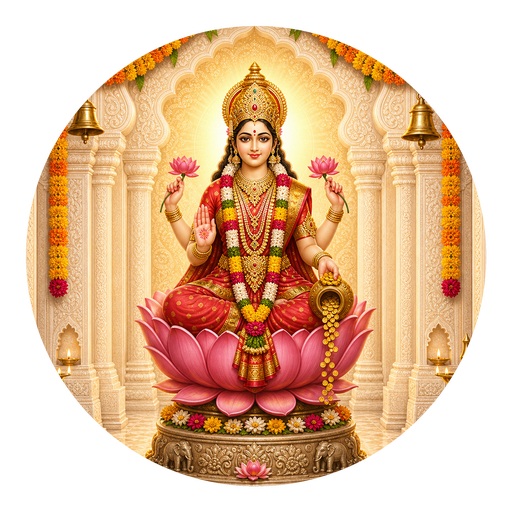
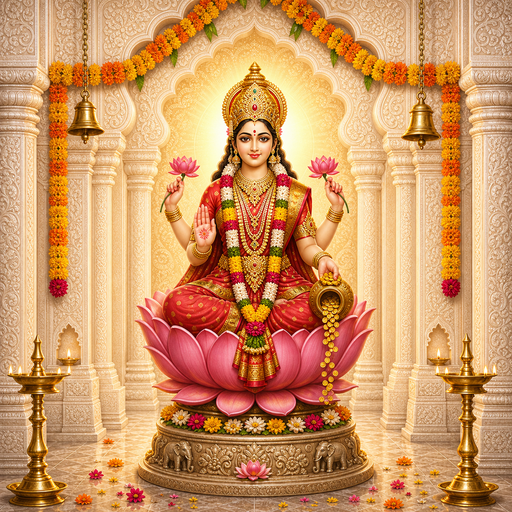
Margashirsh Guruvar — the Thursdays of Margashirsh masa — is a vrat kept for Mahalakshmi. It is mainly kept by women, who worship Lakshmi-mata with the prayer that the home be blessed with contentment, peace and prosperity. A ghat (kalash) is set up at home, and every Thursday there is puja, the katha and the aarti, with the udyapan (concluding rite) on the last Thursday.
This year's dates (2026)
Significance
Margashirsh is regarded as the finest masa for devotion — in the Bhagavad Gita, Shrikrishna says ‘masanam margashirshoham’ (of the months, I am Margashirsh). Coming just after Diwali, this month gives a special place to the worship of Lakshmi.
Guruvar (Thursday) is the vaar of Vishnu and Brihaspati. On this day the energies of Vishnu and Lakshmi are said to come together, which is why Mahalakshmi is worshipped on the Thursdays of Margashirsh.
Kept with faith, the vrat is believed to bless the home with wealth, prosperity, relief from want, and domestic peace.
All Thursdays — tithi & nakshatra (2026)
Margashirsh Guruvar is not fixed to a calendar date — it falls on every Thursday of Margashirsh masa, so its Gregorian dates shift every year. The dates below are taken directly from this site's 2026 panchang data.
| Guruvar | Date | Masa · tithi | Nakshatra |
|---|---|---|---|
| 1st | 10 December 2026 | Margashirsh Shukla Pratipada | Mula |
| 2nd | 17 December 2026 | Margashirsh Shukla Ashtami | Purva Bhadrapada |
| 3rd | 24 December 2026 | Margashirsh Krishna Pratipada | Ardra |
| 4th | 31 December 2026 | Margashirsh Krishna Ashtami | Hasta |
⚠️ Udyapan / last Thursday: the vrat runs for four or five Thursdays, with the udyapan on the last Thursday. In 2026 the Margashirsh masa continues past 31 December (amavasya ~January 2027), so the last (udyapan) Thursday should be checked against that year's panchang. Do not firmly treat 31 December as the ‘udyapan’ day.
Next year's (2027) dates will shift with that year's panchang; the vrat stays the same — the Thursdays of Margashirsh.
The legend (vrat katha)
The vrat katha of Margashirsh Guruvar is set in the Dwapar yug, and its root source is told in the Bhavishyottara Purana. The retelling below puts the story in plain words.
In the land of Saurashtra a mighty king named Bhadrashrava ruled — a master of the four Vedas, the six shastras and the eighteen Puranas. His queen Suratchandrika was devoted and virtuous. They had eight children — seven sons and a daughter, Shamabala. There was no want of prosperity in their home.
One day Mahalakshmi, wishing to grant even greater fortune to this royal house, came to the palace in the form of an old brahmin woman. When the maid asked, she said — ‘My name is Kamala, I have come from Dwarka, my husband is Bhuvanesh.’ She told an old story about the queen: in a past life the queen had been the sorrowful wife of a poor merchant; by keeping the Lakshmi vrat she had won this royal splendour, but had now forgotten that vrat.
Proud of her wealth, Suratchandrika insulted the old woman, spoke harshly and drove her out. She never realized that the old woman was Mahalakshmi herself.
As Lakshmi was leaving the palace, the princess Shamabala met her. Ashamed of her mother's behaviour, she humbly begged Lakshmi's forgiveness. Pleased with her modesty, Mahalakshmi taught her the Lakshmi vrat to be kept on the first Thursday of Margashirsh masa. Shamabala kept it with devotion — and was married to prince Maladhar, son of king Siddheshwar, going on to live in great splendour.
Meanwhile, through Lakshmi's displeasure, the kingdom and wealth of Bhadrashrava and Suratchandrika faded away, and they fell into destitution.
One day king Bhadrashrava went to the kingdom of his son-in-law — that is, of Shamabala. Shamabala lovingly gave her father a handa (a large pot) filled with riches. But when it was opened at home, by Lakshmi's disfavour the wealth in the pot was found turned to coal.
Later, on the last Thursday of Margashirsh, Suratchandrika went to her daughter. That day Shamabala kept the Lakshmi vrat and had her mother keep it too. By the merit of the vrat, the two women regained their former splendour and standing.
On her way back from her maher, Suratchandrika carried only a little salt. When she reached home her husband asked, ‘What have you brought from maher?’ She replied, ‘I have brought the essence of the kingdom.’ That day she served every dish bland (without salt); then she added a little salt to the plate — and the tasteless meal at once became delicious. ‘This is the essence of a kingdom’ — salt is the true essence of food, and likewise of a kingdom — this she lovingly made her husband understand.
The moral of the story: kept with faith and humility, the Lakshmi vrat pleases Mahalakshmi — bringing happiness, peace and the fulfilment of wishes. But one must not grow proud when wealth comes, must not skip the vrat, and must not forget to read the pothi (the katha) every Thursday — that is the real teaching of this story.
The names and the course of the story follow the standard version above; the way it is told may vary a little by household custom.
Who observes it
The vrat is mainly kept by women and girls. The men of the household also take part, and may honour suvasinis (married women) and girls as forms of Mahalakshmi by offering them haldi-kunku.
Keep the vrat as your faith, health and family tradition allow. If a fast is not possible due to illness or health, the day can be kept with just the puja and namasmaran (remembrance of the deity).
Puja vidhi (how to perform)
The sequence below is a general one; details vary a little by household custom.
- In the morning, bathe and clean the puja space; wipe the floor and draw rangoli and a swastik. Draw rangoli around the paat (low seat) and spread a little tandul (rice) or wheat on it in a circle.
- Spread rice or wheat on a red cloth and set up the ghat (a copper kalash) — put water, a coin, supari and durva in it; place five leaves of a plant (mango leaves) at the mouth of the kalash and a naral (coconut) on top. (This same coconut and coin are kept in place until the udyapan.)
- Beside the kalash, place a murti or image of Mahalakshmi (or a yantra / crystal Shriyantra).
- First remember and worship Ganpati; then, after achman, perform Mahalakshmi's panchopachar puja — bath, haldi-kunku, flowers, dhup-dip and naivedya. (In a larger puja, shodashopachar.)
- Offer haldi-kunku, flowers, five fruits, dry fruit, jaggery / rock sugar and kamalgatte (lotus seeds); chant ‘Om Mahalakshmyai Namah’. For the naivedya, keep a bowl of milk in particular.
- Sitting before the deity, read the vrat katha and then read or listen to the Shri Lakshmi-mahatmya, sing the aarti; present the naivedya and give a fruit and a copy of the pothi as prasad.
- Follow the same order every Thursday. The next day, pour the water from the kalash into a well/river or a tulsi-vrindavan, and a little at five spots around the home.
Udyapan (the last Thursday)
The vrat's udyapan (concluding rite) is done on the last Thursday of Margashirsh. On that day, seven suvasinis or seven kumarikas (young girls) are invited home; honoured as forms of Mahalakshmi, they are offered haldi-kunku, a vaan (a fruit) and a copy of the vrat-katha pothi, and a namaskar is made to them. The coconut, coin and the puja items gathered over the month are then given visarjan (immersed) in a river or lake to conclude the vrat.
Check the actual udyapan Thursday against that year's panchang — see the note under the dates above.
What you need (samagri)
- A copper kalash, red cloth, rice/wheat, akshata, supari, coin, durva, mango leaves, coconut.
- A Mahalakshmi murti/image; haldi-kunku, flowers, five fruits (bananas in particular), dry fruit, jaggery / rock sugar, kamalgatte (lotus seeds), a bowl of milk, a lamp, incense, panchamrut.
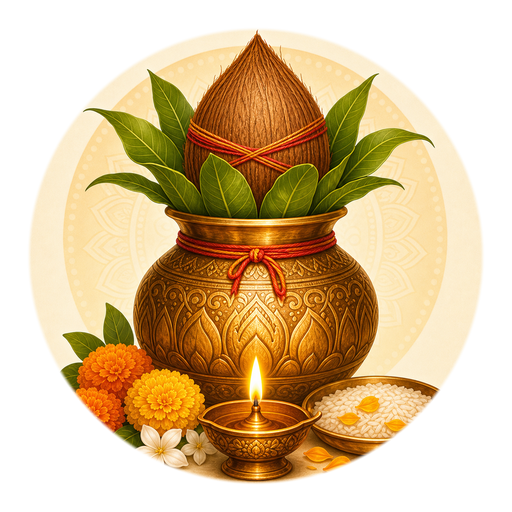 Copper kalash
 Red cloth
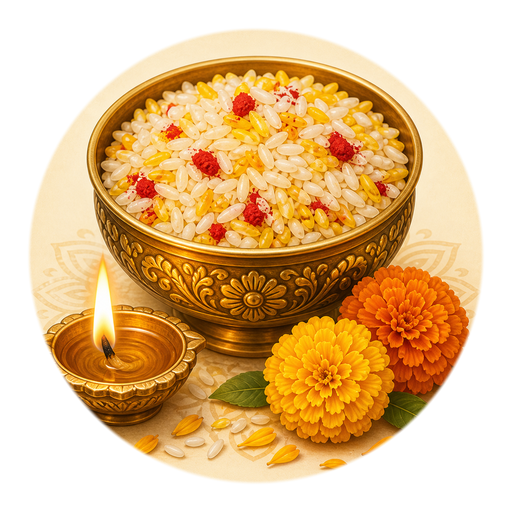 Akshata
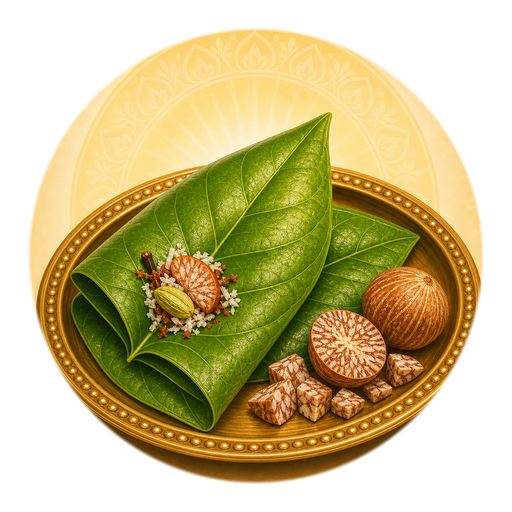 Supari (betel nut)
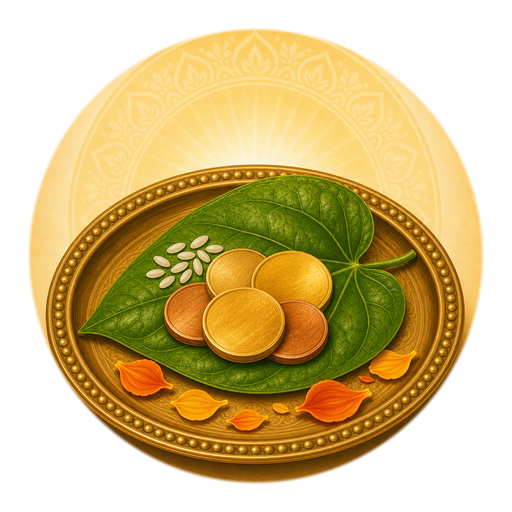 Coin
Coin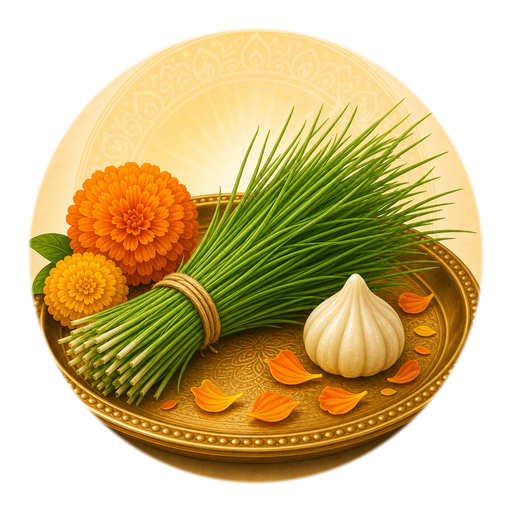 Durva grass
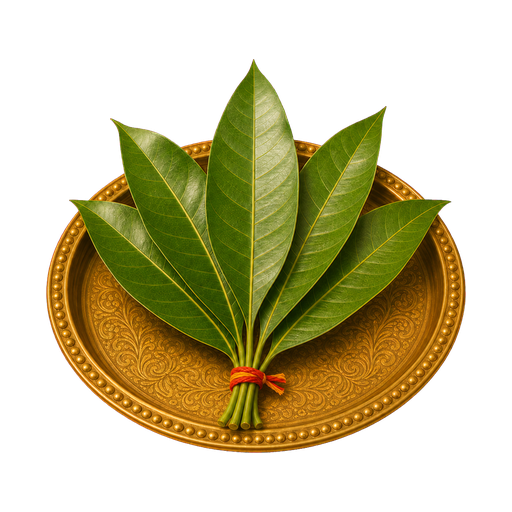 Mango leaves
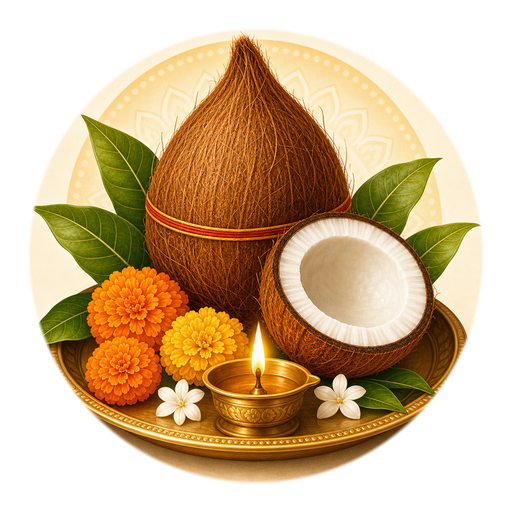 Coconut
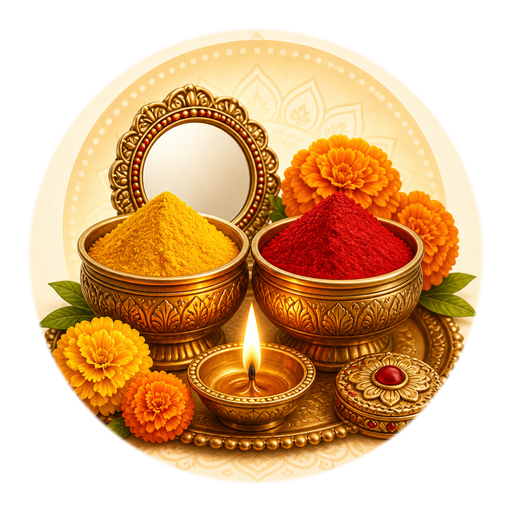 Haldi-kunku
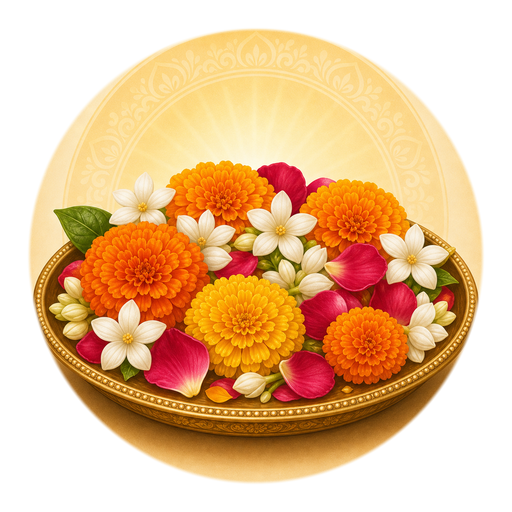 Flowers
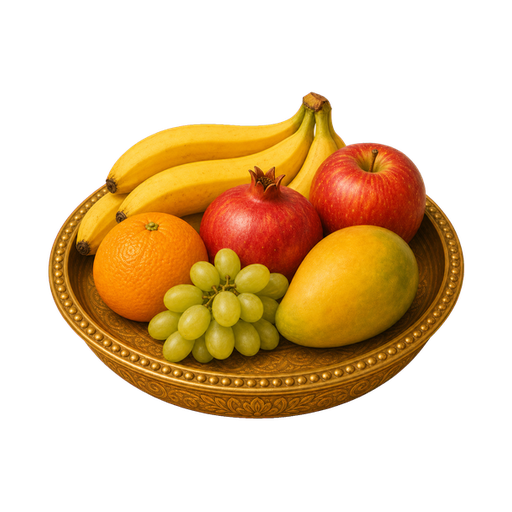 Fruits
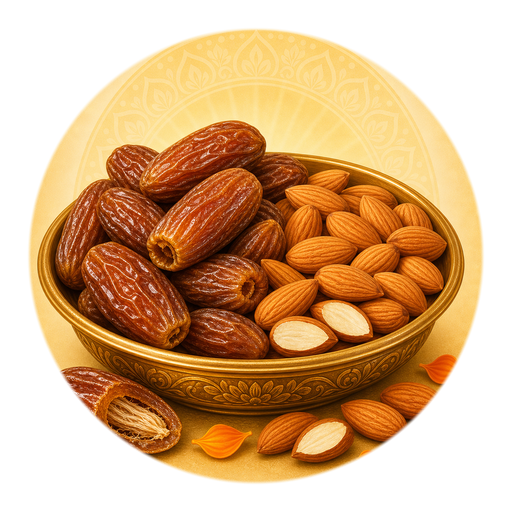 Dry fruit
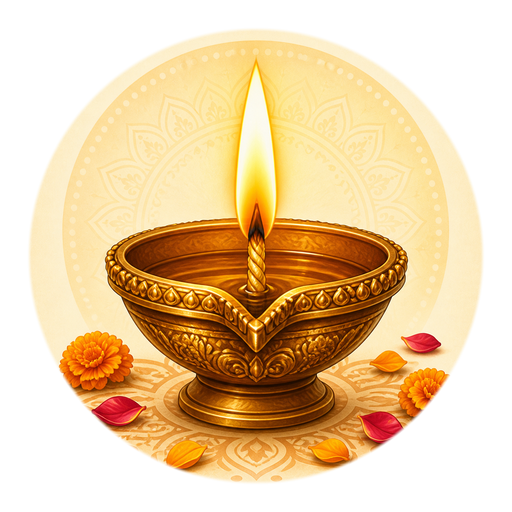 Lamp
Lamp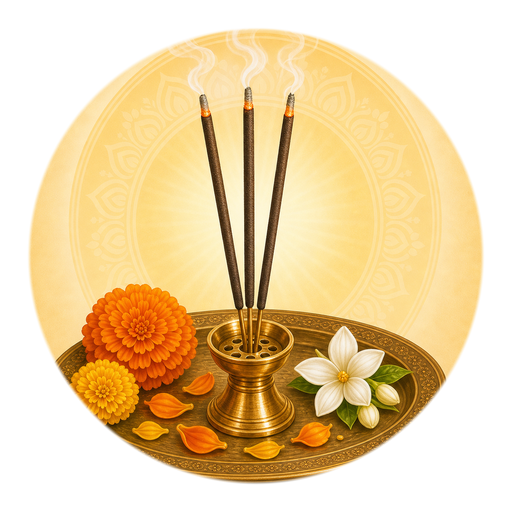 Incense
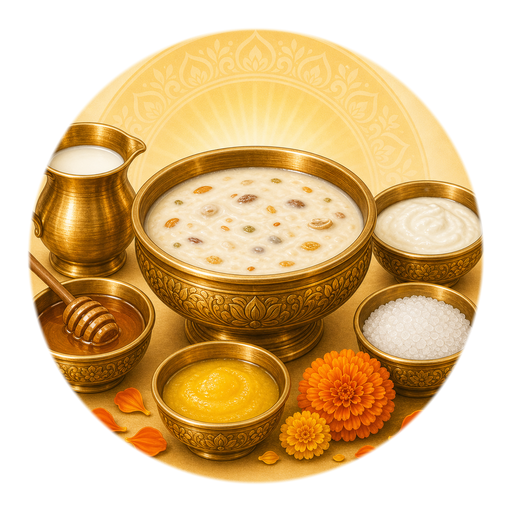 Panchamrut
Fasting & food (upvas)
- The upvas (fast) is kept through the day; in the evening, after the aarti and naivedya, prasad/a meal is taken with the family.
- Naivedya: fruit (bananas), milk and sweet dishes.
- Through the whole Margashirsh masa, many households avoid non-vegetarian food (out of respect and devotion).
- On health grounds: if you take medication or are unwell, avoid a strict fast — the puja and namasmaran are enough.
Mantra & aarti
Jap-mantras (traditional)
- ‘Om Mahalakshmyai Namah’ — a short salutation to Mahalakshmi, chanted in the puja and namasmaran.
- ‘Om Hrim Shrilakshmibhyo Namah’ — a mantra for Lakshmi's grace / for fulfilling a sankalp (by tradition, 108 times a day).
Mahalakshmi aarti — ‘Jay Devi Jay Devi Jay Mahalakshmi’ (by Mukeshwar Nagar)
It is traditionally sung after the puja and on the udyapan day.
- When to sing: at the end of the Thursday puja, after the naivedya is offered, and again on the udyapan day.
- Meaning, in brief: the aarti hails Mahalakshmi who pervades everything, gross and subtle; it invokes her as the goddess who dwells in Karvir (Kolhapur), mother of the gods and sages, giver of boons and remover of hardship who slays the demons; it closes with the devotee taking refuge at her feet and asking her to wash away the lines of ill fate written on the brow.
Note: many households also sing Mukeshwar Nagar's ‘Sukhsadane Shashivadane’ Ambabai aarti at Lakshmi-pujan; the choice of aarti varies by family tradition.
Regional variations (Maharashtra)
In Maharashtra, the haldi-kunku gathering on the last Thursday is the vrat's distinctive mark. Suvasinis and girls are honoured as forms of Mahalakshmi and offered haldi-kunku, a vaan (a fruit), a copy of the vrat-katha pothi, and sweets — a tradition of sisterly warmth and goodwill.
Through the month the kalash and mango leaves are kept on display at home, and non-vegetarian food is set aside. For the devotion of the Devi, many also take darshan at the Kolhapur Mahalakshmi temple.
Good to know
- Keep the fast as your health allows; if you take medication, avoid a strict fast.
- The ghat/kalash and the naivedya vary by household custom.
- The text of the aarti and the katha can differ by family tradition.
- Check the udyapan date against that year's panchang.
FAQ
- When is Margashirsh Guruvar in 2026?
- As per the site's panchang data, there are four Thursdays — 10, 17, 24 and 31 December 2026. Because the Margashirsh masa runs on further, the last (udyapan) Thursday should be checked against that year's panchang.
- How is the Margashirsh Guruvar vrat kept?
- Set up the ghat and perform Mahalakshmi's puja, read the vrat katha and sing the aarti every Thursday, and in the evening take prasad after the naivedya.
- How is the Mahalakshmi ghat mandani (kalash setup) done?
- Take a copper kalash — with water, supari, a coin and durva; place five plant leaves and a coconut on top; set a Mahalakshmi image beside the kalash. This same coconut and coin are kept in place until the udyapan.
- How is the Margashirsh Guruvar udyapan done?
- On the last Thursday, invite seven suvasinis or seven kumarikas home and offer them haldi-kunku, a vaan (fruit) and a copy of the vrat katha, with a namaskar — that is the udyapan.
- What can you eat during the fast?
- Fruit, milk and sweet dishes; adjust as your health allows.