Shani Jayanti
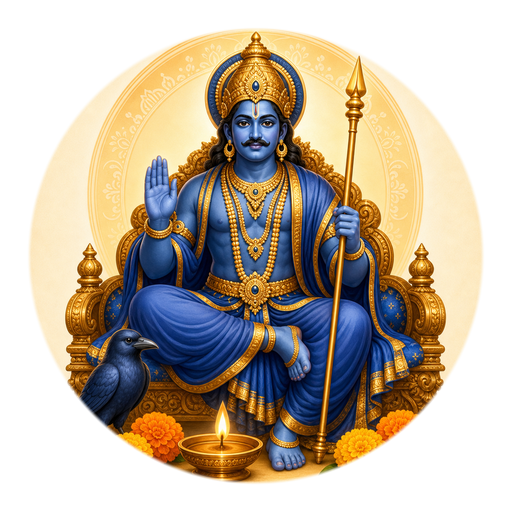
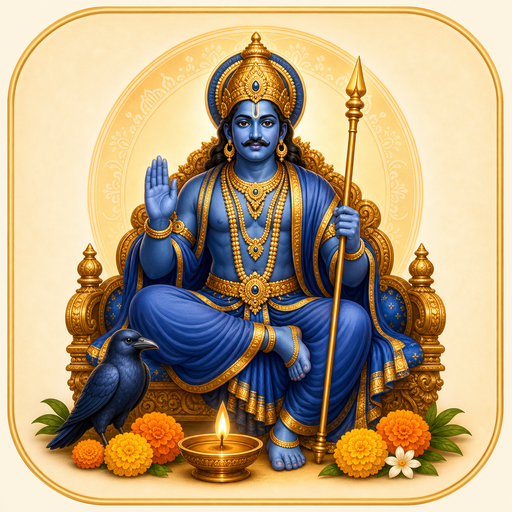
Shani Jayanti marks the birth anniversary of Lord Shani/Shanaishchar — son of Surya and Chhaya, the deity of karma and justice — celebrated on Vaishakh Krishna Amavasya (the amanta/Maharashtra tradition); the same tithi is known as "Jyeshtha Amavasya" in the purnimanta tradition. In 2026, this tithi falls on Saturday, 16 May. Anointing the murti/stone with mustard-sesame oil, offering black sesame, and giving charity are this day's signature features. In Maharashtra, Shani Shingnapur is the main centre of the oil-abhishek tradition.
This year's dates (2026)
Significance
Lord Shani is believed to have been born on Vaishakh (=Jyeshtha) Amavasya — hence Shani Jayanti/Shanaishchar Jayanti. Shani is the giver of karmic results — he's believed to reward honesty, discipline, hard work, and humility, and to humble arrogance, deceit, and injustice; hence he's regarded as the deity of justice — not cruel, but strict and impartial.
In astrology, Shani's Sade Sati (seven-and-a-half years, based on the moon sign) and Dhaiyya (two-and-a-half years) are considered difficult transits; there's a belief that worship on this day eases their hardship.
Shani is a slow-moving planet, regarded as a symbol of restraint, responsibility, austerity, and spiritual growth. Saturday is his day, hence special worship is performed on this day. In 2026, the Jayanti itself falls on a Saturday — this coincidence of Saturday and Amavasya is regarded as a specially potent "Shani Amavasya" yog.
The birth legend
Sanjna, daughter of Vishwakarma, was Surya's wife; unable to bear his intense radiance, she created an exact shadow-double of herself, "Chhaya," to serve Surya, while she herself departed for austerity. Shani was born to Chhaya — hence he's regarded as the son of Surya and Chhaya, brother of Yama and Yamuna.
During her pregnancy, Chhaya performed severe austerity of Shiva (fasting, staying in the sun without shade); under the effect of this austerity, the child was born dark-complexioned. Seeing dark Shani, Surya refused to accept him as his son — leading to father-son enmity; Shani later gained, through his own austerity, the foremost position among the nine planets as the deity of karma and justice.
Some versions attribute Shani's power/position to a boon from Shiva, others to his own austerity; some versions emphasise a "Surya's curse" beat. The exact reason for his dark complexion is also given with slightly varying detail across sources — the core remains the same, but no single detail should be treated as settled.
The popular legend of offering oil to Shani (the Hanuman-Shani episode → Shani injured → mustard oil applied) is mainly a separate legend belonging to the Shingnapur/oil-abhishek tradition — not the birth legend. The two legends are distinct and shouldn't be blended together.
Who observes it
All Shani devotees — especially those believed, per astrology, to have Sade Sati, Dhaiyya, Shani-mahadasha, or Shani-dosha. Devotees who worship Shani or offer oil every Saturday perform special puja on this Jayanti. What's observed varies by family and local tradition.
Puja vidhi
- A dawn bath and sankalp; clean (preferably black or blue) clothing.
- Shiva or Krishna/Hanuman is remembered and worshipped first, then Shani is invoked.
- Shani's murti/image is anointed with mustard (or sesame) oil ("Shani Tailabhishek") — the day's distinctive feature.
- Black sesame, black/blue flowers, sandal paste, and akshata are offered; a mustard-oil lamp is lit under a peepal tree or before the murti.
- Shani mantras/stotras are chanted.
- Naivedya (urad-khichdi/black chana) is offered followed by aarti; then charity. The puja is often performed in the evening/during Pradosh kaal in many places.
Shani Jayanti is a single-day birth celebration — Shani Jayanti generally has no separate udyapan ritual. At temples, especially Shingnapur, tailabhishek/darshan rules can vary — check with the temple committee.
What you need
A Shani murti/image (or a black stone/areca nut), mustard/sesame oil, black sesame, black/blue flowers, sandal paste, akshata, a mustard-oil lamp, incense, a peepal leaf, naivedya (urad-khichdi/black chana), items for charity (black cloth, iron, sesame, oil), and aarti items.
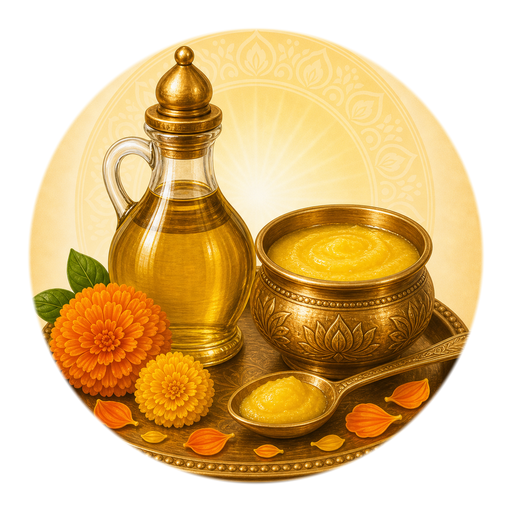 Mustard oil
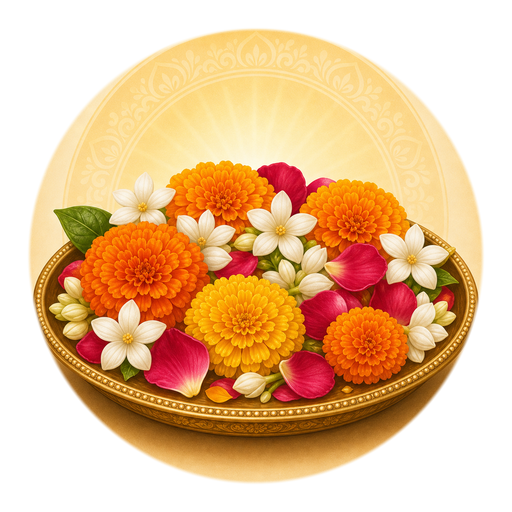 Black/blue flowers
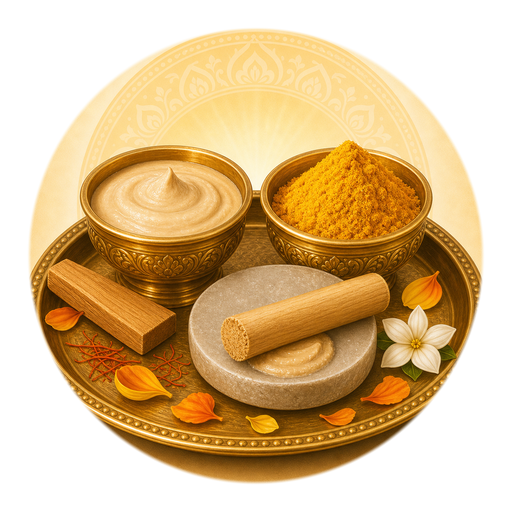 Sandal paste
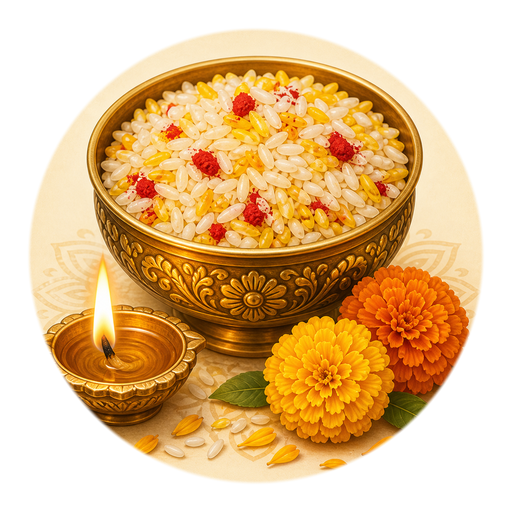 Akshata
 Mustard-oil lamp
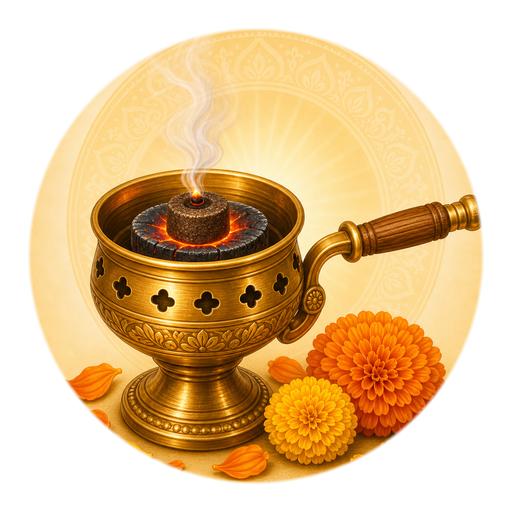 Incense
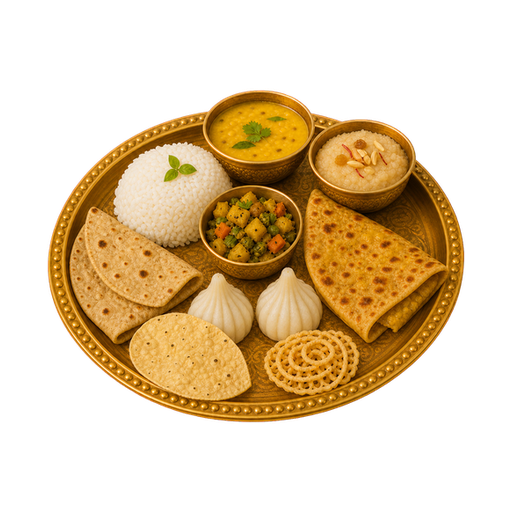 Naivedya (urad-khichdi/black chana)
 Black cloth
Fasting
Many devotees keep a single-meal sattvic fast; black chana, sesame oil, and urad dal are Shani-favoured foods. Meat and alcohol are avoided on this day; devotees also avoid dishonesty, mistreating the poor, and deceit.
The elderly, pregnant women, the unwell, or those on medication should avoid a strict fast; a light fast suited to their health should be observed instead. How strict the fast is varies by family tradition.
Mantra & stotra
The Shani bija mantra — "Om Sham Shanaishcharaya Namah" — is a foundational chant for saluting Shani and seeking his grace.
The Dasharath-composed Shani Stotra — "Om Nilanjana Samabhasam Ravi Putram Yamagrajam…" (believed to have been composed by King Dasharath of Ayodhya) — praises Shani's blue-dark form and calm grace. The meaning and opening line are given here.
The Hanuman Chalisa — composed by Tulsidas — is traditionally recited for protection from Shani's hardship.
Regional customs
Shani Shingnapur (Ahilyanagar district): Shani in a self-manifested black-stone form; oil abhishek is the principal tradition here (per the Maharashtra Tourism department's listing). Large Tailabhishek ceremonies and crowds gather here on Shani Jayanti; the current scale and arrangements should be verified with the temple committee. The village's belief in keeping no doors or locks is well known. Detailed content on Shingnapur lives on the separate Shani Shingnapur page — only a brief mention is given here.
Amavasya falling on a Saturday ("Shani Amavasya") and oil abhishek at Shani temples every Saturday are Maharashtra customs; this year the Jayanti coincides with that same Saturday+Amavasya yog.
In some places, day-long collective abhishek programs are organised by Brahmins on Shani Jayanti — this is a local detail.
Good to know
- Exact timings (Amavasya start/end, the auspicious muhurat, Rahukaal) vary by city — check the 16 May day page for these.
- Fasting is optional — those with diabetes, who are pregnant, or unwell should keep it light according to their health.
- Oil abhishek can make surfaces slippery; temples can get crowded — take care of the elderly and children, and check temple rules.
- Sade Sati/remedies are matters of belief and personal tradition — not an astrological guarantee of any particular outcome.
- Shani Jayanti is not a gazetted public holiday.
FAQ
- When is Shani Jayanti in 2026?
- 16 May 2026, Saturday (Vaishakh Krishna Amavasya = Jyeshtha Amavasya).
- Why is Shani Jayanti celebrated?
- By belief, Lord Shani was born on Vaishakh/Jyeshtha Amavasya — celebrated as his birth anniversary.
- Who was Shani born to?
- To Surya and Chhaya (Sanjna's shadow-double); hence Shani is regarded as Surya's son, brother of Yama and Yamuna.
- What should be done on Shani Jayanti / how is the puja performed?
- Murti abhishek (with mustard oil), offering black sesame, chanting Shani mantras/stotras, naivedya-aarti, and charity. The detailed sequence varies by tradition.
- Why is oil offered to Shani?
- Per legend (the Hanuman episode), Shani's injury was soothed by mustard oil, hence the oil-offering custom (especially in the Shingnapur tradition) — this is a separate legend from the birth legend.
- What should be donated on Shani Jayanti?
- Black sesame, mustard oil, black cloth, iron items, urad, and food to those in need — per belief.
- How should fasting be observed on Shani Jayanti?
- A single-meal sattvic fast; black chana/sesame. The elderly, pregnant, or unwell should keep a light fast.
- Are Shani Jayanti and Shani Amavasya the same?
- They're different concepts — Shani Jayanti is Shani's birthday (a fixed Amavasya); Shani Amavasya is any Amavasya that falls on a Saturday. This year (2026), however, the Jayanti happens to fall on a Saturday, so the two coincide.