Shani Amavasya
Shani Amavasya is the occasion when the Amavasya tithi falls on a Saturday — it isn't tied to one fixed month, but a recurring possibility across the year (tithi ∩ weekday). The combination of Shani Dev (the presiding deity of Saturday) and Amavasya (a day of ancestor remembrance) is regarded as especially significant. This combination occurs exactly twice in 2026 — on 16 May (Vaishakh Krishna Amavasya) and 10 October (Bhadrapad Krishna Amavasya).

This year's dates (2026)
- Saturday; the 1st Shani Amavasya of 2026; Shri Shanaishchara Jayanti also falls on this day (a coincidence, not the same thing)16 May
- Saturday; the 2nd (and last) Shani Amavasya of 2026; Sarvapitri Darsha Amavasya also falls on this day10 Oct
Significance
A rare convergence of tithi and weekday: Amavasya falls only once a month; Saturday, once a week — the two coinciding is regarded as a rare event that happens only a few times a year. This rarity is what gives it special sanctity.
Shani is regarded as the planet that dispenses the fruits of karma, while Amavasya is regarded as a time of self-reflection and the start of a new lunar cycle — their combination is considered a period of especially intense karmic energy.
Relief from Sade Sati/Dhaiya: in astrological belief, worship on Shani Amavasya is considered especially fruitful for those experiencing the effects of Shani's Sade Sati (seven-and-a-half-year period) or Dhaiya (two-and-a-half-year period). (This is an astrological/belief-based claim, not a universal guarantee.)
Greater efficacy of ancestor tarpan: Amavasya is already, in general, a day for remembering one's ancestors; when it falls on a Saturday (on the reasoning that Shani presides over longevity, debt, and ancestor-karma), performing tarpan-shraddha is given greater significance. (This is an extended, belief-based statement.)
2026's special coincidence: both of 2026's Shani Amavasya occurrences coincide with other major events — 16 May with Shani Jayanti (the birth anniversary), and 10 October with Sarvapitri Amavasya (the close of Pitru Paksha). These are coincidences specific to this year only — "Shani Amavasya" doesn't permanently mean the same thing as "Shani Jayanti" or "Sarvapitri Amavasya."
The legend
No separate, standalone legend was found for Shani Amavasya — because this is a convergence of tithi and weekday, not a single event or birth occasion. Two related story threads are already covered in detail on the Shani Jayanti page:
The prevailing belief holds that Shani Dev was born on Vaishakh/Jyeshtha Krishna Amavasya (son of Surya and Chhaya) — the detailed account of this is on the Shani Jayanti page. In some accounts, this birth-amavasya itself fell on a Saturday, and that is said to be the origin of the special significance given to the Saturday-Amavasya combination. The legend behind the oil-anointing custom at Shani Shingnapur is also on that same page.
Who observes it
All devotees of Shani — especially those who, per astrology, believe they are experiencing Sade Sati, Dhaiya, Shani Mahadasha, or Shani Dosh. Those wishing to remember and perform tarpan for their ancestors also observe this day — Amavasya is generally regarded as the day for this, and it's given greater emotional significance when it falls on a Saturday.
What to do varies by tradition/belief.
Puja vidhi
- An early bath and sankalp — a sacred river or pilgrimage bath if possible.
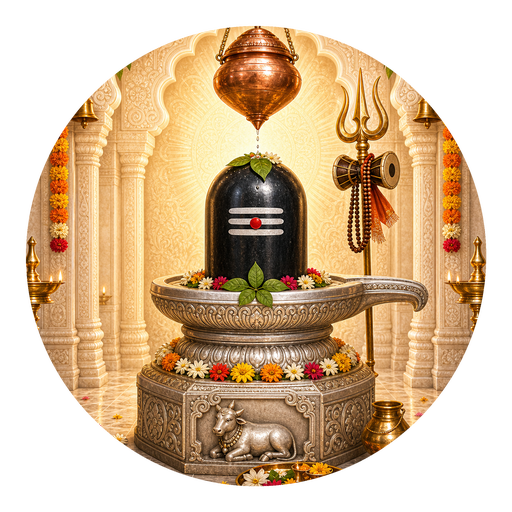
- A visit to a Shani temple — anointing the murti/stone with mustard oil, and offering blue/black flowers and bel leaves.
- Lighting a mustard-oil lamp under a peepal tree (with seven circumambulations in some traditions), and offering black sesame seeds.
- Reciting Shani mantras/stotras.
- Ancestor tarpan (offering water mixed with sesame seeds) and, where possible, a shraddha ritual — a general element of every amavasya, observed with special devotion on a Saturday.
- Charity: black sesame, mustard oil, black cloth, and iron; feeding food to those in need or to crows and dogs.
Since Shani Amavasya is a recurring occasion, there is generally no separate udyapan (closing) ritual — each occurrence is observed independently. Exact temple rules and crowd management vary — check with the temple committee.
What you need
Mustard/sesame oil, black sesame seeds, blue/black flowers, bel leaves, a mustard-oil lamp, incense, peepal leaves, water and sesame for ancestor tarpan, materials for charity (black cloth, iron), and aarti items. (This can vary by tradition.)
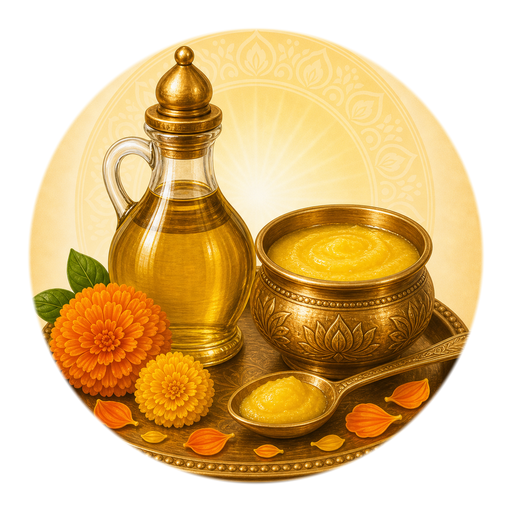 Mustard oil
 Blue/black flowers
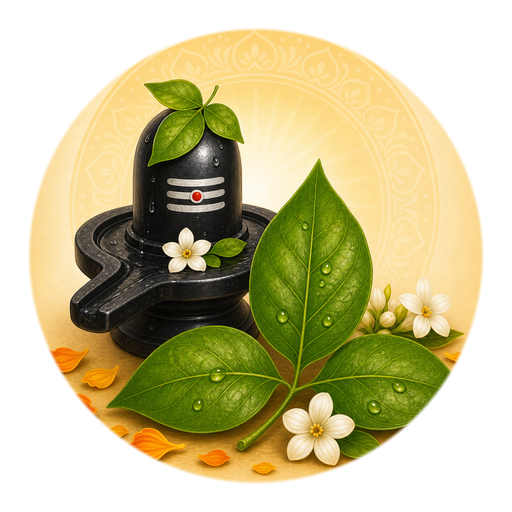 Bel leaves
 Mustard-oil lamp
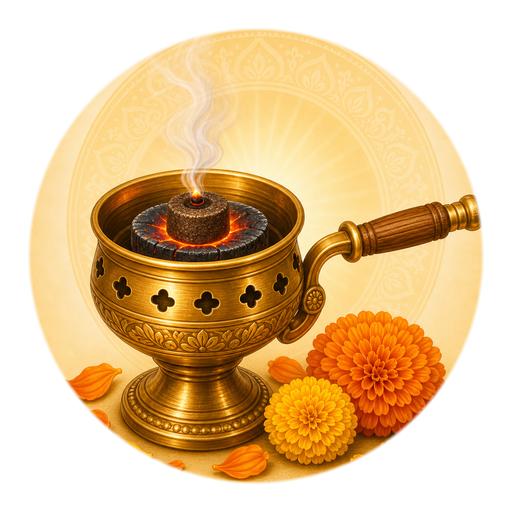 Incense
 Black cloth
Fasting
Many devotees keep a one-meal, sattvik fast (per the general amavasya/Saturday-vrat tradition). Meat and alcohol are avoided. Fasting is optional — if a strict fast isn't advisable for health or medication reasons, follow your doctor's guidance rather than a fixed diet.
The nature of the fast varies by tradition.
Mantra
Shani bij mantra — "Om Sham Shanaishcharaya Namah" — the root mantra of salutation and a prayer for Shani Dev's grace. For other Shani stotras/Hanuman Chalisa detail, see the Shani Jayanti page — the fuller text is there.
Regional customs
Shani Shingnapur: the major Maharashtrian tradition of oil-anointing is detailed on the Shani Jayanti page; Shani Amavasya can also draw crowds there.
Combining with ancestor tarpan: performing ancestor tarpan on Amavasya day is a general Maharashtrian custom; in some households it's observed with special devotion when it coincides with a Saturday.
Shani Pradosh — a different concept, avoid confusion: the "Pradosh" that falls on a Saturday (based on Trayodashi) is an entirely different occasion — it has nothing to do with Amavasya. Shani Amavasya and Shani Pradosh should not be confused with each other.
Good to know
- Exact timings (Amavasya start/end, auspicious muhurat, Rahukaal — different for each date, and by city) should be checked on the 16 May and 10 October day pages.
- Fasting is optional — if it isn't advisable for health or medication reasons, follow your doctor's guidance.
- Take care with slippery oil and temple crowds; check temple rules beforehand.
- Sade Sati remedies are matters of belief.
- Avoid confusing this with Shani Jayanti/Sarvapitri Amavasya — the 2026 overlap is a coincidence, not a permanent equivalence.
FAQ
- What is Shani Amavasya?
- The occasion when the Amavasya tithi falls on a Saturday — not tied to a fixed month, but a recurring possibility through the year.
- When is Shani Amavasya in 2026?
- Twice this year — 16 May and 10 October 2026, both Saturdays.
- What's the difference between Shani Amavasya and Shani Jayanti?
- Shani Jayanti is Shani's birth anniversary (a fixed Vaishakh/Jyeshtha Krishna Amavasya tithi, the same day every year); Shani Amavasya is any Amavasya that falls on a Saturday (recurring, with the count varying year to year per that year's panchang). In 2026, the two happen to coincide on 16 May.
- What should be done on Shani Amavasya?
- Visit a Shani temple/oil-anoint the murti, light an oil lamp under a peepal tree, donate black sesame, perform ancestor tarpan, and chant Shani mantras.
- Why is Shani Amavasya considered so significant?
- It's a rare convergence of Amavasya (once a month) and Saturday (once a week) — Shani, the dispenser of karmic justice, and Amavasya, a day of self-reflection, coinciding is regarded as especially sacred.
- Why is ancestor worship performed on Shani Amavasya?
- Amavasya is already, in general, a day for ancestor remembrance; Shani is regarded as a planet connected to longevity and ancestor-karma, so tarpan on a Saturday is given greater emotional significance.
- What remedies should be done for Sade Sati on Shani Amavasya?
- Shani worship, oil-anointing, donating black sesame/oil, and reciting the Hanuman Chalisa are considered beneficial — these are astrological/belief-based claims, not a guarantee.
- How many times a year does Shani Amavasya occur?
- The count varies year to year, depending on that year's panchang; in 2026 it occurs exactly twice — there's no fixed universal count.