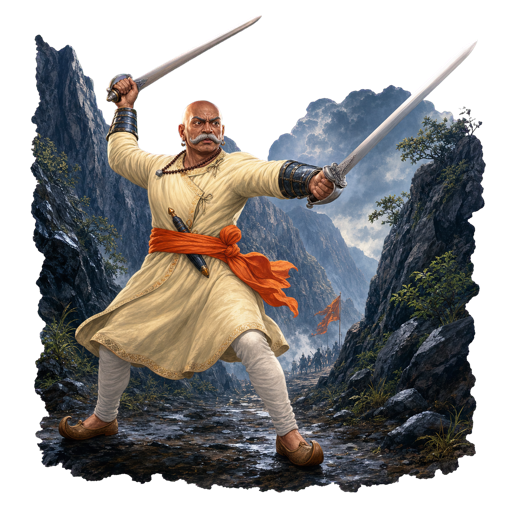
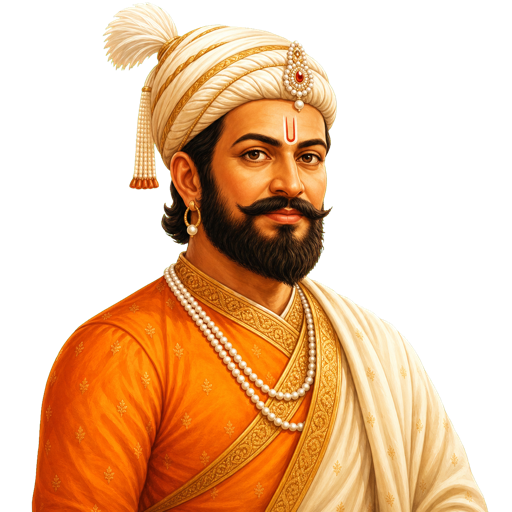
Maharaja Yashwantrao Holkar Punyadin
Maharaja Yashwantrao Holkar (I) Punyadin is observed every year on 28 October — he died on 28 October 1811 at Bhanpura (in present-day Madhya Pradesh). He was the sixth ruler of the Holkar dynasty (Indore state) — ruling as regent from 1799 to 1807, and then as reigning Maharaja from 1807 until his death in 1811. In 2026, the date falls on a Wednesday; it is fixed every year.
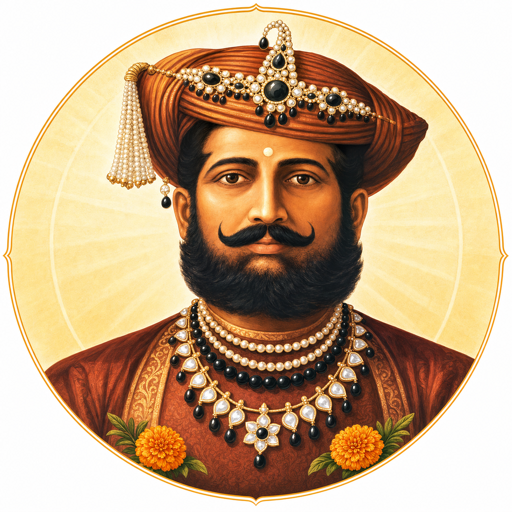
This year's dates (2026)
He is remembered as a striking symbol of resistance to the British — after fighting many battles in the Second Anglo-Maratha War, he ultimately signed the Treaty of Rajghat on 24 December 1805 on equal terms with the British — unlike other Maratha chiefs, he was never forced into the subsidiary alliance system.
Significance
Yashwantrao Holkar is regarded as an exceptional military leader and strategist of the later Maratha empire — building a large force through guerrilla tactics, he was a major ruler who resisted the expansion of the British East India Company for a long period. His place in the history of Indore and Malwa, and in the wider history of the Marathas, is significant — while he is primarily associated with the Indore/Malwa-centred (present-day Madhya Pradesh) Holkar dynasty, he also has a historical connection to Maharashtra as part of the wider Maratha empire.
The core facts about Yashwantrao Holkar are consistently corroborated by the government Marathi encyclopedia and two independent cross-check sources, and what follows here is limited to those clearly corroborated points.
History & resistance to the British
Background and rise to power
Yashwantrao was born on 3 December 1776 at Wafgaon — he was the son of Tukojirao Holkar by Yamunabai, a maid. After his uncle Malharrao II died in the Battle of Bhambudra (14 September 1797), Yashwantrao fled from Pune towards the north and, through guerrilla tactics, built up a force of Pindaris, Bhils, Rajputs, and Afghan soldiers.
Military campaigns
He defeated Daulatrao Scindia's forces at Ghorpadi, Vanawadi, Hadapsar, and Baramati, and sacked the city of Pune. On 25 October 1802 (Diwali day), he decisively defeated the combined forces of Scindia and the Peshwa at Hadapsar. On 8 October 1804, aiming to gain control over the Mughal emperor, he marched on Delhi and attacked the forces of Colonel Ochterlony and Burn. The government encyclopedia records that he commanded a force of sixty thousand cavalry, sixteen thousand infantry, and 192 cannons.
The Treaty of Rajghat (1805)
After a defeat near Farrukhabad in November 1804, Yashwantrao took refuge with Maharaja Ranjit Singh at the fort of Dig. Finally, on 24 December 1805, a treaty was concluded with the British at Rajghat — he is regarded as the only Indian ruler with whom the British negotiated on equal terms; the humiliating subsidiary alliance system imposed on other Maratha chiefs was not imposed on him, and his territory was restored.
Final years and death
In 1807, he set up a cannon-manufacturing works at Bhanpura. Constant warfare and stress took a toll on his mental health, and, per independent sources, he died at Bhanpura, still afflicted by this condition, on 28 October 1811. The Mughal emperor had conferred on him the title "Maharajadhiraj Rajarajeshwar Ali Bahadur." After his death, his wife Tulsabai administered the state, and his son Malharrao III (reign 1811-33) succeeded to the throne.
Connection to Indore and the Holkar dynasty
Yashwantrao was not the founder of the Holkar dynasty (Indore state) — the dynasty was founded by Malhar Rao Holkar (1694–1766); Yashwantrao was a later, sixth ruler of the dynasty. His coronation at Maheshwar (dated by one account to 6 January 1805) is sometimes described as the "founding of the Holkar Maratha empire," but this is a claim from a single source — it should be read carefully, keeping the distinction between "founder" and "an important later ruler" clear.
Who observes it
Citizens of the Indore/Malwa region, along with history enthusiasts and scholars of Maratha history interested in the Holkar dynasty, remember Yashwantrao Holkar on this day.
Public holiday status
This date is not a public holiday in Maharashtra.
Good to know
- Yashwantrao Holkar was not the founder of the Holkar dynasty (that was Malhar Rao Holkar) — he was the dynasty's sixth ruler; avoid calling him the "founder."
- Yashwantrao Holkar and Ahilyabai Holkar are two different people within the Holkar dynasty — worth keeping distinct.
- This topic is centred on Indore/Malwa (present-day Madhya Pradesh) — the connection to Maharashtra is historical, as part of the Maratha empire, not a direct geographic one.
FAQ
- Who was Yashwantrao Holkar?
- The sixth ruler of the Holkar dynasty (Indore state), reigning 1799/1807-1811 — a Maratha commander and strategist remembered as a symbol of resistance to the British.
- How did Yashwantrao Holkar resist the British?
- He fought many battles in the Second Anglo-Maratha War over a long period, and finally secured equal terms with the British in the 1805 Treaty of Rajghat — the humiliating subsidiary alliance system imposed on other Maratha chiefs was not imposed on him.
- What is Yashwantrao Holkar's connection to Indore state?
- He was the sixth ruler of the Holkar dynasty at Indore (the dynasty was founded by Malhar Rao Holkar; Yashwantrao was not its founder).
- When and where did Yashwantrao Holkar die?
- On 28 October 1811, at Bhanpura (present-day Madhya Pradesh), after constant warfare and mental and physical exhaustion.
- Is there a public holiday on Yashwantrao Holkar Punyadin?
- No — this date is not on Maharashtra government's public holiday list.