Dr. Babasaheb Ambedkar Jayanti
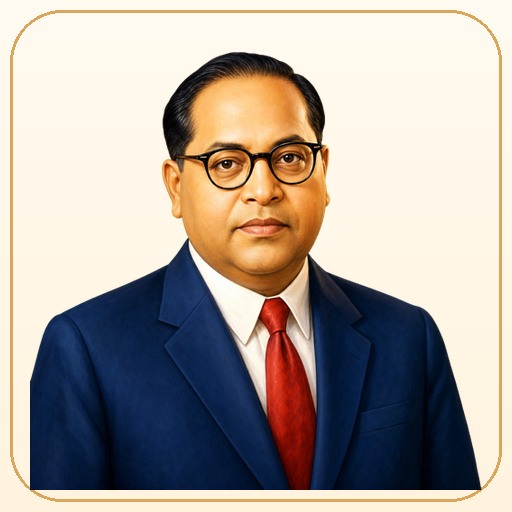
Dr. Babasaheb Ambedkar Jayanti is observed every year on 14 April — the birthday of Dr. Bhimrao Ramji Ambedkar (born 14 April 1891, in Mhow, present-day Madhya Pradesh). He chaired the drafting committee of the Indian Constitution and is called the "chief architect of the Indian Constitution." Dr. Ambedkar has a deep, multi-layered connection with Maharashtra — his ancestral village in Ratnagiri district, Mumbai as the centre of his education and public life, and the historic 1956 Buddhist conversion ceremony at Deekshabhoomi in Nagpur. In 2026, the day falls on a Tuesday.
This year's dates (2026)
The date is fixed every year, independent of the panchang's tithi or nakshatra. The day is observed as a gazetted public holiday by the central government and by most state governments, including Maharashtra.
History & significance
Dr. Babasaheb Ambedkar chaired the drafting committee of the Indian Constitution — the Constitution shaped under his guidance gave India its philosophical framework of fundamental rights, equality, and social justice; this role is also noted on the Republic Day page. He fought caste discrimination and social inequality throughout his life and worked for the education, rights, and dignity of Dalit and marginalised communities. The day is observed in honour of his memory and his work.
Dr. Bhimrao Ramji Ambedkar was born on 14 April 1891 in a British military cantonment at Mhow — his father, Ramji Sakpal, held the rank of Subedar in the army. His family originally belonged to the village of Ambadawe in Ratnagiri district — the surname "Ambedkar" itself comes from this village name, following the era's practice of recording a village name as a surname in school records. A memorial to Dr. Ambedkar stands in the village; the President visited it in 2022.
In 1908, he became the first student from a community then treated as "untouchable" to be admitted to Elphinstone College, Mumbai; he completed his degree from the University of Mumbai in 1912. In July 1924, he founded the "Bahishkrit Hitakarini Sabha" in Mumbai — his first organised platform for the education, social reform, and political representation of Dalit communities. He also founded Siddharth College of Arts and Science in Mumbai — he is also known as an economist and jurist.
On 14 October 1956, a few weeks before his death on 6 December, Dr. Ambedkar embraced Buddhism along with hundreds of thousands of followers at Deekshabhoomi in Nagpur. This date (14 October) is entirely separate from the Jayanti date (14 April) — only the day-of-month happens to coincide; the two are completely different events.
National holiday status
Dr. Babasaheb Ambedkar Jayanti is a gazetted public holiday for central government offices and for most state governments, including Maharashtra. However, it falls in a different category from the "three national holidays" — Republic Day, Independence Day, and Mahatma Gandhi Jayanti. This day is not mandatory for all private establishments; it is observed as a government gazetted holiday.
How it is marked
People offer garlands to Dr. Ambedkar's statues and portraits and pay their respects. Processions, lectures, and cultural programmes are held in schools, institutions, and communities.
Dr. Ambedkar Jayanti has an especially deep, multi-layered connection with Maharashtra: his ancestral roots in Ambadawe village, Ratnagiri district; Mumbai as the centre of his education and public life (Elphinstone College, the Bahishkrit Hitakarini Sabha, Siddharth College); and Deekshabhoomi in Nagpur. Chaitya Bhoomi in Mumbai is his memorial site, since his last rites were performed there.
Both Chaitya Bhoomi in Mumbai and Deekshabhoomi in Nagpur see programmes and crowds on Jayanti day (14 April) too, but each site's single largest annual gathering happens on a different day altogether — the largest gathering at Chaitya Bhoomi is on 6 December (Mahaparinirvan Din, his death anniversary), while the largest gathering at Deekshabhoomi is on 14 October (Dhammachakra Pravartan Din, the anniversary of the 1956 conversion). Jayanti (14 April), Mahaparinirvan Din (6 December), and Dhammachakra Pravartan Din (14 October) are three separate days, at different places, commemorating different events.
Good to know
- Jayanti (14 April, birth), Dhammachakra Pravartan Din (14 October, the 1956 conversion), and Mahaparinirvan Din (6 December, death anniversary) are three completely different events — the coincidence of "14" in two of the dates shouldn't cause confusion; different months, different occasions.
- Chaitya Bhoomi (Mumbai) and Deekshabhoomi (Nagpur) can be visited year-round, but the largest crowds are on 6 December and 14 October respectively, not on Jayanti day.
- Banks, schools, and most government offices stay closed on this day — plan any errands accordingly.
FAQ
- Why is Ambedkar Jayanti celebrated?
- It marks the birthday (14 April 1891) of Dr. Babasaheb Ambedkar, the chief architect of the Indian Constitution.
- When and where was Dr. Babasaheb Ambedkar born?
- On 14 April 1891, in Mhow (present-day Madhya Pradesh) — his family's roots were in Ambadawe village in Ratnagiri district, Maharashtra.
- Is there a national holiday on Ambedkar Jayanti?
- Yes — central government offices and most state governments, including Maharashtra, observe a gazetted public holiday on this day.
- What's the difference between Ambedkar Jayanti and Dhammachakra Pravartan Din?
- Jayanti (14 April) is his birthday; Dhammachakra Pravartan Din (14 October) is a separate day observed in memory of Dr. Ambedkar's embrace of Buddhism at Deekshabhoomi, Nagpur, in 1956 — two different events, two different dates.
- What is Dr. Ambedkar's connection with Maharashtra?
- His ancestral village was in Ratnagiri district, Mumbai was the centre of his education and public life (Elphinstone College, the Bahishkrit Hitakarini Sabha, Siddharth College), and the historic 1956 Buddhist conversion ceremony took place at Deekshabhoomi in Nagpur.