Independence Day
Independence Day is observed every year on 15 August — in 1947, this was the day India gained freedom from British rule, and India and Pakistan emerged as two separate independent nations. This day is different from Republic Day (26 January) — Independence Day marks freedom from foreign rule, while Republic Day marks the Constitution coming into force, two and a half years later. In 2026, Independence Day falls on a Saturday.
This year's dates (2026)
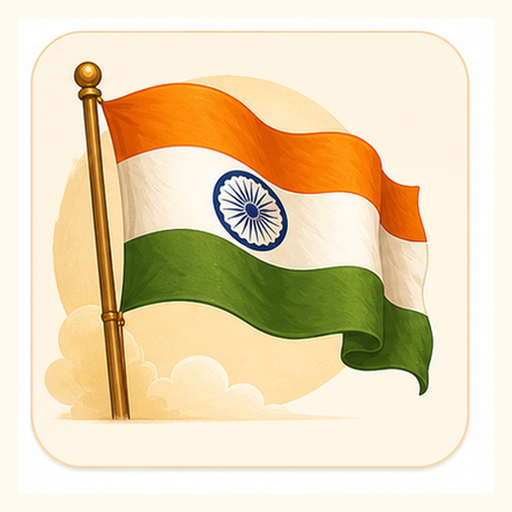
The date is fixed every year, independent of the panchang's tithi or nakshatra. On 15 August 1947, India's first Prime Minister, Jawaharlal Nehru, hoisted the national flag at the Red Fort in Delhi — every year since, the sitting Prime Minister hoists the flag there and addresses the nation.
History & significance
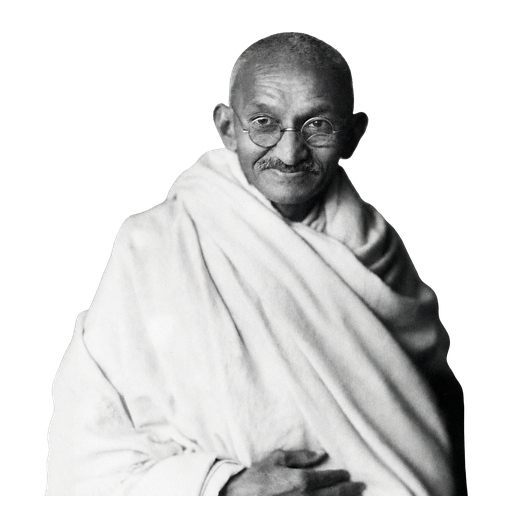
Independence Day commemorates the successful culmination of India's long freedom struggle — after decades of movements, including the path of non-violence and satyagraha under Mahatma Gandhi's leadership, India won freedom from British colonial rule. The Indian Independence Act, passed by the British Parliament on 18 July 1947, partitioned the Indian subcontinent to create two separate sovereign nations, India and Pakistan, and formally ended the British Raj.
On 15 August 1947, Prime Minister Jawaharlal Nehru hoisted the national flag at the Lahori Gate of the Red Fort in Delhi. The tradition has continued ever since — every year, the sitting Prime Minister hoists the flag at the Red Fort and delivers an address to the nation, broadcast across the country.
The last major all-India movement before independence was the Quit India Movement — Mahatma Gandhi launched it on 8 August 1942 at Gowalia Tank Maidan in Mumbai (today's "August Kranti Maidan," an official heritage site of the Brihanmumbai Municipal Corporation), giving the call "Do or Die"; the Congress Working Committee passed the same resolution the same day, also in Mumbai. This detail highlights Mumbai's role in the final phase of the freedom struggle, though it isn't directly tied to the 15 August date itself. The same event is also noted on the Mahatma Gandhi Jayanti page.
National holiday status
Republic Day, Independence Day, and Mahatma Gandhi Jayanti are the only three "national holidays" in India — on these three days, government offices, banks, and schools stay closed nationwide, and most private establishments do too.
How it is marked
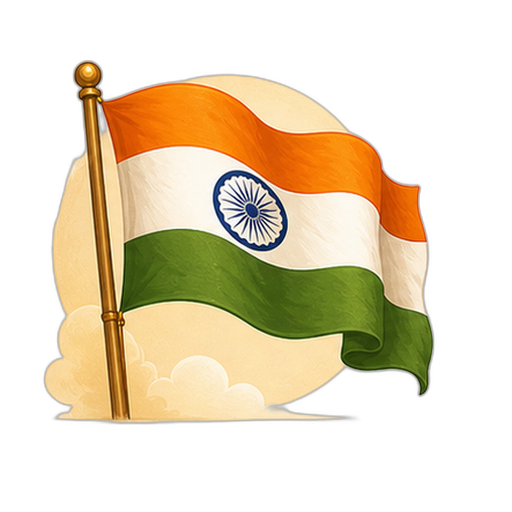
At the Red Fort in Delhi, the Prime Minister hoists the flag and addresses the nation — this national ceremony is specific to Delhi. Across the country, schools, offices, and public places hoist the tricolour, sing the national anthem, and hold patriotic programmes.
Independence Day is entirely a pan-India national observance — the way it's marked in Maharashtra matches other states. Two state-specific details stand out: in recent years, the Chief Minister has hoisted the flag at the main state-level ceremony at Mantralaya in Mumbai (Shivaji Park is the venue for Republic Day, a separate occasion) — other ministers and officials hold local ceremonies across the state.
The second detail is the Quit India Movement's launch, noted above, at Gowalia Tank Maidan in Mumbai (today's August Kranti Maidan).
Good to know
- Independence Day (15 August, freedom in 1947) and Republic Day (26 January, Constitution in force in 1950) are two separate events — worth keeping distinct.
- The Prime Minister's ceremony at the Red Fort in Delhi and the Chief Minister's state-level ceremony at Mantralaya in Mumbai are two different events.
- Banks, schools, and government offices stay closed on this day, along with most private offices — plan any errands accordingly.
FAQ
- Why is Independence Day celebrated?
- Because India gained freedom from British rule on 15 August 1947, when the Indian Independence Act took effect and India became a free, sovereign nation — the day marks that moment.
- Why did India gain independence specifically on 15 August?
- The Indian Independence Act was passed by the British Parliament on 18 July 1947, and it fixed 15 August 1947 as the date of the transfer of power.
- Who hoists the flag at the Red Fort on Independence Day?
- India's Prime Minister hoists the national flag at the Red Fort in Delhi every year and addresses the nation — a tradition that began with the first Prime Minister, Jawaharlal Nehru, in 1947.
- Is there a national holiday on Independence Day?
- Yes — Independence Day, Republic Day, and Mahatma Gandhi Jayanti are the only three days in India when government offices, banks, and schools stay closed nationwide, along with most private establishments.
- What's the difference between Independence Day and Republic Day?
- Independence Day (15 August 1947) marks freedom from British rule; Republic Day (26 January 1950) marks the day the Constitution took effect and India formally became a republic.