Bhishma Ashtami
On Magh Shukla Ashtami, tarpan and shraddha are offered in remembrance of Bhishma Pitamaha — this is regarded as his day of passing. King Shantanu had granted Bhishma the boon of Iccha Mrityu (choosing the moment of his own death); even lying on a bed of arrows in the Mahabharata war, he held onto his life until Uttarayan began. In 2026, Bhishma Ashtami falls on Monday, 26 January.
This year's dates (2026)
Significance
Bhishma is regarded in the Mahabharata as a symbol of loyalty, sacrifice, and commitment — renouncing marriage for life and the throne for his father's happiness, and even at the moment of death, upholding dharma by waiting for Uttarayan.
Offering tarpan (water libation) on this tithi in Bhishma's name is believed to bring peace to one's ancestors — this is a matter of belief, not a medical claim or guarantee.
Bhishma Ashtami falls in the month of Magh, after Makar Sankranti — that is, after the start of Uttarayan. Uttarayan is considered an auspicious six-month period during which passing away is believed to lead to a higher spiritual state — this belief is the core idea behind Bhishma's wait.
Bhishma Ashtami is a single-day tithi in Magh; Bhishma Panchak is a separate observance — a five-day period from Kartik Shukla Ekadashi (Prabodhini) to Purnima, also called Vishnu Panchak.
The legend
Devavrata (Bhishma), son of King Shantanu, took a fearsome vow of lifelong celibacy and renounced the throne for his father's happiness, so that Shantanu could marry Satyavati — pleased by this sacrifice, Shantanu granted him the boon of Iccha Mrityu, the power to choose the moment of his own death.
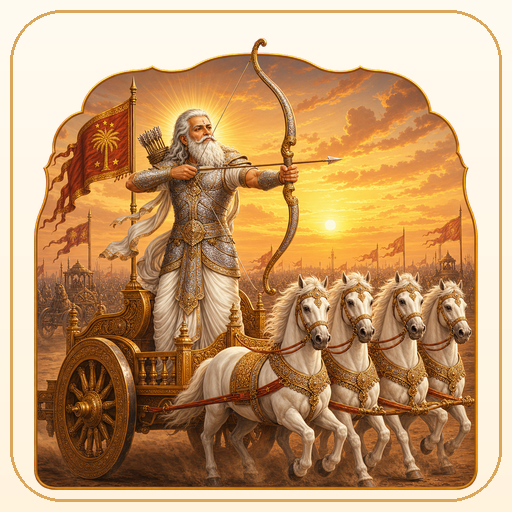
In the Mahabharata war, Arjuna, shooting from behind Shikhandi, struck Bhishma with countless arrows, and he fell onto a bed of arrows (Shar Shayya). Though wounded during Dakshinayan, the boon of Iccha Mrityu let him hold onto life until Uttarayan began — since tradition holds that passing away during Uttarayan leads to a higher spiritual state. He left his body on Magh Shukla Ashtami — this is the day known as "Bhishma Ashtami," and since then, tarpan has been offered in his name on this tithi.
Bhishma was the son of Ganga and Shantanu (Gangaputra). One account holds that he lay on the bed of arrows for about fifty-eight days from being wounded until his passing; it is also mentioned that he left his body at a place called "Vinashan."
Who observes it
Those devoted to their ancestors, along with devotees generally, offer tarpan and shraddha on this tithi — it is considered a special opportunity, especially for those who cannot regularly perform ancestor rites.
Per the traditional scriptural rule, only those whose fathers have passed away are considered eligible to perform shraddha. However, since Bhishma himself was lifelong celibate and had no children, many places extend the practice to everyone — whether one's father is living or not. Both of these hold true simultaneously, because this is a regional and community-based variation, not a single universal rule.
Puja vidhi
- A bath in a sacred river (the Ganga or a nearby tirtha) where possible, otherwise a bath with sacred water at home.
- Taking a sankalp (vow) for the Bhishma tarpan to begin the observance.
- Offering tarpan in Bhishma Pitamaha's name with sesame seeds, kush (darbha grass), and water, accompanied by mantra recitation — this is the core of the ritual.
- Offering cooked rice and sesame as naivedya, and offering arghya.
- By tradition, the fast is kept through the day and broken in the evening.
What you need
Sacred water (Gangajal where possible), black sesame seeds, kush/darbha grass, cooked rice (for naivedya), a lamp with oil and wick, incense sticks, and a vessel for arghya.
 Sacred water (Gangajal)
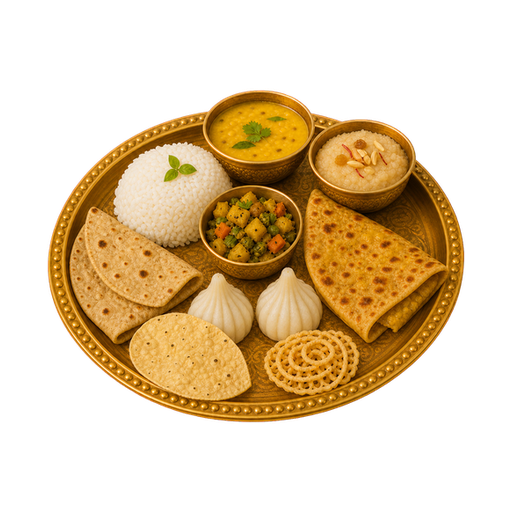 Cooked rice (naivedya)
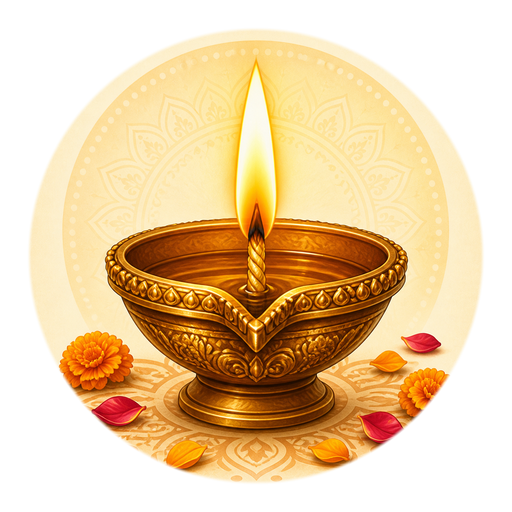 Lamp with oil and wick
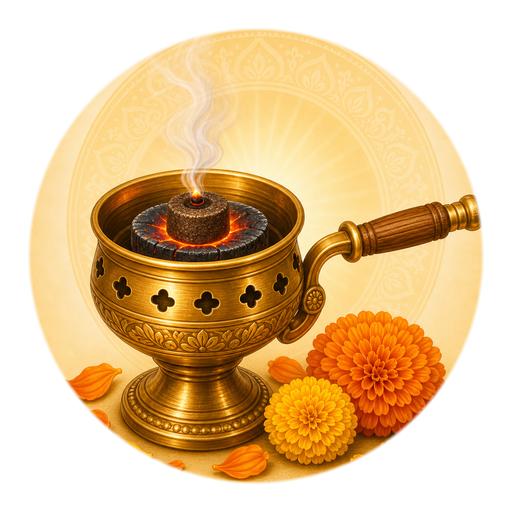 Incense
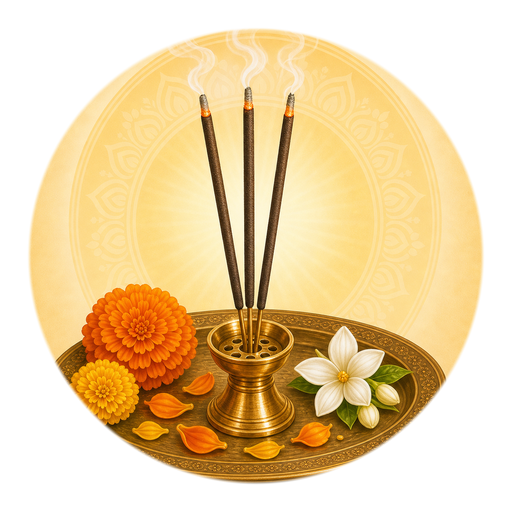 Incense sticks
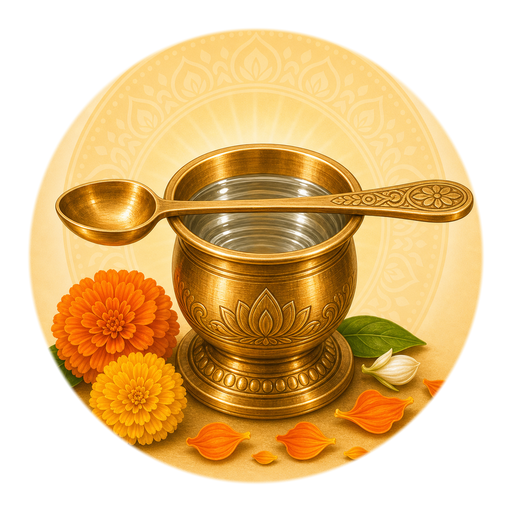 Vessel for arghya
Fasting
By tradition, the fast is kept through the day and broken in the evening with sattvik food — the strictness varies by household/local tradition.
Mantra
A traditional Sanskrit mantra is used in the Bhishma tarpan: "Om Vaiyaghrapadya Gotraya Samkritipravaraya Cha Gangaputraya Bhishmaya Ajanmabrahmacharine" — meaning: salutations and water offered to Bhishma, of the Vaiyaghrapadya gotra, of the Samkriti lineage, son of Ganga, lifelong celibate.
Regional customs
Bhishma Ashtami tarpan appears to be a widely observed practice across North and South India, particularly within Smarta tradition. In Maharashtra this day is observed mainly as a household, personal occasion for tarpan and ancestor remembrance, without a widespread public festival or temple-centred programme.
This year (2026), Bhishma Ashtami coincides with Republic Day (a national holiday) — this is only a one-year tithi coincidence, not a permanent connection.
Good to know
- Tarpan eligibility: while many places say "anyone can perform it," this is a regional/community variation — check against your family's own tradition.
- This year, the day coincides with Republic Day — only a one-year tithi coincidence.
- The exact tarpan timing can vary by city — check that day's panchang page.
- Health and fasting claims should be understood as matters of belief, not medical guarantees.
FAQ
- When is Bhishma Ashtami in 2026?
- Monday, 26 January 2026 (Magh Shukla Ashtami).
- What is Bhishma Ashtami?
- The day of Bhishma Pitamaha's passing in the Mahabharata — he left his body during Uttarayan on Magh Shukla Ashtami, and tarpan is offered in his remembrance on this tithi.
- How did Bhishma Pitamaha receive the boon of Iccha Mrityu?
- Pleased by his renunciation of the throne and lifelong celibacy for his father's happiness, Shantanu granted him this boon.
- Why did Bhishma wait for Uttarayan?
- Because passing away during Uttarayan is believed to lead to a higher spiritual state, the boon of Iccha Mrityu let him choose to wait on his bed of arrows until Uttarayan began.
- Who should perform Bhishma tarpan — only those whose fathers are deceased, or everyone?
- Per the original scriptural rule, this tarpan is for those whose fathers have passed away, but since Bhishma had no children, many places extend it to everyone — this is a regional/community variation.
- What is the difference between Bhishma Ashtami and Bhishma Panchak?
- Bhishma Ashtami is a single-day tithi in Magh; Bhishma Panchak is a separate five-day period in Kartik, from Prabodhini Ekadashi to Purnima (also called Vishnu Panchak). Both relate to Bhishma but are distinct observances.
- How should Bhishma tarpan be performed?
- A bath with sacred water, a sankalp, tarpan with sesame-kush-water accompanied by mantra recitation, naivedya-arghya, and fasting — the exact sequence can vary by household/local tradition.