Gudi Padwa
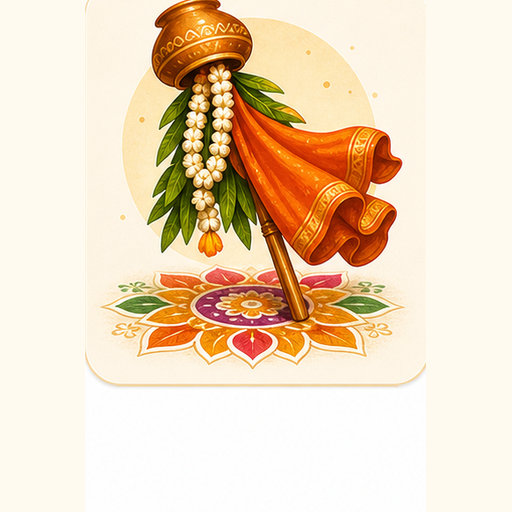
Gudi Padwa is the first day of the Marathi (Shalivahan Shak) new year, falling on Chaitra Shukla Pratipada — it welcomes the spring season and the start of a new samvatsara (year). On this day people raise a gudi (a tall pole dressed with a silk cloth, neem and mango leaves, a garland, sugar-crystal beads, and an inverted copper pot) at the door; it is taken as a symbol of victory and auspiciousness. Because Gudi Padwa is one of the sade-teen muhurta (the “three and a half” auspicious days), you do not need to look up a separate muhurat for new purchases or beginnings on this day. This year's date (2026): Thursday, 19 March.
This year's dates (2026)
Significance
Gudi Padwa matters on several counts:
- Start of the new year: Chaitra Shukla Pratipada is the first day of the Shalivahan Shak year. A new samvatsara and the spring season begin on this day. (In 2026 it marks the start of Shak 1948 — the samvatsara name is noted below.)
- One of the sade-teen muhurta: In the Hindu tradition Gudi Padwa, Akshaya Tritiya and Dasara (three full) plus Diwali Padwa (a half) are regarded as the “sade-teen muhurta.” These are called self-fulfilled (swayamsiddha) muhurat — meaning you need not consult a separate muhurat for auspicious work on this day.
- Season and farming: This is the spring season and the Uttarayan period. Trees put out fresh leaves and a new farming season begins — the festival is tied to this new beginning in nature.
- A symbol of victory and auspiciousness: Raising the gudi (a flag) at the door is taken as a symbol of victory, of warding off ill, and of inviting prosperity.
The samvatsara name: by our panchang record, 2026 begins the Parabhavnam samvatsara (Shalivahan Shak 1948); Vikram Samvat 2083. Some panchang traditions list the samvatsara names a little differently, so cross-check against your reference panchang.
The legend (katha)
Gudi Padwa is not dedicated to a single deity; it is linked to three separate traditions. These three stories are not about the same event — they are alternatives to one another, not rivals.
Brahma's creation of the universe. By belief, Brahma is said to have begun creation and the cycle of time on this very day. The day is therefore taken as “the beginning of time”; in some versions it is called the start of the Satya Yuga.
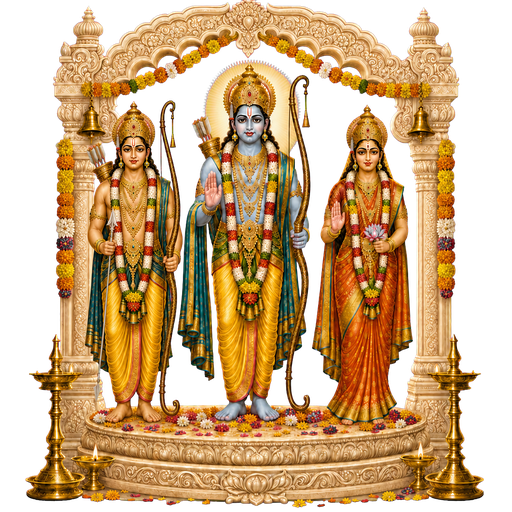
Lord Ram's return to Ayodhya. After fourteen years of vanvas (forest exile), and after defeating Ravan and the rakshasas, Lord Ram is held to have returned to Ayodhya in victory around this time and his rajyabhishek (coronation) to have taken place. The townsfolk are said to have welcomed him by raising gudis, torans and victory-flags at every home — and from this, the custom of raising the gudi is believed to have taken root.
King Shalivahan's victory. Shalivahan, a potter's son, is said to have shaped clay soldiers, breathed life into them, and defeated his enemies (the Shakas). In some versions the number of these soldiers is given as about six thousand. From this victory the Shalivahan Shak (samvatsara) is said to have begun, and a flag is said to have been raised as a symbol of that victory.
There is also disagreement about what the gudi-flag stands for — some sources call it a Brahmadhvaj, some an Indradhvaj, and some simply a victory-flag. Because these three stories come from different traditions, they should not be merged into one.
Who observes it, and how
Gudi Padwa is celebrated at home across Maharashtra, Goa and the Konkani community; more recently a public shobha yatra (procession) — notably in Girgaon, Thane and Dombivli — has become its modern, collective form. It is a public holiday.
The usual order of the day:
- Early morning abhyang snaan (a bath after applying fragrant oil).
- Cleaning the courtyard and drawing a rangoli.
- Raising the gudi at the door.
- Puja of the family deity (kuldaivat) and one's chosen deity.
- Reading the panchang and making new-year resolutions.
- Sweet naivedya and a meal with the family.
Puja vidhi (how to perform)
The steps below are general guidance; details can vary a little by household and region.
- Take an early abhyang snaan; clean the courtyard and doorway and draw a rangoli.
- Prepare the gudi: wrap a silk or brocade cloth around a bamboo pole; tie a sprig of neem and mango leaves, a flower garland and sugar-crystal beads (sakhargathi), and place an inverted copper pot (tambya) or kalash on top.
- Raise the gudi at an auspicious time, at the door or a high spot where it is visible from outside. (In 2026 the tithi is a kshaya, so the time to raise the gudi is a little different — see “Good to know” below.)
- Offer the gudi haldi-kunku, akshata, flowers, dhoop-deep and naivedya; distribute neem-and-jaggery as prasad.
- Read the panchang and new-year greetings. In the evening, when taking the gudi down, bow to it and take jaggery-coconut or prasad. (The custom for when to lower the gudi is regional.)
What you need (samagri)
Bamboo pole · silk or brocade cloth · neem and mango leaves/sprigs · flower garland · sugar-crystal beads (sakhargathi) · copper pot or kalash (inverted) · haldi-kunku and akshata · flowers · dhoop-deep and niranjan · neem-and-jaggery (prasad) · sweets for naivedya (puran poli or shrikhand).
 Silk or brocade cloth
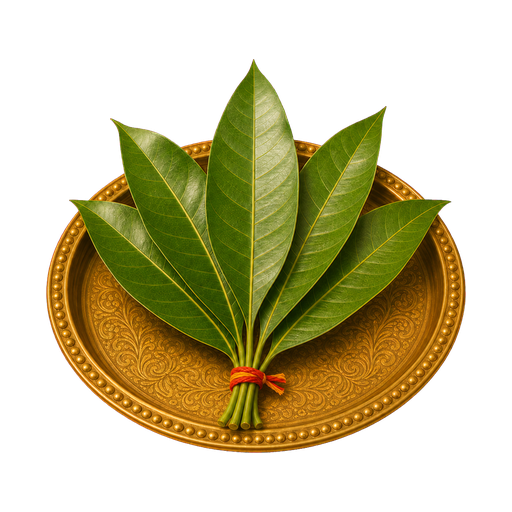 Mango leaves
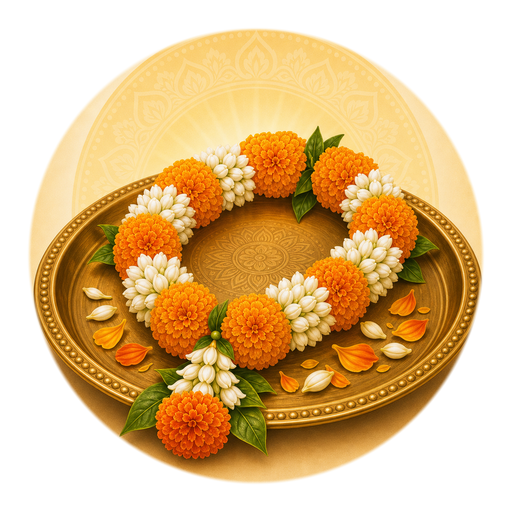 Flower garland
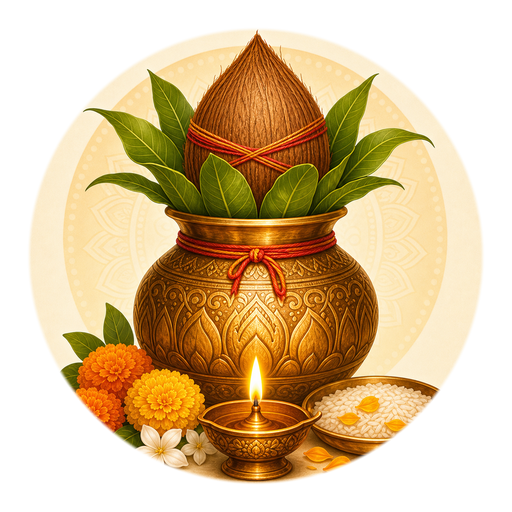 Kalash (inverted)
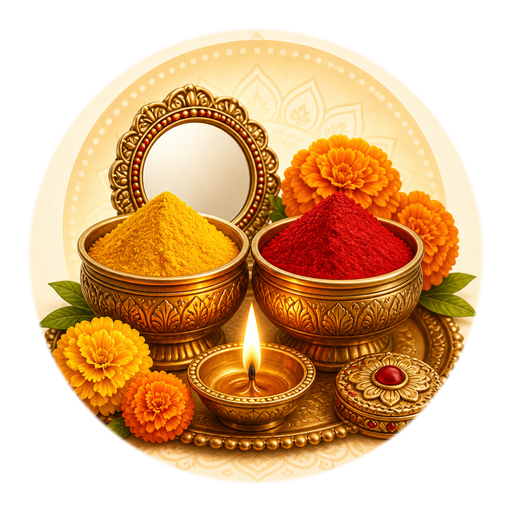 Haldi-kunku
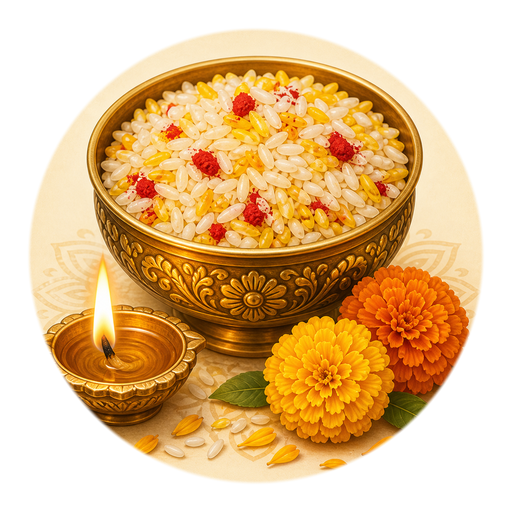 Akshata
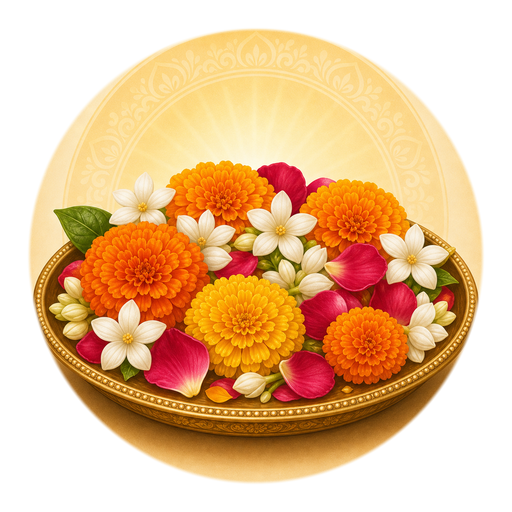 Flowers
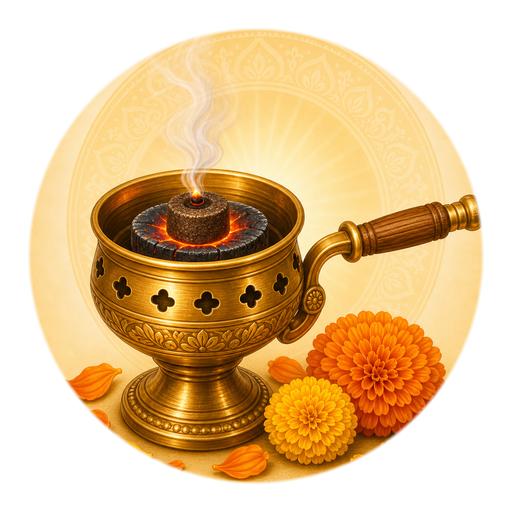 Dhoop
Dhoop Deep (lamp)
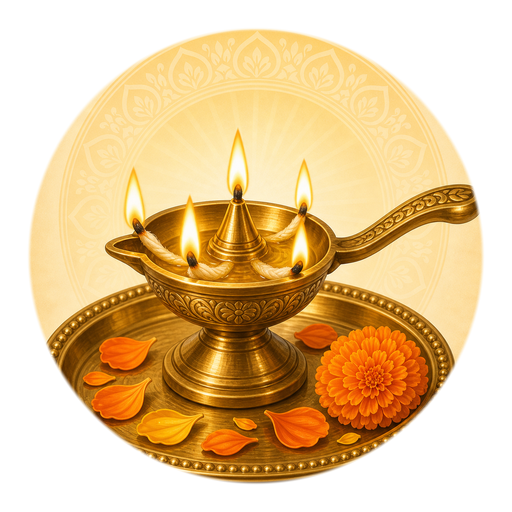 Niranjan
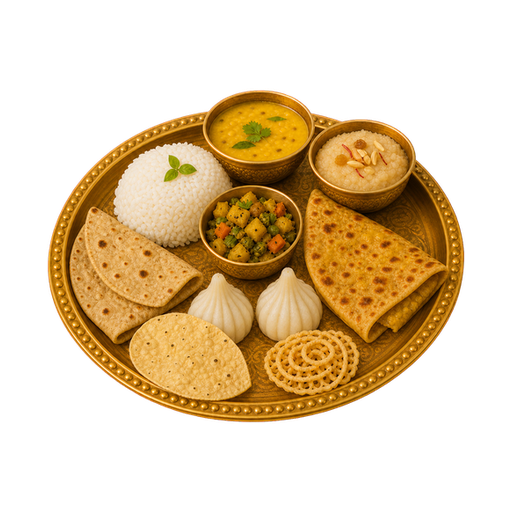 Naivedya (sweets)
Naivedya & food
Gudi Padwa is a festival and new-year day — not a fasting day (upvas).
- Neem-and-jaggery: tender neem leaves and flowers are pounded with jaggery (sometimes with tamarind, ajwain or pepper) to make this prasad. The idea behind it is to accept the bitter and sweet experiences of life with ease; an Ayurvedic health angle is also cited for it.
- Puran poli / shrikhand-puri and other sweets are the traditional naivedya and festive meal in Maharashtra.
Mantra & aarti
At the gudi puja, one offers stotra to the chosen deity and makes a new-year resolution (sankalp); the exact sankalp-mantra varies by tradition, so no specific verse is fixed here. At the close of the puja, however, Maharashtra everywhere sings the traditional concluding prayer “Ghalin Lotangan” (the concluding prayer) — shown below (recited at the end of any puja or aarti).
Ghalin Lotangan (concluding prayer)
Regional variations (Maharashtra)
- Desh (western Maharashtra and Marathwada): the gudi and puran poli are central; many homes do a kulachar (family-custom) puja.
- Konkan: the gudi along with a new-year procession and darshan at local temples.
- Public shobha yatra: processions with traditional dress, dhol-tasha and lezim — Girgaon, Thane and Dombivli are well known for these (a modern, collective form).
- The gudi is customarily raised on the right side, high up, and where it is visible from outside the house; but the exact direction and spot can change by regional custom.
All of these customs can vary by tradition — rather than treating any one direction, time or sequence as a universal rule, celebrate in your family's way.
Good to know
- Kshaya tithi (specific to 2026): in 2026 Chaitra Shukla Pratipada is a kshaya (a skipped tithi). By the clarification in our panchang, that year the gudi should be raised after the amavasya ends (after 6:53 AM in the morning) — the puja and the start of Chaitra Navratri come after that too. This applies only to 2026; such kshaya years come up from time to time, so check that particular year's panchang. For this day's exact timings, see the day page for 19 March 2026.
- Because it is a sade-teen muhurta, no separate muhurat is needed for new purchases or starting a business; even so, take big financial decisions using your own and your advisor's judgement.
- Take neem-and-jaggery in moderation; if you have a health condition, consult an expert.
- When raising the gudi, mind the safety of overhead power lines and the height (the bamboo is tall).
- Take the usual care in processions and crowded places.
FAQ
- Why is Gudi Padwa celebrated?
- Gudi Padwa is the first day of the Marathi new year. It is linked to three traditions — Brahma's creation of the universe, Lord Ram's victorious return to Ayodhya, and King Shalivahan's victory; the gudi is raised at the door as a symbol of victory and prosperity.
- When is Gudi Padwa in 2027?
- It falls on Chaitra Shukla Pratipada (the tithi is fixed). The exact Gregorian date is set by that year's panchang; since our data covers only 2026, no firm 2027 date is given here.
- What is a gudi, and what does it symbolise?
- A gudi is a decorated flag raised on a tall pole. It is taken as a symbol of victory, auspiciousness and prosperity; sources differ on whether the flag is a Brahmadhvaj, an Indradhvaj or simply a victory-flag.
- How should the gudi be raised?
- Tie a silk cloth, neem and mango leaves, a flower garland and sugar-crystal beads to a bamboo pole and place an inverted copper pot on top; raise it at an auspicious time, at the door or a high spot. (In 2026, after 6:53 AM because of the kshaya tithi.)
- Why is Gudi Padwa counted among the sade-teen muhurta?
- Gudi Padwa, Akshaya Tritiya and Dasara (three full) plus Diwali Padwa (a half) are taken as “self-fulfilled” muhurat — no separate muhurat need be looked up for auspicious work on this day.
- Why is neem-and-jaggery eaten on Gudi Padwa?
- It symbolises accepting the bitter and sweet experiences of life with ease; a health angle is also cited.
- What naivedya is made on Gudi Padwa?
- Neem-and-jaggery prasad, and sweets such as puran poli or shrikhand.