Hanuman Jayanti
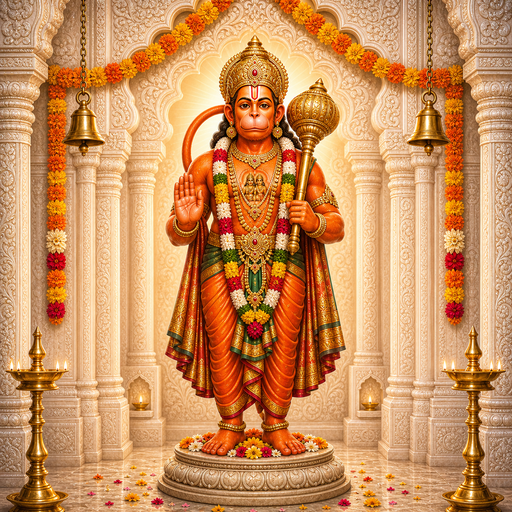
Hanuman Jayanti is the birth celebration of Shri Hanuman (Maruti). In Maharashtra and North India it is observed on Chaitra Shukla Purnima; this year (2026) that falls on 2 April, Thursday (per the panchang). Because Hanuman's birth is held to be at sunrise, temples begin Ramayana recitals and kirtan before dawn and pause at the birth moment to distribute prasad — and offering shendur (vermilion) and oil to Hanuman is this festival's special hallmark.
This year's dates (2026)
Significance
The belief is that Hanuman was born on Chaitra Shukla Purnima — so this day is celebrated as Hanuman Jayanti, the Maruti janmotsav (birth festival).
Hanuman is regarded as a symbol of strength, unwavering devotion to Ram (dasya-bhakti), and fearlessness. Devotees pray to him for courage, relief from troubles, and protection.
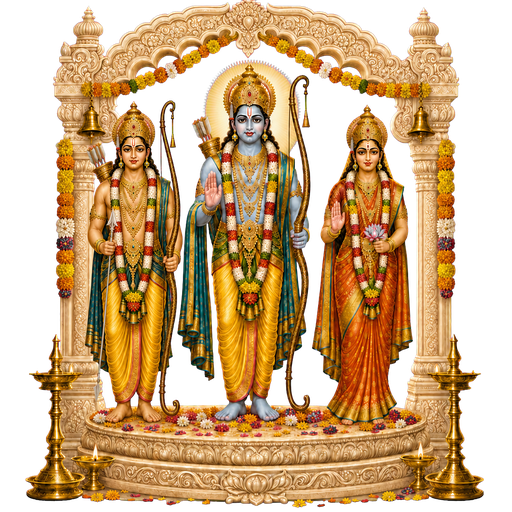
In the Ramayana, Hanuman is Ram's divine vanar (monkey) devotee — his role in the search for Sita, the burning of Lanka, and the war with Ravana is seen as decisive. This devotion to Ram closely links Hanuman with Ram Navami.
Vayuputra + Rudravatar: born by the divine grace of Vayu (the wind god) and held to be the 11th avatar of Shiv — this twin identity is why Hanuman is revered as the deity of strength, speed, and chiranjivatva (immortality).
A Maharashtra note: Samarth Ramdas held Hanuman up as an ideal of strength and valour and established eleven Maruti temples ("Akara Maruti") across southern Maharashtra, carrying a message of exercise and physical strength to the youth. This is why Hanuman Jayanti holds a large place in the Ramdasi tradition.
The beliefs and significance above are given descriptively; assume regional and family variation — don't read them as "it is exactly like this everywhere."
The legend (katha)
The story of Hanuman's birth has several versions. Below, the spine common to all of them is kept apart from the points where the versions differ.
The common spine. Hanuman is the son of Anjana (his mother) and Kesari (his father), and was born by the divine grace of Vayu (the wind god) — which is why he is called Vayuputra / Pavanputra. Anjana was a cursed apsara; to obtain a son she (in one version) did a long tapasya (penance) to Shiv/Rudra, and the birth of her son freed her from the curse. As a child, Hanuman once leapt at the rising sun, mistaking it for a ripe fruit; Indra then struck him with the vajra (in one version the name "Hanuman" comes from this episode). This same child later became Ram's supreme devotee and helped Ram in the search for Sita and the war with Ravana.
Where the versions differ (no single one is treated as final). The mechanism of the birth is told differently across versions. In some, Shiv directly grants Anjana the boon of a son. In Eknath's Bhavarth Ramayan, however, while Anjana was doing her Rudra-upasana, King Dasharath's putrakameshti yajna (a rite for progeny) was under way in Ayodhya; a kite (bird) carries off a piece of the payas (kheer) from that yajna, and Vayu delivers it into Anjana's hands — and from this Hanuman is born. (This same payas story is linked to the putrakameshti of Ram Navami.) The leap-at-the-sun episode is prominent in some versions and absent in others; Kesari's identity, too, varies by version. So no single mechanism is presented here as "the true one" — only the heart of the story stays constant.
Who observes it
All devotees of Hanuman and Ram keep this festival; especially Warkari, Ramdasi, and Maruti-worshipping families, the akhada/talim (wrestling-gym) traditions, and the Maruti temples in every town. Devotees who treat Tuesday and Saturday as Hanuman's days do special worship on this day.
There's no strict age or eligibility rule — participation is decided by regional and family custom.
Puja vidhi (how to perform)
Below is the general shape of the puja vidhi; the details differ by household and region.
1. Before dawn — snan (bath) and sankalp; Ramayana kirtan and Sundarkand recital begin before sunrise, at home or in the temple.
2. At the birth moment (sunrise) — the janmotsav moment; the kirtan is paused, the birth is celebrated, and prasad is distributed.
3. Shendur + oil offering — the murti/image of Hanuman is given abhishek and offered shendur (vermilion) and oil (especially til/mustard oil) — the signature element of this festival.
4. Flowers and lamp — a garland of rui (aak) / jaswand flowers, gandha, akshata, a ghee/oil lamp, dhoop and kapoor.
5. Recitation — the Hanuman Chalisa, Bhimarupi Maruti stotra, Sundarkand, and Bajrang Baan are recited; with cheers of "Jai Hanuman / Jai Bajrangbali."
6. Aarti and prasad — after the naivedya (a food offering) is shown, the aarti ("Satrane Uddane") is sung and prasad is distributed. In many places a palkhi / procession with dhol-tasha sets out.
Udyapan: Hanuman Jayanti is a one-day janmotsav; a separate udyapan (concluding) ritual is generally not prescribed.
What you need (samagri)
(Varies by region and family custom):
- A Hanuman murti/image (ideally with the Ram-darbar).
- Shendur (vermilion) and oil (til / mustard).
- A rui / jaswand flower garland, gandha / ashtagandha, akshata.
- A ghee/oil lamp, dhoop, kapoor.
- Naivedya: gul-khobare (jaggery-coconut), bundi / motichoor ladoo, bananas; tulsi; aarti items.
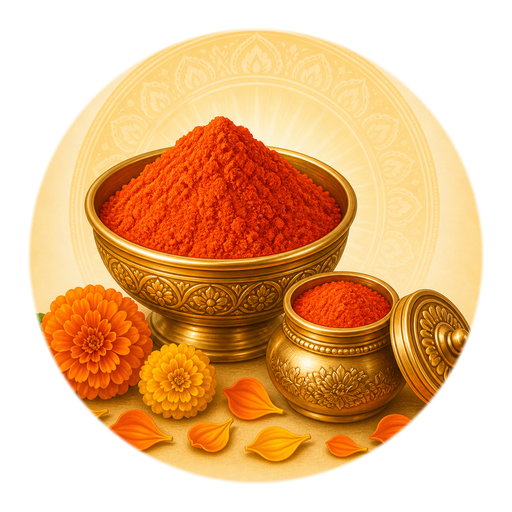 Shendur (vermilion)
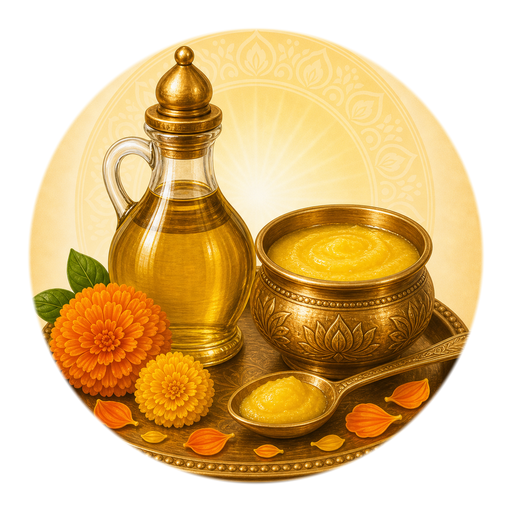 Oil
Oil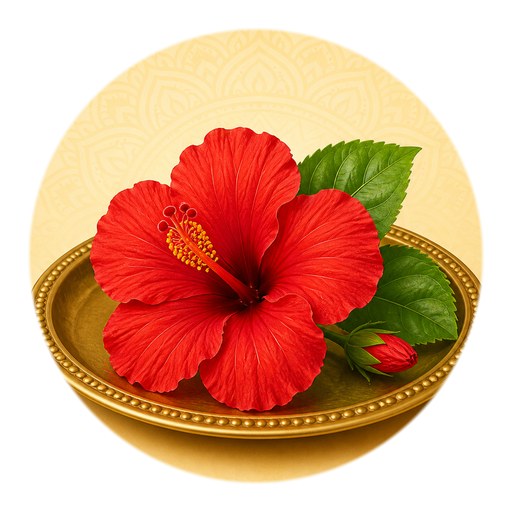 Jaswand
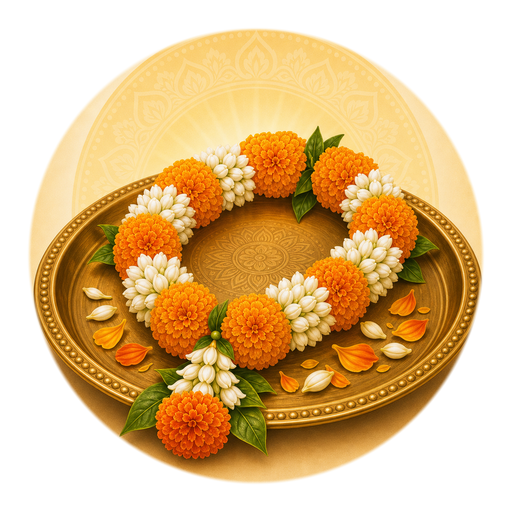 Flower garland
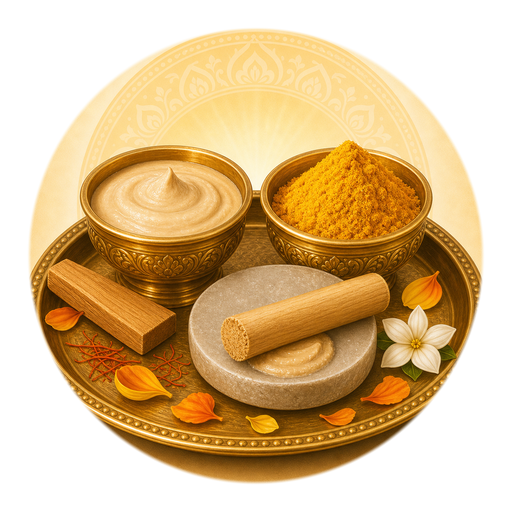 Gandha/ashtagandha
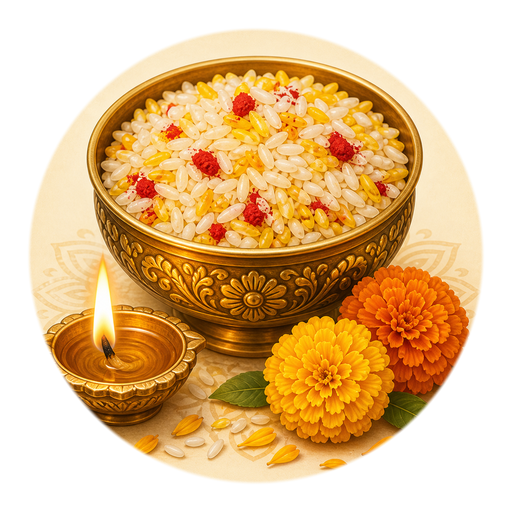 Akshata
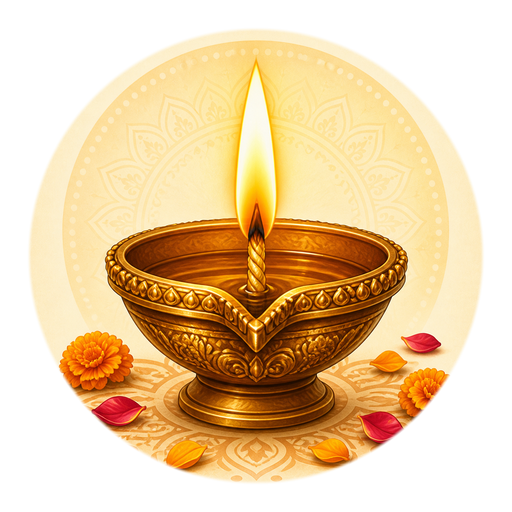 Ghee/oil lamp
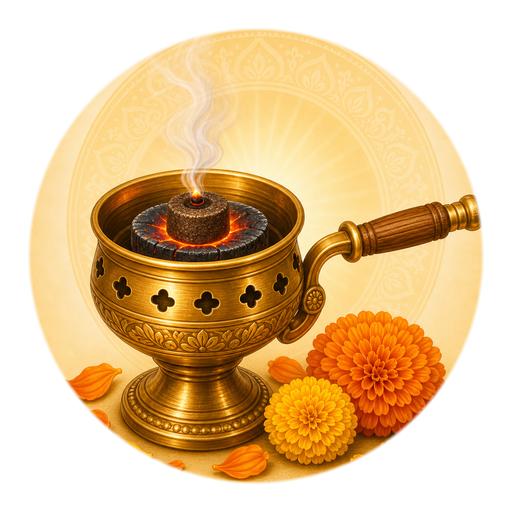 Dhoop
Dhoop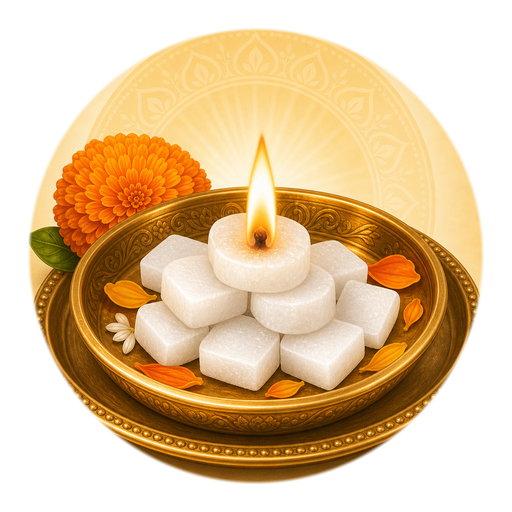 Kapoor (camphor)
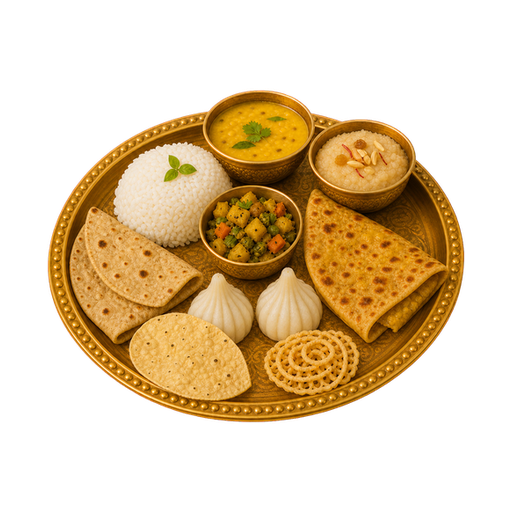 Naivedya
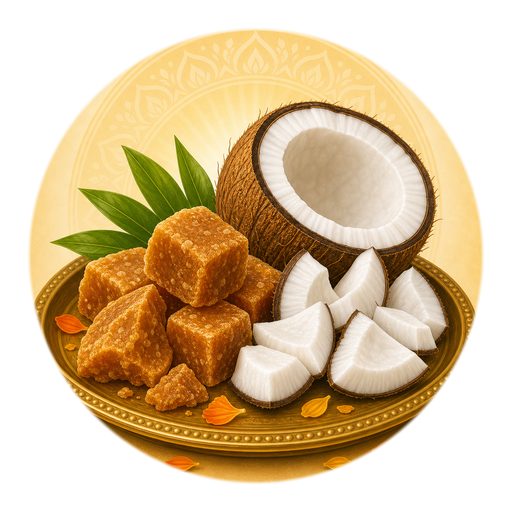 Gul-khobare
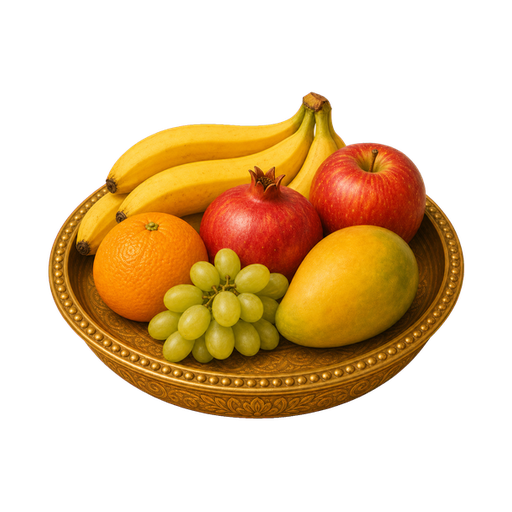 Bananas
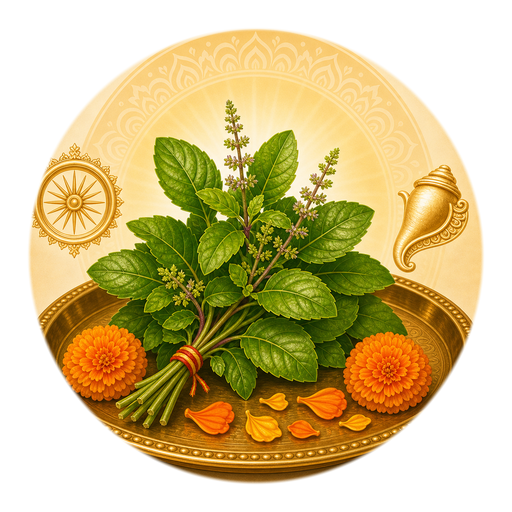 Tulsi
TulsiFasting & food (upvas)
- Many devotees keep a day-long upvas and break it after the janmotsav/aarti; those who keep the Tuesday Hanuman fast also fast on this jayanti.
- ⚠️ Note: the "Hanuman Jayanti upvas" is recorded on the previous day — 1 April 2026 (Chaitra Shukla 14) — with the jayanti itself on 2 April.
- Naivedya / prasad: gul-khobare, bundi / motichoor ladoo, bananas, panchamrut (by tradition).
The strict or relaxed form of the fast varies by tradition — don't take it as a universal rule. Adjust jaggery-ladoo/prasad to your health (diabetes, etc.).
Mantra & aarti
The main Maruti aarti in Maharashtra is "Satrane Uddane" (composed by Samarth Ramdas, public-domain). The full text (romanized) is given below. Its meaning and when to sing it follow.
- When to sing: during the janmotsav and daily worship, after the naivedya is offered.
- Meaning, in brief: the aarti describes Hanuman's mighty leap and roar shaking the earth, seas and sky, making the three worlds tremble, and hails him as the one by whose grace the devotee no longer fears even death (Yama); it closes with Ramdas's note that this is the awakening of Ram's own shakti (power).
Two other stotras are popular at the janmotsav and in daily recitation:
- Bhimarupi Maharudra stotra (Maruti stotra) — composed by Samarth Ramdas. It describes Hanuman's form, strength and speed and praises him for protection; recognizable opening line: "Bhimarupi maharudra vajra Hanuman Maruti…"
- Hanuman Chalisa — composed by Tulsidas; a praise of Hanuman in 40 chaupais (describing his virtues, strength and devotion to Ram), recited regularly for relief from troubles.
Regional variations
The Maharashtra angle is the differentiator — this can vary by local or family custom.
- Sunrise janmotsav: kirtan/Ramayana recital from before dawn, paused at the birth moment for prasad — a distinctive Maharashtra custom.
- Shendur + oil offering: Hanuman is coated in shendur and oil all over; devotees apply the shendur from the murti to their own foreheads. (By the katha: seeing Sita apply shendur in the parting of her hair, Hanuman coated his whole body in shendur for Ram's long life.)
- Samarth Ramdas and the "Akara Maruti": Ramdas established eleven Maruti temples (Chaphal and others, from 1648 on) across southern Maharashtra; Hanuman as the ideal of strength, exercise and valour. Hanuman Jayanti carries great weight in the Ramdasi tradition.
- Twice a year (regional tithi variance): Maharashtra/North India = Chaitra Purnima; but in the South/Telugu tradition it is Vaishakh Krishna Dashami (a ~41-day festival that begins on Chaitra Purnima and ends in Vaishakh), in Karnataka Margashirsh/Vaishakh Shukla Trayodashi, and in Kerala/Tamil Nadu the Dhanu (Margazhi) month — so different days are observed by tradition. This is why Hanuman Jayanti can fall more than once in a year.
- Palkhi/procession and continuous Sundarkand recital: a Maruti palkhi with dhol-tasha; in some places a continuous recital. (Local detail — verify with the local temple/committee.)
Good to know
- Birth at sunrise is the belief; but the exact sunrise time varies by city and year → check it on the 2 April 2026 day page; no universal time is stated here.
- The upvas is optional; adjust jaggery-ladoo/prasad to your health.
- Temple crowds: the janmotsav and palkhi draw large crowds — take care of elders and small children. (Check local advisories.)
- Avoid eye contact with the shendur-oil when offering it to the murti.
FAQ
- When is Hanuman Jayanti in 2026?
- In Maharashtra/North India, 2 April 2026, Thursday (Chaitra Shukla Purnima).
- Why is Hanuman Jayanti celebrated?
- The belief is that Hanuman was born on Chaitra Purnima; the day is celebrated as his birth festival.
- At what time was Hanuman born?
- He is held to have been born at sunrise; so worship starts before dawn and prasad is distributed at the birth moment. The exact sunrise time varies by city.
- What should you do on Hanuman Jayanti?
- An early-morning snan and puja, recital of the Hanuman Chalisa / Sundarkand, the shendur-oil offering, and the aarti with prasad. (Details vary by family custom.)
- Why are shendur and oil offered to Hanuman?
- By the katha, seeing Sita apply shendur in the parting of her hair, Hanuman coated his whole body in shendur for Ram's long life — and so the custom of offering shendur and oil took root.
- Why does Hanuman Jayanti fall twice a year?
- Because of the different regional panchang traditions: Maharashtra/North India = Chaitra Purnima; the Telugu tradition = Vaishakh Krishna Dashami (41-day); Karnataka/Tamil Nadu-Kerala = still other tithis. (It varies by tradition.)
- What is the connection between Samarth Ramdas and Maruti?
- Ramdas was a devotee of Ram and Hanuman; he established the "Akara Maruti" (eleven Maruti) temples across southern Maharashtra and held Hanuman up as an ideal of strength and valour.
- Should you keep a fast on Hanuman Jayanti?
- Many devotees do (those keeping the Tuesday fast especially); it is optional and decided by tradition.