Ram Navami
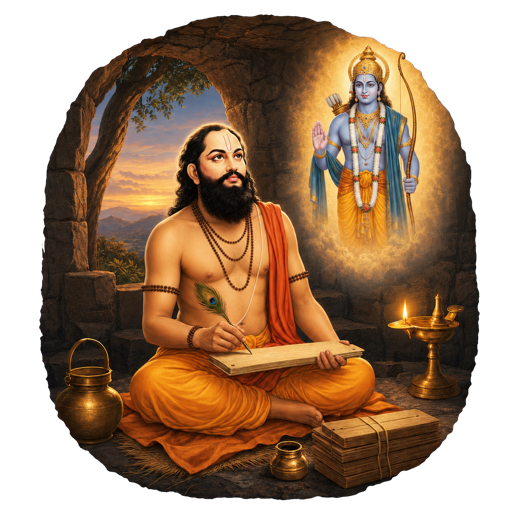
Ram Navami is the birth celebration (janmotsav) of Lord Shri Ram, falling on Chaitra Shukla Navami (the ninth tithi of the bright fortnight of Chaitra masa). By tradition Shri Ram was born to King Dasharath and Queen Kausalya in Ayodhya; he is taken as the seventh avatar of Vishnu and the ‘Maryada Purushottam’ (the ideal man). Because his birth is held to be at madhyahna (midday, around 12 noon), the main celebration happens then — rocking the cradle (palna), reciting the Ram Raksha and Ramayana, and (in Maharashtra) sharing sunthavada prasad. It is the ninth and final day of Chaitra Navratri. This year's date (2026): Thursday, 26 March.
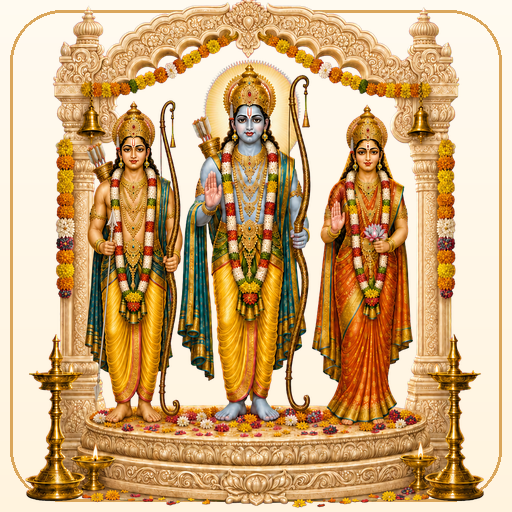
This year's dates (2026)
Significance
Ram Navami matters on several counts:
- The birth of Shri Ram: Shri Ram is held to have been born in Ayodhya on Chaitra Shukla Navami — hence the day is Ram Navami, the birth festival (janmotsav).
- The seventh avatar of Vishnu: Shri Ram is taken as the seventh avatar of Vishnu; his life stands for dharma, restraint and truth, and the day is seen as a symbol of the victory of good over evil.
- The close of Chaitra Navratri: Chaitra is the Marathi new-year month and the start of the spring season. Ram Navami is the concluding tithi (the ninth day) of Chaitra Navratri, so it is treated as the peak of the navratri observance.
- A midday birth: Because Ram's birth is placed at madhyahna (when the sun is overhead), the main puja and janmotsav are held around 12 noon — the festival's distinctive timing.
The legend (katha)
The katha of Ram Navami tells the events leading up to Shri Ram's birth. The story-spine below is shared across traditions; some details differ by version, and those are noted as such.
King Dasharath of Ayodhya had three queens — Kausalya, Kaikeyi and Sumitra — yet for many years he had no son. On the advice of the sages, Dasharath performed a Putrakameshti Yajna (a sacrifice for progeny). (In some versions the advising sage is Vashishta, while Rishyashringa is said to have supervised the yajna.)
From the sacred fire of the yajna a divine being appeared and gave the king a vessel filled with payasam (a milk-and-rice pudding, kheer), asking that it be shared among the queens. After they partook of it, in due course four sons were born — Shri Ram to Kausalya, Bharat to Kaikeyi, and the twins Lakshman and Shatrughna to Sumitra. Of these, Kausalya gave birth to Shri Ram at midday on Chaitra Shukla Navami — and that is Ram Navami.
The proportions in which the payasam was divided differ between versions — in some tellings half goes to Kausalya and shares to Sumitra and Kaikeyi, while other tellings give it differently; so no single split should be taken as fixed. The story rests mainly on the Valmiki Ramayana; for popular recitation, Tulsidas's Ramcharitmanas is used.
Who observes it
Ram Navami is observed by all devotees of Ram, especially Warkari and Ram-worshipping families, along with Ram temples and maths. Publicly, temples hold a large midday janmotsav. In Maharashtra it is a public holiday. At home, most families keep the day with a puja, naam-smaran (chanting the name), and naivedya.
Puja vidhi (how to perform)
The steps below are general guidance; details can vary by household and local custom.
- Bathe in the morning and wear clean (preferably yellow) clothes; spread a yellow cloth on a wooden seat (paat) or chaurang at the place of worship.
- Place the murtis or images of Shri Ram, Sita, Lakshman and Hanuman, and purify with gangajal (holy water).
- Offer chandan (sandal paste), akshata, yellow flowers and cloth-ornaments; light a ghee lamp, dhoop and kapoor (camphor).
- Recite the Ram Raksha Stotra, the Ramayana / Sundarkand, and bhajan-kirtan.
- At madhyahna (around 12 noon) — the moment of Ram's birth — celebrate the janmotsav by rocking the cradle (palna) of the infant Ram; people raise the chant ‘Shri Ram Jai Ram Jai Jai Ram.’
- Show naivedya, perform the aarti, and distribute prasad. In some places a Ram-Sita wedding (vivah) is enacted, or temples perform a Ram Rajya abhishek.
Ram Navami is a one-day janmotsav, so there is usually no separate udyapan (concluding rite); if Chaitra Navratri has been kept, it concludes on this same day.
What you need (samagri)
Paat or chaurang + yellow cloth · murti/image of Shri Ram (with Sita, Lakshman, Hanuman) · gangajal · chandan / ashtagandha · akshata · yellow flowers and garland · tulsi · ghee lamp · dhoop · kapoor · a cradle (palna) with an image of the infant Ram · naivedya (sunthavada / kheer / panchamrut) · aarti items.
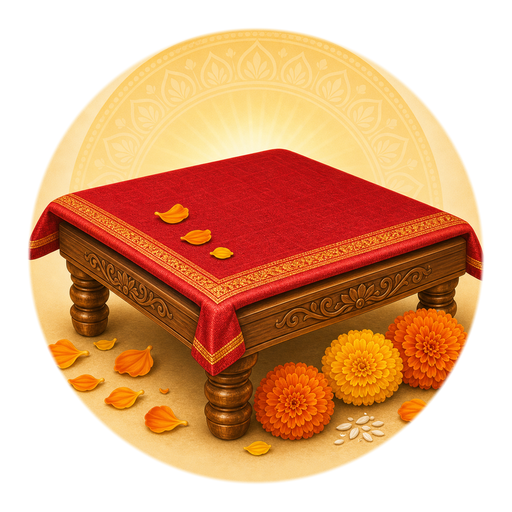 Paat / chaurang
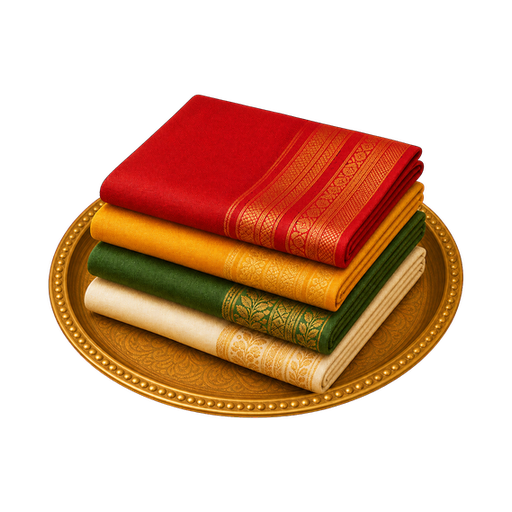 Yellow cloth
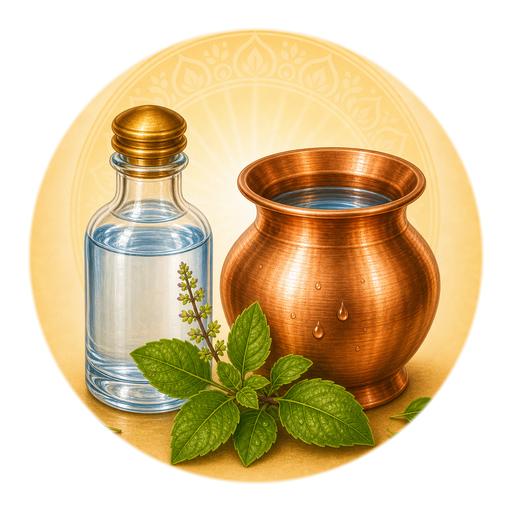 Gangajal
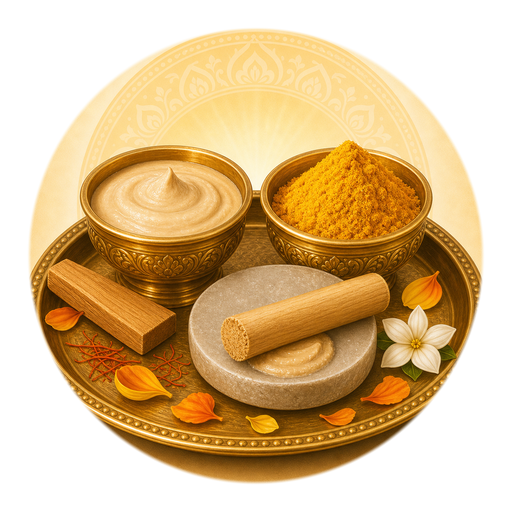 Chandan / ashtagandha
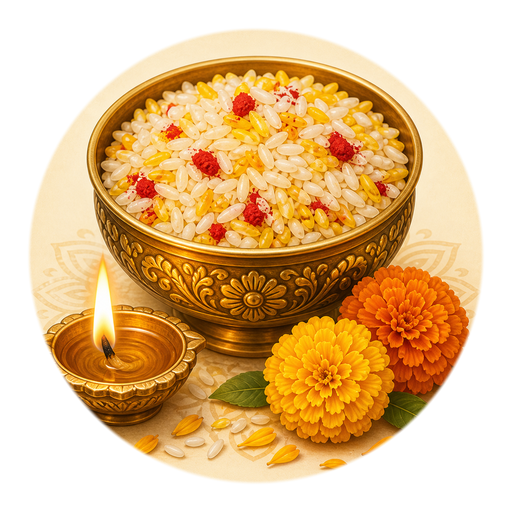 Akshata
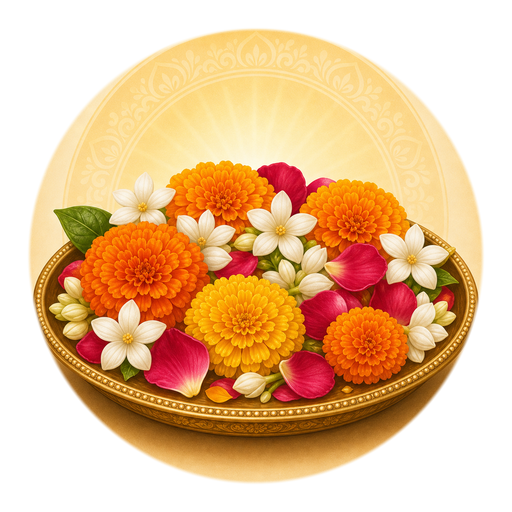 Yellow flowers
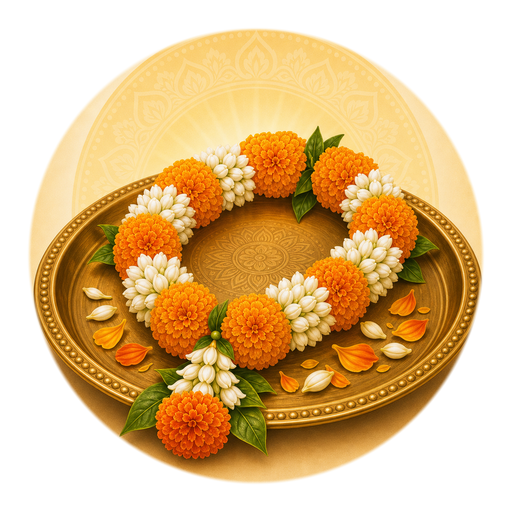 Garland
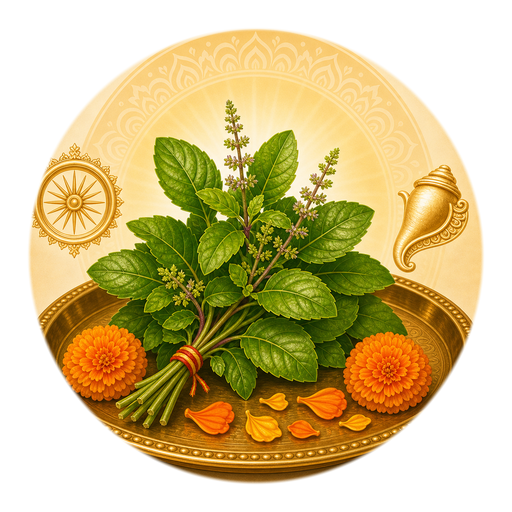 Tulsi
Tulsi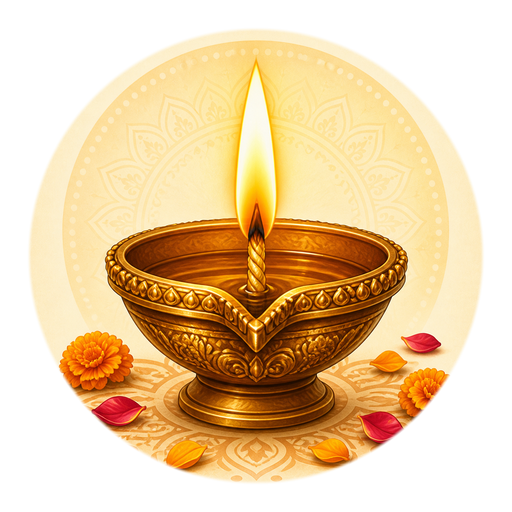 Ghee lamp
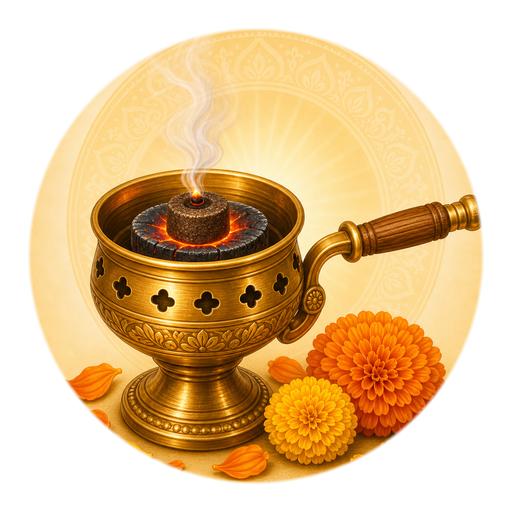 Dhoop
Dhoop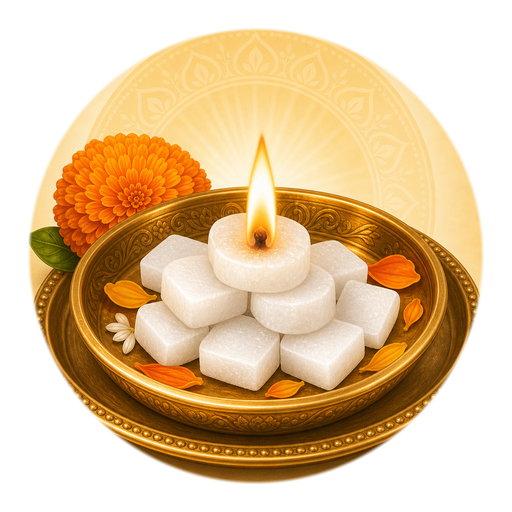 Kapoor (camphor)
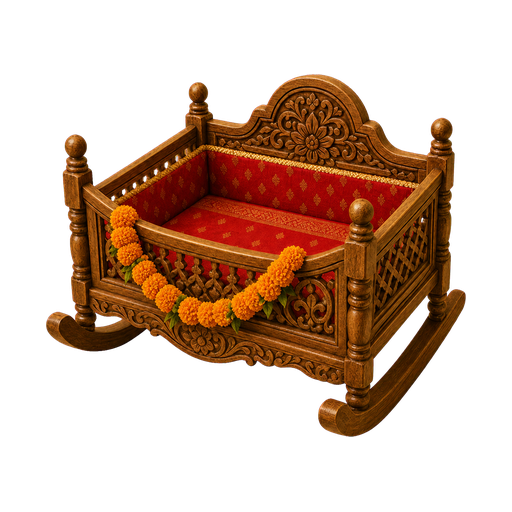 Cradle (palna)
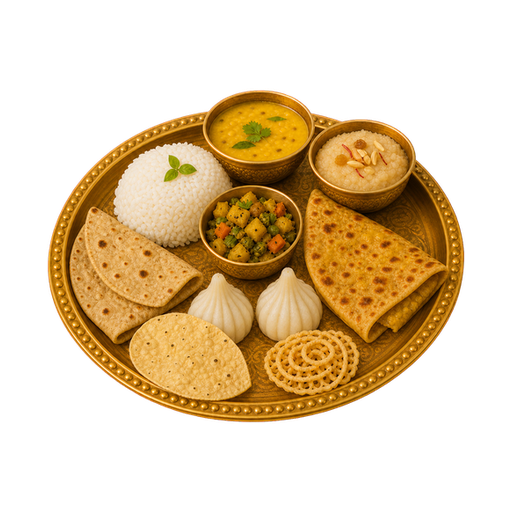 Naivedya (sunthavada / kheer)
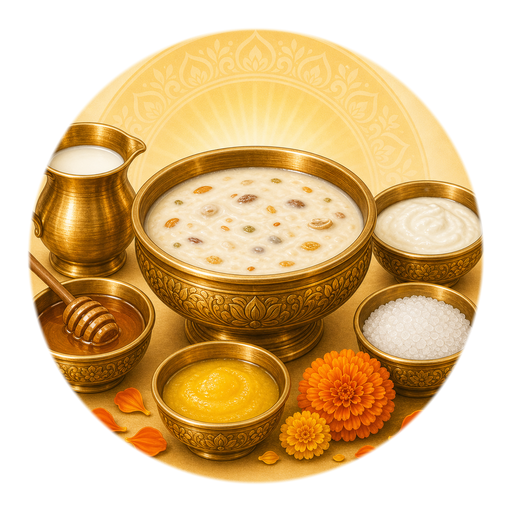 Panchamrut
Fasting & food (upvas)
- Many devotees keep a day-long fast (upvas) on Ram Navami; some observe an ‘aath prahar’ (whole-day) upvas and break it after the janmotsav or after sunset with sattvik (pure vegetarian) food.
- For naivedya and prasad: sunthavada (dry ginger + jaggery — special to Maharashtra), panchamrut, kheer, shrikhand, halwa, or chana/sundal.
- How strict or relaxed the upvas is varies by tradition. If you have a health condition (diabetes, etc.), take sunthavada/kheer in moderation.
Mantra & stotra
On Ram Navami, chanting the name of Ram (naam-jap) and reciting the Ram Raksha Stotra are taken as the main practices.
Ram naam-jap: ‘Shri Ram Jai Ram Jai Jai Ram’ is the thirteen-syllable naam-jap chanted everywhere in Maharashtra; by tradition it is associated with Samarth Ramdas. Its sense is a joyous invocation of the name of Ram. (Note: under the name ‘Ram Taraka mantra,’ sources give different text — some the jap above, others the form ‘Ram Ramaya Namah’ — so no single form should be taken as fixed.)
Ram Raksha Stotra: a Sanskrit protective hymn (a ‘raksha-kavach,’ or shield, for Ram) composed by the sage Budha Kaushika, recited on Ram Navami and in daily practice. Meaning: its sense is that the name of Ram grants a shield of protection. The recognizable opening line and the full stotra are not printed here; take the authoritative text from your household pothi or a standard collection.
Regional variations (Maharashtra)
These customs can vary by local and household tradition.
- Midday janmotsav and palna: around 12 noon, in temples and at home, people rock the cradle of the infant Ram and celebrate his birth with chanting.
- Sunthavada prasad: the dry-ginger-and-jaggery sunthavada is taken as Maharashtra's distinctive Ram Navami prasad (tied to the sunth-and-jaggery traditionally given after a birth).
- The close of Chaitra Navratri: Ram Navami is the ninth day of Chaitra Navratri; it is also linked to the month's household Chaitragaur and haldi-kunku tradition.
- Large public celebrations: Ram temples across the state — including Nashik (Kalaram temple) and the Pandharpur area — hold kirtan-bhajan and the janmotsav. (Check local details with the particular temple.)
Good to know
- The exact time of the madhyahna (midday) birth muhurat varies by city and date — rather than treating it as universal, see the day page for 26 March 2026; that is where the exact timings for the day are given.
- The upvas is optional; if you have a health condition (diabetes, etc.), take sunthavada/kheer in moderation.
- Temple crowds: the midday janmotsav draws large crowds — take care of elders and small children, and check local advisories.
- Hanuman Jayanti follows on Chaitra Purnima (2 April 2026); by tradition it is linked to the Ram worship that begins on Ram Navami.
FAQ
- When is Ram Navami in 2026?
- Ram Navami is on Thursday, 26 March 2026 (Chaitra Shukla Navami).
- Why is Ram Navami celebrated?
- By tradition, Shri Ram was born in Ayodhya on Chaitra Shukla Navami; the day is celebrated as his birth festival. Shri Ram is taken as the seventh avatar of Vishnu.
- What should you do on Ram Navami, and how is the puja performed?
- The usual order is a morning bath and puja, recitation of the Ram Raksha / Ramayana, the midday cradle-rocking janmotsav, and naivedya with aarti. The exact vidhi varies by household tradition.
- At what time is the janmotsav celebrated?
- Ram's birth is placed at madhyahna (around 12 noon), so the main janmotsav is held then. The exact time varies by city; see it on the day page.
- Should one fast on Ram Navami, and what is eaten?
- Many keep a day-long upvas and break it with sattvik food. Sunthavada, kheer, panchamrut or faral is taken. (This varies by tradition.)
- What is sunthavada, and why is it shared?
- Sunthavada is a Maharashtrian prasad of sunth (dry-ginger powder) and jaggery. It is shared specially on Ram Navami to mark the birth of Ram.
- How are Ram Navami and Chaitra Navratri related?
- Ram Navami is the ninth and final day of Chaitra Navratri, so it is taken as the concluding tithi of the Chaitra navratri observance.