Madhvacharya Jayanti
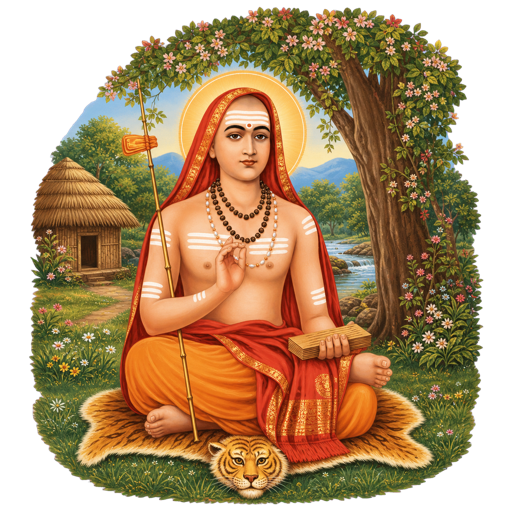
Shri Madhvacharya was the founder-acharya of Dvaita Vedanta (Tattvavada) philosophy — regarded as one of the three principal acharyas of Vedanta, alongside Adi Shankaracharya (Advaita) and Ramanujacharya (Vishishtadvaita). His Jayanti falls on Ashwin Shukla Dashami — in 2026, on Wednesday, 21 October. Only one Jayanti falls each year.

This year's dates (2026)
An important note: this tithi (Ashwin Shukla Dashami) falls on the very same day as Vijayadashami/Dussehra this year. These are two separate festivals — Vijayadashami is an independent festival marking the close of Navratri, while Madhvacharya Jayanti is the birth-remembrance of an acharya that happens to coincide with the same tithi. They should be understood separately, without conflating the two.
He challenged Advaita by holding that the self (jiva) and Brahman are eternally distinct, and he founded eight mathas (Ashta Matha) at Udupi. The Jayanti is mainly observed with special worship at the Udupi Krishna Matha and the Ashta Matha tradition, along with recitation of Madhva's compositions.
Significance
Dvaita Vedanta (Tattvavada) is Madhvacharya's core doctrine — "reality is twofold: independent (Vishnu/the Supreme) and dependent (jiva-jagat)" — the direct opposite of Advaita's teaching that "the self and Brahman are one." He is recorded as having viewed Advaitins as teaching Buddhism under the guise of Vedanta, and he also disputed certain points in Ramanuja's Vishishtadvaita.
His literary legacy is considered extensive — about 37 Sanskrit works are attributed to him, including the Brahma Sutra Bhashya, the Gita Bhashya, commentaries on the Upanishads, and the Anuvyakhyana (regarded as his finest work). His Tattvavada is also believed to have influenced Karnataka's Haridasa movement and the Bengal Vaishnava (Chaitanya) tradition.
Biography (brief)
Born with the name Vasudeva; tradition places his birth at Pajaka village near Udupi. As a young man he took sannyasa under the Advaitin guru Achyutapreksha, but later rejected Advaita and put forward his own Dvaita doctrine.
Scholars hold two prominent positions on his birth and death years — 1199-1278 CE (one estimate) versus 1238-1317 CE (a second, more widely cited view).
By tradition, he is regarded as the third avatar of Vayu (after Hanuman and Bhima). Modern scholars (for example, Roque Mesquita) have questioned the authenticity of many of his Puranic citations, while traditional Dvaita scholars (for example, B.N.K. Sharma) dispute this.
Miracle legends associated with Madhvacharya include golden tamarind seeds, eating enormous quantities of food, and crossing the Ganga without getting his clothes wet — these should be understood as hagiography (devotional legend), not history.
Who observes it
Mainly Madhva/Dvaita followers, and devotees connected to the Udupi Ashta Matha and the Krishna Matha, along with the broader Karnataka-centred Vaishnava tradition. Dvaita followers are noted generally to be present in small numbers in Maharashtra too, but no distinct Maharashtra-specific observance custom is documented.
Observance
Special worship and abhishek are held at the Udupi Krishna Matha and the Ashta Matha; recitation of and discourses on Madhvacharya's Brahma Sutra Bhashya/Gita Bhashya are organised. No documented household vrat or fast specific to this day was found — this is mainly a matha/institution-centred observance.
The eight mathas at Udupi (Palimaru, Adamaru, Krishnapura, Puttige, Shirur, Sodhe, Kaniyuru, and Pejavara) are traditionally held to have been founded by Madhvacharya, and since 1522 CE these mathas have managed the Udupi Krishna temple in rotation (the Paryaya system). The precise history of the mathas' founding rests mainly on tradition and later biographical texts — independent contemporary historical documentation is limited.
Regional customs
Madhvacharya Jayanti is originally a Karnataka (Udupi)-centred tradition. Followers of the Dvaita/Madhva tradition are found in scattered numbers across Maharashtra, but no distinct, documented Maharashtra-specific custom for this Jayanti was found.
Good to know
- This tithi falls on the same day as Vijayadashami/Dussehra.
- Two scholarly estimates exist for his birth/death years: 1199-1278 CE and 1238-1317 CE.
- The Vayu-avatar claim and the miracle stories are traditional/devotional legends.
- Observance in Maharashtra is limited — the Jayanti is kept mainly at the Udupi Krishna Matha and the Ashta Matha.
FAQ
- When is Madhvacharya Jayanti in 2026?
- Wednesday, 21 October 2026 — Ashwin Shukla Dashami.
- Who was Madhvacharya?
- The founder-acharya of Dvaita Vedanta (Tattvavada) philosophy and founder of the Udupi Ashta Matha.
- What is Dvaita Vedanta (Tattvavada)?
- The doctrine that the self (jiva) and Brahman (Vishnu) are eternally distinct — the opposite of Advaita's "jiva=Brahman" teaching.
- Why does Madhvacharya Jayanti fall on Vijayadashami?
- Tradition holds that he was born on Ashwin Shukla Dashami, the same tithi as Vijayadashami.
- What are the Udupi Ashta Mathas?
- Palimaru, Adamaru, Krishnapura, Puttige, Shirur, Sodhe, Kaniyuru, and Pejavara — each originally headed by one of his disciples.
- What is the difference between Madhvacharya and Adi Shankaracharya?
- Adi Shankaracharya taught Advaita (jiva=Brahman), while Madhvacharya taught Dvaita (jiva and Brahman are eternally distinct).