Dussehra / Vijayadashami
Dussehra (Vijayadashami) is the festival on Ashwin Shukla Dashami — it marks the close of Sharadiya Navratri and celebrates the victory of good over evil. By tradition, the Devi slew the demon Mahishasura and Lord Ram slew Ravan on this tithi. In Maharashtra people give each other apta leaves as ‘gold’ (sona) on this day, perform seemollanghan (crossing the village boundary), and do puja of the Shami tree, goddess Aparajita, and their weapons/tools (ayudha); students do Saraswati and pati pujan. Because Dussehra is one of the sade-teen muhurat (the ‘three and a half’ auspicious days) as a full muhurat, no separate dinshuddhi (auspicious-day check) is needed for purchases or new beginnings. This year's date (2026): Tuesday, 20 October.
This year's dates (2026)
Significance
Dussehra matters on several counts:
- Vijayadashami = ‘the Dashami of victory’: the victory won on the tenth day, after nine nights of devotion to the Devi. The victory of truth and dharma over untruth and adharma is taken as the festival's central theme.
- One of the sade-teen muhurat: in the Hindu tradition Gudi Padwa, Akshaya Tritiya and Dasara (three full) plus Diwali Padwa / Balipratipada (a half) make up the ‘sade-teen muhurat.’ On these days there is a self-fulfilled (swayamsiddha) combination of tithi, nakshatra and yoga, so by tradition you need no separate dinshuddhi for buying a vehicle, property, gold or clothes and for starting new ventures.
- Season and harvest: Ashwin is a masa (month) of devotion to the Devi; the monsoon ends and the sharad (autumn) season settles in. Diwali follows twenty days after Dussehra — it is the starting point of the festive season.
- Historical, martial meaning (Maharashtra): after the monsoon, kings and warriors once set out on campaign, performing seemollanghan and doing puja of their ayudha, wishing for victory.
The sade-teen muhurat list: Gudi Padwa · Akshaya Tritiya · Dasara (three full) + Diwali Padwa / Balipratipada (a half) — this list is tradition-based; even so, cross-check against your reference panchang.
The legend (katha)
Dussehra is not tied to a single story — it is linked to three separate katha threads. These stories are not about the same event; they are alternatives to one another, not rivals. Details of all three threads vary by tradition and source.
Devi–Mahishasura and Ram–Ravan (the Navratri-close thread)
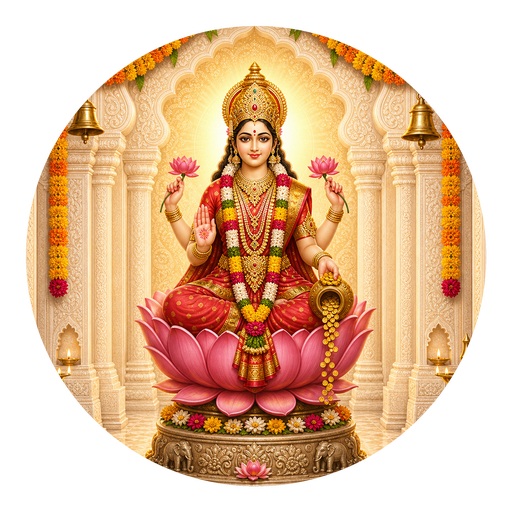
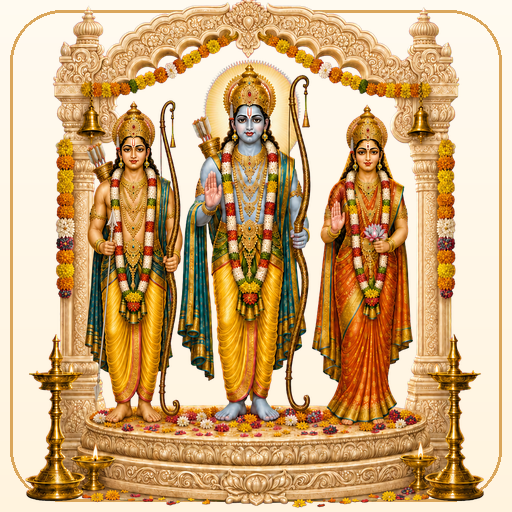
By tradition, the Devi won her final victory by slaying the demon Mahishasura on Dashami, after nine days of battle — hence ‘Vijayadashami.’ On the same tithi Lord Ram is held to have slain Ravan, defeating ego and adharma; in north India this thread is marked with Ravan-dahan and Ramlila. (These two stories are covered at length on the Navratri page — here they are in brief.)
Kauts–King Raghu–Kuber (the story of sharing apta leaves as ‘gold’)
This is the Dussehra-specific legend. When the student Kauts finished his education, he offered his guru a gurudakshina; the guru (in some versions the sage Varatantu) asked for one crore gold coins per vidya — fourteen crore for fourteen vidyas. Kauts went to King Raghu of Ayodhya; but the king's treasury was empty, as he had recently given away all his wealth in the Vishwajit yajna. Then a rain of gold fell on the apta and Shami trees outside Ayodhya. The guru took only fourteen crore; the gold that was left, Kauts placed under the tree and told people to take it — and from that memory, people to this day give apta leaves as ‘gold’ to one another on Dussehra.
Versions differ on why Kuber made the gold rain fall — in some versions King Raghu prepared to march on Kuber, forcing his hand; in other versions Indra himself, on hearing of it, had Kuber make it rain gold.
The Pandavas and the Shami tree (the weapon-puja thread)
During their agyatvas (year in disguise) the Pandavas had hidden their weapons in a Shami tree; when the agyatvas ended, they took them back on Dussehra — this is cited as the basis for Shami puja and the puja of ayudha. Some versions also mention that Lord Ram did Shami puja before his campaign against Ravan.
Who observes it
- Hindu families at home celebrate Dussehra; giving and receiving apta leaves and bowing to elders is a near-universal custom.
- The kings and warriors of the past → today's soldiers, farmers, craftspeople and business owners do ayudha puja of their weapons, tools, machines and vehicles.
- Students and artists do Saraswati and pati pujan of their books, writing-slate (pati) and instruments — the day is taken as auspicious for beginning study.
Puja vidhi (how to perform)
The steps below are general guidance; details can vary a little by household and region.
- Navratrotthapan / lifting the ghat: the nine-day ghat and the akhand deep (unbroken lamp) are lifted and honoured; the sprouted grain (from the sown seeds) is used with reverence. (The Navratri ritual is covered in detail on the Navratri page.)
- Shami puja and Aparajita puja: puja of the Shami / apta tree; an ashtadal (eight-petalled figure) is drawn on the ground for the puja of goddess Aparajita (Aparajita means ‘she who is never defeated,’ a giver of victory).
- Weapon / ayudha puja: weapons, tools, machines and vehicles are cleaned, marked with haldi-kunku, flowers and a tilak, and offered puja and naivedya.
- Saraswati / pati pujan: puja of books, notebooks, the writing-slate and instruments; a resolve (sankalp) to begin study.
- Seemollanghan and sharing ‘gold’: in the evening people cross the village boundary (seemollanghan) and do puja of the apta tree; they give each other apta leaves as ‘gold,’ exchange good wishes, and bow to elders.
This day's Vijay muhurat (in 2026, 2:19–3:05 PM) shifts each year and by city; for the exact timings see the day page for 20 October 2026.
What you need (samagri)
Shami / apta leaves and a sprig · haldi-kunku · akshata · flowers (marigold) · dhoop-deep and niranjan · naivedya · vida-supari (betel) · an ashtadal figure for the Aparajita puja · weapons/tools/vehicle · Saraswati/pati books and instruments · gul-khobare (jaggery-coconut) or a sweet naivedya. (The list can vary by local custom.)
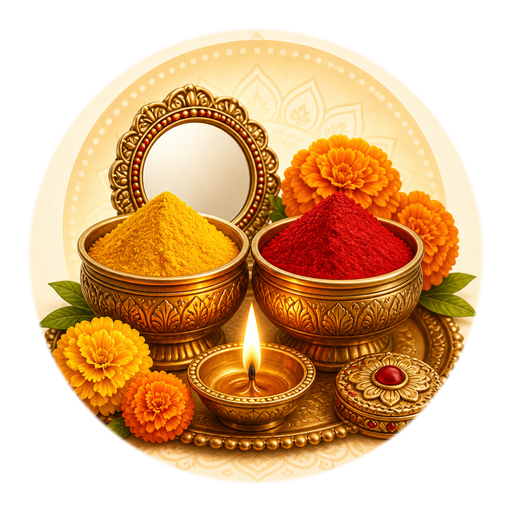 Haldi-kunku
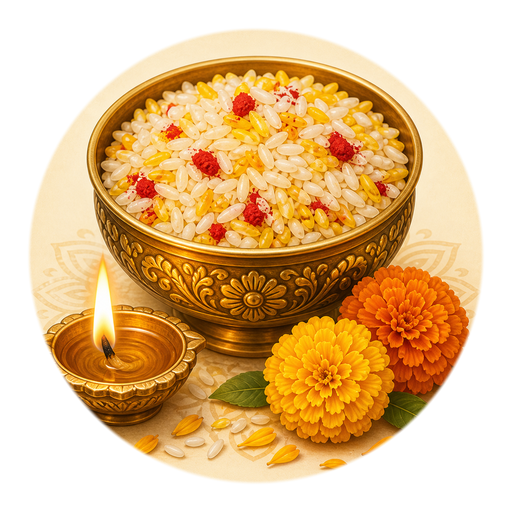 Akshata
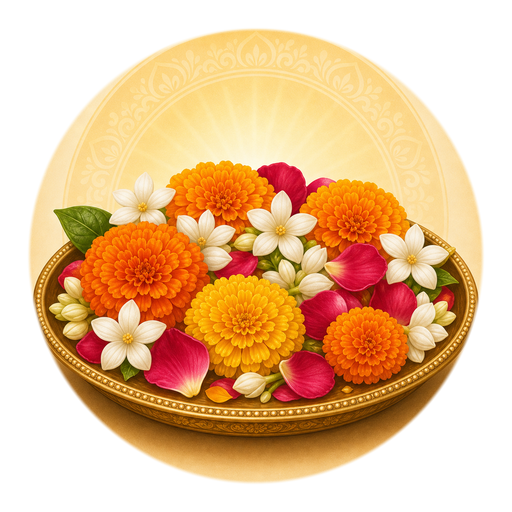 Flowers (marigold)
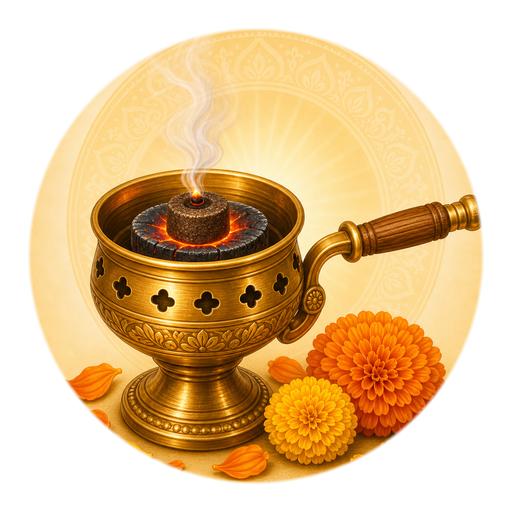 Dhoop
Dhoop Deep (lamp)
 Niranjan
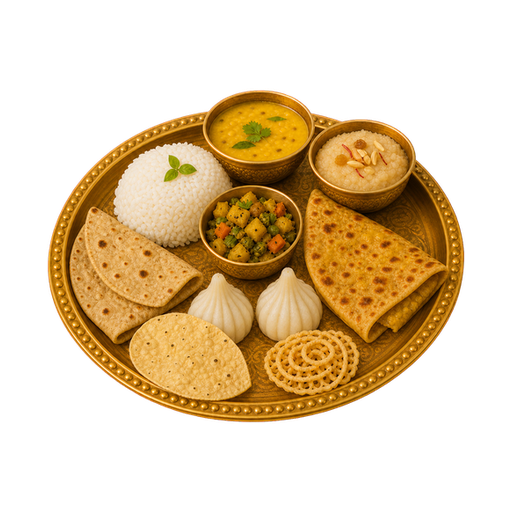 Naivedya
 Vida-supari
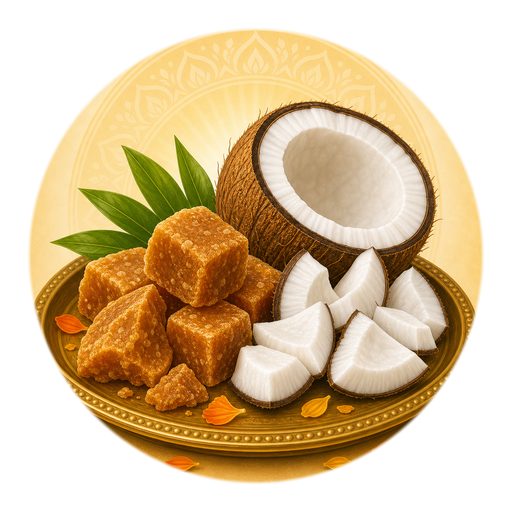 Gul-khobare
Fasting & food (upvas)
- Dussehra is mainly a festival / celebration day — there is no strict rule of upvas everywhere. In many places the parana (breaking) of the Navratri fast happens on this day.
- Sweet naivedya and dishes such as gul-khobare and shrikhand-puri are common. Food customs vary by household and tradition — no one practice should be presented as universal.
Mantra & aarti
Because Dussehra is the close of Sharadiya Navratri, the Devi's aarti is sung on this day. The Navratri aarti ‘Ashwinshuddhapakshi Amba’ by Samarth Ramdas — sung everywhere in Maharashtra — is the fitting one; its tenth verse itself names Dashami and seemollanghan, and describes Amba, lion-mounted, slaying Shumbha-Nishumbha and other demons, so it suits Dussehra too. Traditional shlokas are also recited at the Shami and Aparajita puja. The wording of the aarti and shlokas can vary slightly by tradition or sect.
- When to sing it: as the Devi's aarti at the navratrotthapan and the Dussehra puja (the close of the nine nights of worship). It walks day by day from Pratipada to Dashami — its tenth verse runs ‘Dashamiche divashi Amba nije seemollanghani ho…’ — ‘On Dashami the Amba goes forth at the seemollanghan, lion-mounted, bearing fierce weapons,’ recalling her victory over the demons.
- Shami shloka: its well-known opening is ‘Shami shamayate paap…’ — the sense being that the Shami tree quells sin and the inauspicious and grants the strength of victory.
Regional variations (Maharashtra)
- Sharing apta leaves as ‘gold’: this is Maharashtra's signature custom. The leaves shared are of the apta (Bauhinia racemosa), a tree distinct from the Shami. Tucking the leaves into a turban or cap, and giving them to elders to take their blessing, is customary. There is a folk line: ‘Sayankali sone lutuni Moru partuni ala’ (‘having gathered “gold” in the evening, Moru returned home’).
- Seemollanghan: crossing the village boundary after the monsoon — originally a martial, campaign custom. One source mentions Jijabai taking the young Shivaji Maharaj for seemollanghan; today it is taken as a symbol of crossing one's limits toward progress. A royal seemollanghan ceremony is held at Kolhapur and Satara.
- Ayudha / weapon puja and Saraswati-pati pujan: farmers, craftspeople and business owners do puja of their tools and vehicles; students begin their study.
- Ravan-dahan / Ramlila: in many cities — including Nagpur and the Mumbai suburbs — Ravan-dahan is held; it is growing under north-Indian influence. In Maharashtra, though, the core emphasis stays on apta and seemollanghan.
All of these customs can vary by tradition — rather than treating any one practice, direction or time as a universal rule, celebrate in your family's way. Check the timings of the royal seemollanghan and Ravan-dahan programs with the organisers / temple committee.
Good to know
- Apta vs Shami: apta (Bauhinia racemosa) and Shami (Prosopis cineraria) are different trees; in Maharashtra the leaves shared are mainly the apta, while the Shami puja is separate. (Apta is not neem.) An eco-note: avoid damaging the apta trees — take only a limited number of leaves.
- Buying muhurat: because it is a sade-teen muhurat, financial dealings and purchases rise on this day; even so, take big financial decisions using your own and your advisor's judgement.
- Crowds / ceremonies: the royal seemollanghan (Kolhapur-Satara) and Ravan-dahan programs draw crowds; check the timings with the organisers and take the usual care in crowds.
- Avoid the tithi confusion: ‘20th or 21st October?’ — 20 October; some national panchangs show 21 October (see the tithi note above).
FAQ
- When is Dussehra in 2026?
- Tuesday, 20 October 2026 (Ashwin Shukla Dashami, in the afternoon; nakshatra Shravan). Some national panchangs show 21 October — see the tithi note above.
- Why are apta leaves given as ‘gold’?
- By the Kauts–King Raghu–Kuber story, a rain of gold fell on the apta and Shami trees on this very day; from that memory, people give apta leaves to one another as ‘gold’ and bow to their elders.
- What is seemollanghan, and why is it done on Dussehra?
- Seemollanghan is crossing the village boundary in the evening to do puja of the apta tree and share ‘gold.’ Originally it was a post-monsoon campaign custom; today it is taken as a symbol of crossing one's limits and moving toward progress.
- What are the sade-teen muhurat, and is Dussehra one of them?
- Yes. Gudi Padwa · Akshaya Tritiya · Dasara (three full) and Diwali Padwa / Balipratipada (a half) are the sade-teen muhurat. By tradition, auspicious work can be done on these days without checking a separate dinshuddhi.
- What puja is done on Dussehra?
- Shami and Aparajita puja, puja of weapons/ayudha and vehicles, Saraswati/pati pujan by students, and the sharing of apta leaves as ‘gold.’ Navratrotthapan (lifting the ghat) also takes place on this day.
- What does Vijayadashami mean / how did the name come about?
- ‘The Dashami of victory’ — the tithi of the Devi's (over Mahishasura) and Lord Ram's (over Ravan) victory. The victory won on the tenth day, after nine nights of devotion to the Devi, gives the name ‘Vijayadashami.’
- Should one buy new things / a vehicle / gold on Dussehra?
- As a full muhurat among the sade-teen muhurat, buying and new work are taken as auspicious. Even so, take personal financial or jyotish decisions using your own judgement and an advisor's guidance.
- What is the link between Dussehra and Navratri?
- Dussehra is the close of Navratri (the tenth day) — the day of victory after nine nights of devotion to the Devi. The nine-day detail is on the Navratri page.