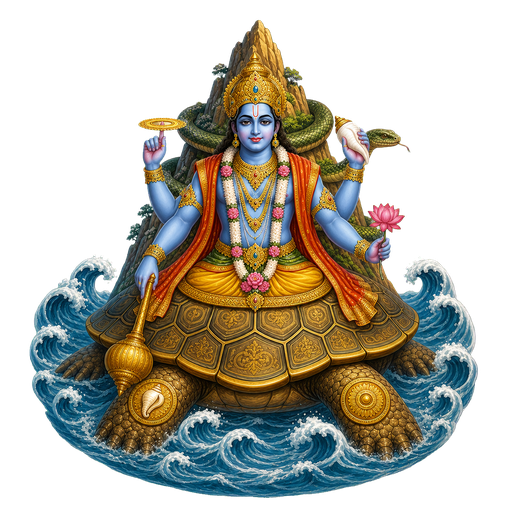
Adi Shankaracharya Jayanti
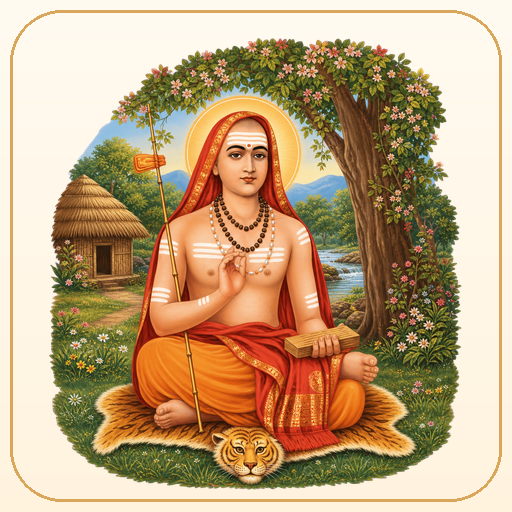
Adi Shankaracharya was the founder-organiser of the Advaita Vedanta school of philosophy — in a life of only about thirty-two years, he is believed to have revitalised Sanatan Dharma. Tradition holds him to be an incarnation of Shiva. His Jayanti is observed on Vaishakh Shukla Panchami — in 2026, on Tuesday, 21 April. Only one Jayanti falls each year. The day is mainly observed through recitation of stotras (Nirvana Shatakam, Bhaja Govindam), discourses on Advaita, and celebrations at the mathas — it is not a household vrat or fast.
This year's dates (2026)
Significance
Shankaracharya organised the philosophy of Advaita Vedanta (Kevaladvaita) — per the maxim "Brahma satya, jagat mithya, jivo brahmaiva na aparah," the self (jiva) and Brahman are one and the same, and duality is an illusion created by maya. Moksha means realising this oneness through hearing (shravana) of the Mahavakyas.
In an era of ritualism and philosophical confusion, he gave Vedanta an intellectual foundation by writing commentaries (bhashyas) on the Upanishads, the Brahma Sutras, and the Bhagavad Gita — which is why he is called Jagadguru. However, the claim that "he defeated Buddhism" should be avoided as an overstatement — the actual history is more complex; one account notes that Shankara remained comparatively overshadowed by Mandana Mishra until the 10th century.
To ensure the propagation of dharma and the continuity of the sannyasa tradition, the four Amnaya pithas and the Dashanami (Giri, Puri, Bharati, Saraswati, and others) sannyasi tradition are traditionally associated with him.
The Shanmata/Panchayatana style of worship — treating Shiva, Vishnu, Devi, Surya, and Ganesh as forms of the one Brahman — is also linked to him as a teaching of synthesis, though this form of worship existed even before his time; it is traditionally associated with him.
His literary legacy is extensive — commentaries on the Brahma Sutras, the major Upanishads, and the Gita, the Upadeshasahasri, and numerous stotras such as the Nirvana/Atma Shatakam, Bhaja Govindam, Kanakadhara Stotra, and Dakshinamurti Stotra.
Biography
Adi Shankaracharya's biography is largely built on tradition and hagiography — not verified event-history. Reliable historical information is scarce, and the biographical texts are considered to have been written centuries later, in an idealised form (around the 14th century, in Vidyaranya's time). The account below should be understood as "per tradition / per legend," not as historical fact.
Tradition holds that he was born at Kaladi in Kerala to a Nambudiri Brahmin couple, Shivaguru and Aryamba, after a long period of childlessness, by Shiva's grace — hence the name Shankara. His father passed away while he was still young; his mother gave him his early education in the Vedas and Upanishads. At around age eight, after obtaining his mother's permission with great difficulty, he took sannyasa — a popular legend tells of a crocodile seizing his leg, prompting his plea for permission to renounce.
By the banks of the Narmada, he met Govinda Bhagavatpada (a disciple of Gaudapada); when asked "Who are you?", Shankara answered with the Nirvana Shatakam ("Shivoham"), and Govinda accepted him as a disciple. He then travelled across India (digvijaya) to spread Vedanta, and after days of philosophical debate defeated the ritualist scholar Mandana Mishra, who, tradition says, then took sannyasa and became Sureshvaracharya.
Tradition holds that he left his body at around age thirty-two, at Kedarnath in the Himalayas.
Tradition, and the Sringeri matha officially, hold that Mandana Mishra himself became Sureshvaracharya, though modern scholars question this identification. The place where he left his body is traditionally held to be Kedarnath, though Kanchipuram and Kerala versions also exist.
Scholars significantly disagree on Adi Shankaracharya's dating — three major positions exist: 788-820 CE (an older scholarly estimate, now questioned), 700-750 CE (current scholarship), and the 5th century BCE (held by some matha traditions). None of these is presented here as settled historical fact — this page simply notes that "scholars disagree."
Who observes it
Especially Advaita Vedantins, Smartas, Dashanami sannyasis, and devotees connected to the four mathas; also Vedanta scholars, Sanskrit associations, and institutions like the Ramakrishna Math. In Maharashtra, this is not a widespread household festival — observance is mostly matha- and institution-centred (for example, branches of the Sringeri Sharada Peetham, Shri Shankar Mattham Mumbai, and the Ramakrishna Math).
Observance
There is no fixed household vrat or puja vidhi specific to this day. The following general practices are found at mathas and institutions:
- Special worship of Shankaracharya's murti or padukas at mathas and temples — sandal paste, flowers, incense, lamps, abhishek, and aarti.
- Recitation of stotras such as the Nirvana Shatakam, Bhaja Govindam, and Guru Stotra; discourses on Advaita and collective Vedic recitation.
- Reverence and meditation on the acharya as guru; processions or a palanquin at some places.
- Some devotees optionally keep a waterless, fruit-only, or sattvik fast — this is not mandatory.
What you need
An image, murti, or padukas of the acharya, sandal paste, unbroken rice, turmeric-kumkum, flowers, tulsi-bel leaves, incense, an oil or ghee lamp, camphor, fruit for naivedya, and a text of the Nirvana Shatakam/Bhaja Govindam for recitation — this applies mainly to matha/institutional worship; household observance tends to be minimal.
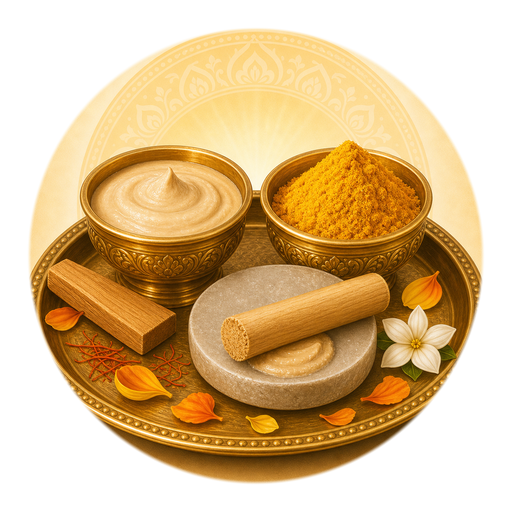 Sandalwood paste
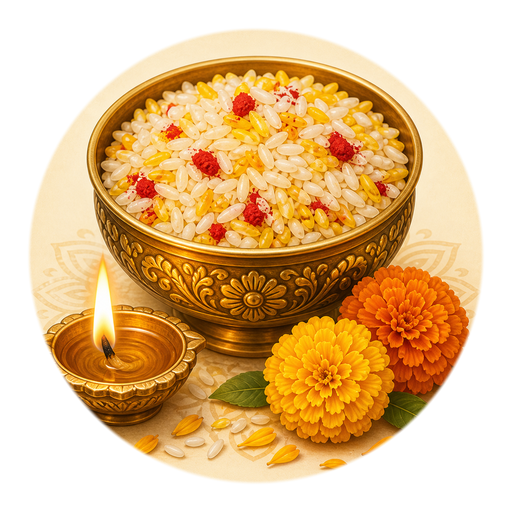 Akshata (unbroken rice)
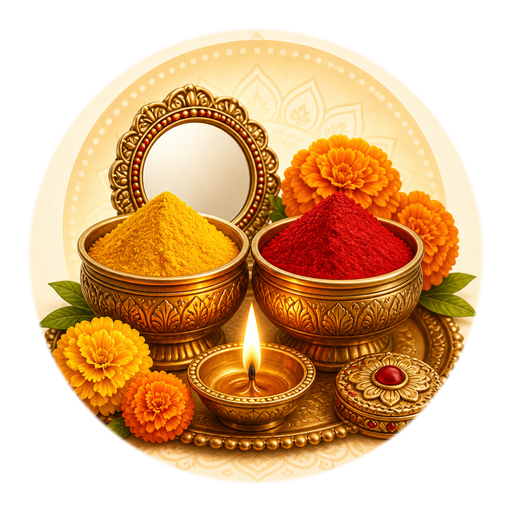 Turmeric-kumkum
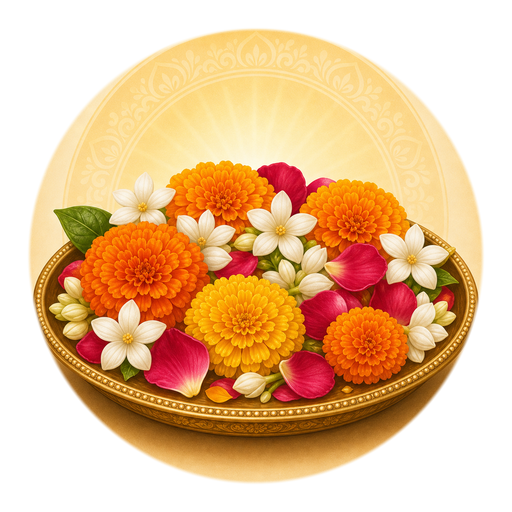 Flowers
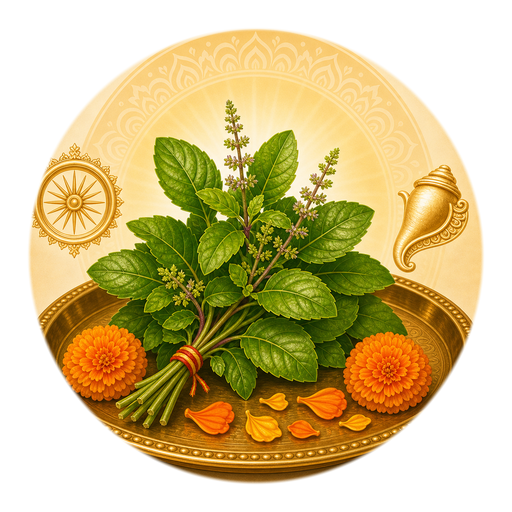 Tulsi leaves
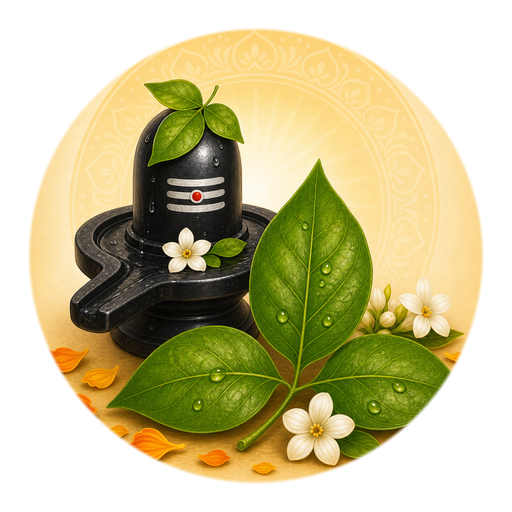 Bel leaves
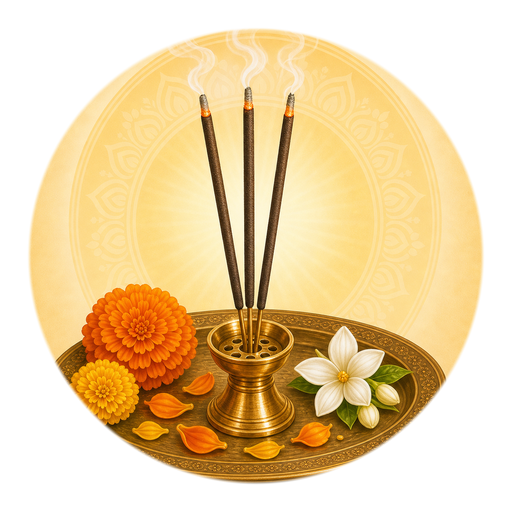 Incense (agarbatti)
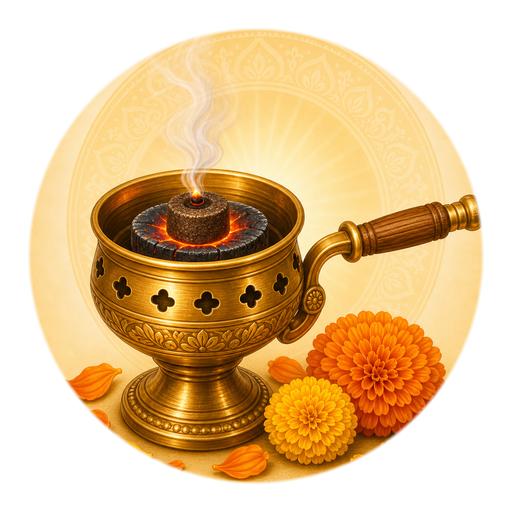 Dhoop
Dhoop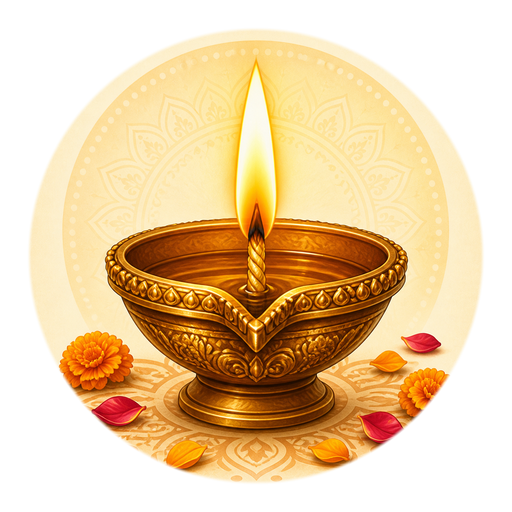 Oil or ghee lamp
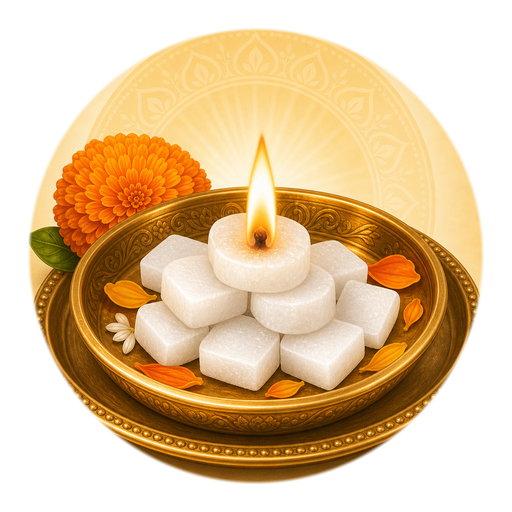 Camphor
 Fruit for naivedya
 Text (Nirvana Shatakam / Bhaja Govindam)
Mantra & stotra
The Nirvana Shatakam (Atma Shatakam) opens with the line "Manobuddhyahankara chittani naham…" and its refrain is "Chidanandarupah Shivoham Shivoham" — meaning "I am not the mind, intellect, ego, or memory; I am consciousness-bliss itself, I am Shiva." This composition is believed to be the answer he gave, at age eight, to Govinda Bhagavatpada's question "Who are you?"
Bhaja Govindam opens with "Bhaja Govindam Bhaja Govindam Govindam Bhaja Mudhamate…" — meaning "O foolish one, worship Govinda (Krishna); mere word-knowledge is of no use at the hour of death." This is a renunciation-themed stotra composed for an old grammarian in Kashi.
Other celebrated works attributed to him include the Kanakadhara Stotra, the Dakshinamurti Stotra, and the Saundarya Lahari — though authorship of some of these remains disputed.
The four Amnaya mathas and Mahavakyas
The following four pithas are traditionally linked to Adi Shankaracharya — the exact history of their founding is somewhat disputed; they are traditionally associated with him, without implying endorsement by any currently living Shankaracharya or matha.
| Direction | Matha / Pitha | Location | Veda | Mahavakya (meaning) | First disciple |
|---|---|---|---|---|---|
| South | Sringeri Sharada Peetham | Chikmagalur, Karnataka | Yajurveda | Aham Brahmasmi (I am Brahman) | Sureshvaracharya |
| West | Dwarka Sharada Peetham | Dwarka, Gujarat | Samaveda | Tat Tvam Asi (Thou art That) | Hastamalakacharya |
| East | Govardhan Peetham | Puri, Odisha | Rigveda | Prajnanam Brahma (Consciousness is Brahman) | Padmapadacharya |
| North | Jyotirmath (Badri) | Joshimath, Uttarakhand | Atharvaveda | Ayam Atma Brahma (This self is Brahman) | Totakacharya |
The Kanchi Kamakoti Peetham (Kanchipuram) is traditionally regarded as an additional, fifth pitha said to have been established by Shankaracharya — but this is disputed among scholars and traditions.
Regional customs
In Maharashtra, this is not a major household or public festival — unlike Ganesh or Datta Jayanti. Observance is mostly found among Smarta, Dashanami, and matha circles — Shankar Jayanti celebrations, discourses, and stotra recitation at institutions such as branches of the Sringeri Sharada Peetham, Shri Shankar Mattham (Mumbai), and the Ramakrishna Math. Vedanta study groups and Sanskrit pathshalas also hold lectures and competitions.
Good to know
- The date is taken only from the panchang (2026 = 21 April); if other sources show a different year/date, that reflects their own separate panchang.
- His dating (which century) is a subject of scholarly debate — no single view should be taken as historical fact.
- The biography should be understood as tradition/legend, not verified history.
- The founding of the mathas and the Sureshvara identification are disputed details — neither side should be taken as settled.
- This day is about Adi Shankaracharya — given the dating dispute noted above, no single century should be treated as settled; and it should not be connected to any currently living Shankaracharya or matha.
- Any household vrat or fast is optional, not mandatory.
FAQ
- When is Adi Shankaracharya Jayanti in 2026?
- Tuesday, 21 April 2026 (Vaishakh Shukla Panchami).
- Who was Adi Shankaracharya?
- The founder-organiser of Advaita Vedanta; in a life of about thirty-two years, he is believed to have revitalised Sanatan Dharma. Tradition holds him to be an incarnation of Shiva.
- When and where was he born, and why is there debate about it?
- Tradition places his birth at Kaladi in Kerala, as the son of Shivaguru and Aryamba. Scholars disagree on his dating — three views exist: 788-820 CE, 700-750 CE, or the 5th century BCE.
- What is Advaita Vedanta?
- "Brahman is real, the world is illusory; the self and Brahman are one" — duality is an illusion created by maya; moksha means realising this oneness.
- What are the four mathas?
- Sringeri (South), Dwarka (West), Puri/Govardhan (East), and Jyotirmath/Badri (North) — each linked to one Veda and one Mahavakya.
- What are the four Mahavakyas?
- Prajnanam Brahma, Aham Brahmasmi, Tat Tvam Asi, and Ayam Atma Brahma — one from each of the four Vedas.
- What are his famous compositions?
- The Nirvana Shatakam (Atma Shatakam), Bhaja Govindam, Kanakadhara Stotra, Dakshinamurti Stotra, and others.
- How is the Jayanti observed?
- Special worship and abhishek at mathas and temples, recitation of the Nirvana Shatakam and Bhaja Govindam, and discourses on Advaita — any household fast is optional.