Maharashtriya Bendur
Maharashtriya Bendur is the farmers' festival of gratitude toward their bulls — observed on Ashadh Shukla Trayodashi. This year (2026) it falls on Monday, 27 July.
This year's dates (2026)
This festival is a close sibling of Bail Pola — not the same festival, and not a merger of the two. Many sources describe both as regional forms of one bull-gratitude tradition, but Bendur is observed on a different tithi (Ashadh, not Shravan Amavasya) and in a different main region (western Maharashtra / the Karnataka border, not Vidarbha). For a reader searching for this festival, the date itself is the most useful distinction — don't confuse it with Pola's (September) date.
Significance
Farming is the backbone of rural Maharashtra's life, and the festival's core purpose is expressing gratitude toward the bulls that labour all year at ploughing, sowing, and hauling loads. The monsoon does not arrive across Maharashtra all at once — it moves in stages from the Kerala coast to western Maharashtra, then central Maharashtra, and finally Vidarbha — so, according to one Marathi cultural-information source, the local agricultural cycle also shifts the bull-gratitude festival to different tithis in different regions. Maharashtriya Bendur is this same wider bull-gratitude tradition's Ashadh-month form, centred on western Maharashtra and the Karnataka border.
The Indian government's official cultural-festivals listing (utsav.gov.in) also describes Bendur and Pola together as one bull-gratitude tradition.
Who observes it
Farmers and rural families who keep bulls observe this festival, particularly in the districts of western Maharashtra and along the Karnataka border.
Puja vidhi
The sequence agreed upon across most sources:
- In the morning, the bulls are bathed, and their shoulders are soothed with warm water and turmeric ("khandemalani").
- Colour or foil is applied to the horns; a new decorative cloth (jhool), headgear (bashing), strings of bells, and new reins/ropes are put on.
- The bulls are given complete rest from work for the day.
- A sweet offering such as puran-poli is given to the bulls as naivedya.
- In the evening, a puja is performed, followed by a procession with dhol-tasha drums.
The exact sequence of worship and local details (for instance, worshipping a clay bull where no real bull is kept) can vary by family and region — this closely resembles the Bail Pola ritual.
What you need (samagri)
Colour/foil, turmeric, oil, a new decorative cloth (jhool), headgear (bashing), strings of bells, new reins/ropes, flowers and garlands. The offering is puran-poli.
Bendur has no legend of its own resembling Bail Pola's Polasur story — every source describes the festival simply as agrarian gratitude. You can read Bail Pola's Polasur legend for reference, but that story is not Bendur's own.
 Oil
Oil Flowers
 Garlands
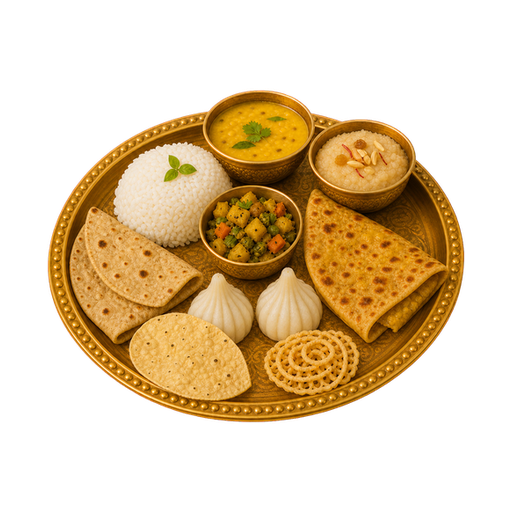 Naivedya (puran-poli)
Regional customs — Bendur, Pola, and Karnataki Bendur compared
Panchang records and web sources show three separate bull-gratitude observances tied to three distinct tithis — which itself supports the picture of "one tradition, three regional forms":
| Name | Tithi (2026) | Main region |
|---|---|---|
| Karnataki Bendur | Jyeshtha Shukla Purnima (29 June) | Western Maharashtra (Karnataka-influenced areas) |
| Maharashtriya Bendur (this page) | Ashadh Shukla Trayodashi (27 July) | Western Maharashtra / Karnataka border |
| Bail Pola | Shravan Krishna Amavasya (10 September) | Across Maharashtra, including Vidarbha |
The ritual (bathing, decorating the horns, khandemalani, the procession, puran-poli as naivedya) is described the same way at all three — the difference lies mainly in tithi and regional prevalence.
Exactly which districts fall under "western Maharashtra / Karnataka border" (Sangli, Kolhapur, and Solapur are a reasonable guess) isn't named in any source — check your own region's exact practice against the local panchang/tradition.
Good to know
- Bendur and Bail Pola are not the same festival — the tithi and the main region differ; don't merge the two.
- While decorating or colouring the horns, take care not to injure the bulls; use natural, non-toxic colour/foil.
- Watch for the animal getting startled in a crowded procession.
- Check your own region's exact Bendur date (Trayodashi or Purnima) against the local panchang/tradition beforehand.
FAQ
- When is Maharashtriya Bendur in 2026?
- Monday, 27 July 2026 (Ashadh Shukla Trayodashi).
- Are Bendur and Bail Pola the same festival?
- The underlying spirit and rituals are the same — gratitude toward the bulls — but the two are observed on different tithis (Bendur in Ashadh, Pola on Shravan Amavasya) and in different main regions. They can be called two regional forms of one tradition, but the calendar days are different.
- Which regions observe Bendur?
- Mainly western Maharashtra and the districts along the Karnataka border.
- What is the difference between Karnataki Bendur and Maharashtriya Bendur?
- Karnataki Bendur falls on Jyeshtha Shukla Purnima (29 June in 2026); Maharashtriya Bendur falls on Ashadh Shukla Trayodashi (27 July in 2026) — two different tithis, two different regional records.
- How is the bull puja performed on Bendur?
- Bathing, colour/foil on the horns, a turmeric shoulder-warming, a new jhool-bashing-bells set, puran-poli as naivedya, a full day's rest, and an evening procession.
- Is there a holiday on Bendur?
- Panchang records show this day as a public holiday, but the exact district-level scope is unclear — check your local administration's holiday list.