Guru Purnima (Vyas Puja)
Guru Purnima is the full moon (Purnima) of the Shukla paksha in the Ashadh month — a day to express respect and gratitude toward one's guru (teacher or guide). It is also called Vyas Purnima, since it's regarded as the birth anniversary of Maharshi Vyasa — who divided the Vedas into four parts and composed the Mahabharata, earning him the title of Adi-Guru (the first guru). This year (2026): Wednesday, 29 July.
This year's dates (2026)
This is a day honouring the guru-shishya tradition, and beyond Hindu tradition, this Purnima also holds significance in Buddhist and Jain traditions. In Maharashtra, it carries special weight within the Datta sampradaya.
Significance
In Indian tradition, the guru is regarded as a guide toward knowledge, sadhana, and spiritual growth — "one who dispels the darkness of ignorance." Guru Purnima is the principal day for expressing gratitude toward that guru-tattva (the guru principle).
Vyasa compiled the scattered Vedic knowledge and divided it into the four Vedas (Rig, Yajur, Sama, Atharva), teaching each to one of his four disciples (Paila, Vaishampayana, Jaimini, Sumantu), and composed the Mahabharata and the eighteen Puranas — which is why he's regarded as the primary organizer of humanity's knowledge tradition.
This Purnima falls close to the start of Chaturmas (the roughly four-month monsoon period) — in ancient times, disciples would live near their guru's ashram during this period for intensive study; in the sannyasi tradition too, this marks the start of a period of monsoon residence and study. Ashadhi Ekadashi (the start of Chaturmas) falls in this same Ashadh month. As a guru-parva in the Datta tradition, it also shares a conceptual link with Datta Jayanti (in Margashirsh).
Vyasa's life story
Vyasa was the son of sage Parashar and Satyavati (a fisherwoman's daughter). Because he was born on an island (dwipa) and was dark-complexioned, he is called "Krishna Dwaipayana." He compiled the scattered Vedic verses and divided the single, eternal Veda into four parts, teaching one each to his four principal disciples (Paila, Vaishampayana, Jaimini, Sumantu). Tradition credits Vyasa with composing the Mahabharata (including the Bhagavad Gita within it), the eighteen major Puranas, and the Brahma Sutras. Vyasa is regarded as a partial avatar of Vishnu, and one of the seven Chiranjivis (immortals who are held to still be alive in the Kali Yuga).
Worshipping Vyasa as the Adi-Guru — along with one's own guru lineage — on Guru Purnima is called "Vyas Puja"; many ashrams and mathas hold a veneration of Vyasa, discourses, and remembrance of the guru tradition on this day.
Who observes it, and how
Disciples and devotees seek darshan of their living guru and receive blessings through worship and veneration; in the guru's absence, Vyasa or one's chosen deity is worshipped instead. Temples, ashrams, and mathas hold Vyas Puja, discourses, and bhajan-kirtan. It is also viewed, in a broader sense, as a day to express gratitude toward teachers, mentors, and gurus of music or dance.
Puja vidhi (guru worship)
The order varies by tradition and sampradaya; what follows is a general order, not a fixed universal one.
- An early morning bath (traditionally at Brahma-muhurta) and clean clothes; clean the puja space and spread a yellow or white cloth, on which an image of the guru, Vyasa, or one's chosen deity is placed.
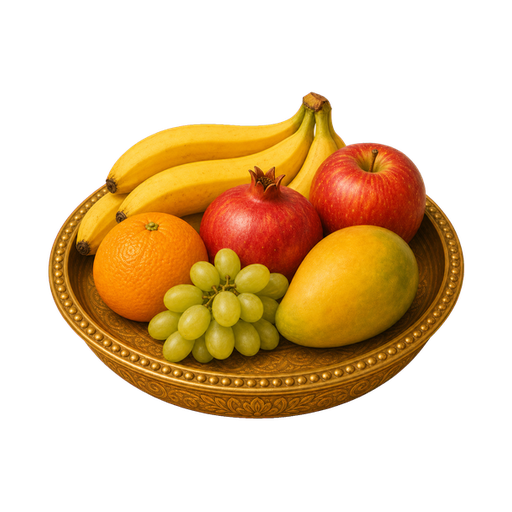
- Offer a lamp and incense, sandalwood paste-akshata-flowers, and fruit or naivedya; recite a guru stotra or guru-vandana in remembrance of one's sadhana.
- If a living guru is present, perform pada-puja (worship of the guru's feet) and receive blessings; otherwise, offer prayers to an image or to Vyasa.
- Guru dakshina — traditionally offered to the guru (money, but more importantly, service, respect, and living out the teaching).
Since this is an annual day of gratitude, it doesn't carry a single concluding rite the way a vrat does. In the Datta tradition, it's customary to recite the Gurucharitra for the preceding seven days (Gurucharitra saptah).
What you need
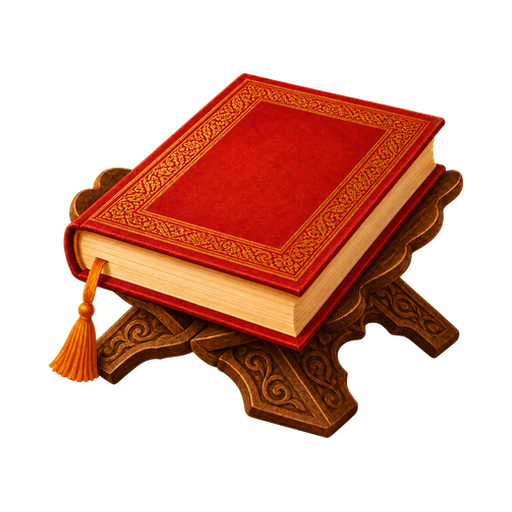
An image of the guru, Vyasa, or one's chosen deity, a yellow or white seating cloth, sandalwood paste-turmeric-kumkum-akshata, flowers/garlands, incense-lamp-niranjan, fruit or naivedya (sunthavda prasad in the Datta tradition), the Gurucharitra text or a pothi for recitation, and guru dakshina.
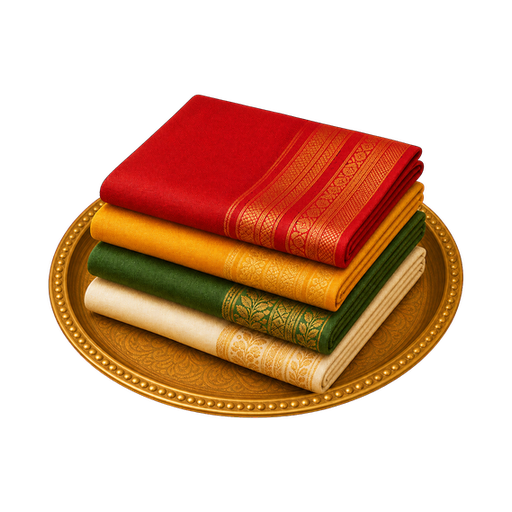 Seating cloth
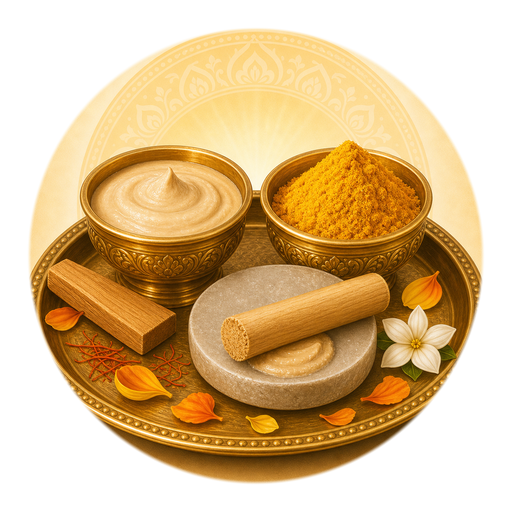 Sandalwood paste
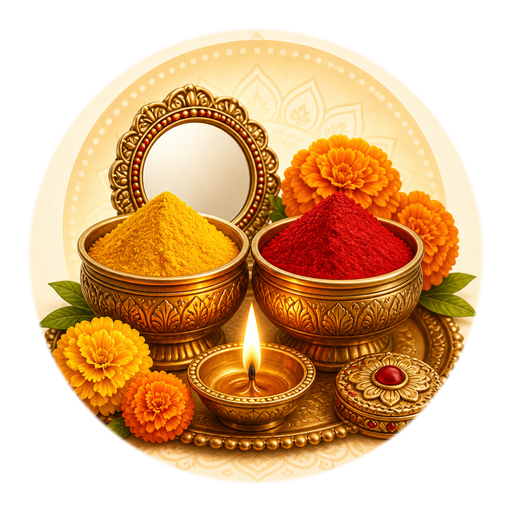 Turmeric-kumkum
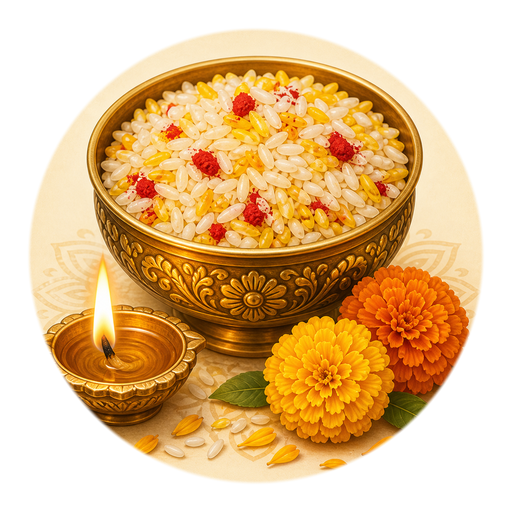 Akshata
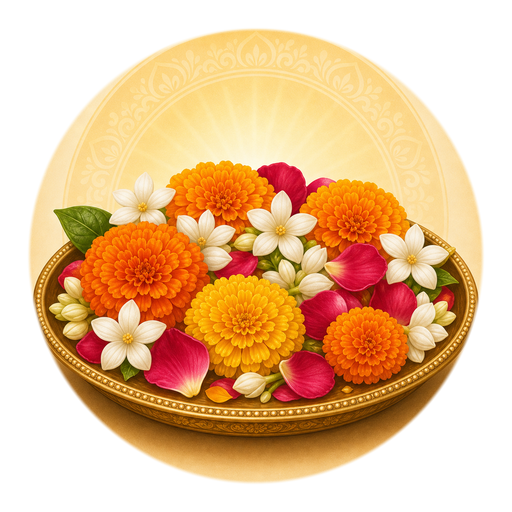 Flowers
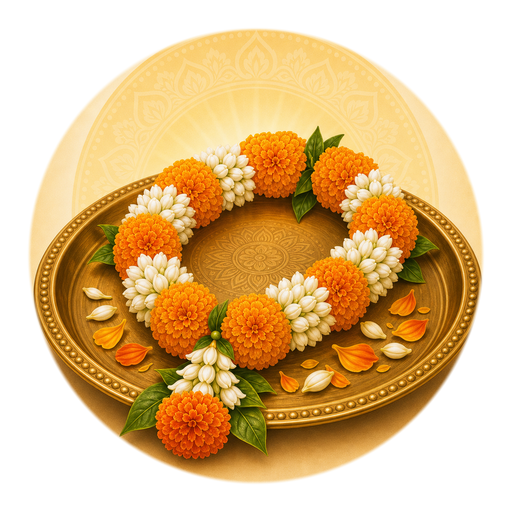 Garlands
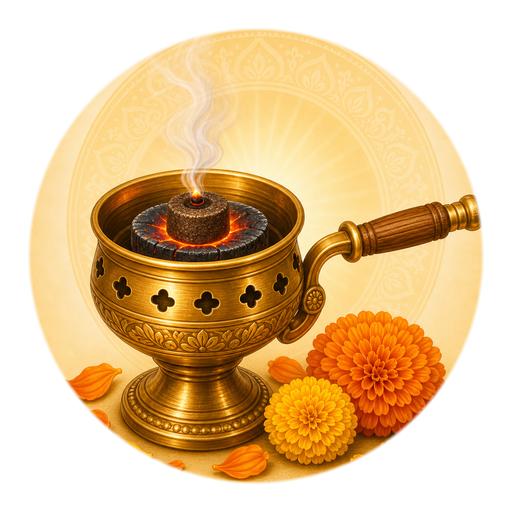 Incense
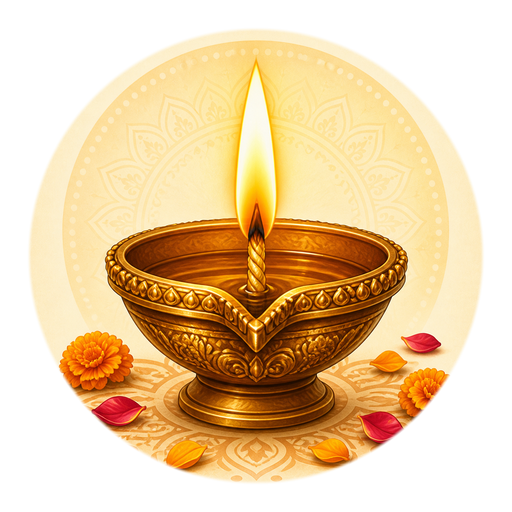 Lamp
Lamp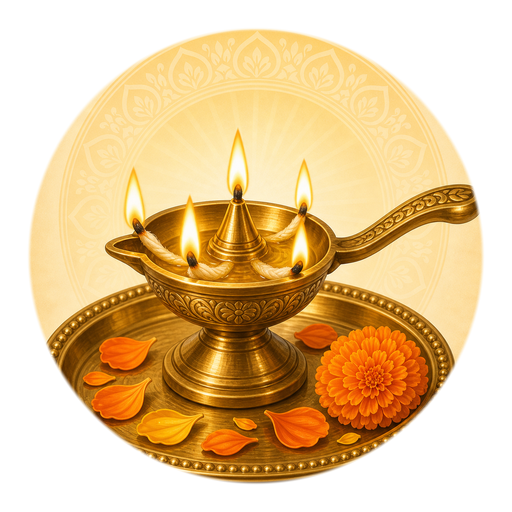 Niranjan
 Fruit
Fruit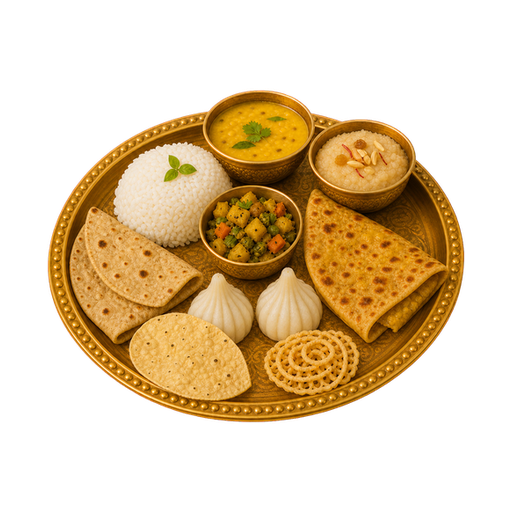 Naivedya
 Gurucharitra / pothi
 Guru dakshina
Fasting & food
A strict fast isn't required on Guru Purnima; it is mainly a day of guru-reverence and worship. Some devotees observe a Purnima fast or sattvic food out of personal faith, but this is individual and tradition-dependent — it can vary by household and local custom.
Mantra & shloka
Guru Purnima's best-known shloka — recognizable by its opening line, "Gururbrahma Gururvishnu…" — carries the sense that the guru is like Brahma, Vishnu, and Maheshwar; the guru is the very embodiment of the supreme reality, and salutations are offered to that guru. By tradition, this shloka belongs to the Guru Gita (within the Skanda Purana tradition, a dialogue between Shiva and Parvati), and its authorship is popularly credited to Vyasa; its exact placement within surviving Skanda Purana manuscripts remains uncertain. In the Datta tradition, "Om Namostute Vyasa…" is also recited as a salutation to Vyasa.
Regional variations (Maharashtra)
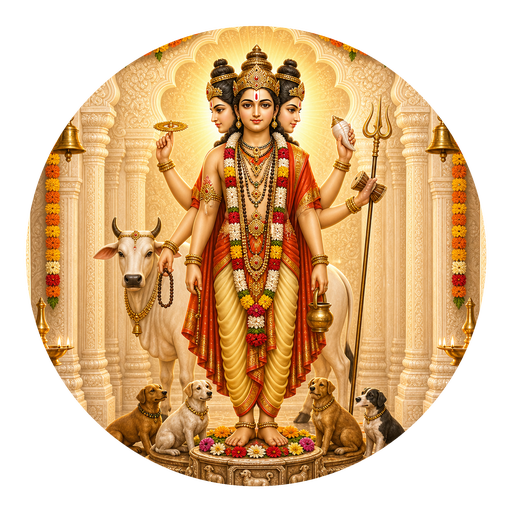
- A centre of the Datta sampradaya: Guru Purnima holds special significance within Maharashtra's Datta sampradaya — Dattatreya is regarded as the embodiment of guru-tattva. Datta temples hold bhajan-kirtan, Datta-guru puja, incense-lamp-aarti, and sunthavda prasad; devotees recite the Gurucharitra.
- Gurucharitra saptah: it's customary to recite the Gurucharitra for the seven days before Guru Purnima, concluding on the day itself. The exact rules (which day it starts, how the chapters are divided, purity rules) vary by tradition.
- Datta kshetras: Audumbar, Narsobawadi, and Ganagapur hold major significance for Guru Purnima celebrations.
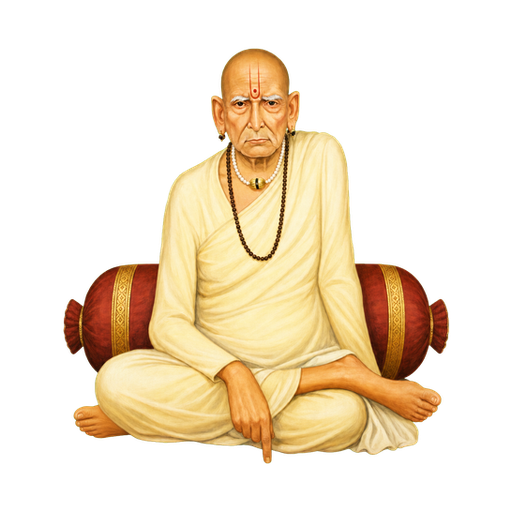
- Swami Samarth (Akkalkot): within the Datta-avatar tradition, the lineage of Shripad Shrivallabh, Narasimha Saraswati, and Akkalkot Swami Samarth is recognized; many devotees perform seva-puja of Swami Samarth on Guru Purnima.
- For this year's celebration timings at these kshetras, check each temple's own page and its devasthan committee.
Beyond Hindu tradition
- Buddhist: about five weeks after his enlightenment, the Buddha is held to have given his first teaching (Dharmachakra Pravartana) to five companions at Sarnath; the founding of the Sangha is traditionally placed on this Ashadh Purnima.
- Jain: by tradition, Bhagavan Mahavira made Gautam Swami (Indrabhuti) his first Ganadhara (chief disciple) on this same day, becoming a guru himself.
Good to know
- Crowds at Datta kshetras: Audumbar, Narsobawadi, Ganagapur, and Akkalkot see very large crowds — follow local authority guidance on darshan timings and travel; check timings with each temple trust.
- Choosing a guru is personal: regarding a teacher as one's guru is a matter of personal faith — guru dakshina can take the form of money, service, or conduct, according to one's own tradition and circumstances.
- Fasting is optional — a strict fast isn't the focus of this day.
FAQ
- When is Guru Purnima in 2026?
- Wednesday, 29 July 2026 (Ashadh Shukla Purnima; the tithi ends around 8:04 PM).
- Why is Guru Purnima also called Vyas Purnima?
- It's regarded as the birth anniversary of Maharshi Vyasa; since he divided the Vedas into four parts and composed the Mahabharata, he's honoured as the Adi-Guru through Vyas Puja.
- What does the word "guru" mean?
- "Gu" means darkness/ignorance, and "ru" means one who dispels it — a guru is one who removes the darkness of ignorance with the light of knowledge.
- How should guru worship be done on Guru Purnima?
- After a bath, worship an image of the guru or Vyasa with a lamp, incense, flowers, and naivedya; if a living guru is present, perform pada-puja and receive blessings, and offer guru dakshina.
- How is Guru Purnima observed in Maharashtra and the Datta sampradaya?
- Datta temples hold Datta-guru puja, bhajan-kirtan, sunthavda prasad, and Gurucharitra recitation; devotees perform seva at Akkalkot (Swami Samarth), and festivities are held at the Audumbar-Narsobawadi-Ganagapur Datta kshetras.
- What is Gurucharitra saptah, and when is it observed?
- A seven-day recitation of the Gurucharitra before Guru Purnima, concluding on the day itself.
- What is guru dakshina?
- A gift offered to the guru out of gratitude — money, but more importantly, service, respect, and living out the teaching.
- Is Guru Purnima celebrated only by Hindus?
- No — it also holds significance in Buddhist (the Buddha's first teaching at Sarnath) and Jain (Mahavira and Gautam Swami) tradition on this same Ashadh Purnima.