Bail Pola
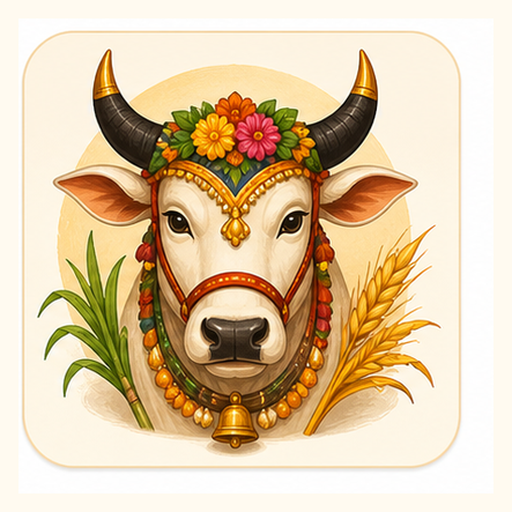
Bail Pola is the farmers' festival observed on Shravan Amavasya (Pithori Amavasya) — a day of gratitude toward the bulls that labour in the fields all year. This year (2026) it falls on Thursday, 10 September.
This year's dates (2026)
- Thursday; the main Bail Pola (across Maharashtra) — bull worship, Darsha Pithori Amavasya10 Sep
- Saturday; 'Bhadvi Pola' — in some regions Pola is also observed on Bhadrapad Amavasya (which regions exactly isn't confirmed); this is also Sarvapitri Amavasya10 Oct
Farming is the backbone of rural life; the bull works hard all year at ploughing, sowing, and hauling loads. Pola is the day to express gratitude for that labour and give the bulls a full day's rest from work. By the Amanta reckoning followed in Maharashtra this is Shravan Amavasya, while North Indian Purnimanta tradition calls the same tithi Bhadrapad Amavasya — the same day.
Significance
Coming at the end of the monsoon, just before the new sowing season, this festival is an important part of Maharashtra's agrarian culture — a celebration of the bond between humans and animals. Customs vary from region to region; no single ritual practice should be treated as universal — it may vary by household and local tradition.
The legend (katha)
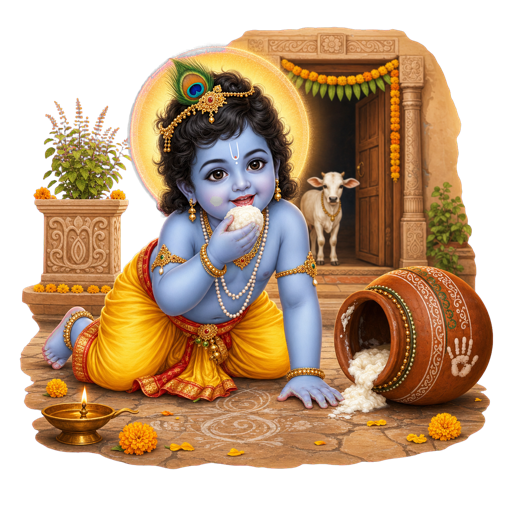
A widely told folk legend says that Kansa sent a demon named Polasur to kill Krishna. Polasur took the form of a bull and tried to blend into the herd of cattle, but the child Krishna recognised him even among the herd and slew him. The day came to be called "Pola" from this event, and the practice of worshipping bulls is said to have been attached to it from then on.
This legend hasn't been traced to a direct classical Puranic source. Some framings hold that the festival's roots lie in agrarian gratitude rather than the Krishna story; the real heart of the festival is the farmers' gratitude toward the bulls, with the story as a supporting element rather than the primary basis.
Who observes it
Farmers and rural families who keep bulls perform the actual bull-worship. In households without bulls, and in urban families, a clay or wooden pair of bulls is worshipped instead, and puran-poli is made to mark the day. In Maharashtra this is observed especially in Vidarbha, western Maharashtra, and Marathwada, as well as in Chhattisgarh and Madhya Pradesh.
Puja vidhi
- In the morning, the bulls are bathed at a river or at home, and their shoulders are soothed with warm water or turmeric.
- Oil is applied to the horns, followed by colour/foil, ochre (geru), decorative headgear (bashing), cowrie-shell strings, bells, and new reins/ropes.
- A decorative cloth (jhool) and garlands of flowers are draped over the bulls.
- Turmeric-vermilion and flowers are offered in worship, followed by an aarti; a decorative garland or thread is tied to the horns.
- A procession with dhol-tasha drums moves through the village; a designated person breaks a decorative arch (toran) tied at the village boundary or near the Maruti temple — signalling the festival's start.
The exact sequence of worship and the invitation custom vary by family and region; there is no separate closing ceremony since this is a one-day festival.
What you need & the offering
Turmeric, vermilion, ochre (geru), colour/foil, oil, flowers and garlands, decorative cloth (jhool), headgear (bashing), cowrie-shell strings, bells, new reins/ropes, a toran (mango leaves/thread), a lamp. The offering is mainly puran-poli — given to the bulls as well; regionally, khirapat (a mixed prasad snack), bajra flatbread, pithla-bhakri, and peanut laddoos are also seen.
 Turmeric, vermilion
 Flowers
 Garlands
 Toran (mango leaves)
 Samai (oil lamp)
 Niranjan (small lamp)
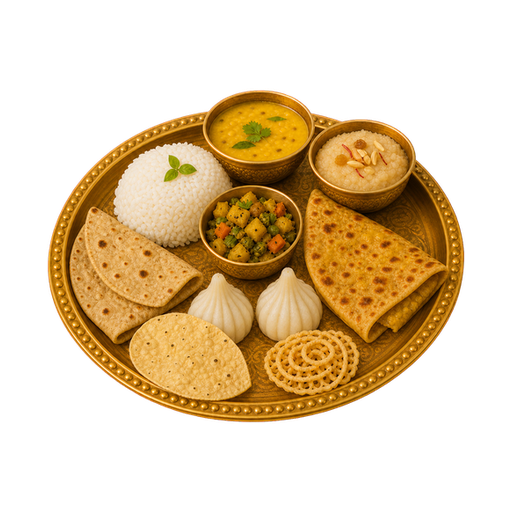 Naivedya (puran-poli)
Regional customs — Mota and Tanha Pola
The main Pola is observed across Maharashtra, including Vidarbha, on Shravan Amavasya. In some regions Pola is also observed on Bhadrapad Amavasya ("Bhadvi Pola") — which regions exactly varies by local tradition.
In Vidarbha, the day after the main ("Mota") Pola is observed as Tanha Pola — children decorate wooden or clay bulls and carry them from house to house, and elders give them "bojara" (a gift or money). Nagpur's Raja Raghuji Bhosale (II) started this custom in 1806 CE so that children would understand the importance of livestock in farming, it is said — which is why it remains centred in Vidarbha.
Pola is also observed in Chhattisgarh and Madhya Pradesh, with local names and customs.
Good to know
- If using colour/foil, choose natural, non-toxic options; take care not to injure or over-stress the bulls while decorating their horns, and watch for the animal getting startled in a crowded procession.
- Check your local panchang/tradition in advance for which tithi (Shravan or Bhadrapad Amavasya) your region observes Pola on.
- The order of worship and the offerings vary by family and regional tradition.
FAQ
- When is Bail Pola in 2026?
- Thursday, 10 September 2026 (Shravan Amavasya). In some regions, "Bhadvi Pola" is observed on 10 October (Bhadrapad Amavasya).
- Why is Bail Pola celebrated?
- To express gratitude toward the bulls that labour in the fields all year, and to give them a full day's rest from work.
- What is the difference between Mota Pola and Tanha Pola?
- Mota (main) Pola — farmers decorate and worship real bulls. Tanha Pola (in Vidarbha, the following day) — children decorate wooden or clay bulls and carry them from house to house.
- Why is Tanha Pola observed only in Vidarbha?
- Nagpur's Raja Raghuji Bhosale (II) is said to have started this custom for children in 1806 CE, which is why it took root in Vidarbha.
- How do people without bulls observe Pola?
- By worshipping a clay or wooden pair of bulls and making puran-poli to mark the day.