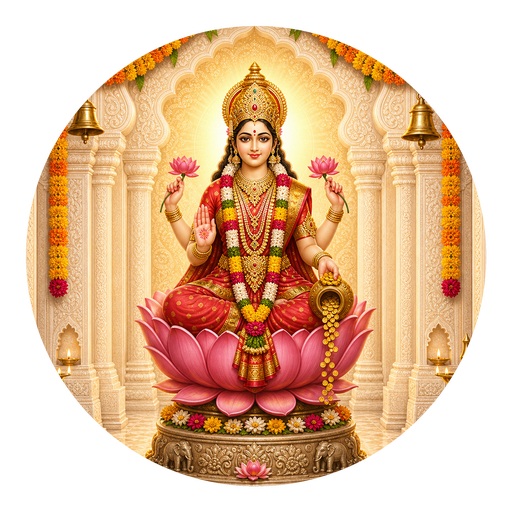
Navratri
Shardiya Navratri is the nine-night, nine-day festival of Adishakti Durga Devi that begins on Ashwin Shukla Pratipada; on the first day the Ghatasthapana (installing the Devi in a ghat, with an akhand deep — a continuously burning lamp) is done. In 2026, Ghatasthapana falls on Sunday, 11 October, Durga Ashtami on 19 October, and Vijayadashami/Dasara on 20 October (all per this site's Ashwin tithi data). Across the nine days people keep an akhand deep, add a fresh mala (garland) on the ghat daily, recite the Durga Saptashati, and do kumarika pujan (worship of young girls).
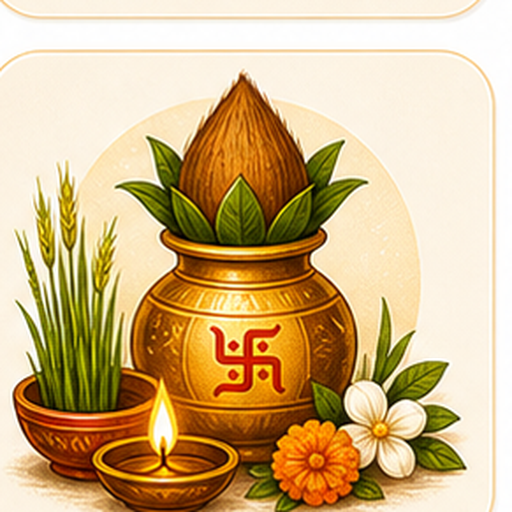
This year's dates (2026)
- Ghatasthapana · Shardiya Navratri begins · Saptashringi & Mahur utsav begin — Day 111 Oct
- Day 212 Oct
- Saptaratrotsav begins · Day 313 Oct
- Vinayak Chaturthi · Day 414 Oct
- Lalita Panchami · Tryamboli yatra-Kolhapur · Day 515 Oct
- Saraswati avahan · Day 616 Oct
- Kaveri Sankraman snan · Day 7 (Saptami vriddhi)17 Oct
- Kolhapur Jyotirling jagar & Mahalakshmi ghagari phunkane · second day of Saptami vriddhi18 Oct
- Durga Ashtami · Mahalakshmi jagar-Kolhapur · Day 819 Oct
- Vijayadashami, Dasara · Khande-mahanavami · Navratrotthapan · Simollanghan · Shami/Aparajita/Ayudh pujan · Vijay muhurat 2.19–3.05 PM (date-bound) · Navratri ends20 Oct
Significance
Navratri is the year's biggest period of upasana (devotion) to Adishakti — a celebration of the asura-slaying power of the Devi. The tradition holds that over nine days of battle the Devi destroyed the demons Mahishasura, Shumbha-Nishumbha and Raktabija.
The festival falls in the sharad (autumn) season — hence ‘Shardiya’ — and is distinct from the Vasantik Navratri of Chaitra. Ashwin is regarded as a month of Devi-bhakti. After nine nights of upasana comes victory on the tenth day = Vijayadashami; the guiding idea is the triumph of truth and dharma over untruth.
In Maharashtra, Navratri is also the season of kuldevi (family-deity) darshan and yatra — considered the best time to visit the Sade Teen Shakti Peeth (three-and-a-half power seats). It is the major Ashwin Devi-utsav that follows soon after Ganesh Chaturthi in Bhadrapad.
The legend (katha)
Many Puranic kathas are linked to Navratri and Dasara; in some versions one thread is primary, in others another. The three main threads are given below.
Mahishasuramardini (Devi Mahatmya / Durga Saptashati) — the heart of Navratri. When the tyranny of Mahishasura, an asura who took the form of a buffalo, became unbearable, Adishakti Durga emerged from the combined radiance of all the gods. A fierce battle raged for nine days and nights, and on the tenth day the Devi slew Mahishasura — which is why she is called ‘Mahishasuramardini.’ In some versions this Devi is named ‘Chamunda,’ in others ‘Durga’ or ‘Mahakali’; the Marathi Vishwakosh also mentions her battle with Shumbha-Nishumbha and Raktabija.
Shri Ram–Ravan (Ramayana) — the Vijayadashami thread. Another belief holds that it was on this very Vijayadashami that Shri Ram slew Ravana, defeating ego and adharma. In North India, Ravan-dahan (the burning of Ravana's effigy) and Ramlila follow this same thread.
The Pandavas–Shami tree (Mahabharata) — the shastra-puja thread. During their agyatvas (year in hiding) the Pandavas had concealed their weapons in a Shami tree; as the agyatvas ended, they retrieved them on Dasara — and from this, it is said, came the tradition of Shami pujan and ayudh/shastra puja (worship of tools and weapons).
All three kathas are attached to the same festival. No single version is fixed here as ‘official’ — read it according to your own tradition.
Who observes it
Devi devotees across households — especially families whose kuldevi is Durga / Bhavani / Ambabai / Renuka / Saptashringi — perform the Ghatasthapana and nine days of upasana.
Many women keep a nine-day upvas (fast) and observances; in homes and public Devi mandals there is installation of the Devi, garba-dandiya and jagar (night vigils). At the Sade Teen Shakti Peeth and kuldevi temples, lakhs of devotees gather for yatra and darshan. (Temple-specific details are below under ‘Regional variations.’)
Puja vidhi (how to perform)
The sequence below is a general one; details can vary a little by household and local custom. For this year's exact Ghatasthapana muhurat, see the 11 October day page.
- Ghatasthapana (Day 1): on a cleaned spot, make a small mound of soil and sow wheat / barley / seven grains (sapta-dhanya) in it; place a water-filled earthen ghat (kalash) topped with mango leaves over it, and install the Devi upon it.
- Light an akhand (nanda) deep and keep it burning continuously for the nine days.
- Do a daily shodashopachar puja of the Devi and tie one mala (garland) on the ghat/Devi each day, in increasing order.
- Recite the Durga Saptashati across the nine days; on Ashtami/Navami do kumarika pujan (kanya pujan).
- Udyapan / Navratrotthapan: on Dasara (20 Oct) the ghat is lifted (utthapan) — the Devi is given visarjan/samaradhan, and the sprouts of the sown grain are used reverently.
What you need (samagri)
- An earthen ghat/kalash, a mound of soil, wheat / barley / seven grains (to sow), soil/sand, water, mango leaves, a coconut.
- Akhand deep (nanda deep) with oil/ghee and a wick, haldi-kunku, flower malas (marigold/lotus/hibiscus etc.), akshata, dhup-deep, naivedya, a murti/image of the Devi, and a Durga Saptashati pothi. (The list can vary by local custom.)
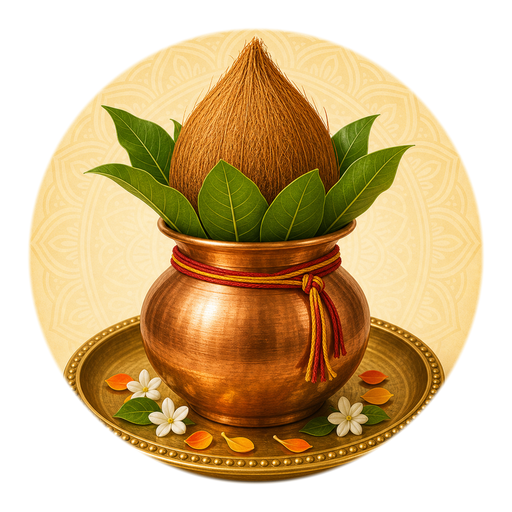 Earthen ghat/kalash
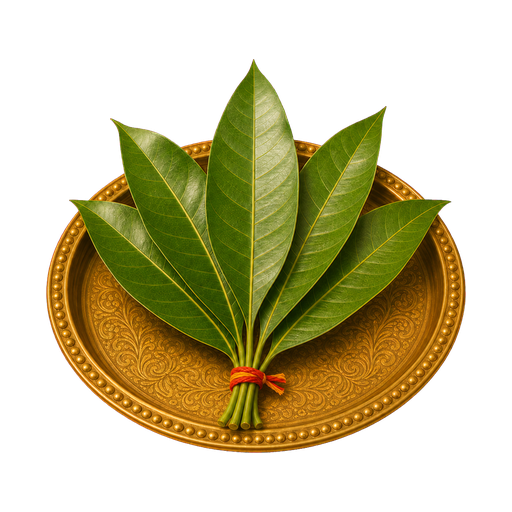 Mango leaves
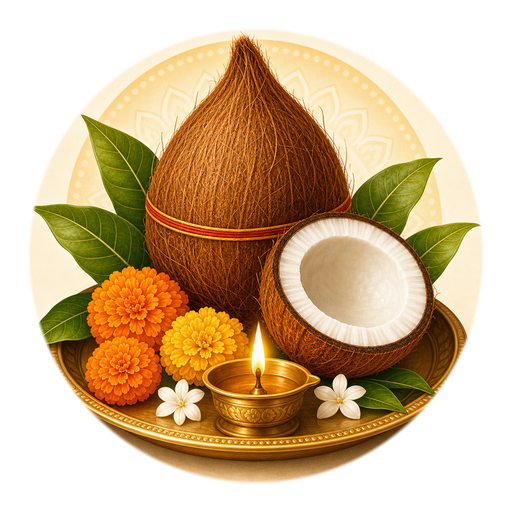 Coconut
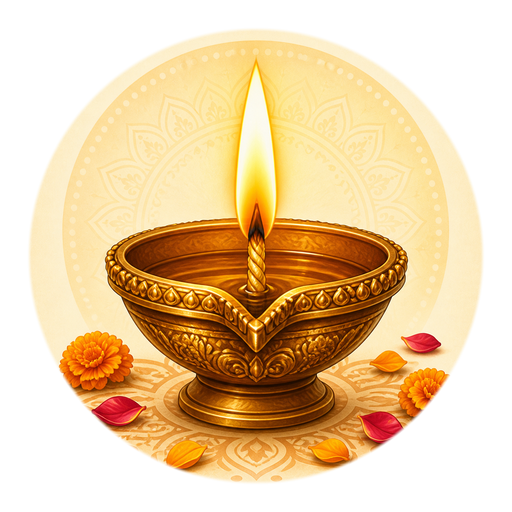 Akhand deep (nanda deep)
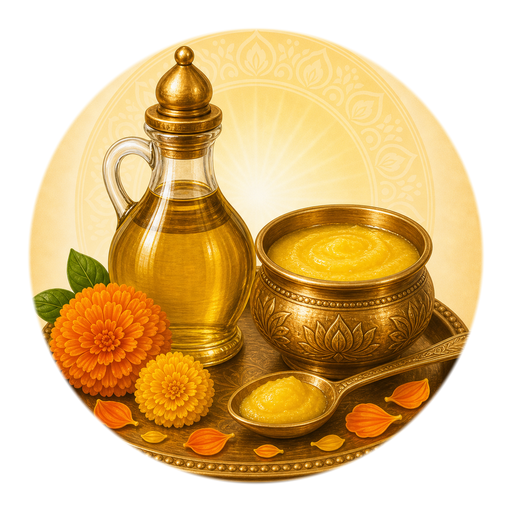 Oil/ghee wick
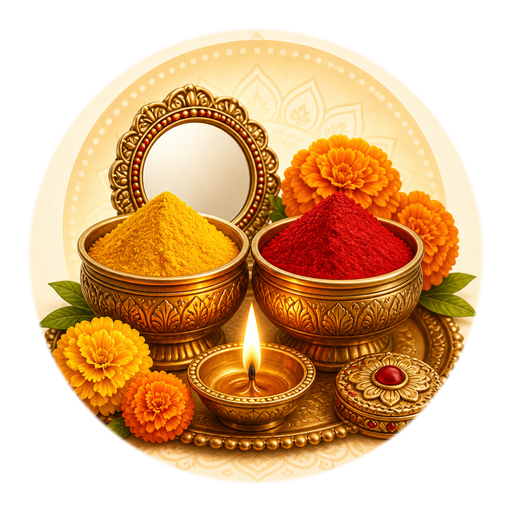 Haldi-kunku
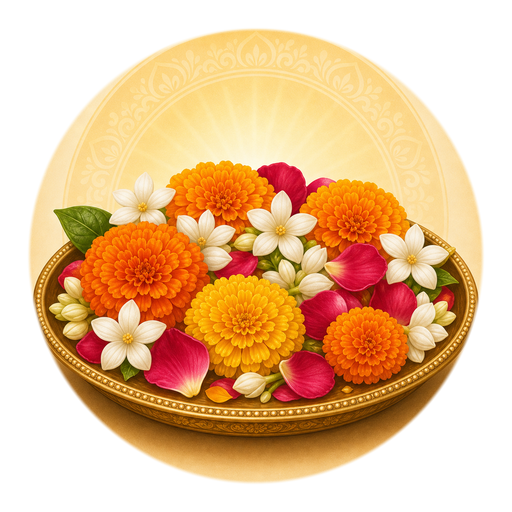 Flowers
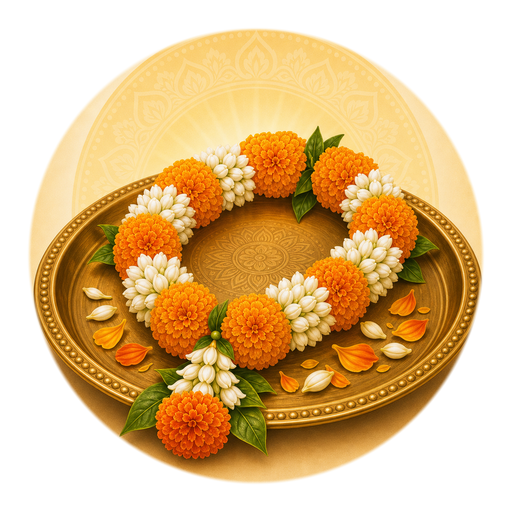 Flower malas
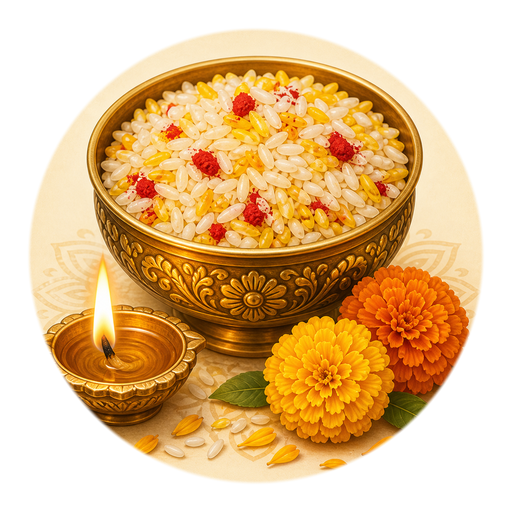 Akshata
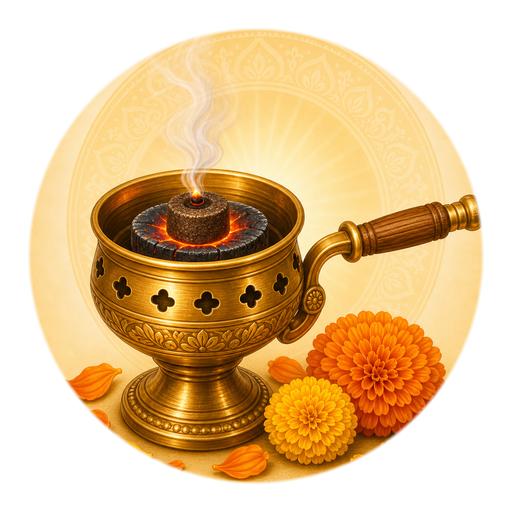 Dhup
Dhup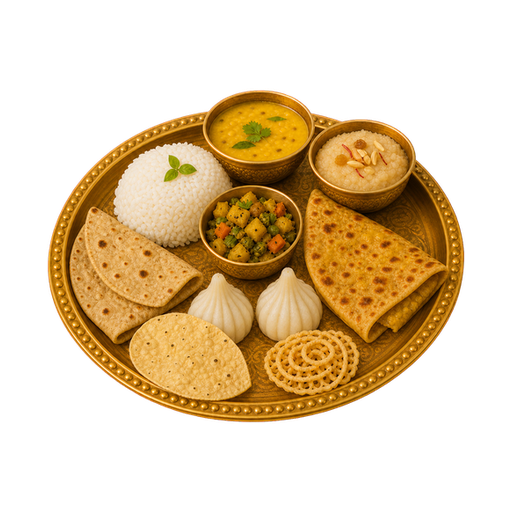 Naivedya
 Durga Saptashati pothi
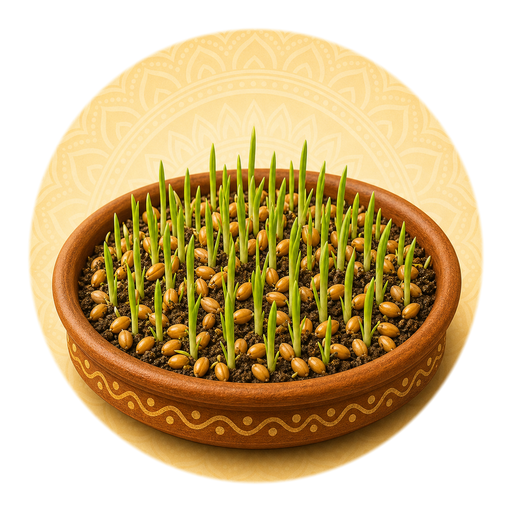 Sown grains/javare (sprouted)
Fasting & food (upvas)
- Many devotees keep a nine-day upvas — fruit and upvas foods; some fast only on the first and last day, or on Ashtami-Navami.
- Avoiding onion-garlic and tamasik food is a common practice. The rules vary by household and tradition — do not take any one rule as universal. On Dasara the fast is broken (parane).
Mantra & aarti
During Navratri the recitation of the Durga Saptashati (Devi Mahatmya) is central; kumarika pujan is done on Ashtami/Navami, and harikatha is sung during the jagar. After the puja it is customary to sing the Devi's aarti.
- Navratri aarti — ‘Ashwinshuddhapakshi Amba…’ (by Samarth Ramdas). When to sing: as the closing aarti after the daily Devi puja through the nine days. Meaning: this aarti is remarkable in that it walks day by day from Pratipada to Dashami — describing the Ghatasthapana, the shringar (adornment) of the Devi, Lalita-vrat on Panchami, her presence on Saptashringgad, the kumarika-parane on Navami, and the Simollanghan on Dashami — a poetic account of the whole festival. Its refrain is the well-known call ‘Udo bola Udo Ambabai maulicha ho.’
- Devi aarti — ‘Durge Durghat Bhari…’ (by Samarth Ramdas). When to sing: a general Devi aarti, sung after puja at Navratri and at Devi temples. Meaning: a praise of the Devi as the refuge of the helpless (anath-nath), a plea to end the cycle of birth-and-death and to remove all distress; its refrain hails her as ‘Jay Devi Jay Devi Jay Mahishasuramathini.’
- Jap-mantra (traditional): Om Durgayai Namah / Om Dum Durgayai Namah — commonly repeated during Devi upasana.
Regional variations
Sade Teen Shakti Peeth Navratri. Maharashtra reveres three-and-a-half Shakti Peeth of the Devi, and Navratri sees large festivals at each: Tuljapur — Tuljabhavani (the kulaswamini of Maharashtra, a full peeth), Kolhapur — Mahalakshmi/Ambabai (an adya/full peeth), Mahur — Renuka (a full peeth), and Vani (Nashik) — Saptashringi (the half-peeth). In this site's panchang, the Navratri utsav at Saptashringgad and Mahur begins on 11 October.
Tuljabhavani manchaki nidra (a rare custom special to Tuljapur). Because Tuljabhavani is the only movable idol (chalmurti), three times a year — for a total of 21 days — she is laid on a cot for ‘manchaki nidra’ (repose): Ghor-nidra (8 days before Shardiya Navratri), Shram-nidra (5 days after Simollanghan/Dasara), and Sukha-nidra (8 days before Shakambhari Navratri). This site's panchang supports it: the nidra period ends on 10 October (the Devi wakes for Ghatasthapana) and begins again on 22 October (the Shram-nidra after Dasara). (The exact tithis/timings should be checked with the temple committee.)
Kolhapur Ambabai. During Navratri there is the Tryamboli yatra (15 Oct), Jyotirling jagar and Mahalakshmi ‘ghagari phunkane’ (18 Oct), and the Mahalakshmi jagar (19 Oct).
Dasara — Maharashtra. On Dasara there is Simollanghan (crossing the village boundary — a campaign-season tradition from the Shiv/Peshwa era), giving apta leaves as ‘gold,’ Shami/Aparajita pujan, ayudh/shastra puja, and students' Saraswati/pati-pujan. This site's panchang also records the Nagpur Dhammachakra Pravartan Din and the Shirdi Saibaba punyatithi on the same day (20 Oct).
Navadurga forms & the nine colours (two separate mappings)
These two lists are different: the Devi forms are tithi-wise (a fixed order, the same every year); the colours, however, are vaar-wise (they change every year). Because of the Saptami vriddhi, these two lists do not line up 1:1 with the dates — so they are given separately below.
(a) Navadurga — tithi-wise (Pratipada → Navami), a fixed order:
Shailaputri · Brahmacharini · Chandraghanta · Kushmanda · Skandamata · Katyayani · Kalaratri · Mahagauri · Siddhidatri.
Note: this order is mainly a North-Indian/Shaiva tradition. In Maharashtra the core is the mala, akhand deep, kumarika pujan and Shakti Peeth darshan rather than a daily home puja of a different form — so the daily tithi↔Devi pairing is not followed everywhere.
(b) The nine colours — vaar-wise, changing every year:
- The rule: the first day's colour is set by the vaar (weekday) on which Navratri begins; the remaining eight follow a fixed cycle. That is why the list is different each year.
- The 2026 order (Sunday start; matching across two independent sources): 11 Orange · 12 White · 13 Red · 14 Royal Blue · 15 Yellow · 16 Green · 17 Grey · 18 Purple · 19 Peacock Green.
⚠️ This colour list is laid out vaar-wise over Oct 11–19 (nine calendar days) and does not account for the Saptami vriddhi, so it will not line up exactly with this site's tithi count. Which colour applies on the extra vriddhi day is not stated here.
Good to know
- The colours change every year — keep this page year-pinned; last year's list becomes wrong the next year.
- Akhand deep safely — a lamp burning for nine days should be set up with fire safety in mind.
- Upvas as your health allows; those with diabetes, or who are pregnant or elderly, should follow a doctor's advice.
- Crowds/yatra: the Sade Teen Shakti Peeth and large temples get very crowded — darshan/aarti timings and special rituals should be checked with the temple committee.
- During the Tuljabhavani nidra period, the regular sanctum darshan may change — verify before you visit.
FAQ
- When is Navratri 2026? When is Ghatasthapana?
- Ghatasthapana is on Sunday, 11 October 2026 (Ashwin Shukla Pratipada); Navratri runs up to Durga Ashtami on 19 October and Vijayadashami/Dasara on 20 October.
- How is Ghatasthapana done, and what is sown in the ghat?
- Sow wheat / barley / seven grains in a mound of soil, place a water-filled earthen ghat on top and install the Devi, and light an akhand deep.
- What are the nine colours of Navratri? Do they change every year?
- Yes — the colours are vaar-wise and change every year. The 2026 order is: Orange, White, Red, Royal Blue, Yellow, Green, Grey, Purple, Peacock Green (11–19 Oct) — year-specific, please verify.
- What are the nine forms of Navadurga?
- Shailaputri, Brahmacharini, Chandraghanta, Kushmanda, Skandamata, Katyayani, Kalaratri, Mahagauri and Siddhidatri.
- Why are the akhand deep and mala kept?
- The akhand deep is a symbol of the Devi's radiance; adding one mala on the ghat each day is taken as a symbol of the nine days of upasana.
- How should one fast during Navratri?
- Take fruit and upvas foods and avoid tamasik food; the rules vary by tradition — adjust for your health.
- What is done on Dasara/Vijayadashami?
- Simollanghan, Shami/Aparajita pujan, ayudh/shastra puja, and giving apta leaves as ‘gold’ — these are the main Dasara acts.
- What are Maharashtra's Sade Teen Shakti Peeth?
- Tuljapur (Bhavani), Kolhapur (Ambabai) and Mahur (Renuka) — the full peeth; and Vani-Saptashringi — the half-peeth.