Tulsi Vivah
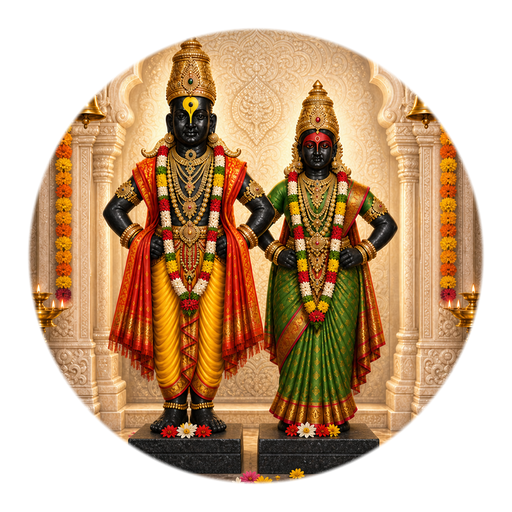
Tulsi Vivah is the symbolic wedding of the household Tulsi plant (Vrinda) and Vishnu (as Shaligram, an amla branch, or a Krishna murti) — held in the Kartik month, once Vishnu wakes from yogic sleep at the end of Chaturmas. It falls on one evening within the window from Kartik Shukla Ekadashi to Purnima, most commonly on Dwadashi — since Ekadashi itself is a fasting day, the wedding shifted to Dwadashi or later. This year (2026): Saturday, 21 November (Kartik Shukla Dwadashi), with the window running to 24 November (Kartik Purnima). This marks the opening of the Hindu wedding season; performing Tulsi Vivah is regarded as equal in merit to giving away a daughter in marriage (kanyadaan).
This year's dates (2026)
- Saturday; Tulsi Vivah begins — most traditions hold the wedding on this Dwadashi, in the evening21 Nov
- Tuesday; Tripurari Purnima — the last day of the Tulsi Vivah window24 Nov
Significance
Vishnu, who goes into yogic sleep on Ashadhi Ekadashi, wakes on Kartiki (Prabodhini) Ekadashi; auspicious ceremonies resume once Tulsi Vivah is performed after that. The festival is also read as marking the end of the monsoon and the start of the wedding season — by popular belief, human weddings are held only after Tulsi Vivah, not during Chaturmas.
Dressing Tulsi as a bride and marrying her to Vishnu is regarded as equal to performing kanyadaan (giving away a daughter) in one's household — couples without a daughter, in particular, take on the role of Tulsi's "parents" for the ceremony. Tulsi is held to be extremely sacred and purifying — by tradition, an offering to Vishnu isn't accepted without a tulsi leaf on it.
The legend
Tulsi was, in a former life, Vrinda — an intensely devoted wife married to the powerful demon Jalandhar. The strength of Vrinda's chastity made Jalandhar invincible — the gods could not defeat him. They turned to Vishnu for help; to protect the gods, Vishnu broke Vrinda's chastity, and only then was Jalandhar killed in battle. On learning the truth, Vrinda cursed Vishnu; in the end, she herself remained as the Tulsi plant, and Vishnu as the Shaligram (a sacred stone) — which is why, every Kartik, the wedding of Tulsi and Shaligram is performed.
Versions diverge on the details — in some, Vishnu first appears as a sage announcing "your husband has died," then takes Jalandhar's form to break Vrinda's chastity; in Marathi retellings, Vishnu goes straight to the palace in Jalandhar's form, and the moment Vrinda stops her worship to touch his feet, her vow is broken. The ending differs too — in some versions Vrinda immolates herself (sati) and Tulsi grows from her ashes; in others she simply transforms into the Tulsi plant. Even the number of curses varies by version — some tell of a single curse (turning to stone), others of two (a curse of separation, in addition to the stone curse).
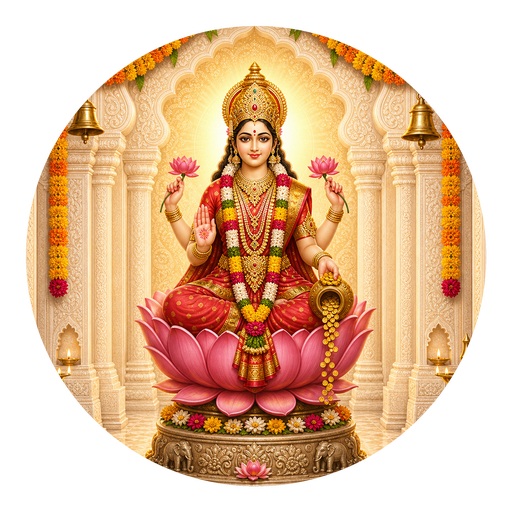
One tradition holds that Tulsi is itself a form of Lakshmi (as Vrinda); but many other traditions hold Vrinda (Jalandhar's wife) to be distinct from Lakshmi — some versions even have Lakshmi regard Jalandhar as a brother. Tulsi's identity shifts by devotional tradition.
Who performs it
Householders — women in particular — perform the wedding in front of the household Tulsi Vrindavan in the courtyard. Couples without a daughter often take on the symbolic role of Tulsi's parents and perform the kanyadaan, bearing the ceremony's cost as custom holds. For Vaishnavs, Warkaris, and devotees of Vishnu generally, the Tulsi-Shaligram wedding is regarded as part of devotion to Vishnu.
Puja vidhi
The exact sequence varies by tradition and region — follow your family's and local custom.
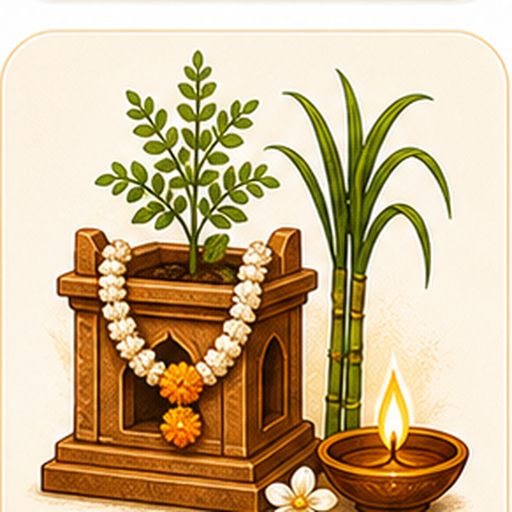
- The Tulsi Vrindavan is cleaned and freshly painted; rangoli is drawn around it; a mandap is raised with sugarcane stalks, marigold flowers, mango leaves, and banana-tree trunks.
- Tulsi — as the bride — is dressed in a sari and dupatta, with haldi-kumkum, sindoor-bindi, and jewellery; the Shaligram, Krishna murti, or amla branch — as the groom — is dressed with yellow sandalwood, cloth, and a sacred thread (janve).
- Both Tulsi and the Shaligram are bathed (with Ganga water or clean water) and offered flowers, garlands, and haldi-oil.
- A white antarpat (cloth) is held between Tulsi and Vishnu; a priest or family elder recites the mangalashtak verses; at the final "Savadhan," those present throw akshata (sindoor-tinted rice) — the ceremony unfolds just like a real Marathi wedding.
- The kanyadaan of Tulsi (performed by the couple without a daughter) follows; a pradakshina (circumambulation) is done around Tulsi — seven times, in some versions; an aarti is performed for Tulsi and Vishnu together.
- Sugarcane pieces, coconut, fruit, and groundnuts are distributed as prasad.
The auspicious clock-time (pradosh/muhurat) for the wedding varies by city — see the day page for your city's timing.
Puja samagri
Tulsi Vrindavan (freshly painted), sugarcane stalks, mango leaves and banana-tree trunks (for the mandap), marigold flowers and garlands, a white antarpat cloth, a sari-dupatta-jewellery-sindoor-haldi-kumkum set for Tulsi, a Shaligram/Krishna murti or amla branch with cloth-sandalwood-sacred thread for the groom, akshata (sindoor-tinted rice), a kalash with Ganga water, a lamp or oil-lamps, rangoli colours, and prasad (sugarcane, coconut, fruit, groundnuts).
Fasting / dietary rules
Tulsi Vivah itself carries no separate fast — it's a celebration, not a vrat day. The fasting belongs to Prabodhini Ekadashi, the day before. Those observing the Ekadashi fast break it (parana) at the proper time on Dwadashi and then perform Tulsi Vivah — which is also why the wedding is generally held on Dwadashi rather than Ekadashi itself.
Mangalashtak
The mangalashtak (auspicious verses) recited during the ceremony form the heart of the ritual — they're chanted while the antarpat is held, at the ceremony's central moment, right before the "Savadhan" call and the throwing of akshata (see the puja vidhi above); Tulsi's aarti is also performed. The exact wording of traditional mangalashtak varies by household and tradition.
Regional customs
- Antarpat + mangalashtak + "Savadhan": holding a white antarpat between Tulsi and Vishnu, reciting mangalashtak, and throwing akshata at "Savadhan" is a distinctly Maharashtrian touch — just like a Marathi wedding.
- Vrindavan decoration and sugarcane: painting the Tulsi Vrindavan and raising sugarcane stalks for the mandap is the visible centrepiece in Maharashtrian households.
- Amla branch: some households use an amla (Indian gooseberry) branch instead of, or alongside, the Shaligram or Krishna murti as the "groom."
- Weddings resume after Tulsi Vivah: across Maharashtra and much of India, it's believed that human weddings aren't held until Tulsi Vivah is performed (through Chaturmas); auspicious dates resume only afterward.
In North and East India, the same festival is known as "Dev Uthani/Devotthan Ekadashi" — but the antarpat-mangalashtak-sugarcane form described here is the Maharashtrian flavour.
Good to know
- The wedding is held in the evening/pradosh — the exact auspicious time varies by city; check the day page.
- The fast belongs to Ekadashi (20 November) — Tulsi Vivah itself carries no separate fast.
- Vidhi and legend details vary by tradition — follow your family's and local custom.
- Tulsi's identity — "Tulsi is Lakshmi" is one tradition's view; another tradition holds Vrinda to be distinct from Lakshmi.
- With lamps, the sugarcane mandap, and akshata in use, take the usual care around flame and food hygiene.
FAQ
- When is Tulsi Vivah in 2026?
- It begins Saturday, 21 November 2026 (Kartik Shukla Dwadashi); the wedding window runs to Kartik Purnima (24 November).
- Why is Tulsi Vivah celebrated?
- Once Vishnu wakes at the end of Chaturmas, the Tulsi-Shaligram wedding is performed to resume auspicious ceremonies; the Vrinda-Jalandhar legend lies behind it.
- Which day should Tulsi Vivah be performed on — Ekadashi, Dwadashi, or Purnima?
- Somewhere within Kartik Shukla Ekadashi to Purnima, most commonly on Dwadashi (since Ekadashi is a fasting day); the exact day varies by tradition.
- Why do human weddings resume only after Tulsi Vivah?
- By popular belief, Tulsi Vivah marks the start of the wedding season; auspicious ceremonies are avoided during Chaturmas, while Vishnu is in yogic sleep.
- How is Tulsi Vivah performed?
- The Tulsi Vrindavan is decorated, Tulsi is dressed as the bride and the Shaligram-Krishna murti as the groom, an antarpat is held while mangalashtak verses are recited, akshata is thrown, and kanyadaan and aarti follow.
- What are mangalashtak and antarpat?
- The antarpat is the white cloth held between bride and groom; the mangalashtak are the auspicious verses recited during the wedding — together they make the ceremony feel like a real Marathi wedding.
- Is Tulsi a form of Lakshmi, or a separate goddess?
- One tradition holds Tulsi to be Lakshmi (as Vrinda); but many other traditions hold Vrinda (Jalandhar's wife) to be distinct from Lakshmi — the view depends on the tradition.
- What merit does performing Tulsi Vivah bring?
- It's held to carry the merit of performing a kanyadaan in one's household — couples without a daughter, in particular, take this on.