Bhau Beej
Bhau Beej (Yamadwitiya) is the festival of a brother-sister bond, observed on Kartik Shukla Dwitiya — the sixth and last day of Diwali in the Maharashtrian count (see Diwali). On this day, a sister does aukshan (a lamp-waving ritual) of her brother and prays for his long life. This year (2026): Wednesday, 11 November.
This year's dates (2026)
- Wednesday; the sixth (last) day of Maharashtrian Diwali; Yamadwitiya/Yama-pujan, moon-sighting11 Nov
The name "Yamadwitiya" comes from the belief that Yama, the god of death, visited his sister Yamuna on this very dwitiya, and she welcomed him with aukshan and a meal. Maharashtra's distinct custom is that once the crescent moon appears in the evening, a sister does aukshan of the moon first, then her brother; basundi-puri or puran poli is the festive treat, and the brother gives his sister a gift called ovalani.
Significance
Bhau Beej celebrates the love, protection and gratitude between siblings. Where a sister ties a rakhi for her brother on Raksha Bandhan, on Bhau Beej she does aukshan of him and prays for his long life — Raksha Bandhan is the sibling festival on the other side of this bond.
It is the closing, relationship-affirming day of the Diwali season of lights. Doing aukshan of a brother carries the symbolic sense of deliverance from Yama's grasp (untimely death) and a wish for long life — the very core of the Yama-Yamuna katha. For a married sister, it's also a day that reconnects her to her maher (parental home) — she invites her brother over, or he visits her, keeping the bond alive.
The legend (katha)
Two separate stories are linked to Bhau Beej.
Yama and Yamuna (the primary story — the origin of "Yamadwitiya"): Yama, the god of death, and his sister Yamuna (both children of Surya and Sanjna; Yamuna is regarded as a river-goddess). Yamuna invited her brother home many times; finally, on Kartik Shukla Dwitiya, Yama visited her. Yamuna welcomed him with aukshan, a tilak, and a loving meal. Pleased, Yama granted a boon — any brother who receives aukshan from his sister on this day is blessed with long life and freedom from the fear of untimely death; hence the day is called Yamadwitiya. The exact nature of the boon varies by version — some say "long life," others "untimely death averted," while Marathi Wikipedia holds that bathing in the Yamuna river on this day removes the fear of Yama for that year.
Krishna and Subhadra (an alternative version): after slaying the demon Narakasura, Krishna returned victorious; his sister Subhadra welcomed him with sweets and flowers, and applied a sandalwood-kumkum tilak on his forehead while performing an aarti — from this, the custom of a sister applying a tilak to her brother is said to have taken root. This Narakasura connection ties Bhau Beej to Diwali's Krishna-katha cycle; but the name "Yamadwitiya" itself comes from the Yama-Yamuna story — the two are kept as separate stories, not merged.
Who observes it
Since this is a relationship festival, there's no specific presiding deity — the sister does aukshan, and the brother gives ovalani (a gift) in return. Sisters without a brother have a traditionally accepted alternative of doing aukshan of, or worshipping, the moon instead; even for a brother who is far away, a prayer for his long life is offered through the moon — a way of making sure no one feels left out on this day.
Puja vidhi (how to perform)
The order varies by tradition; what follows can differ by household and local custom.
- The sister seats her brother on a low wooden seat (pat), or within a rangoli-marked square, and applies a kumkum-akshata tilak to his forehead.
- Once the crescent moon appears in the evening, the sister first does aukshan of the moon, then of her brother, with a lit lamp.
- The sister prays for her brother's long life, and serves him a festive meal.
- The brother places ovalani — money, clothing, or jewellery — on the aukshan plate as a token of appreciation for his sister.
In some places, a same-day observance for Yama is also described — fourteen offerings of water (arghya) and a tarpan.
The auspicious clock time for the aukshan/tilak (where one is observed) varies by city — see the day page for the city-specific time.
What you need (samagri)
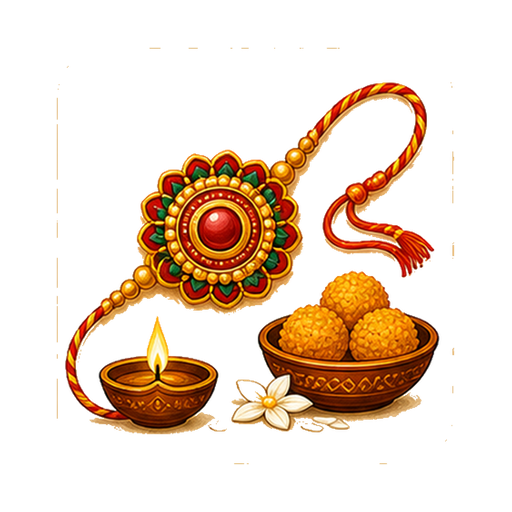
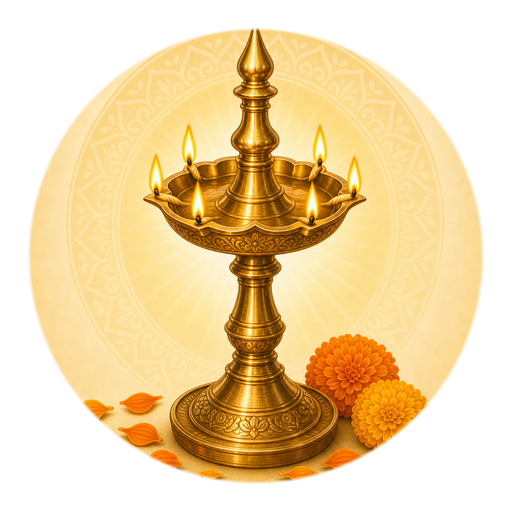
An aukshan plate (thali), a niranjan or samai lamp with oil-wicks, kumkum and akshata, flowers, a festive naivedya (basundi-puri, puran poli, or sweets), the ovalani gift for the brother, a low seat (pat) to sit on, and a rangoli.
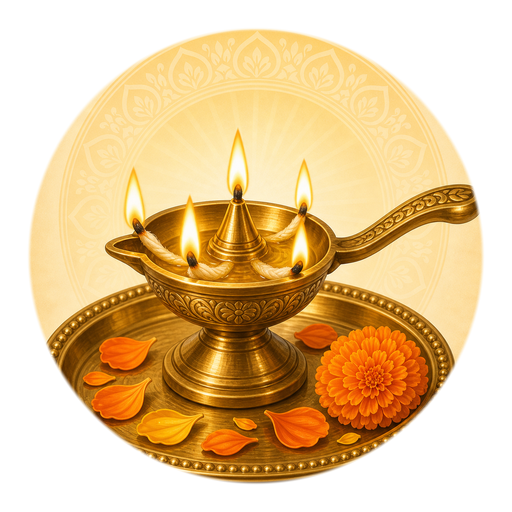 Niranjan lamp
 Samai lamp
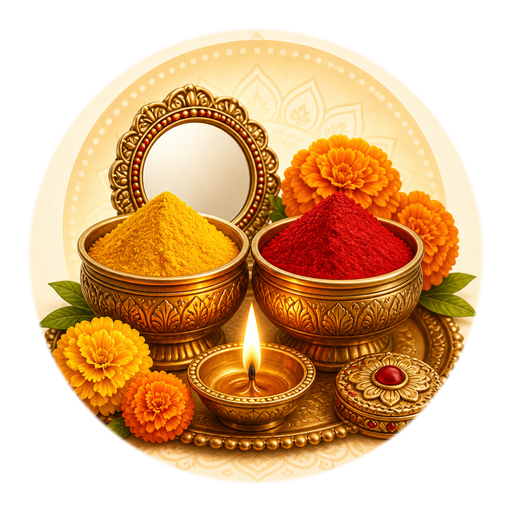 Kumkum
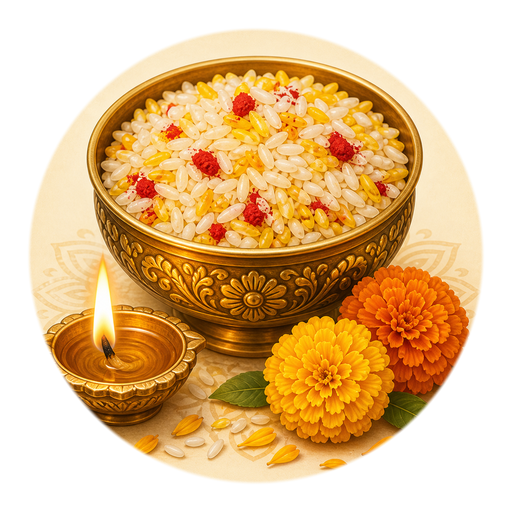 Akshata
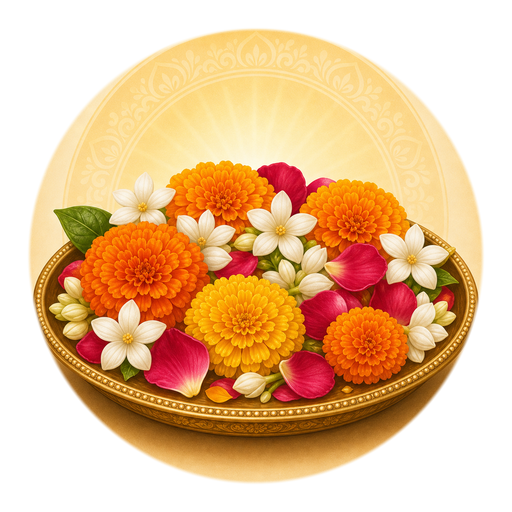 Flowers
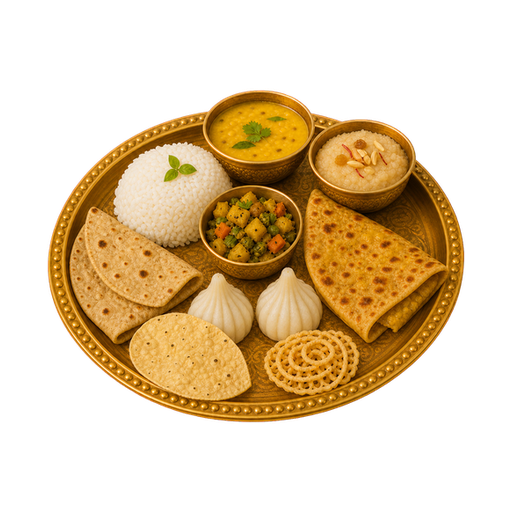 Festive naivedya (basundi-puri)
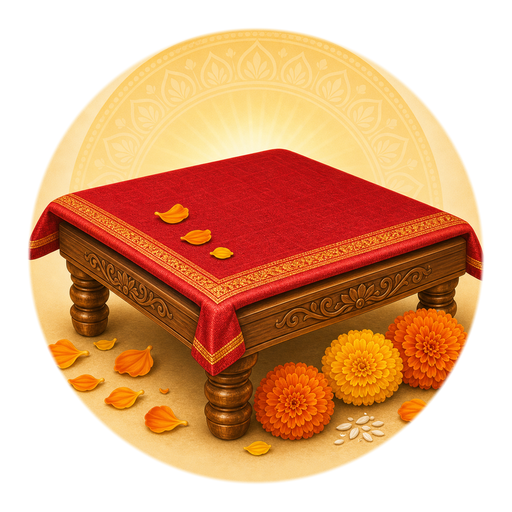 Low seat (pat)
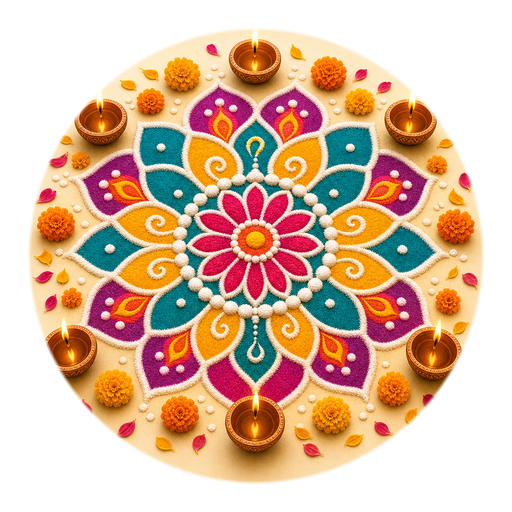 Rangoli
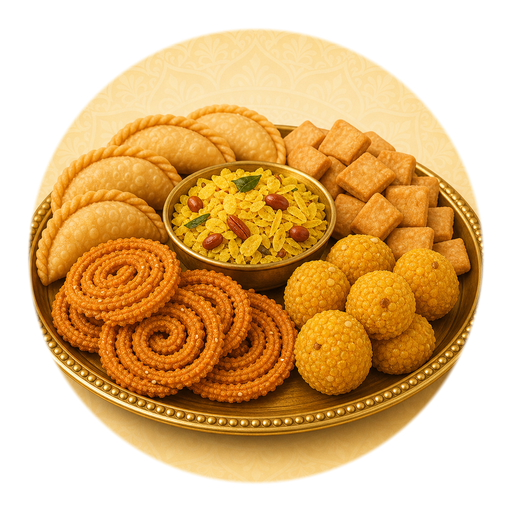 Diwali faraal (festive snacks)
Fasting & food (upvas)
Bhau Beej is a festival of celebration and a shared meal, not a fasting day. The focus is on festive sweets — basundi-puri, puran poli, shrikhand, and Diwali faral.
Mantra & aarti
There is no fixed, canonical aarti or mantra for the aukshan on Bhau Beej — the songs sung while doing aukshan are folk and regional, and vary from household to household.
Regional variations
- Aukshan of the moon's crescent: Maharashtra's distinct custom — once the crescent moon appears in the evening, the sister does aukshan of the moon first, then her brother.
- Sisters without a brother: if a sister has no brother, or he is far away, she may do aukshan of the moon and pray for his long life instead.
- Sweets: basundi-puri is the special treat, along with puran poli, shrikhand, karanji, chakli, bhaji and Diwali faral.
- Community reach: Bhau Beej is celebrated among Marathi, Konkani, and Gujarati communities (Maharashtra, Goa, Gujarat, Karnataka). North India observes "Bhai Dooj" (tilak and a meal), but the moon-aukshan and basundi-puri are distinctly Maharashtrian touches.
Good to know
- Aukshan happens in the evening — once the crescent moon appears (a Maharashtrian custom); the auspicious clock time for the tilak/aukshan varies by city — see the day page.
- If there's no brother — doing aukshan of the moon is a traditionally accepted alternative.
FAQ
- When is Bhau Beej in 2026?
- Wednesday, 11 November 2026 (Kartik Shukla Dwitiya) — the day after Diwali Padwa.
- Why is Bhau Beej celebrated?
- It celebrates the love between brother and sister; the sister does aukshan of her brother and prays for his long life. The Yama-Yamuna katha is its root story.
- Why is Bhau Beej called Yamadwitiya?
- Yama, the god of death, visited his sister Yamuna on this very dwitiya, and she welcomed him with aukshan — hence "Yamadwitiya."
- How is Bhau Beej celebrated?
- The sister seats her brother on a low seat and applies a tilak; once the crescent moon appears in the evening, she does aukshan of the moon first, then her brother; the brother gives her ovalani in return.
- If a sister has no brother, what should she do?
- She can do aukshan of, or worship, the moon and pray for a brother's long life — a traditionally accepted alternative.
- What sweets are made on Bhau Beej?
- Basundi-puri is the special treat, along with puran poli, shrikhand, and Diwali faral.
- What is ovalani?
- The gift — money, clothing, or jewellery — that a brother gives his sister after she does his aukshan is called ovalani.