Diwali / Lakshmi Pujan (Deepavali)
Diwali (Deepavali) is the biggest Hindu festival of light, prosperity and the victory of light over darkness. In Maharashtra it runs over several days, from Vasubaras to Bhaubeej. Its main day is Lakshmi Pujan — the evening (pradosh) puja of Mahalakshmi, Kubera and Ganesh on the Ashwin amavasya. In 2026, Vasubaras is 6 November, Lakshmi Pujan 8 November (Sunday — also the day of Narak Chaturdashi's dawn abhyangasnan), Padwa 10 November and Bhaubeej 11 November.
This year's dates (2026)
- Vasubaras / Dhanteras6 Nov
- Narak Chaturdashi / Lakshmi Pujan8 Nov
- Balipratipada / Padwa10 Nov
- Bhaubeej11 Nov
Significance
Diwali means deep + aavali — a row of lamps. The central idea of the festival is to drive out darkness with light, ignorance with knowledge, and the inauspicious with the auspicious.
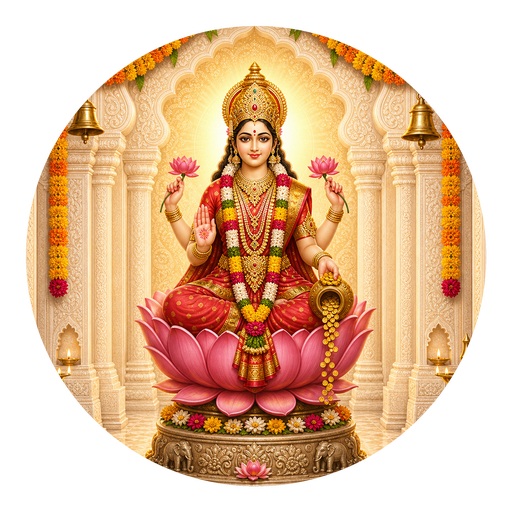
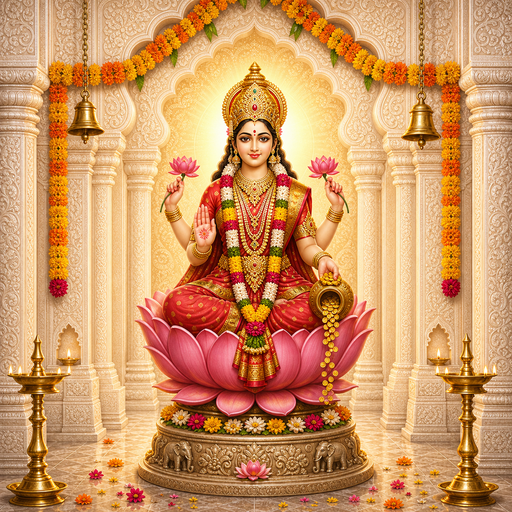
Prosperity and the worship of Lakshmi are at the heart of it. The main puja is of the goddess Lakshmi — one of her well-known seats is the Mahalakshmi temple at Kolhapur, covered on its own page. Merchants also close the old year's accounts and do a puja of the new ledger (chopdi) — the spirit of a financial new year. Diwali's Padwa (Balipratipada) is one of the saadetin muhurat (the three-and-a-half most auspicious days), so it is considered highly favourable for buying and for new ventures.
This one festival weaves together several legendary victories — the slaying of Narakasura, the Vamana–Bali story, and in some traditions Rama's return to Ayodhya. All of them share the same note: the victory of truth and light.
The days of Diwali — Vasubaras to Bhaubeej
Diwali is not a single day but a run of a few days. In Maharashtra the sequence is:
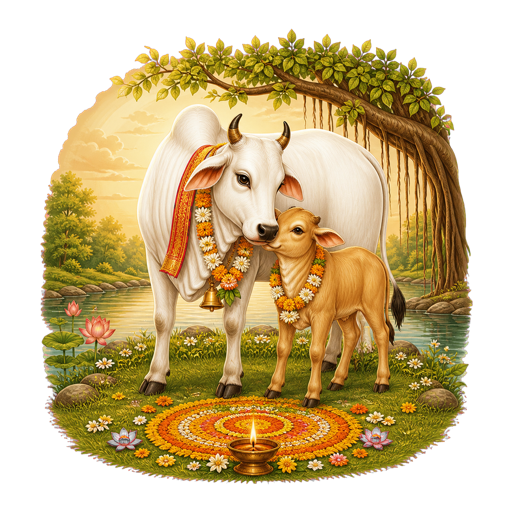
- Vasubaras (Govatsa Dwadashi) — the puja of the cow and calf; the start of Diwali.
- Dhanteras — the worship of health and wealth; the day for buying gold and utensils.
- Narak Chaturdashi — the pre-dawn abhyangasnan (ritual oil bath); it recalls the slaying of Narakasura.
- Lakshmi Pujan — the evening puja of Mahalakshmi and Kubera on the amavasya; the main day of Diwali.
- Balipratipada / Padwa — one of the saadetin muhurat; a day for husband and wife, and the merchants' new year.
- Bhaubeej (Yamadwitiya) — the day of sister and brother.
An important note for 2026: Diwali days are set by a specific window (evening or pre-dawn), so this year some observances share a day. Dhanteras falls on the same day as Vasubaras — 6 November (Trayodashi is running at pradosh that day); 7 November is Masik Shivratri, not a Diwali day. Likewise, Narak Chaturdashi (pre-dawn) and Lakshmi Pujan (evening) fall on the same day — 8 November; 9 November is observed separately as Somvati Amavasya.
The legends (katha)
Diwali is not one story but a series of different stories, one per day. Each day's legend is distinct, yet the spirit is the same — the triumph of good. These stories are handed down by tradition, and details can vary by region or sect — the version given here is the commonly told one, not an undisputed historical account.
Vasubaras
On this day the cow and calf (Nandini / Kamadhenu) are worshipped — an act of gratitude towards motherhood and towards cattle-wealth. In some versions women keep the Nandini vrat (a vow for the welfare of their children) and avoid milk and dairy that day, so that the calf's share is left for it.
Dhanteras
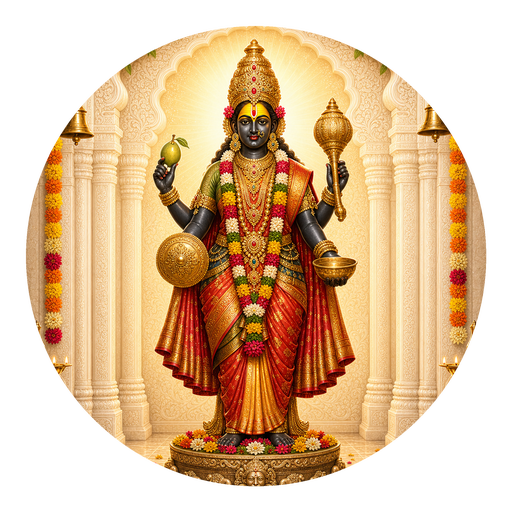
During the Samudra Manthan (the churning of the ocean), Dhanvantari — the father of Ayurveda and an avatar of Vishnu — rose bearing the pot of amrit (nectar). From that same churning the goddess Lakshmi appeared. So this day honours both health and wealth. Some traditions emphasise Dhanvantari Jayanti, while others emphasise Lakshmi, Kubera and the auspiciousness of buying. This gold-buying custom also shows up on other auspicious days of the year, such as Akshaya Tritiya.
Narak Chaturdashi
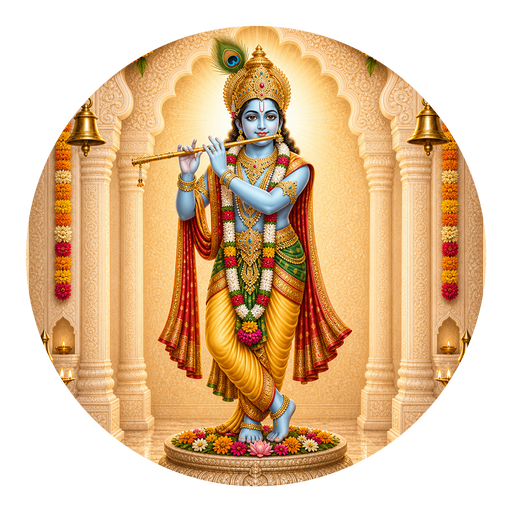
The asura Bhaumasura, better known as Narakasura, conquered the earth, stole Aditi's earrings and held sixteen thousand women captive. Krishna and Satyabhama (an avatar of Bhudevi) slew him and freed them all. In some versions the slaying is credited to Krishna's Sudarshana Chakra, in others to Satyabhama's arrow. After the killing, Krishna bathed with oil applied to his body — and from this, it is believed, the pre-dawn abhyangasnan custom took root.
Lakshmi Pujan
The spirit of this day is to welcome the goddess Lakshmi into the home by lighting lamps in the darkness of the amavasya, and to invite prosperity in. In some traditions this is also held to be the day of Rama's return to Ayodhya — after the victory over Lanka, Ayodhya is said to have lit rows of lamps to welcome Rama.
Balipratipada (Padwa)
This is the story of the generous asura king Bali. Vishnu, in the form of Vamana (a young brahmin boy), asked Bali for three paces of land. The moment the gift was granted, Vamana grew into Trivikrama and covered all three worlds in two paces; for the third pace, Bali offered his own head and was sent to Patala (the netherworld). Pleased by Bali's generosity, Vishnu granted him a boon: that Bali would return to the earth for one day each year — and this is held to be that day.
Bhaubeej (Yamadwitiya)
Yama, the god of death, visited his sister Yamuna at her home. Yamuna performed his aukshan (the waving of a lamp), applied a tilak and prayed for his long life. The pleased Yama granted a boon: a brother whose sister lovingly does aukshan for him on this day will not meet an untimely death. This is why the day is also called ‘Yamadwitiya’.
Who observes it
- The whole family — Diwali is a household and social festival. The emphasis falls on the women of the house (puja, rangoli, faral), on merchants (the ledger and Lakshmi Pujan), and on the children (killa forts, akash-kandil lanterns, and celebration).
- Vasubaras — families with a cow and calf, and women keeping the Nandini vrat.
- Padwa — husband and wife; the wife does aukshan of the husband, and he gives a gift.
- Bhaubeej — sister and brother; the sister does aukshan of her brother.
Puja vidhi (how to perform)
The sequence below is given in a general form; it can vary by household and local custom.
Lakshmi Pujan
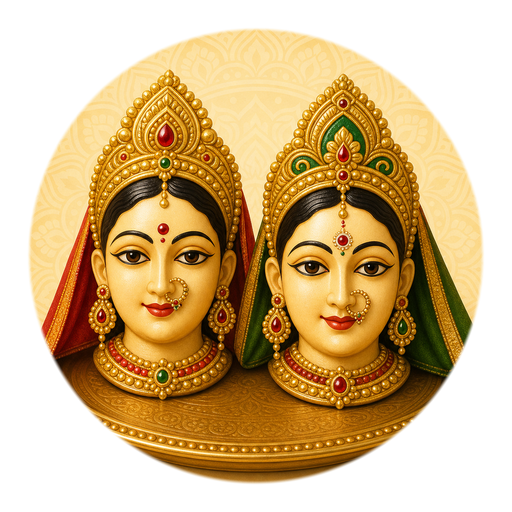
The house is cleaned and a rangoli with Lakshmi's footprints is drawn at the doorstep. On a low seat (chaurang) an idol or kalash of Lakshmi–Kubera, gold coins and the account ledger are placed, and flowers, dhoop and sweets are offered. Merchants do a puja of the new ledger (chopdi-pujan). Lamps are then lit, the home is decorated, and the celebration follows.
Abhyangasnan (Narak Chaturdashi)
Before sunrise, while the Moon is still up, fragrant oil and utane (a herbal paste) are applied to the body before the bath; then come new clothes, lamps and faral.
⚠️ The exact time of Lakshmi Pujan (pradosh and sthir lagna) varies by date and by city — it is not given here as a clock time. For 2026 you can find it on the day page for 8 November.
What you need (samagri)
- An idol or kalash of Lakshmi–Kubera, and coins
- The account ledger (chopdi)
- Akshata, kunku and haldi
- Flowers and garlands
- Dhoop, incense, a niranjan/samai lamp and oil-wicks
- Naivedya and sweets
- Rangoli colours
- Fragrant oil and utane for the abhyangasnan
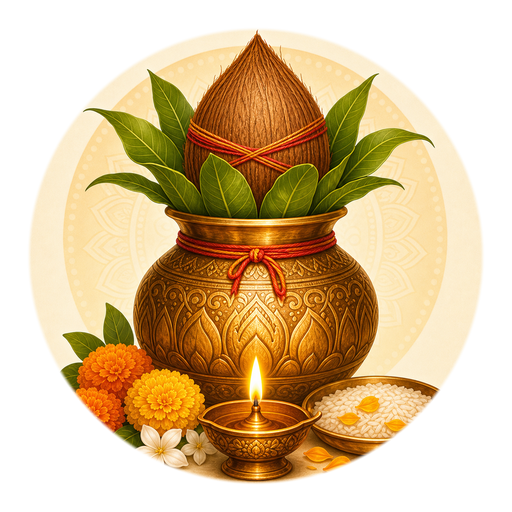 Kalash
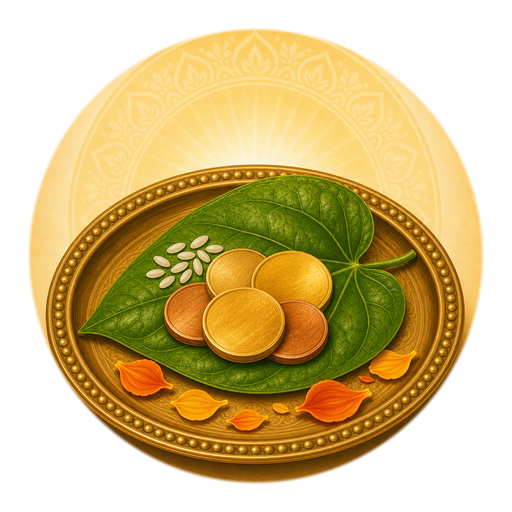 Coins
Coins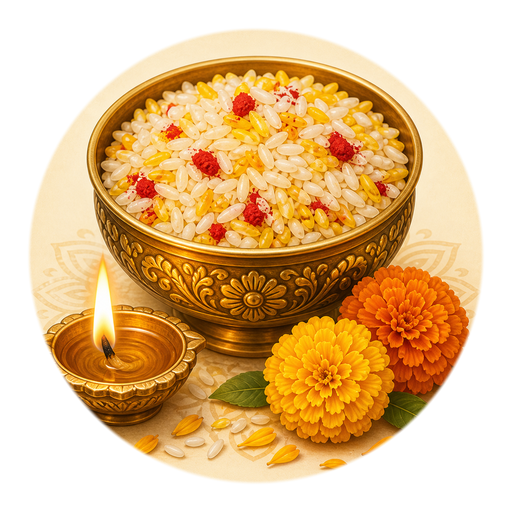 Akshata
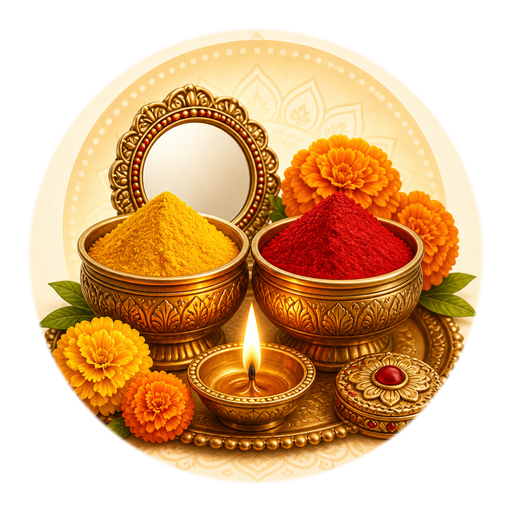 Kunku and haldi
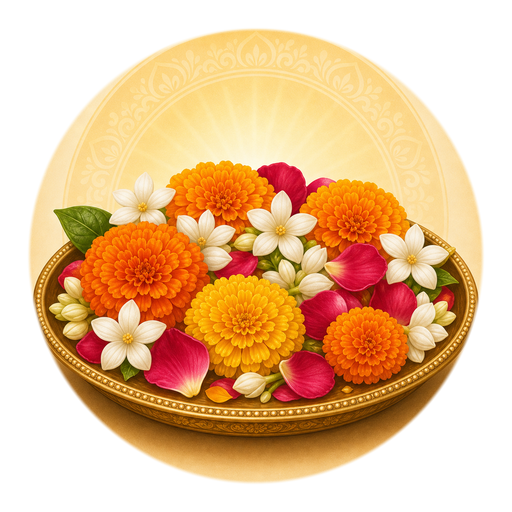 Flowers
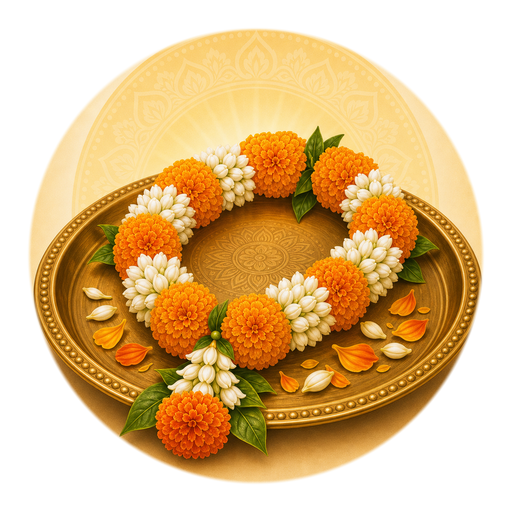 Garlands
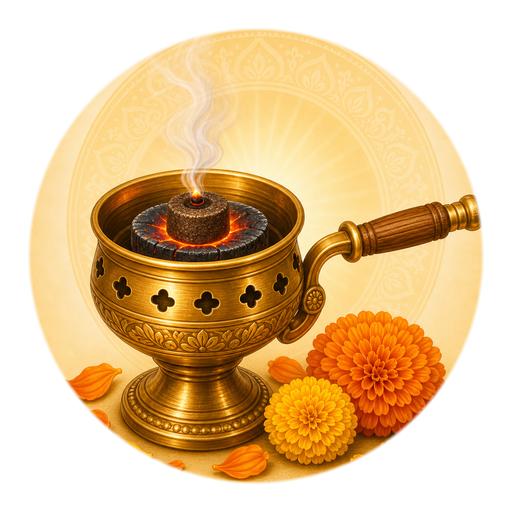 Dhoop
Dhoop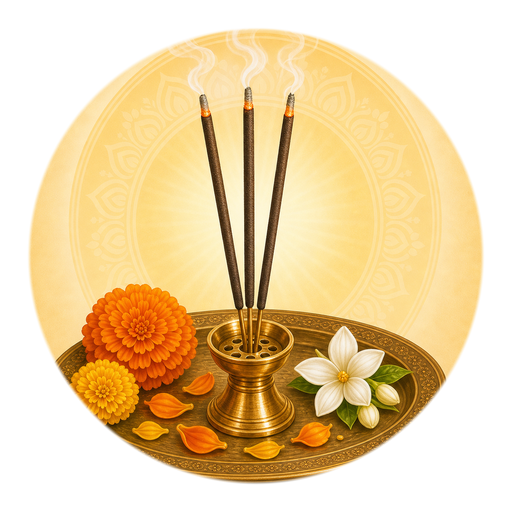 Incense
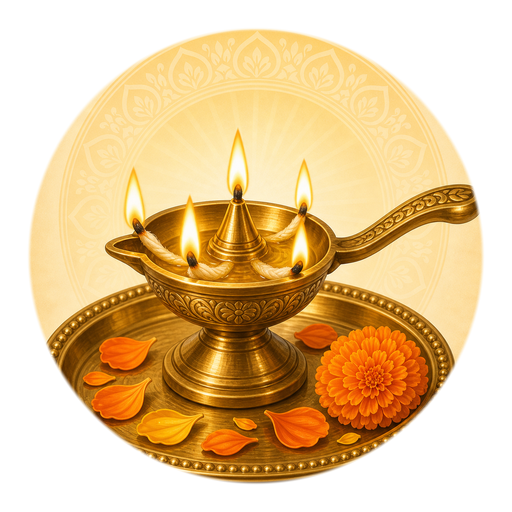 Niranjan lamp
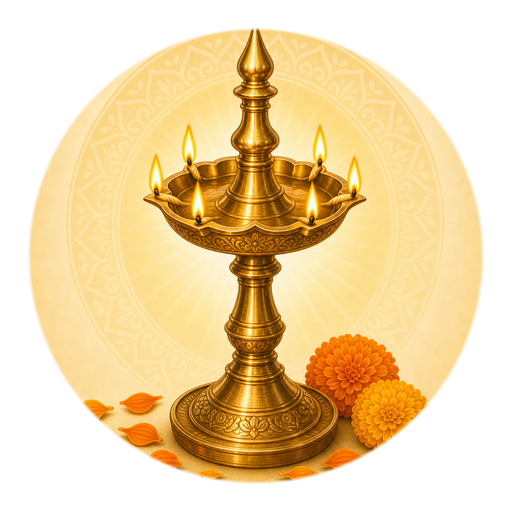 Samai lamp
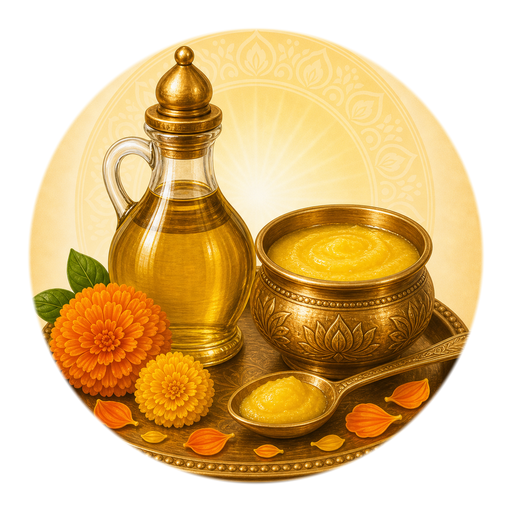 Oil-wicks
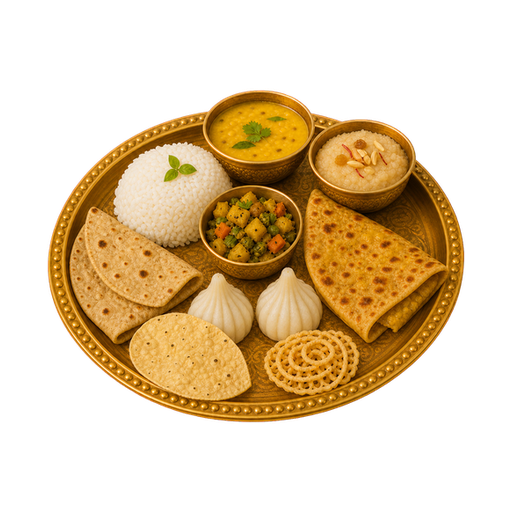 Naivedya
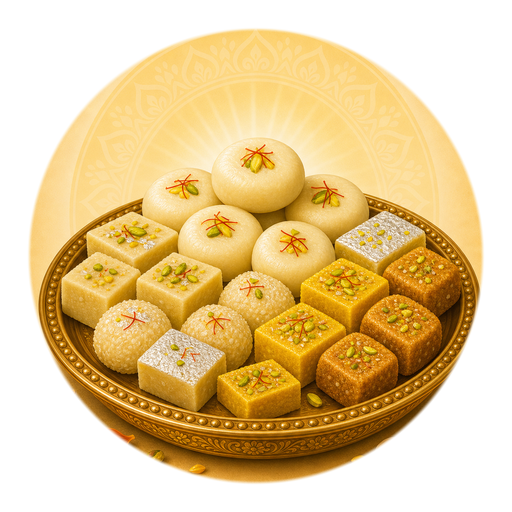 Sweets
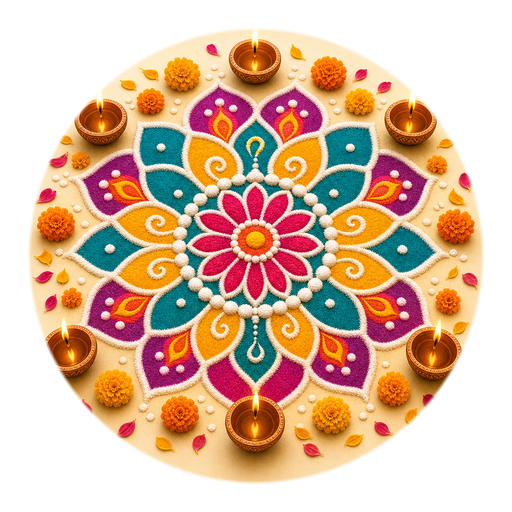 Rangoli colours
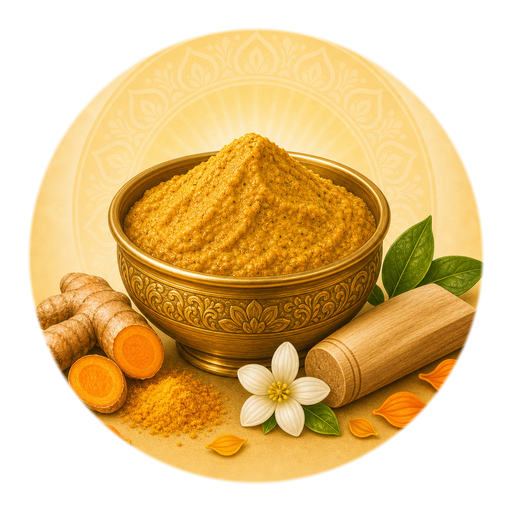 Utane
Utane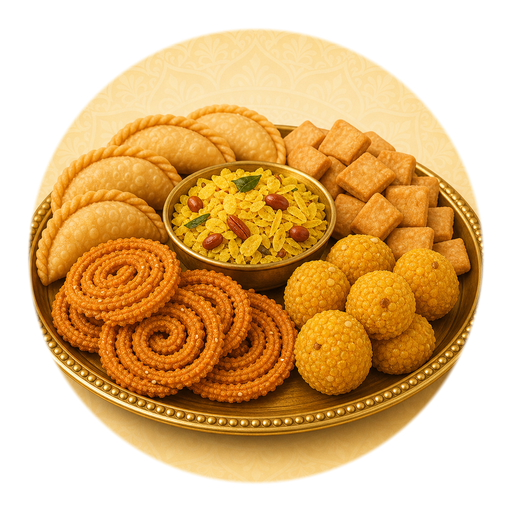 Diwali faraal (festive snacks)
Fasting & food (upvas)
Diwali is mainly a festival of faral (festive snacks), not of strict fasting. The focus is on the home-made faral — items such as chakli, karanji, anarse, laddu, chivda and shev.
The one exception is Vasubaras — women keeping the Nandini vrat avoid milk and dairy that day (to leave the calf's share). This varies by tradition.
Mantra & aarti
At the time of Lakshmi Pujan, the Shri Mahalakshmi aarti is sung. It is a well-known Marathi aarti that praises the goddess for prosperity, well-being and the removal of poverty. Its opening line is ‘Jai Devi Jai Devi Jai Mahalakshmi’. The words and tune can vary slightly by household or sect; this is the commonly settled version.
Regional variations (Maharashtra)
Maharashtra's Diwali has a few distinct signatures:
- Abhyangasnan — the pre-dawn oil-and-utane bath on Narak Chaturdashi (prominent in Maharashtra).
- Faral — chakli, karanji, anarse, laddu, chivda, shev; the tradition of the family sitting together over faral.
- Akash-kandil and panti — a paper lantern and a row of oil lamps outside the home.
- Rangoli and Lakshmi's footprints — a rangoli at the threshold with the goddess's footprints drawn in (welcoming Lakshmi).
- Killa (forts) — children build mud replicas of Chhatrapati Shivaji Maharaj's forts (Raigad, Sinhagad, Pratapgad, Shivneri, Panhala), sowing mustard on them for greenery — a custom unique to Maharashtra.
- Padwa (husband and wife) — the wife does aukshan of the husband and he gives a gift; in Maharashtra Padwa is also treated as the merchants' new year.
Regional difference: Govardhan Puja, a fourth-day observance in north and west India, is a distinct rite; on that tithi Maharashtra observes Balipratipada / Padwa instead. So Govardhan Puja should not be presented as the Maharashtra norm.
The days, tithi by tithi (2026)
The days of Diwali are fixed by tithi; the Gregorian dates below come from the site's 2026 panchang data and shift every year. Diwali days are set by a specific window (evening or pre-dawn), not by the tithi running at sunrise — for example, Lakshmi Pujan = amavasya at pradosh (dusk).
| Date (2026) | Vaar | Tithi | Nakshatra | Diwali day |
|---|---|---|---|---|
| 6 November | Shukravar (Friday) | Ashwin Krishna Dwadashi | Hasta | Vasubaras / Govatsa Dwadashi + Dhanteras (Trayodashi at pradosh) |
| 7 November | Shanivar (Saturday) | Ashwin Krishna Trayodashi | Chitra | Masik Shivratri — not a Diwali day (parallel observance) |
| 8 November | Ravivar (Sunday) | Ashwin Krishna Chaturdashi | Swati | Narak Chaturdashi (pre-dawn) + Lakshmi Pujan (evening) |
| 9 November | Somvar (Monday) | Ashwin Amavasya | Swati | Somvati Amavasya (a separate observance) |
| 10 November | Mangalvar (Tuesday) | Kartik Shukla Pratipada | Vishakha | Balipratipada / Diwali Padwa (saadetin muhurat) |
| 11 November | Budhvar (Wednesday) | Kartik Shukla Dwitiya | Anuradha | Bhaubeej / Yamadwitiya |
Dates and times vary by place and year. Future-year dates will resolve from that year's panchang. For today's exact tithi, see today's panchang page.
Good to know
- The Lakshmi Pujan time is auspicious in the evening / pradosh window; the exact muhurat shifts by city (by sunset) — check the time on the day page.
- Abhyangasnan is before sunrise; use the oil and utane gently on sensitive skin.
- Firecrackers — keep in mind noise and air pollution, children and pets, and local time restrictions; consider green crackers and a quieter Diwali.
- Lamps and panti — open flames and decorative light strings; take care against fire.
- The vidhi and the katha vary by tradition — treat them as custom (‘by household and local practice’), not as universal rules.
FAQ
- When is Diwali in 2026?
- In Maharashtra, from 6 November (Vasubaras) to 11 November (Bhaubeej). Lakshmi Pujan is on 8 November (Sunday) — also the day of Narak Chaturdashi's dawn abhyangasnan. 9 November is Somvati Amavasya. (Dates from the site's panchang.)
- What are the five days of Diwali?
- Vasubaras → Dhanteras → Narak Chaturdashi → Lakshmi Pujan → Balipratipada/Padwa → Bhaubeej. (In Maharashtra, counting Vasubaras, these six observances come together.)
- When should Lakshmi Pujan be done?
- While the amavasya is running at pradosh (dusk). In 2026 that day is 8 November; the exact time varies by city — see the day page for 8 November.
- What do people buy on Dhanteras, and why?
- In memory of Lakshmi and Dhanvantari appearing from the Samudra Manthan, people buy gold, silver and utensils as symbols of health and wealth.
- Why is abhyangasnan done on Narak Chaturdashi?
- It recalls the oil bath Krishna took after slaying Narakasura; the spirit is of purity and auspiciousness. This varies by tradition.
- Why does Balipratipada / Padwa fall among the saadetin muhurat?
- It is considered a highly auspicious day — the merchants' new year and a day to begin new ventures, which is why it is one of the three-and-a-half muhurats.
- Why is Bhaubeej celebrated?
- From the story of Yama and Yamuna; the spirit is that a sister's love brings her brother the blessing of a long life.