Maharshi Yajnavalkya Jayanti
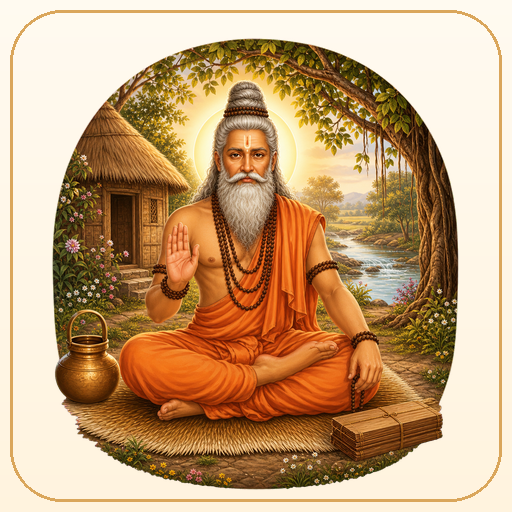
Maharshi Yajnavalkya Jayanti is the day of remembrance for the ancient Vedic sage Yajnavalkya — the central philosopher of the Brihadaranyaka Upanishad and the compiler of the Shukla Yajurveda samhita. This Jayanti falls on Phalgun Shukla Panchami (the tradition regarded as primary in North and West India); in 2026, it falls on Sunday, 22 February. Yajnavalkya is known for teaching the oneness of atman and brahman, for originating the "neti neti" method, and for his famous dialogue on self-knowledge with his wife Maitreyi.
This year's dates (2026)
Since Yajnavalkya is an ancient Vedic sage, both his biography and his dating sit partly at the level of legend. Traditional and modern scholarly dating differ by a large margin, and scholars are divided on whether the Upanishad-era Yajnavalkya and the author of the Yajnavalkya Smriti are the same person or two different sages.
Significance
Yajnavalkya is the principal speaker in the Brihadaranyaka Upanishad — regarded as one of the oldest and most important Upanishads; his teaching there is considered foundational to the later philosophy of Advaita Vedanta.
Conflict with his guru Vaishampayana and the origin of the Shukla Yajurveda: per the Taittiriya Upanishad, an angered Vaishampayana demanded back the knowledge he had taught Yajnavalkya; Yajnavalkya vomited it up, and other disciples took it in by turning into tittiri birds — the traditional origin story for the name "Taittiriya." Tradition then holds that Yajnavalkya received the Shukla Yajurveda directly from the Sun God.
The debate at King Janaka's court in Mithila: when a prize of a thousand cows with gold-tipped horns was announced for the most learned Brahmin at King Janaka's yagna, Yajnavalkya boldly claimed them himself, defeating scholars such as Ashvala, Uddalaka Aruni, and Shakalya in philosophical debate. His two-round debate with Gargi Vachaknavi is especially famous — she ultimately acknowledged his philosophical superiority.
The Yajnavalkya Smriti: a foundational text of Hindu dharmashastra is associated with this name — but scholars hold that this text may have been composed centuries after the Upanishad-era Yajnavalkya, likely by a different, similarly named sage. Despite the shared name, scholarly opinion holds these may be two different, similarly named sages.
The legend
This is a scripture-centred sage's biography rather than a purely mythological legend — yet the Upanishadic episodes are traditionally recounted in story form. The two main episodes below are given briefly, based on the Brihadaranyaka/Taittiriya Upanishad accounts.
The Maitreyi dialogue (the most famous episode): before renouncing the world for the forest, Yajnavalkya begins dividing his wealth between his two wives — Maitreyi (a philosopher interested in metaphysical discussion) and Katyayani. Maitreyi asks, "Will this wealth grant me immortality?" Yajnavalkya replies, "What use do I have for that which does not grant immortality?" — and imparts to her the knowledge of the oneness of atman and brahman.
The debate at Mithila's court: after defeating other scholars at King Janaka's yagna, a two-round philosophical debate unfolds with Gargi Vachaknavi — asking questions about the ultimate support of creation, Gargi eventually reaches the question of brahman itself; Yajnavalkya stops her with a well-known caution ("don't ask too many questions, or your head will fall off"), and Gargi ultimately concedes his philosophical superiority.
Dating: traditional/astrological sources place Yajnavalkya's era at roughly 3200 BCE, while modern scholarly opinion places the Brihadaranyaka Upanishad/Yajnavalkya at roughly 700 BCE — a gap of more than two and a half thousand years. There is no consensus between traditional and scholarly accounts on this point.
Who observes it
Students of the Vedic/Upanishadic tradition, Brahmin communities, and ordinary seekers of knowledge observe Yajnavalkya Jayanti — with particular enthusiasm in Tamil Nadu, Karnataka, Kerala, Andhra Pradesh, as well as in North Indian states (Uttar Pradesh, Madhya Pradesh, Bihar). A "Yajnavalkya Mahotsav" is noted at a Yajnavalkya ashram in the Mithila region — a site outside Maharashtra.
In Maharashtra, this is chiefly a panchang-level day, not observed as a distinct, large public festival.
Puja vidhi
As with general sage worship: a bath, remembrance/worship of Yajnavalkya, recitation/listening to the Brihadaranyaka Upanishad or Yajnavalkya's own texts, and gatherings/discourses. This isn't presented as an ancient household ritual specific to the sage — the references found lean more toward social/cultural remembrance.
A lamp, incense, flowers, and a copy of the Brihadaranyaka Upanishad/Yajnavalkya Smriti for recitation — an indicative list; there is no fixed regional list of items.
There is no specific, widely accepted fasting/dietary rule for this Jayanti.
Mantra & stotra
There is no independent, widely used aarti or stotra specific to Yajnavalkya. "Neti neti" is his famous method of pointing to the nature of the self (not a mantra, but a philosophical formula) — meaning "not this, not this": a negation method stating that the true self is beyond, and different from, any description.
Regional customs
Maharashtra has almost no distinct custom of its own — this is chiefly a panchang-level Jayanti.
South India (Tamil Nadu/Karnataka/Kerala/Andhra Pradesh) and North India (Uttar Pradesh/Madhya Pradesh/Bihar) — Brahmin communities observe it with particular enthusiasm, through prayers, gatherings, and scripture recitation.
Regional date variance: besides Phalgun Shukla Panchami (the tradition this panchang follows), other traditions also exist — Phalgun Krishna Panchami, Kartik Shukla Dwadashi, and the seventh day of Kartik in Gujarat. These aren't "wrong," just regional/sectarian variation.
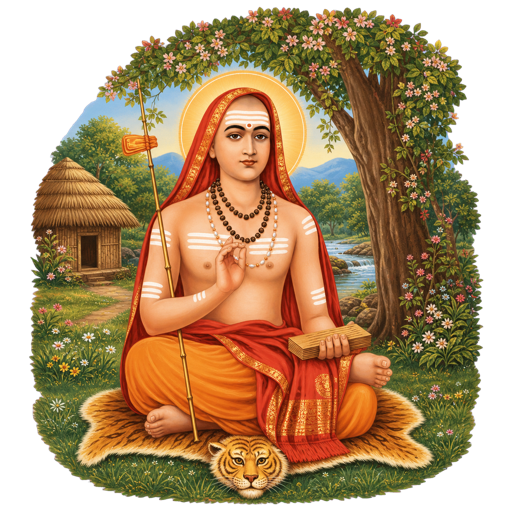
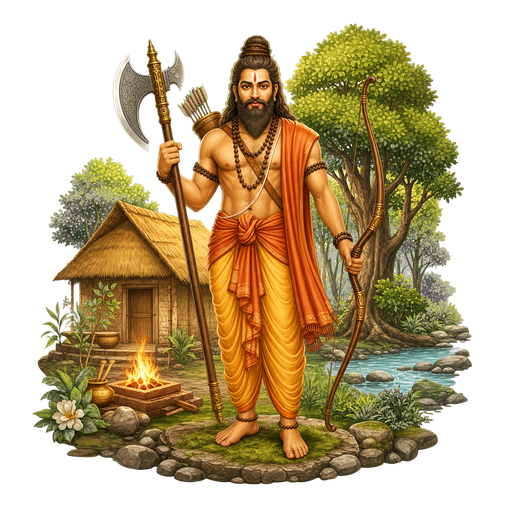
Adi Shankaracharya Jayanti and Parshuram Jayanti are parallel Vedic/philosopher-sage Jayantis — different figures on different tithis, similar mainly in kind.
Good to know
- Don't treat the dating as settled — traditional (~3200 BCE) and scholarly (~700 BCE) opinions differ by a huge margin.
- Keep the "two Yajnavalkyas" question in mind — the Upanishad-era sage and the Smriti's author shouldn't be assumed to be the same person.
- The date tradition varies regionally — besides Phalgun Shukla Panchami (this panchang's own tradition), other regional traditions also exist.
FAQ
- When is Yajnavalkya Jayanti in 2026?
- Sunday, 22 February 2026 (Phalgun Shukla Panchami).
- Who was Maharshi Yajnavalkya?
- The central Vedic sage of the Brihadaranyaka Upanishad, compiler of the Shukla Yajurveda samhita, and teacher of the oneness of atman and brahman.
- What was the dialogue between Yajnavalkya and Maitreyi?
- Before renouncing the world, at the time of dividing his wealth, Maitreyi asked about immortality; Yajnavalkya explained the importance of self-knowledge instead.
- Are the Yajnavalkya of the Yajnavalkya Smriti and the Brihadaranyaka Upanishad the same person?
- Not certain — scholarly opinion holds these may be two different, similarly named sages (the Smriti likely composed centuries later).
- How did Yajnavalkya obtain the Shukla Yajurveda?
- After a disagreement with his guru Vaishampayana, tradition says he received it directly from the Sun God.
- What was the outcome of the Gargi-Yajnavalkya debate?
- After a two-round philosophical debate, Gargi acknowledged Yajnavalkya's philosophical superiority.
- Is Yajnavalkya Jayanti observed on the same date everywhere?
- No — Phalgun Shukla Panchami (North/West India) is the primary tradition, but Phalgun Krishna Panchami, Kartik Shukla Dwadashi, and the seventh day of Kartik in Gujarat are also regional traditions.