Parshuram Jayanti
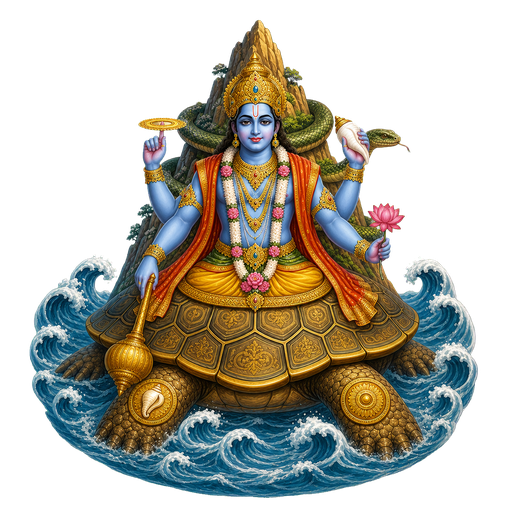
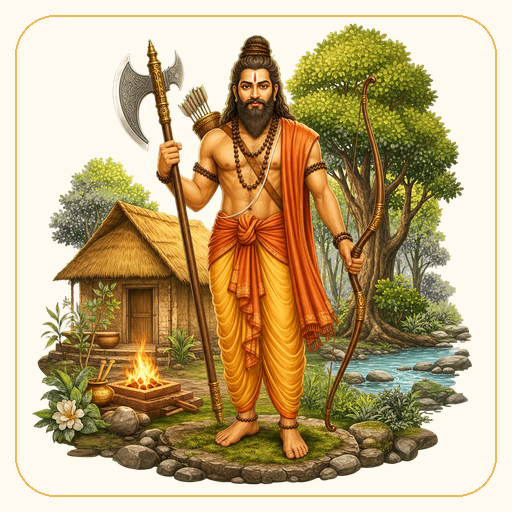
Parshuram Jayanti marks the birth tithi of Lord Parshuram — Vishnu's sixth avatar (Bhargavram/Ram Jamadagnya) — falling on Vaishakh Shukla Tritiya, the very same tithi as Akshaya Tritiya. In 2026, this falls on Sunday, 19 April. Parshuram is regarded as one of the seven Chiranjivis (immortals) — the guru of Bhishma, Drona, and Karna. For Maharashtra and Konkan, he's believed to have pushed back the sea to create the land of Konkan, and Shri Kshetra Parshuram, Chiplun (Ratnagiri) is the principal site associated with him.
This year's dates (2026)
Significance
Parshuram's avatar is believed to have arisen to rein in unrighteous, arrogant kshatriya kings and restore dharma — a rare combination of a Brahmin's knowledge and a Kshatriya's valor united in one figure.
Akshaya Tritiya and Parshuram Jayanti both fall on the same Vaishakh Shukla Tritiya, but for different reasons — Akshaya Tritiya is one of the three-and-a-half most auspicious muhurats — a sunrise day associated with prosperity — while Parshuram Jayanti commemorates his birth during Pradosh kaal (see below).
Parshuram is believed to still be alive on earth, and to become the guru of Vishnu's tenth (Kalki) avatar at the end of Kali Yuga — which is why he's regarded as a Chiranjivi.
As the creator of the land of Konkan ("lord of the seven Konkans"), Parshuram is deeply tied to Konkan culture — giving this festival a special local meaning in Maharashtra.
The legend
Parshuram was born to the sage Jamadagni and Renuka — belonging to the Bhrigu/Bhargava clan, he's also known as "Ram Bhargava"/"Jamadagnya." In some versions he received the parashu (axe) from Lord Shiva — which is said to be the origin of the name "Parashu-Ram."
King Kartavirya Arjuna (Sahasrarjuna) forcibly seized Jamadagni's Kamadhenu (the wish-fulfilling cow); when Jamadagni resisted, the king killed him. In revenge for his father's death, Parshuram is said to have destroyed unrighteous kshatriyas twenty-one times; their blood is said to have filled the Samanta Panchaka lakes near Kurukshetra.
After the destruction of the kshatriyas, Parshuram donated all the earth to Kashyapa; to make a place for himself to live, he is said to have thrown his axe/an arrow into the sea, pushing it back and creating the land of Konkan/Parshuram Kshetra (from Gokarna to Kanyakumari). The Mahabharata also records him as the guru who taught Bhishma, Dronacharya, and Karna their weaponry.
How far the sea was pushed back also varies by version — some give "400 yojanas."
A community tradition holds that Parshuram is the progenitor of the Chitpawan Brahmins — this is a community-tradition claim, not a settled fact; it doesn't appear on Marathi Wikipedia's Parshuram page.
Who observes it
Parshuram devotees, the Brahmin community (especially in the Konkanastha/Chitpawan tradition), and Vishnu-avatar worshippers. Most people who celebrate Akshaya Tritiya also remember Parshuram on this same day, since both fall on the same tithi.
Puja vidhi
- Parshuram's image/murti is installed on red cloth over a clean chaurang or wooden plank.
- A sankalp is taken, followed by a shodashopachar/panchopachar puja with sandal paste, akshata, flowers, incense, a lamp, and naivedya; Parshuram stavan/naam-smaran is recited.
- Many devotees observe a fast, according to their faith.
- Temples hold havan, bhajan-kirtan, bhandara-prasad, and a shobha/kalash yatra; in some places, the Parshuram Kalpasutra is also recited.
No separate binding udyapan is recorded for this — it's a single-day Jayanti.
What you need
Red cloth, a chaurang or wooden plank, Parshuram's image, turmeric-kumkum-sandal paste-akshata, flowers-tulsi, incense-lamp-nirajan, naivedya/fruit, and dakshina. This is a general list of Vishnu-puja items; it can vary by household tradition.
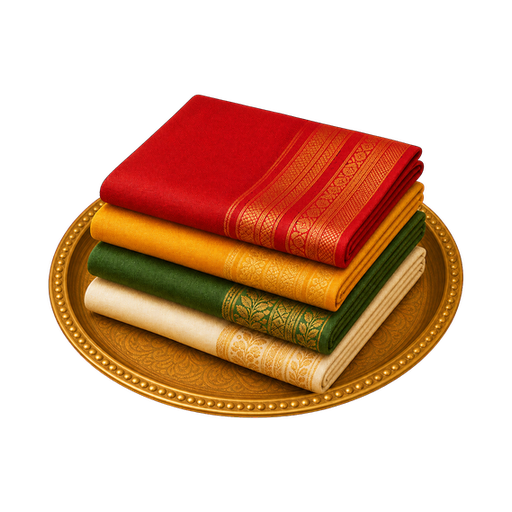 Red cloth
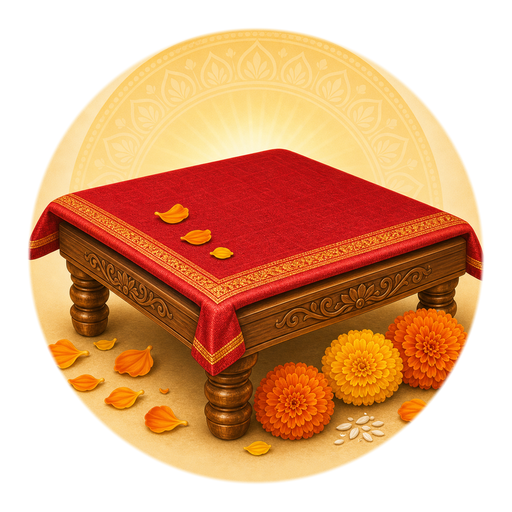 Chaurang / wooden plank
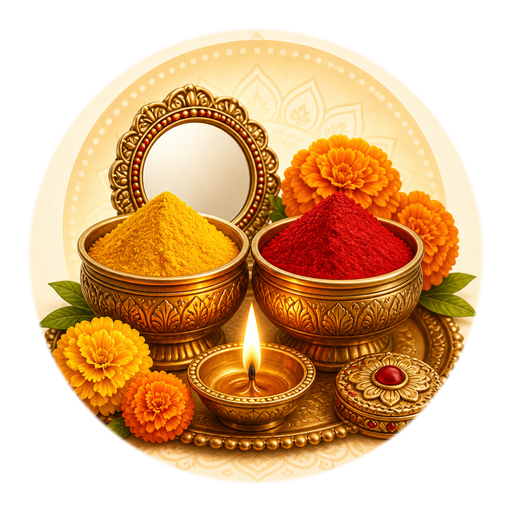 Turmeric-kumkum
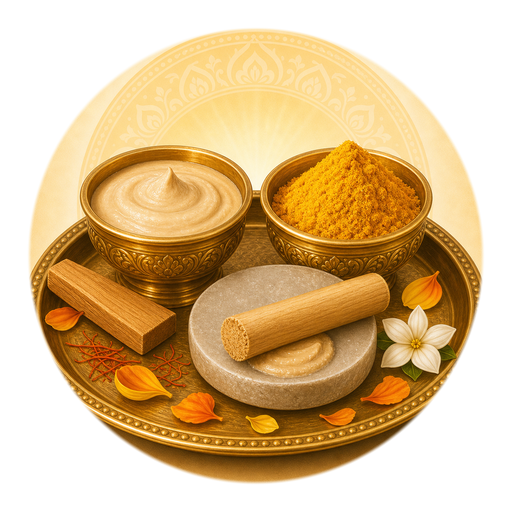 Sandal paste
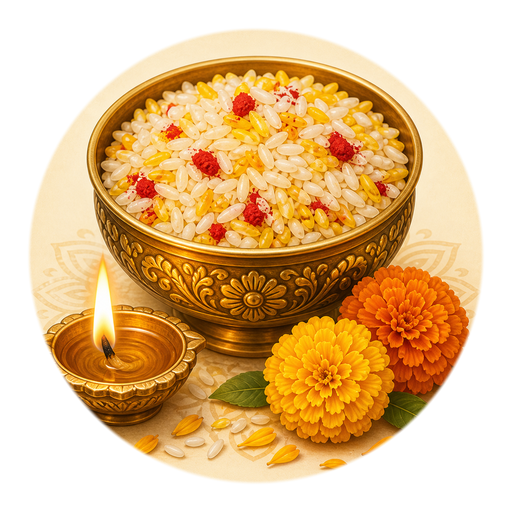 Akshata
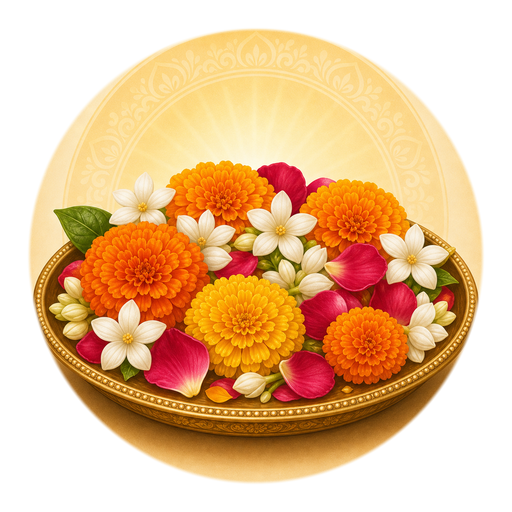 Flowers
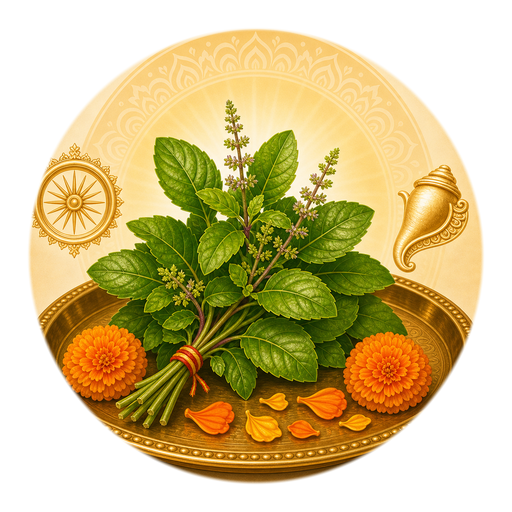 Tulsi
Tulsi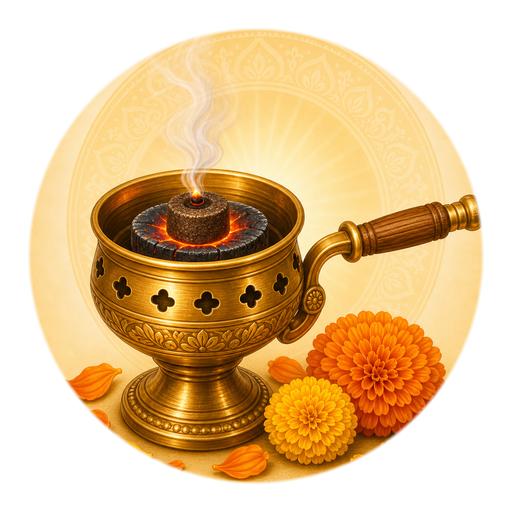 Incense
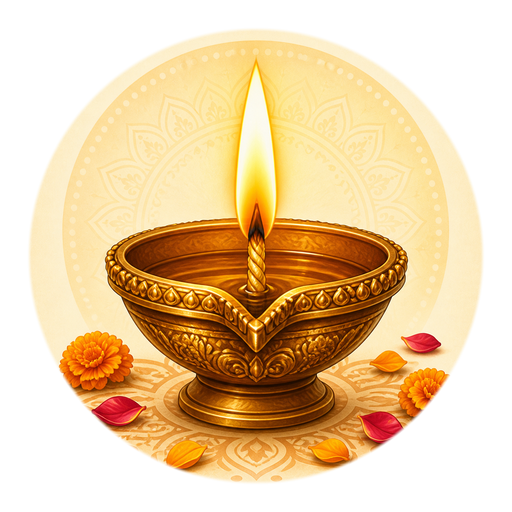 Lamp
Lamp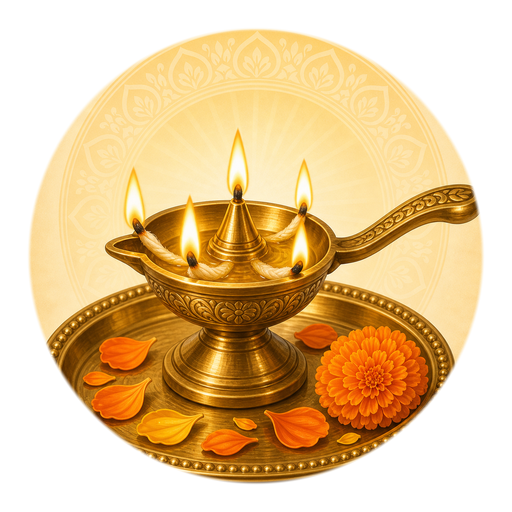 Niranjan
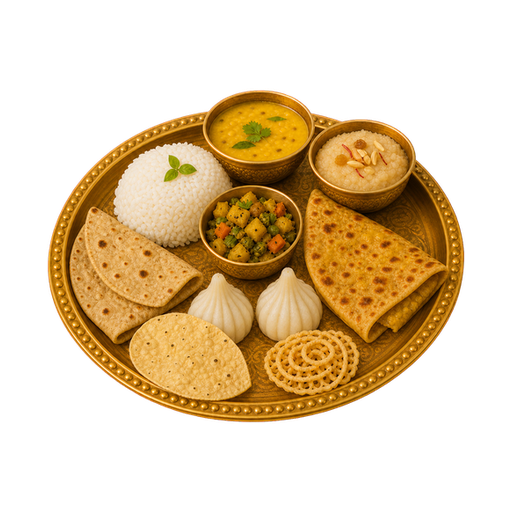 Naivedya
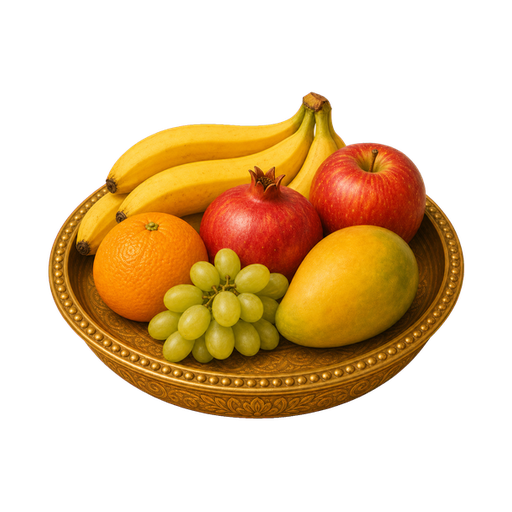 Fruit
Fruit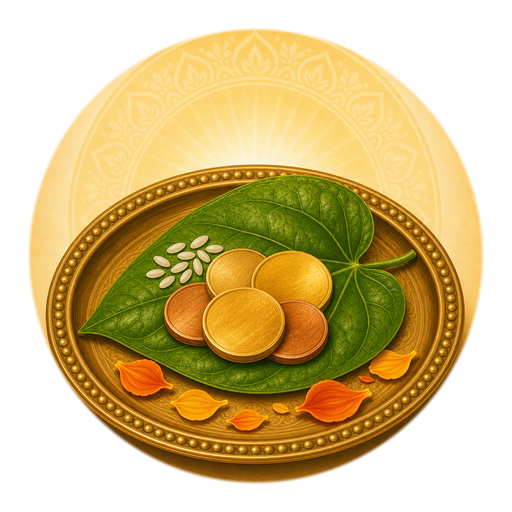 Dakshina
Fasting
Fasting is optional and tradition-dependent — some devotees keep a strict waterless fast or eat only fruit, while others simply observe puja and remembrance. This can vary by household/local tradition — it isn't presented here as a universal rule.
Mantra & stotra
Common remembrance chants include a Parshuram-Gayatri in the form "Om Jamadagnyaya Vidmahe…" and the chant "Parshuramaya Namah."
Regional customs
Konkan (Maharashtra) is this page's main differentiator. Parshuram is regarded as the creator of the land of Konkan; Shri Kshetra Parshuram, Chiplun (Mahendragiri, Chiplun taluka, Ratnagiri district) is the principal devasthan associated with him. The exact name and official detail of the trust that manages the temple haven't been independently verified yet.
A local belief holds that the deity departs to the Himalayas for austerity at sunrise and returns at sunset. The temple's main festival days are recorded as Akshaya Tritiya, Ram Navami, and Mahashivratri. By tradition, the "Dev Bhargavram Utsav" is also said to take place around this time — but the exact 2026 schedule hasn't yet been confirmed by the temple committee, so it should be treated as provisional/unconfirmed.
Outside Maharashtra, Parshuram Jayanti is also celebrated in Bihar (Mokama — a state festival) and Himachal Pradesh (a public holiday) — these are secondary references for a Konkan-focused Marathi reader.
Good to know
- Akshaya Tritiya and Parshuram Jayanti fall on the same day — remember this distinction (same tithi, different reason/time) to avoid confusion.
- The exact puja muhurat (morning vs. Pradosh) is date- and place-dependent — check the 19 April day page for these.
- Crowds/darshan timings for the Chiplun pilgrimage should be checked with the temple committee.
FAQ
- When is Parshuram Jayanti in 2026?
- Sunday, 19 April 2026 (Vaishakh Shukla Tritiya; the same day as Akshaya Tritiya).
- Which avatar of Vishnu is Parshuram?
- Vishnu's sixth avatar; son of Jamadagni and Renuka, of the Bhargava clan.
- Why do Parshuram Jayanti and Akshaya Tritiya fall on the same day?
- Parshuram's birth is held to have occurred on Vaishakh Shukla Tritiya — the same tithi as Akshaya Tritiya — so both fall together.
- Was Parshuram born during Pradosh or midday?
- By tradition, during Pradosh kaal (the first prahar of the night) — so the day on which Pradosha-vyapini Tritiya prevails is observed, not midday.
- What's the connection between Parshuram and Konkan/Chitpawan?
- Parshuram is believed to have pushed back the sea to create the land of Konkan; Chiplun's Shri Kshetra Parshuram is the principal site. The claim that he's the progenitor of the Chitpawans is a community tradition, not a settled fact.
- What is done on Parshuram Jayanti / how is the puja performed?
- Worship of Parshuram's image, naam-smaran, an optional fast; havan/bhajan/bhandara at temples. The exact vidhi varies by tradition.