Banada Ashtami
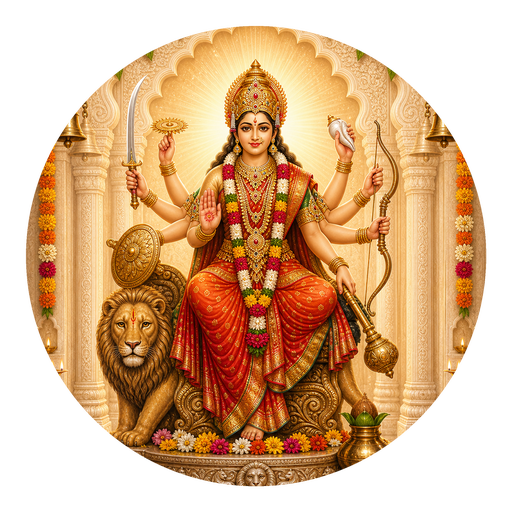
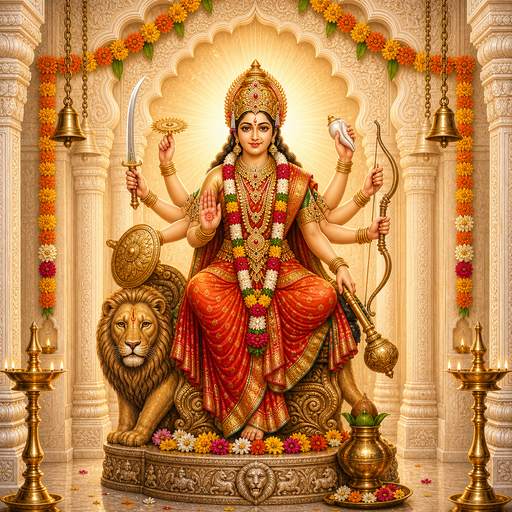
Banada Ashtami is the Paush Shukla Ashtami tithi that opens Shakambhari Navratri — a festival that concludes on Paush Purnima (Shakambhari Purnima). The goddess involved, Shakambhari — known in Karnataka as Banashankari — is regarded as a form of Durga/Adi Shakti. Unlike most Navratris, which begin on Shukla Pratipada, Shakambhari Navratri is distinctive — it begins on Ashtami and ends on Purnima, roughly a seven-to-eight day span. The festival is observed in Rajasthan, Uttar Pradesh, Karnataka, Maharashtra, and Tamil Nadu; a major, ancient temple is at Cholachagudu, near Badami in Karnataka, regarded by that tradition as the original centre.
Significance
The name Shakambhari comes from "Shakan Bibharti Iti Shakambhari" — "she who nourishes/bears through vegetables." The main tradition holds that during a great famine, the goddess produced vegetables, fruits, and grain from her own body to nourish the world. This is why the festival is closely tied to food, agriculture, and nature's balance — a tradition of combining more than sixty kinds of vegetables into a single offering is observed. Farming communities regard this as a particularly significant festival.
Banada Ashtami is the opening point of this seven-to-eight day festival cycle — the Banashankari temple in Badami holds a particularly large fair (jatra) on this day.
Most sources hold that the festival begins on Ashtami, since the observance itself is named for it; some respected sources, however, place the start on Saptami instead.
The legend
During a terrible famine, the earth suffered a severe shortage of food and water. Gods, sages, and humans all worshipped Adi Shakti. The goddess appeared, pleased, and produced vegetables, fruits, and water from her own body and eyes to nourish creation — this is how she came to be called Shakambhari, the common thread across all versions of the story.
Several distinct variants of this story exist. Some versions directly connect it to the demon Durgamasura, who acquired the four Vedas through penance, causing knowledge to be lost and a drought to follow; the goddess slew him and restored the Vedas, and in this version she also takes the name Shatakshi ("the hundred-eyed one"). Some versions omit Durgamasura entirely — the story is simply the natural famine and the goddess's compassionate manifestation. A separate version holds that the goddess herself performed a hundred years of penance living only on vegetables, which is how she got the name — here the emphasis is on "her own austerity" rather than "nourishing others." Another version connects the name to Parvati's penance to win Shiva, living only on leafy greens.
The local legend at the Banashankari temple in Badami specifically states that the goddess slew Durgamasura at Badami itself.
Who observes it
Generally Devi devotees — especially families for whom Shakambhari/Banashankari is the kuldevata (family deity), a practice found in Karnataka and among some families in Maharashtra. Farming communities also give this festival special importance, since it's tied to food abundance. One source notes this vrat is often kept as a "Gupt" (hidden) Navratri, observed quietly at a household/personal level.
Puja vidhi
The puja style found in sources follows the general Devi-Navratri pattern — no distinct Banada-Ashtami-specific ritual was found in any source:
- A bath before sunrise.
- Decorating the puja space and placing an image or murti of the goddess on red cloth.
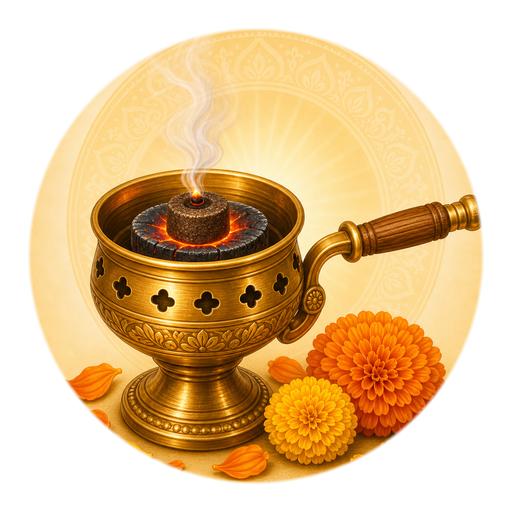
- Lighting incense and lamps.
- Chanting the goddess's 108 names.
- Concluding with a Durga stotra and aarti.
- Keeping the observance going for seven to eight days (Ashtami to Purnima).
Notably, on Purnima (the concluding day), a tradition of offering a grand naivedya combining more than sixty types of vegetables is observed.
What you need
No definitive, source-verified list was found. General items expected for Devi worship — red cloth, incense-lamps, an image or murti of the goddess, and a variety of vegetables and fruits for naivedya — can be used as a reference.
 Red cloth
 Incense
 Lamp
Lamp Fruits for naivedya
Mantra & stotra
Chanting the goddess's 108 names is mentioned, and reciting the Durga Saptashati is noted as part of the concluding ritual — this is a well-known, ancient text. However, the exact text of either, and any part specific to Banada Ashtami, is not given here; no original line of any goddess-specific aarti or stotra is included either.
Regional customs
In Karnataka, the Banashankari temple at Badami (Bagalkot district) is a major, ancient centre — local tradition regards it as the original seat; a large fair is held there, and Banada Ashtami is that fair's opening day. In Rajasthan, one source notes that the Shakambhari temple near Sambhar Lake (near Jaipur) treats Paush Shukla Ashtami as its main festival day. One source holds the temple at Saharanpur in Uttar Pradesh to be the original/ancient seat.
Some secondary sources connect Maharashtra's Shaktipeeth-linked temples — Saptashrungi Gad, Kolhapur's Ambabai, and Tuljapur's Bhavani — with "Shakambhari." However, the official Saptashrungi temple trust's own list of festivals does not include "Shakambhari" at all — it lists "Dhanurmas" for the same season instead. So this regional claim is noted here only as a mention, not as a settled regional custom.
One source notes that Kolhapur's Ambabai and Tuljapur's Bhavani temples hold a special vegetable display/mahaprasad around this season, but this hasn't been independently confirmed by an official temple source as specifically tied to the name "Shakambhari Purnima."
Date
No new Paush Shukla Ashtami begins within the 2026 calendar year (January-December) — this Navratri cycle's Ashtami already occurred in December 2025 (though its conclusion did fall within 2026, on 3 January, Paush Purnima), and the next Paush Shukla Ashtami is expected around January 2027. So this page does not give a fixed Gregorian date — Banada Ashtami always falls on Paush Shukla Ashtami, and the date for the next cycle should be checked in that year's panchang.
Good to know
- Banada Ashtami and Shakambhari Navratri are parts of the same festival — not separate observances.
- The overall festival duration can be seven, eight, or nine days, varying slightly year to year based on tithi variations.
- Maharashtra-specific temple associations (Saptashrungi, Kolhapur, Tuljapur) are unconfirmed by official sources — they should not be taken as settled regional custom.
- The Banashankari fair at Badami draws large crowds — those attending should keep local safety guidance in mind.
FAQ
- What is Banada Ashtami?
- The Paush Shukla Ashtami tithi that opens the Shakambhari Devi Navratri festival — which concludes on Paush Purnima (Shakambhari Purnima).
- When is Banada Ashtami in 2026?
- No new Paush Shukla Ashtami begins within the 2026 calendar year — this cycle's Ashtami occurred in December 2025 (though its conclusion fell on 3 January 2026). The next Banada Ashtami is expected around January 2027 — check that year's panchang for the exact date.
- How is Banada Ashtami related to Shakambhari Navratri?
- Banada Ashtami is the very first day of Shakambhari Navratri — both are part of the same festival, not separate ones.
- Who is Shakambhari Devi?
- Shakambhari is a form of Durga/Adi Shakti, said to have nourished creation by producing vegetables, fruits, and grain from her own body during a severe famine. In Karnataka she is called Banashankari.
- How many days does the festival run, from Banada Ashtami to Shakambhari Purnima?
- Roughly seven to eight days (Ashtami to Purnima) — this can vary slightly year to year based on tithi variations; some sources cite nine days.
- Are Banashankari and Shakambhari the same goddess?
- Yes — most sources hold that Banashankari (the name mainly used in Karnataka) and Shakambhari are two names for the same goddess.