Shakambhari Navratri
Shakambhari Navratri is a roughly 8-day period of Devi worship beginning on Paush Shukla Ashtami (this day is called Banada Ashtami) and concluding on Paush Purnima (Shakambhari Purnima). Most Navratris (Chaitra, Sharadiya) begin from Shukla Pratipada — Shakambhari Navratri instead begins from Ashtami, this is its most recognisable difference. In 2026, the Navratri concludes on Saturday, 3 January; it generally begins in late December (Paush Shukla Ashtami).
This year's dates (2026)
Significance
Sharadiya/Chaitra Navratri runs nine days and begins from Pratipada; Shakambhari Navratri instead runs roughly eight days and begins from Ashtami — in some years, due to tithi contraction/expansion, it can run 7 or 9 days. This notable exception is one of Shakambhari Navratri's most distinctive traits.
Indian tradition chiefly recognises four Navratris — Chaitra, Ashadha (Gupta), Sharadiya (Ashwin), and Magha (Gupta). Some sources present Shakambhari/Paush Navratri as a distinct, "fifth" concept. Some (comparatively less reliable) sources treat Shakambhari Navratri as simply another name for "Ashadha Gupta Navratri" — but the more consistent majority of sources clearly treat Shakambhari/Paush Navratri (the Ashtami-to-Purnima, roughly 8-day structure) and Gupta Navratri (Magh/Ashadha, centred on tantric sadhana of the Dus Mahavidyas, beginning from Pratipada) as distinct. Their exact relationship isn't fully settled — the two shouldn't be firmly equated.
Paush is tied to the winter-crop harvest season — the decoration and naivedya of vegetables and fruit across the 8 days is a symbol of gratitude toward agriculture and nature (the detailed naivedya focus is on the Shakambhari Purnima page). This vrat is observed in Rajasthan, Uttar Pradesh, Karnataka, Maharashtra, and parts of Tamil Nadu — a pan-Indian observance, but with uneven regional popularity.
The legend
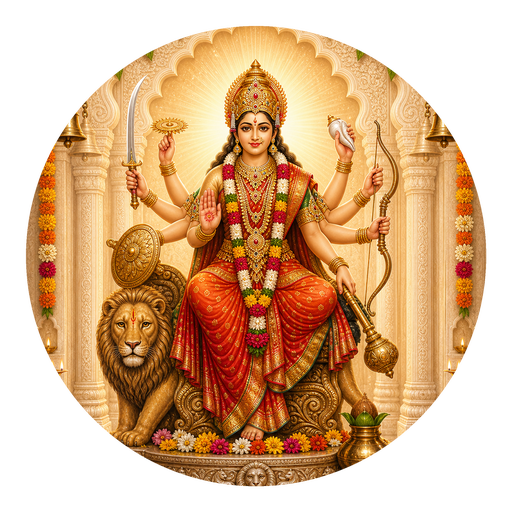
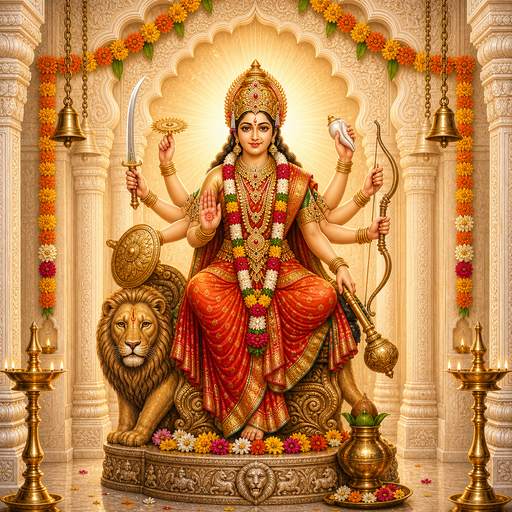
By legend, during a severe famine, Goddess Shakambhari is said to have created vegetables, fruit, and plants from her own body to nourish creation — this Navratri is devoted to the culmination of that story. The full legend, its version-differences, and the "Durga" name-etymology detail can be read on the Shakambhari Purnima page.
Who observes it
Devi devotees and general worshippers — those who observe worship/fasting across the roughly 8 days from Paush Ashtami to Purnima. Some Rigvedi/Deshastha Brahmin families in Maharashtra are also recorded as having Shakambhari as their kuldevata. An annual Shakambhari Navratrotsav is recorded at Saptashrungi Gad (Nashik, Vani) every year — the decoration in front of the goddess is done with fruit and vegetables.
Puja vidhi
The roughly 8-day vrat begins on Ashtami (Banada Ashtami) with the goddess's invocation and a puja-sankalp. Across these days, daily worship of the goddess, decoration with vegetables and fruit (whether from the start or in increasing amounts — the exact sequence isn't clear from sources), and naivedya are offered. In some traditions, the goddess's four principal stotras are recited, though which four isn't specified here.
The vrat concludes on Purnima (the 8th day) — the detailed vidhi for that day is on the Shakambhari Purnima page.
What you need
A Shakambhari/Durga image, a variety of vegetables and fruit (for decoration and naivedya), medicinal plants/leaves, lamps-oil-wick, and incense (a detailed list is on the Shakambhari Purnima page).
 Fruit (for decoration and naivedya)
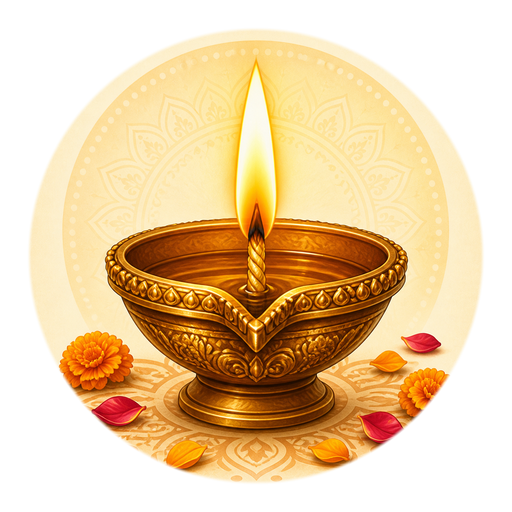 Lamps
Lamps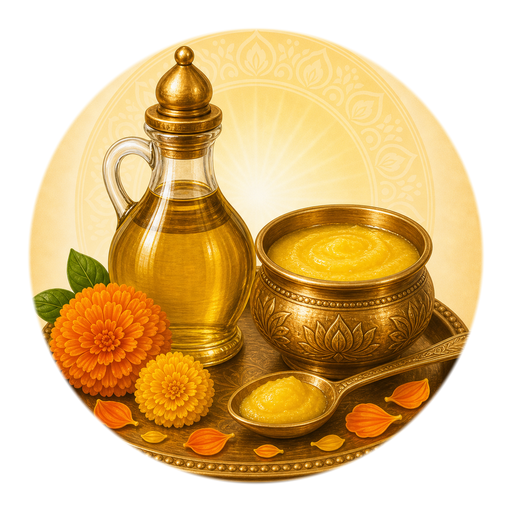 Oil
Oil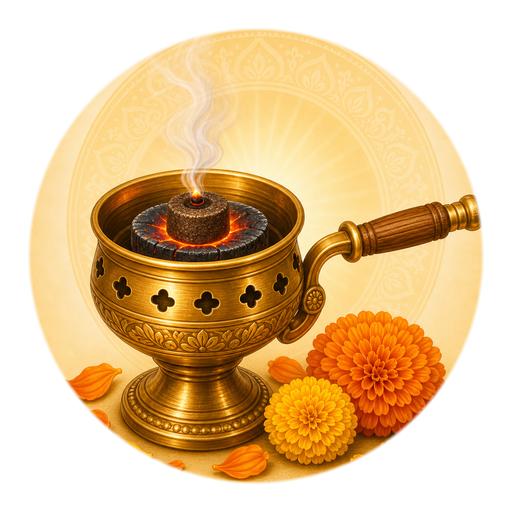 Incense (dhoop)
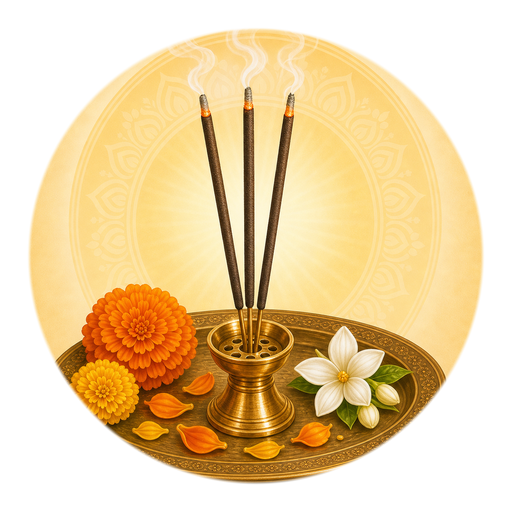 Incense sticks (agarbatti)
Fasting
The 8-day fasting rules are similar to other Devi Navratris (milk, curd, sabudana, rock salt, sattvic food; onion-garlic/grain/spicy-non-vegetarian food avoided). This varies by household/local tradition.
Mantra & stotra
Tradition mentions Goddess Shakambhari's four principal stotras — which stotras these are isn't clear here.
Regional customs
Saptashrungi Gad (Nashik, Vani) — an ardh Shaktipeeth: an annual Shakambhari Navratrotsav is recorded as being held here every year; the decoration in front of the goddess is done with fruit and vegetables.
Goddess Shakambhari's main annual (Sharadiya) festival site is at Saharanpur (Uttar Pradesh, the Shivalik region) — its main fair takes place during Ashwin/Chaitra Navratri, and no mention of Paush/Shakambhari Navratri is found there. In Maharashtra, though, the local utsav at Saptashrungi is the main relevant reference point for this Navratri; this isn't evidence that the main temple is in Maharashtra.
This vrat is recorded as observed in Rajasthan, Uttar Pradesh, Karnataka, Maharashtra, and parts of Tamil Nadu.
Good to know
- Avoid structure confusion: this Navratri runs from Ashtami to Purnima, not from Shukla Pratipada — roughly 8 days (tithi contraction/expansion can make it 7 or 9). Don't confuse it with Chaitra/Sharadiya Navratri.
- Avoid "Gupta Navratri" confusion: don't confuse Shakambhari/Paush Navratri with the Ashadha/Magha "Gupta Navratri" — most reliable sources treat the two as distinct.
- The start date is approximate: the Navratri's exact start date changes from year to year; check the relevant year's panchang for the precise date.
- Temple utsav (Saptashrungi): check exact timings/darshan arrangements with the temple committee.
- Full legend: the complete legend of Goddess Shakambhari can be read on the Shakambhari Purnima page.
FAQ
- When does Shakambhari Navratri start and end in 2026?
- It concludes on Saturday, 3 January 2026 (Paush Shukla Purnima). It begins (Paush Shukla Ashtami) toward the end of December — check the relevant year's panchang for the exact date.
- How is Shakambhari Navratri different from other Navratris (Chaitra/Sharadiya)?
- Other Navratris run 9 days from Shukla Pratipada; Shakambhari Navratri runs roughly 8 days from Ashtami to Purnima — this is the main structural difference.
- What is Banada Ashtami?
- The start day of Shakambhari Navratri (Paush Shukla Ashtami) is called Banada Ashtami.
- How many days does Shakambhari Navratri last — is it always 8 days?
- Generally 8 days (Ashtami to Purnima), but tithi contraction/expansion can make it 7 or 9 days in some years — so it can't be said with certainty that it's "always 8."
- Is Shakambhari Navratri a Gupta Navratri?
- Per most reliable sources, Shakambhari/Paush Navratri is a distinct, separate concept from the Ashadha/Magha "Gupta Navratris" — though some sources conflate the names.
- What worship is performed during Shakambhari Navratri?
- Daily worship of the goddess across 8 days, decoration with vegetables and fruit, and naivedya; a special utsav on the concluding day (Purnima).
- Where is Shakambhari Navratri observed on a large scale in Maharashtra?
- An annual Shakambhari Navratrotsav is held at Saptashrungi Gad (Nashik, Vani), with the goddess decorated in fruit and vegetables.