Shakambhari Purnima
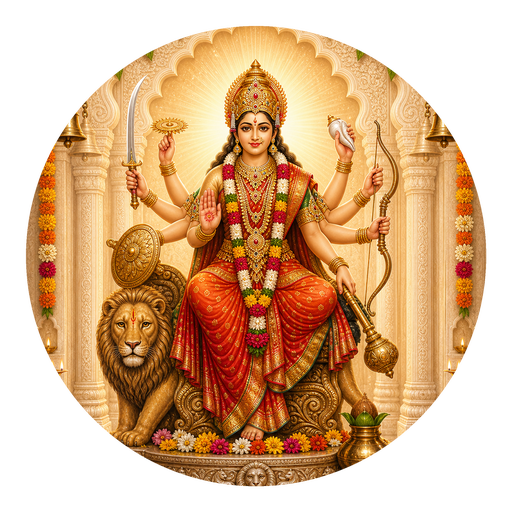
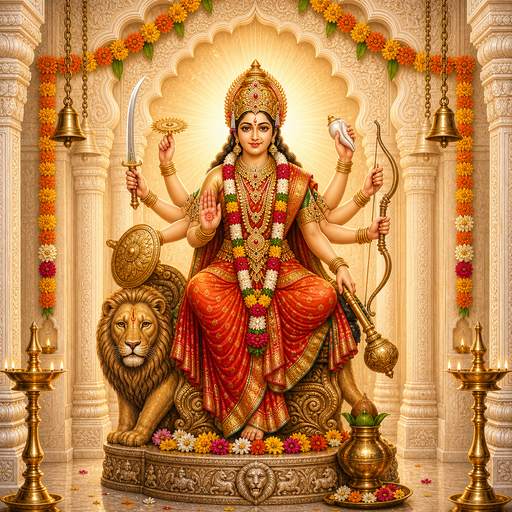
Shakambhari Purnima falls on Paush Shukla Purnima — the day dedicated to worshipping Goddess Shakambhari, the food-giving form of Durga/Adi Shakti. In 2026, this tithi falls on Saturday, 3 January. This day marks the conclusion of the roughly 8-day Shakambhari Navratri; decorating the goddess's murti with vegetables and fruit (in some places, 60 to 108 varieties), along with food donation, are regarded as this day's signature features.
This year's dates (2026)
Significance
"Shakambhari" means shaka (vegetables/plants) + bhari/ambari (one who bears/nourishes) — during a severe famine, the goddess created vegetables, fruit, and plants from her own body to nourish creation, hence the name. Shakambhari is regarded as a form of Durga — the goddess who provides food and grain and nourishes the world, a compassionate power who saved her people during a time of famine.
In some versions, the goddess took on a hundred eyes, whose tears brought rain — hence she's also called Shatakshi (hundred-eyed). This detail doesn't appear in a Marathi-language version of the legend, which focuses only on the creation of vegetation and the demon's slaying.
Most Navratris begin from Shukla Pratipada, but Shakambhari Navratri runs roughly 8 days, from Shukla Ashtami to Purnima — in some years, tithi contraction/expansion can make it 7 or 9 days.
Paush is tied to the winter-crop harvest season — the naivedya and decoration of vegetables and fruit express gratitude toward agriculture and nature; the Mahalakshmi Temple utsav in Mumbai has explicitly framed this message as "honouring food, respecting the farmer, and protecting nature."
Some North Indian traditions note that the sacred bathing period of Magh (the Prayagraj Kalpvas) begins from Paush Purnima.
The legend
Durgamasura, son of the demon Ruru, pleased Brahma through severe austerity and seized all four Vedas; yagyas ceased, gods, sages, and humans grew weak, and a severe famine (said in some versions to last roughly 100 years) fell upon the earth. All of creation writhed without food or water. Adi Shakti then took the form of Shakambhari and created vegetables, fruit, and medicinal plants from her own body to satisfy the hunger of those who came to her; she later fought and slew Durgamasura, and recovered the Vedas.
In one version, the goddess took on a hundred eyes; tears from those eyes became rain and rivers, ending the famine — hence she's also called Shatakshi (hundred-eyed). The Devi Bhagavata Purana (Book 7, Chapter 28) is cited as the primary source for this legend; it's also mentioned in the Skanda Purana (Kedar Khand), the Shiv Purana, and the Mahabharata (Van Parva).
A Marathi-language version, however, doesn't include this Shatakshi/tears detail — instead, the goddess emerges from a cave, takes up a chakra, and challenges Durgamasura and his army to battle before slaying him. In this version, a naivedya of 60 to 108 varieties of vegetables is recorded as part of the tradition.
The claim that the goddess got the name "Durga" from slaying the demon Durgamasura is repeated across many sources — but this is inconsistent with established linguistic etymology: per Sanskrit linguistics, "Durga" derives from "durg" (durga = hard to approach, a fortress), and this same meaning appears in the Rigveda, long predating the Durgamasura legend.
Who observes it
Devi devotees and general worshippers — those who fast or bathe and give charity on Paush Purnima. Some Rigvedi Brahmin families in Maharashtra are also recorded as having Shakambhari as their kuldevata. Farmers and those giving food-donations — food-grain-vegetable charity is central to this day. Temple-centred devotees — an annual Shakambhari utsav is recorded as being held at Saptashrungi Gad (Nashik) and the Mahalakshmi temple in Mumbai.
Puja vidhi
- Bath and charity: a bath at dawn (in a sacred river/tirtha if possible, otherwise at home with Ganga-mixed water) — followed by charity.
- Decorating the goddess: vegetables, fruit, and medicinal plants are used to decorate in front of, or on, the goddess's murti/image (60+ varieties in some temples) — this is the day's most recognisable visual signature.
- Naivedya: various vegetables and fruit are offered to the goddess; a naivedya of 60 to 108 vegetable varieties is a recorded practice.
- Charity: donating white items (rice, milk, sugar, white cloth, sandal), warm clothing, and food to those in need is considered meritorious; food donation is especially significant.
The udyapan practice follows household or local tradition.
What you need
A Shakambhari/Durga image, a variety of vegetables and fruit (as many kinds as possible, for decoration and naivedya), medicinal plants/leaves, lamps-oil-wick, incense, and white items for charity (rice, milk, sugar, cloth) and food grain.
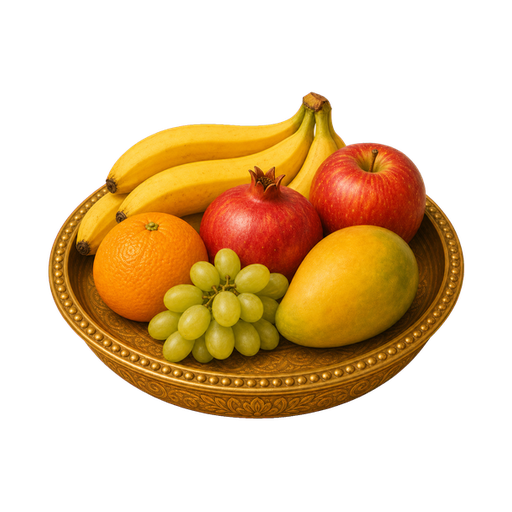 Vegetables and fruit
 Lamps
Lamps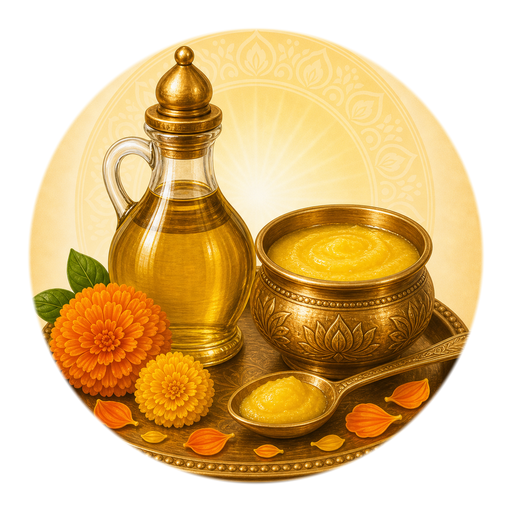 Oil
Oil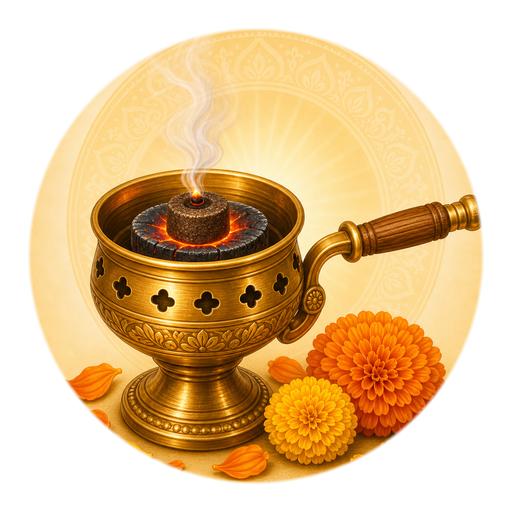 Incense (dhoop)
 Incense sticks (agarbatti)
 White cloth (for charity)
Fasting
A fasting diet of milk, curd, sabudana dishes, and rock salt, with light sattvic food; onion-garlic, grain (in a strict fast), spicy food, and non-vegetarian food are avoided — this is a general practice that varies by household/local tradition.
Mantra & stotra
"Om Shakambharyai Namah" is recorded as the name-chant for Goddess Shakambhari.
Regional customs
Saptashrungi Gad (Nashik, Vani) — one of the three-and-a-half Shaktipeeths: an annual Shakambhari Navratrotsav is recorded as being held here every year; the decoration in front of the goddess is done with fruit and vegetables.
Mumbai — Shri Mahalakshmi Temple: an annual Shakambhari Purnima utsav is recorded as being held here — special puja, naivedya, and decoration with fruit, vegetables, and medicinal plants (check timings with the temple committee).
Goddess Shakambhari's principal Shaktipeeth-form temples are located in Rajasthan (Sambhar/Sikar) and Uttar Pradesh (Saharanpur); her Banashankari form's temple is near Badami in Karnataka. For devotees in Maharashtra, Saptashrungi and Mumbai's Mahalakshmi are the nearest utsavs.
Good to know
- "Paush Purnima" and "Shakambhari Purnima" are the same day — the name differs, but the tithi is the same; these aren't two separate festivals.
- Navratri's structure runs from Ashtami to Purnima, not from Shukla Pratipada — roughly 8 days; don't confuse this with other Navratris.
- The strictness of fasting/diet varies by household tradition; treat any specific health claim as belief, not medical advice.
- Check the exact timings for temple utsavs (Saptashrungi/Mumbai Mahalakshmi) with the temple committee.
FAQ
- When is Shakambhari Purnima in 2026?
- Saturday, 3 January 2026 (Paush Shukla Purnima).
- What is Shakambhari Purnima, and who is Goddess Shakambhari?
- A form of Durga/Adi Shakti; the food-giving goddess who created vegetables, fruit, and plants from her own body during a severe famine to nourish creation.
- Why was the name 'Shakambhari' given to this Purnima?
- Because she bears/offers "shaka" (vegetables/plants) — she created vegetables from herself to save the world during a famine, hence the name.
- What is Shakambhari Navratri, and how does it differ from other Navratris?
- A roughly 8-day observance running from Paush Shukla Ashtami to Purnima (other Navratris begin from Pratipada); it concludes on this Purnima.
- Are Shakambhari Purnima and Paush Purnima the same?
- Yes; the same tithi is known by two names — "Paush Purnima" is the calendar name, "Shakambhari Purnima" is the deity-centred name.
- Why was the name 'Durga' given to Goddess Shakambhari?
- The legend says she was called "Durga" for slaying the demon Durgamasura (an explanation within the story — linguistically, the established etymology of "Durga" is separate, from "durg/an inaccessible fort").
- What should be donated on Shakambhari Purnima?
- White items (rice, milk, sugar, cloth), warm clothing, and especially food, vegetables, and grain to those in need are considered meritorious to donate.