Hartalika (Haritalika Tritiya)
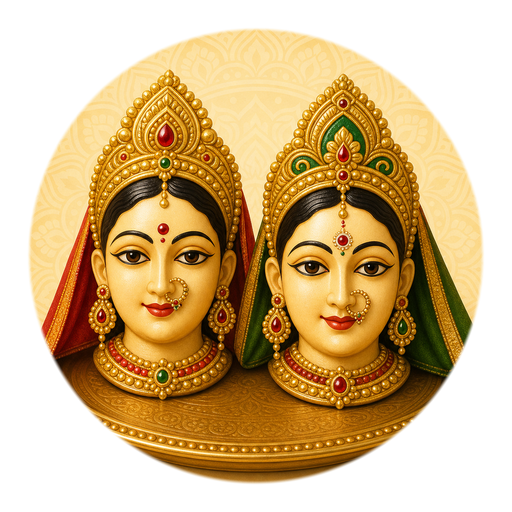
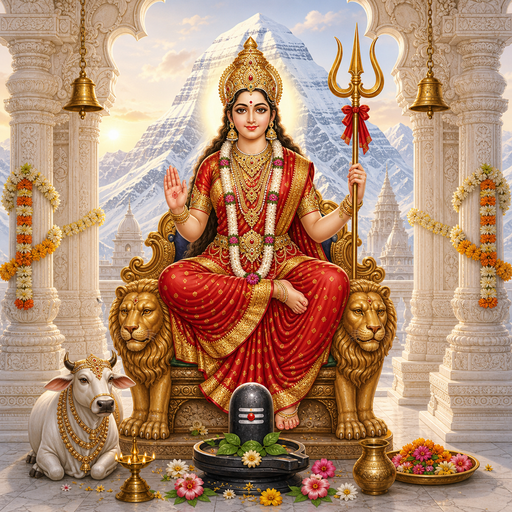
Hartalika is the vrat of Shiv-Parvati (Hargauri) — marking Parvati's rigorous penance to win Shiv as her husband. It falls on Bhadrapad Shukla Tritiya — usually the day before Ganesh Chaturthi; this year (2026), though, it falls on the very same day as Ganesh Chaturthi — Monday, 14 September (per the panchang). Married women and unmarried girls mainly keep a nirjala (waterless) fast through the day, worship a Shivling made of sand or clay, listen to the katha, and keep vigil at night — one of the most demanding vrats observed by women.
This year's dates (2026)
Significance
Hartalika is regarded as a symbol of devotion, resolve, and marital faithfulness. Parvati went against her father's wishes and won Shiv purely through the strength of her resolve — so married women keep this vrat for their husband's long life and unbroken marital fortune, while unmarried girls keep it hoping for a husband of their choosing. In North and West India this is regarded as one of the three "Teej" observances (Hariyali, Kajari, Hartalika); it is widely observed in Bihar, Madhya Pradesh, Chhattisgarh, Jharkhand, Rajasthan, and parts of Maharashtra. In Maharashtra it is known specifically as "Hartalika/Haritalika."
The legend (katha)
Parvati (daughter of the Himalayas) had already chosen Shiv as her husband in her heart. On Narada's advice, her father arranged her marriage to Vishnu instead. Unwilling to accept this, Parvati confided in her sakhi (friend) — sending word that she would give up her life if married to Vishnu. Her sakhi took her away into the forest; there, Parvati fashioned a Shivling of sand and worshipped it. She kept a complete fast through the day and stayed awake all night (chanting Shiv stotras/bhajans). Pleased by her severe penance, Shiv accepted her as his wife.
Some versions place the sand on a riverbank, while Marathi Wikipedia simply says "sand from the forest." In household practice, some traditions worship only Parvati, her sakhi, and the Shivling, while others include images of Shiv, Parvati, and Ganesh together. The etymology of "Haritalika" is also disputed — some hold that harita means "the one carried away" (Parvati) and lika/aalika means "friend"; other sources say harit means abduction/carrying away; yet another holds it derives from "hari + talika," though its precise sense is unclear. No single etymology should be treated as final.
Who observes it
Mainly married women (for their husband's long life and unbroken marital fortune) and unmarried girls (for a husband of their choosing). In Maharashtra, widowed women are also mentioned as observing this vrat — though this may not hold everywhere. Many sources offer the practical guidance that pregnant, unwell, or medicated women should skip the strict waterless fast and observe only the puja instead.
Puja vidhi (how to perform)
The order below is a general one; it varies by household and region.
- Take the sankalp (resolve) for the day-long nirjala vrat.
- Install a Shivling made of sand or clay on a low seat (chaurang), along with images of Parvati and her sakhi (and, in household practice, Ganesh).
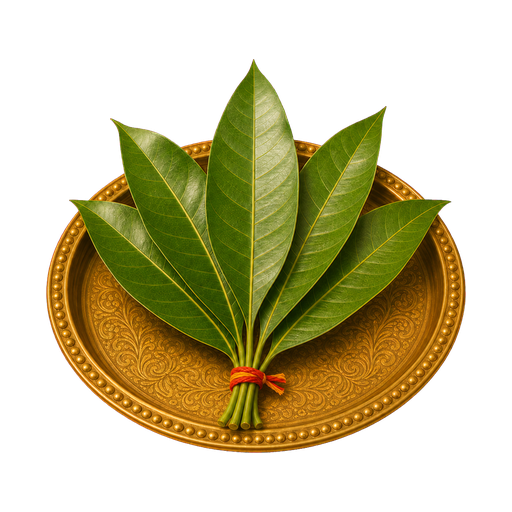
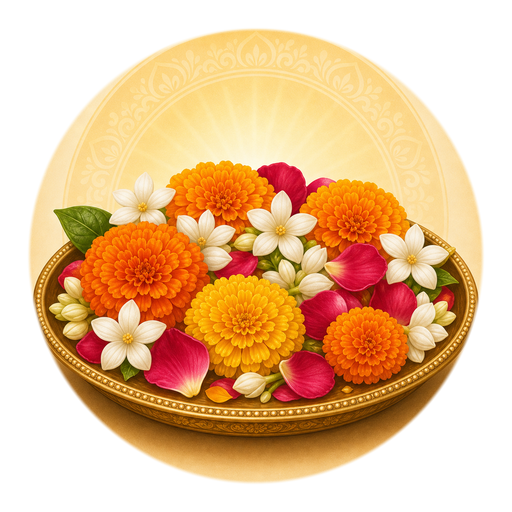
- Perform a sixteen-step (shodashopachar) puja — offering bel leaves, shami leaves, mango leaves, white flowers, panchamrut, cloth, turmeric-kumkum-ashtagandha, and more.
- Women dress in a green saree, bangles, and mehendi — the customary marks of marital fortune — before sitting for the puja.
- Read the vrat katha and perform the aarti, praying — married women for unbroken marital fortune, unmarried girls for a husband of their choosing.
- Keep vigil at night — with bhajans, games, or stotra recitation; many women stay awake through the night.
- Break the fast (paran) the next day — Marathi Wikipedia describes dipping a rui (calotropis) leaf in ghee and eating it. In some places it's broken at midnight with a bel leaf, some with honey, and some with a little rock sugar and banana.
Since Hartalika and Ganesh Chaturthi fall on the same day in 2026, and the two vrats are observed by different people in the household, either puja can be done before or after the other during the main puja window.
What you need (samagri)
Sand; two images for Hartalika plus a Shivling; bel leaves, shami leaves, mango leaves, white flowers; leaves of sixteen trees; cloth; panchamrut (milk, curd, ghee, honey, sugar); items for marital fortune — bangles, kajal, kumkum, sandalwood paste, turmeric-kumkum, ashtagandha, gulal; a low seat (chaurang), rangoli, rice, kalash, a niranjan or samai lamp, a conch, a bell, and camphor for the aarti. The list varies somewhat by household.
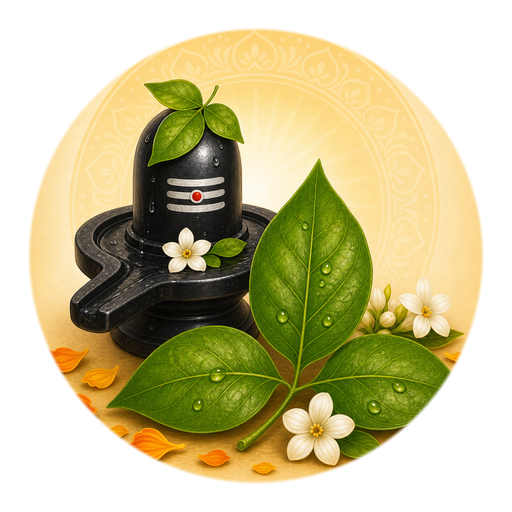
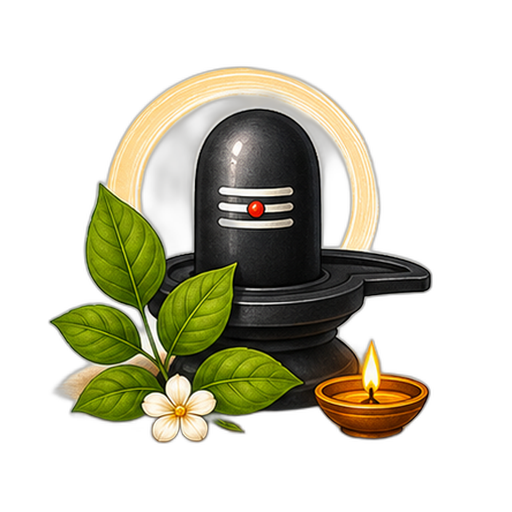 Shivling
 Bel leaves
 Mango leaves
 White flowers
 Cloth
Cloth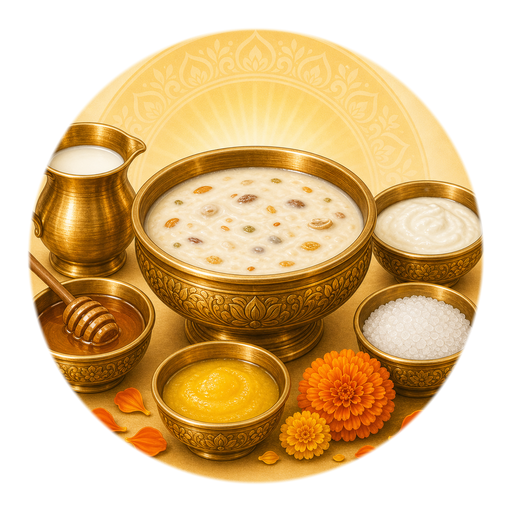 Panchamrut
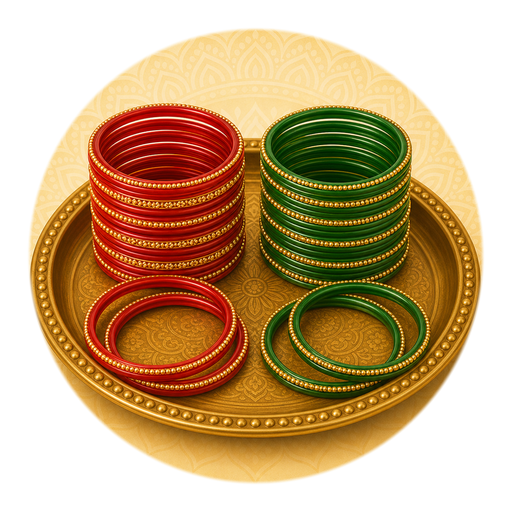 Bangles
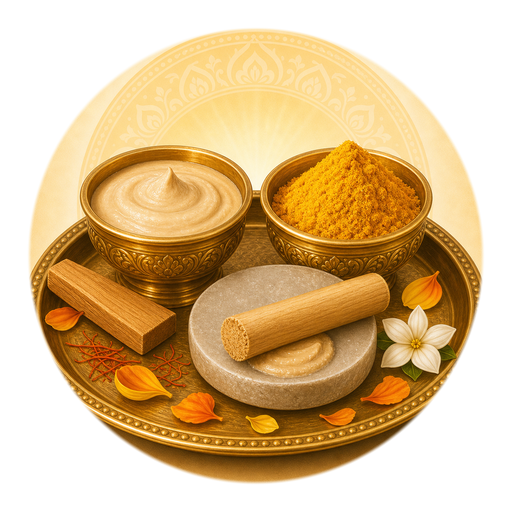 Sandalwood paste (ashtagandha)
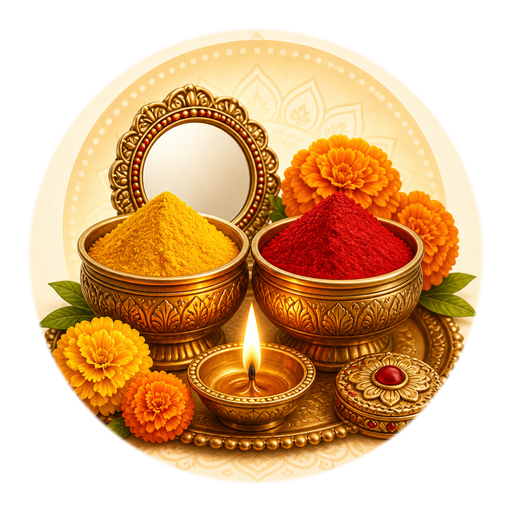 Turmeric-kumkum
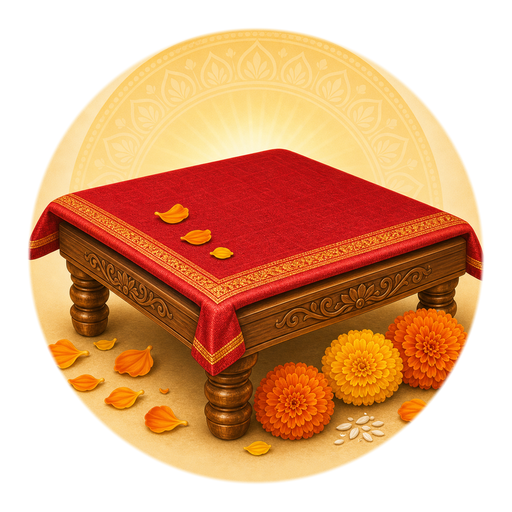 Low seat (chaurang)
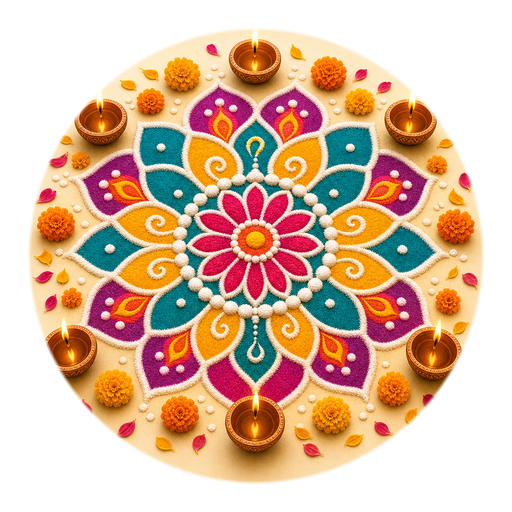 Rangoli
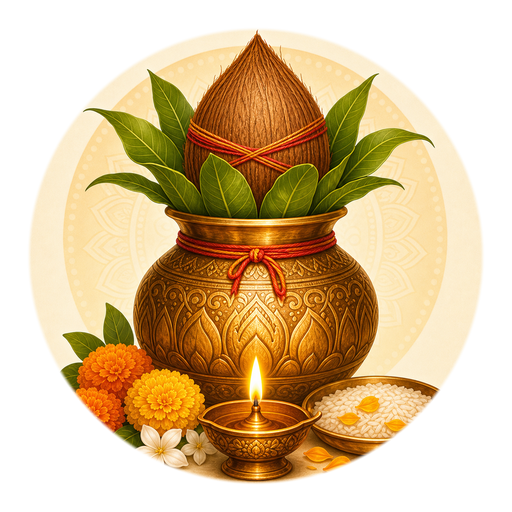 Kalash
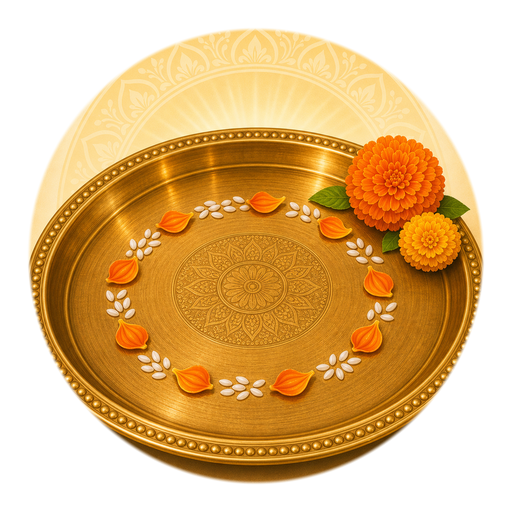 Tamhan (metal tray)
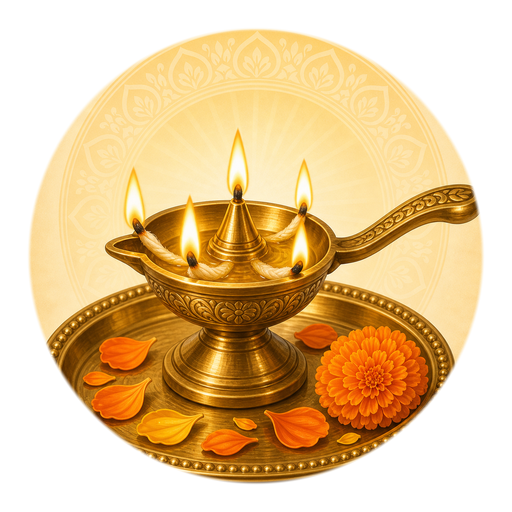 Niranjan lamp
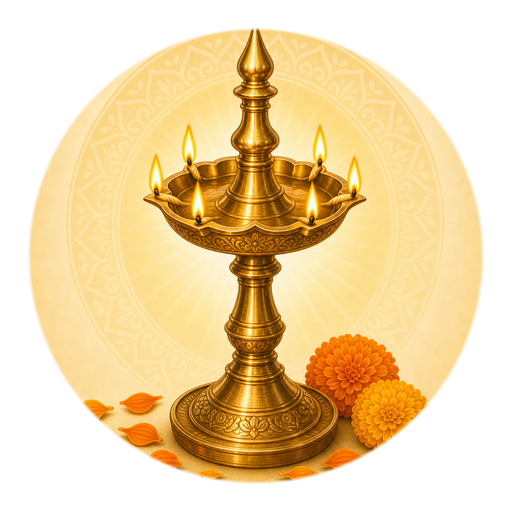 Samai lamp
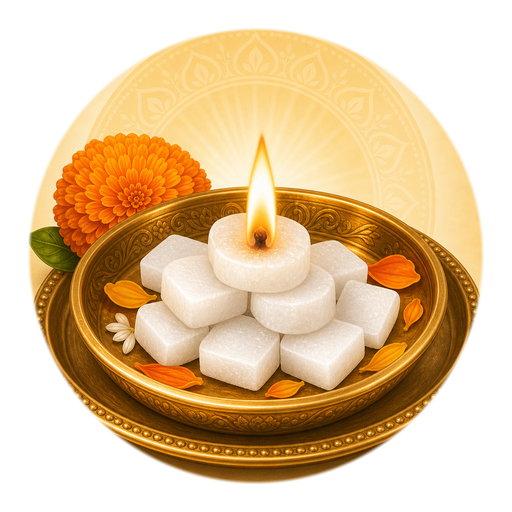 Camphor
Fasting & food (upvas)
In the strict form, this is a nirjala (waterless) fast — both food and water are given up for the entire day, making it one of the most demanding vrats kept by women. The vrat is broken the next day, after the puja. Not every woman keeps the nirjala form — pregnant, unwell, older women, and those following local custom sometimes observe a lighter fast or just the puja instead.
Mantra & aarti
The vrat includes worship of Shiv-Parvati, a reading of the Hartalika vrat katha, and an aarti. At the close of the puja, a Shiv aarti is sung, invoking Shankar's grace and honouring him alongside Parvati. Its familiar opening line: "Jai Dev Jai Dev Jai Shri Shankara, Aarti Owalu Tuj Karpurgaura" (roughly, "Victory to you, Lord Shankar; we wave this camphor-lit aarti before you").
Regional variations
- Maharashtra: known as "Hartalika/Haritalika Tritiya"; observed along the Sindhudurg-Goa coast too — a women's vrat on the eve of Ganeshotsav (this year, on the very same day).
- North India: called "Hartalika Teej" — one of the three Teej observances; Bihar, Madhya Pradesh, Chhattisgarh, Jharkhand, Rajasthan.
- Karnataka: the same tithi is observed as Swarna Gauri Vrat / Gauri Habba — worship of Gauri (Parvati, Ganesh's mother); this can be regarded as a regional form of Hartalika, though it shouldn't be presented as identical to it.
- Tamil Nadu: a three-day Gauri festival. This vrat isn't customary in Gujarat or Bengal.
Good to know
- Health: a day-long nirjala fast (without even water) is demanding — pregnant, diabetic, hypertensive, unwell, and older women should choose a lighter fast or just the puja, on medical advice and following local custom; health shouldn't be compromised.
- Variation by tradition: the puja vidhi, paran method, and mantras vary by household and region — follow your own family and local custom.
- 2026 special note: Hartalika and Ganesh Chaturthi fall on the same day; if both pujas are held in the same household, there's no fixed rule on order — either can come first.
FAQ
- Why is the Hartalika vrat observed?
- Parvati won Shiv as her husband through severe penance; in that memory, married women keep this vrat for unbroken marital fortune, and unmarried girls for a husband of their choosing.
- Who should observe the Hartalika vrat, and who should avoid it?
- Mainly married women and unmarried girls (in Maharashtra, widows too); pregnant, unwell, and medicated women are often advised to skip the strict fast and observe only the puja (guidance varies by local tradition).
- When is Haritalika Tritiya in 2026?
- Monday, 14 September 2026 (Bhadrapad Shukla Tritiya); this year it falls on the same day as Ganesh Chaturthi.
- Why do Hartalika and Ganesh Chaturthi fall on the same day?
- Hartalika is set by the sunrise-spanning Tritiya, and Ganesh Chaturthi by the midday-spanning Chaturthi; since both tithis are present on 14 September at the relevant times, both festivals fall on the same day.
- How should the Hartalika fast be broken?
- Traditionally, the next day after the puja — Marathi Wikipedia describes dipping a rui leaf in ghee; other regions use a bel leaf, honey, or rock sugar.
- What samagri is needed for the puja?
- Sand, two images for Hartalika and a Shivling, bel-shami-mango leaves, white flowers, panchamrut, items for marital fortune, and the usual puja materials.
- How did the name "Haritalika" come about?
- By one account, because the sakhi ("aalika") carried Parvati away ("harita/harit") into the forest — though the exact etymology differs across sources.