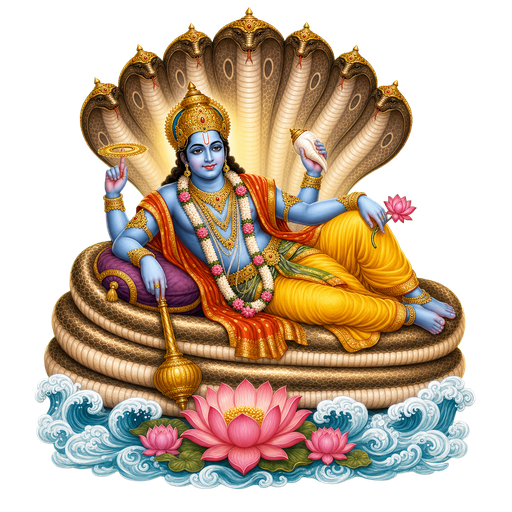
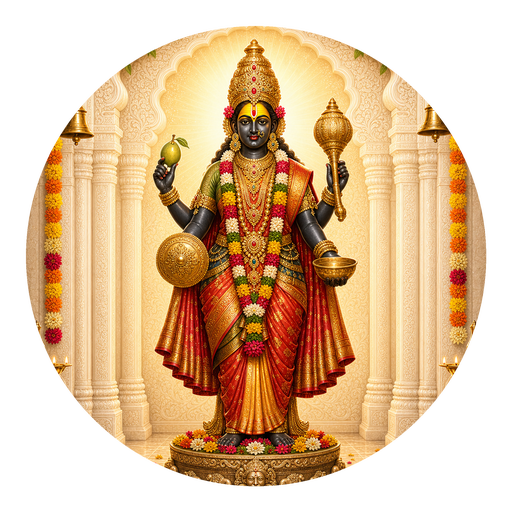
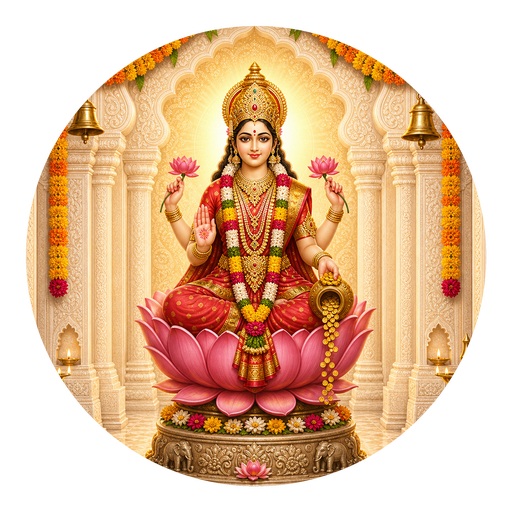
Jyeshtha Gauri
Jyeshtha Gauri is a three-day Gauri (Mahalakshmi) festival that falls in the Shukla paksha of Bhadrapad masa, during the Ganeshotsav of Ganesh Chaturthi. Gauri comes home as a maherwashin (a married daughter visiting her parents' home) for three days, so married women worship her for saubhagya (marital good fortune), well-being and children. The anchor for this festival is the nakshatra, not the tithi: avahan on Anuradha nakshatra, pujan on Jyeshtha nakshatra, and visarjan on Mula nakshatra.
This year's dates (2026)
Significance
Gauri is worshipped as a form of Parvati / Mahalakshmi. In popular tradition she is regarded as Ganpati's mother, which is why she arrives in homes during the Ganeshotsav days.
The central emotion of the festival is the maher (parents' home) theme. Gauri comes from her husband's home to her maher for three days, is lovingly fussed over, and returns on the day of visarjan — an idea that stands for family affection, saubhagya and the prosperity of the household.
For women it is treated as a vrat (an observance) for saubhagya, children and domestic well-being. It holds a special place in Maharashtra, where Gauri and Ganpati are very often worshipped together.
The legend (katha)
The story told behind Gauri pujan, in brief: Gauri (Mahalakshmi) comes to her devotees' homes and grants happiness, saubhagya and prosperity. In one traditional katha, Gauri arrived at the homes of women who were troubled by asuras (demons), to protect them and bless them with saubhagya; ever since, women are said to have welcomed her arrival.
In some versions the story is told in different forms — the details change by region, family and household custom. What stays constant is the heart of the story — Gauri's arrival, her blessings, and the saubhagya of women.
Who observes it
The vrat is mainly kept by married women and maherwashins (married daughters), but the whole family takes part. Households that have the tradition of installing Gauri observe the festival every year. Many families begin the tradition when a new bride joins the home or when they resolve to bring Gauri into the house.
Puja vidhi (how to perform)
Below is the general shape of the puja vidhi; the details differ by household and region.
1. Avahan (Anuradha nakshatra) — Gauri arrives in the home on this day. She is brought in the form of khade (pebbles), mukhwate (masks/faces) or terda plants, depending on the region. Prints of Lakshmi's footsteps are drawn from the threshold to the devghar (home shrine), and saying ‘Gauri has come, come with golden feet,’ the household walks her past the important spots of the house and seats her in a place of honour.
2. Pujan (Jyeshtha nakshatra) — this is the main puja day. Gauri is adorned with the solah shringar (the sixteen adornments — sari, jewellery, haldi-kunku and flowers). Lamps (samai, niranjan) are lit, rangoli is drawn, the Mahalakshmi aarti is sung and the mahanaivedya (grand food offering) is presented. In the evening a haldi-kunku gathering is held and suvasinis (married women) are invited.
3. Visarjan (Mula nakshatra) — on the third day Gauri is given visarjan (immersion) or utthapan (a ritual send-off). Some homes immerse the murti/mukhwate, while others keep the mukhwate or khade safely and perform a symbolic visarjan. Since the festival is tied to the Ganeshotsav, many homes plan Gauri's send-off along with the Ganpati visarjan; the public Ganeshotsav itself concludes later, on Anant Chaturdashi.
(Sovle (ritual purity practices), rangoli, samai/niranjan and other details follow each home's own custom.)
What you need (samagri)
- Gauri murti / mukhwate or khade (pebbles) or terda plants (depending on the region).
- Sari, jewellery, haldi-kunku, flowers, rangoli.
- A mould for Lakshmi's footprints, samai, niranjan, incense.
- Naivedya ingredients (puranpoli, vegetables, faral snacks, etc.) and haldi-kunku items.
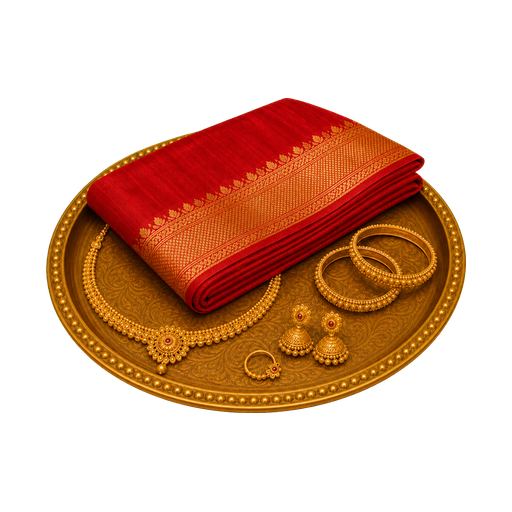 Sari-jewellery
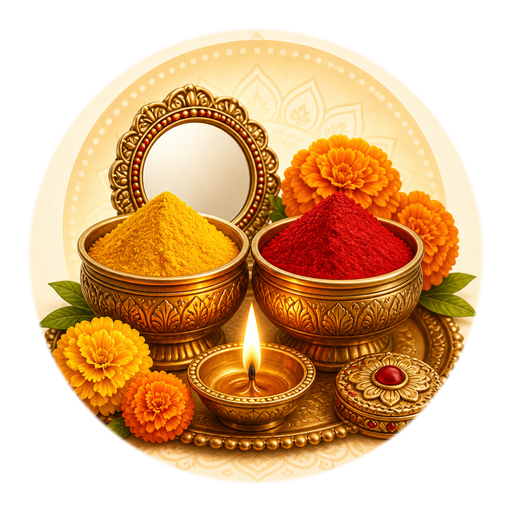 Haldi-kunku
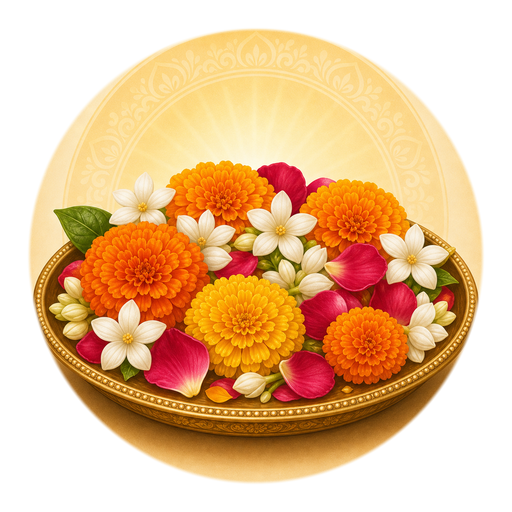 Flowers
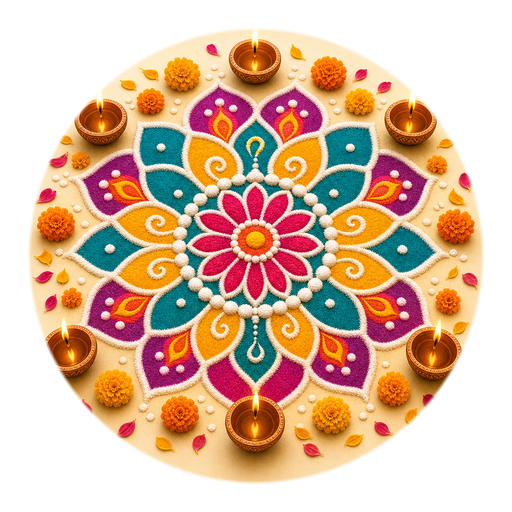 Rangoli
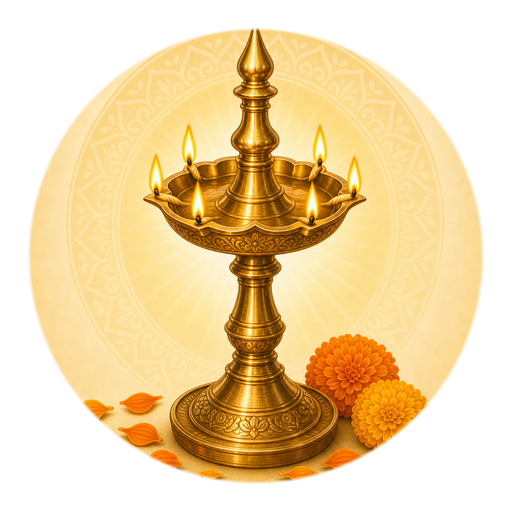 Samai lamp
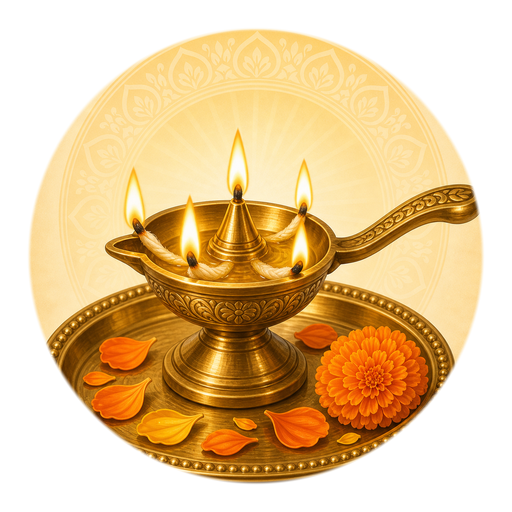 Niranjan lamp
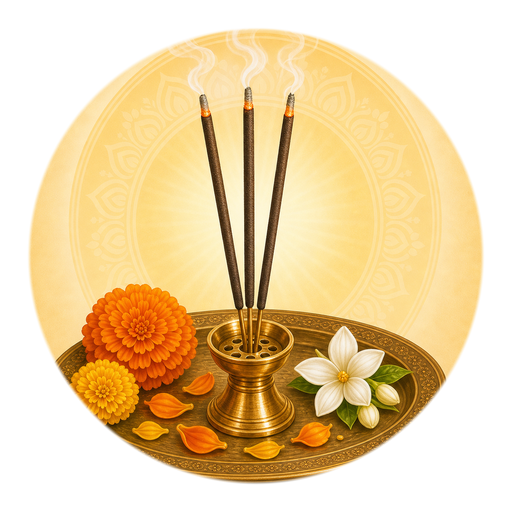 Incense
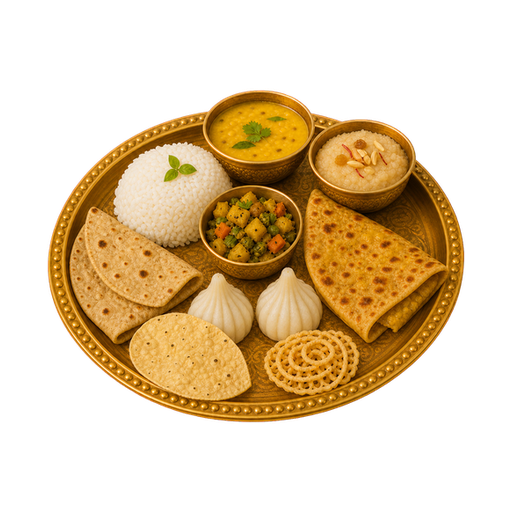 Naivedya (puranpoli & vegetables)
Naivedya
On the day of pujan (Jyeshtha nakshatra) it is traditional to present a mahanaivedya — this includes puranpoli, an assortment of vegetables, bhakri-kadhi, faral (festive snacks) and sweet dishes. In many places a naivedya of sixteen vegetables is said to be offered.
However, the exact list for the ‘sixteen vegetables’ is not universal — it varies by household custom. So the dishes above are only examples; treat your own family's practice as the right one.
Mantra & aarti
After the pujan it is traditional to sing the Mahalakshmi aarti — the traditional ‘Jay Devi Jay Devi Jay Mahalakshmi’ (Mukeshwar Nagar).
- When to sing: at the end of the Gauri pujan on the Jyeshtha-nakshatra day, after the naivedya is offered (and again at the haldi-kunku gathering, by custom).
- Meaning, in brief: the aarti hails the Devi as Mahalakshmi who pervades everything, gross and subtle; it invokes her as the goddess of Karvir (Kolhapur), mother of the gods and sages, remover of hardship and destroyer of the demons, and closes with the devotee asking her to wash away the lines of ill fate written on the brow, taking refuge at her feet.
- Opening line (romanized): ‘Jay Devi Jay Devi Jay Mahalakshmi…’
Jap-mantra (traditional): Om Mahalakshmyai Namah.
Regional variations (Maharashtra)
The form of Gauri pujan differs across Maharashtra by region:
- Coastal belt (Konkan / Koli community): here usually a single Jyeshtha Gauri is worshipped.
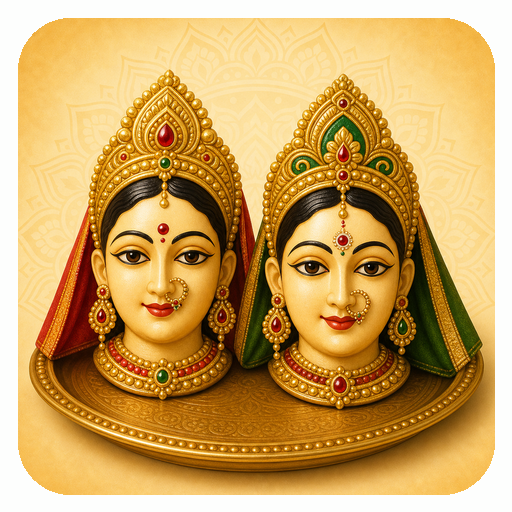
- Desh / Deccan region: here two Gauris — Jyeshtha and Kanishtha — are worshipped together as Mahalakshmi — a form that resembles the goddess at Kolhapur Mahalakshmi (who is known by the same name).
In Varhad, Vidarbha and Marathwada too the details differ — so treat it as ‘according to your home and regional custom.’
The form the Gauri murti takes also varies by region:
- Khade Gauri — made by gathering pebbles from a river or well.
- Mukhwate Gauri — standing Gauris with masks/faces of clay or metal.
- Terda Gauri — made by tying up terda plants.
Any one of these is followed household by household as per tradition; no single method applies to everyone.
Good to know
- Gauri murtis, mukhwate and decorations vary by household custom — don't compare with someone else's way.
- The ‘sixteen vegetables’ naivedya list is not universal; follow your own family's practice.
- Check the auspicious time (muhurat) for avahan and pujan against that year's panchang and your city.
- Since the festival is tied to the Ganeshotsav, plan Gauri's visarjan along with Ganpati's.
FAQ
- When is Jyeshtha Gauri in 2026?
- As per the panchang data, avahan is on 17 September (Anuradha nakshatra), pujan on 18 September (Jyeshtha nakshatra) and visarjan on 19 September 2026 (Mula nakshatra). The anchor is the nakshatra, so the dates shift every year with the panchang.
- On which nakshatra are Gauri avahan, pujan and visarjan done?
- On Anuradha (avahan), Jyeshtha (pujan) and Mula (visarjan) respectively, in the Shukla paksha of Bhadrapad.
- Are Jyeshtha Gauri and Mahalakshmi the same?
- In the Desh/Deccan region, two Gauris — Jyeshtha and Kanishtha — are worshipped together as ‘Mahalakshmi’; in the coastal belt there is a single Jyeshtha Gauri. Gauri is worshipped as a form of Mahalakshmi / Parvati.
- What is offered as naivedya for Jyeshtha Gauri?
- Puranpoli, an assortment of vegetables (in some places sixteen vegetables), bhakri-kadhi, faral and sweet dishes — the exact items vary by household custom.
- Who observes Gauri pujan?
- Mainly married women and maherwashins, along with the whole family. Where the household has the tradition, it is kept every year.