Rishi Panchami
Rishi Panchami falls on Bhadrapad Shukla Panchami — the day after Ganesh Chaturthi — and marks a vrat honouring the Saptarishis (the seven great sages). It's not a festival but a vrat, observed chiefly by women. In 2026, this tithi falls on Tuesday, 15 September. A dish of tubers and vegetables grown without bullock labour or a plough — Rishichi Bhaji — is Maharashtra's signature custom, and the day's best-known feature.
This year's dates (2026)
Significance
The Saptarishis are said to have devoted their lives to knowledge and human welfare — laying the foundations of the Vedas, yoga, meditation, Ayurveda, and philosophy. Expressing gratitude toward them is this vrat's central theme.
By tradition, women are also said to observe this vrat to resolve faults from unknowing touch during menstruation; this idea appears in the sankalp itself too.
After the monsoon, digestion and immunity are said to weaken; avoiding grain in favour of light tubers and vegetables is also seen as a kind of seasonal, sattvic diet — this is a cultural observation, not a medical claim.
The legend
Across several versions, a common spine appears: a woman (wife or daughter) in a Brahmin household unknowingly enters the kitchen or cooks during menstruation, or doesn't follow the customary rules; this fault leads her to a sorrowful next birth or suffering; a sage reveals the true cause of this suffering; and by observing the Rishi Panchami vrat and worshipping the Saptarishis, the fault is resolved and liberation follows.
Names and details vary across versions — some give the Brahmin as Sumitra and his wife Jayashri (Hemadri Khand, Bhavishyottar Purana); others give Uttanka and his wife Sushila, with their widowed daughter as the one who suffers. The nature of the suffering also varies — some versions describe a lowly next birth, others describe the daughter found covered in ants. The path to liberation differs too — in some versions the children's vrat redeems the parents, in others the woman herself observes the vrat and is freed.
Who observes it
Chiefly women and girls (many sources specify married women in particular). Some sources note that since the vrat's deeper meaning — gratitude to the Saptarishis — is universal, men can observe it too, even though the practice is chiefly women-centred.
Puja vidhi
- Bathe early in the morning and put on clean clothes.
- Sankalp: the traditional sankalp includes language such as "may the faults of unknowing touch during menstruation be resolved, and may the Saptarishis along with Arundhati be pleased."
- A square/mandal is drawn with turmeric-kumkum; on a wooden plank, eight heaps of rice topped with eight areca nuts are set out, invoking the seven sages and Arundhati.
- A shodashopachar puja follows — an abhishek of pure water/panchamrit, sandal paste, flowers, a garland, and incense-lamp.
- The legend is recited or read, and naivedya (fruit, Rishichi Bhaji) is offered to the Saptarishis.
Udyapan customs vary by family — follow your own family tradition.
What you need
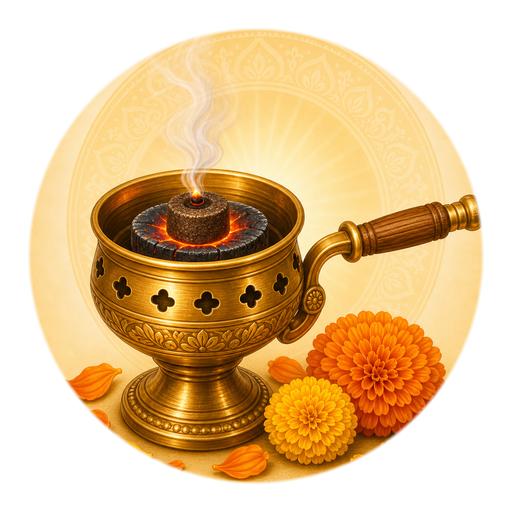
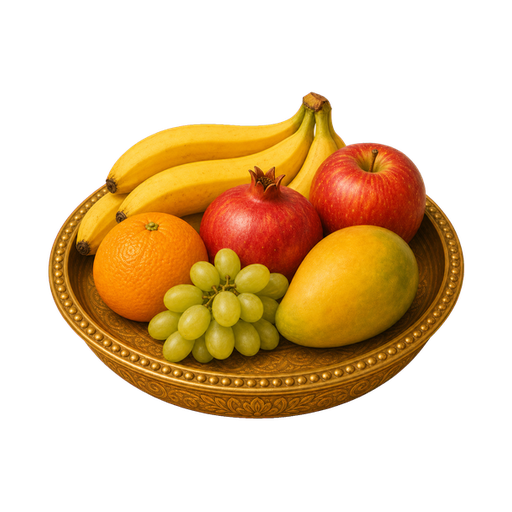
Areca nuts (8), rice, flowers, turmeric-kumkum, sandal paste, incense-lamp, panchamrit, fruit, and Rishichi Bhaji for naivedya. Banana or mango leaves are used in some places. A murti/image of the Saptarishis and Arundhati, or an areca-nut symbol, is used for invocation.
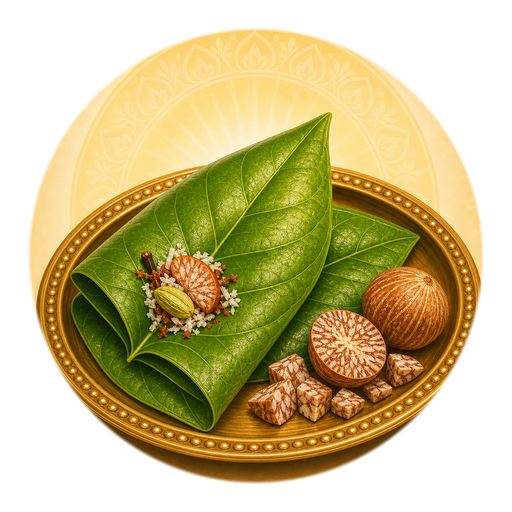 Areca nuts
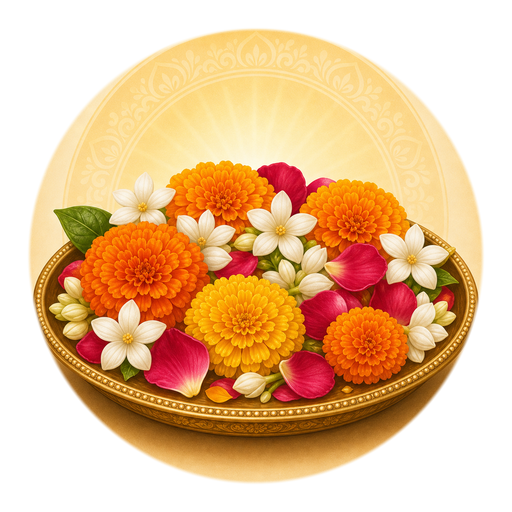 Flowers
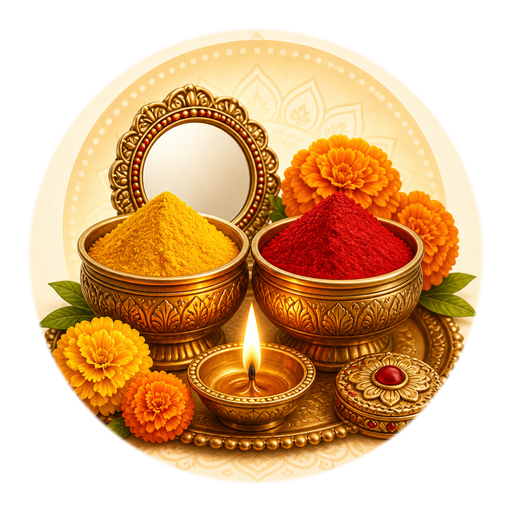 Turmeric-kumkum
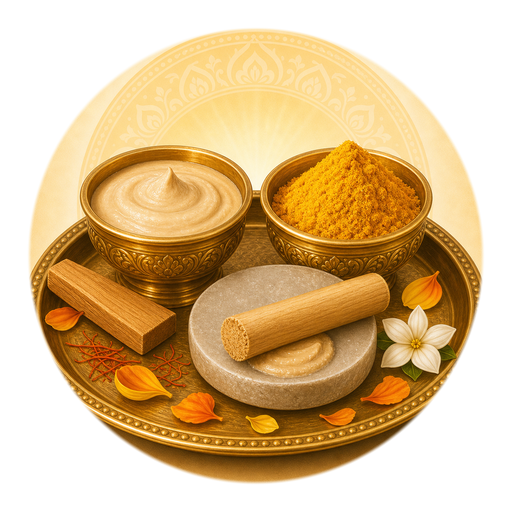 Sandal paste
 Incense
 Lamp
Lamp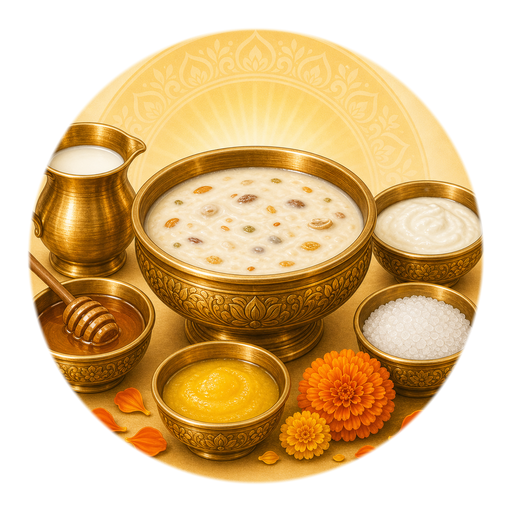 Panchamrit
 Fruit
Fruit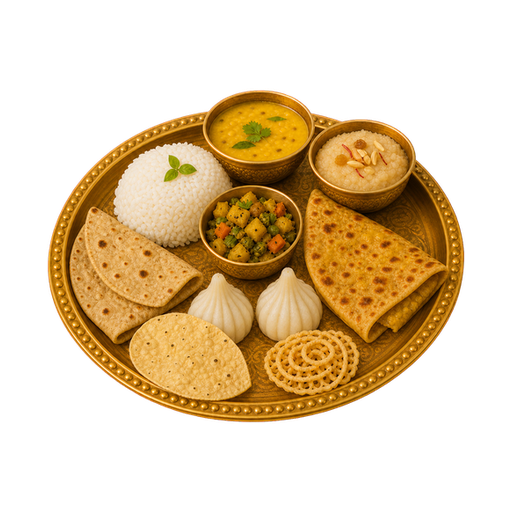 Rishichi Bhaji (naivedya)
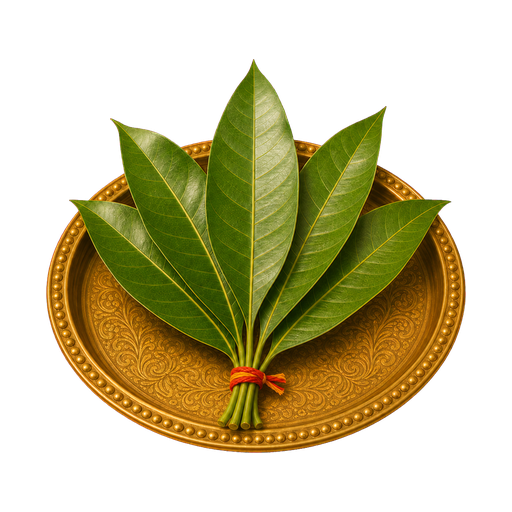 Mango leaves
Fasting
Grain grown with bullock labour or a plough is avoided on this day; naturally-grown tubers and vegetables are eaten instead. Many women fast all day; some take only fruit or water. Onion and garlic are also avoided (sattvic). Dietary details vary by household and tradition.
Rishichi Bhaji (Maharashtra's signature dish)
A mixed dish of vegetables and tubers grown without bullock labour or a plough — a symbol of faith, purity, and gratitude. Ingredients vary by household — an illustrative list: alu (colocasia/taro) leaves, chavali leaves, sour chuka greens, suran (yam), sweet potato, potato, red/bottle gourd, padwal, ghosala (ridge gourd), okra, corn cob, drumstick, val beans, cucumber, raw banana, maath greens, and groundnuts.
Two culinary traditions exist — in the oil-and-spice-free tradition, the vegetables are steamed and dressed with a green-chili paste and salt, with no oil; in the light-ghee tradition, some households use a light tempering of a teaspoon of ghee, cumin, hing, and ground chili. Ingredients and method vary by household tradition.
Mantra & stotra
Verses of praise addressed to the Saptarishis are recited.
Regional customs
In Maharashtra, Rishichi Bhaji is the centrepiece — this vrat day falls amid the bustle of Ganeshotsav, the day after Ganesh Chaturthi. In some places, the groundnut plant is also worshipped.
Outside Maharashtra, the Kumaon region (Almora, Nainital) is recorded as observing communal worship, folk songs, and storytelling.
Good to know
- Sensitivity: the traditional belief tied to menstruation/impurity is an old social notion, not a universal truth; the heart of this vrat is gratitude toward the Saptarishis.
- Keep the diet light and sattvic; those with health concerns, who are pregnant, or unwell should decide according to their own condition (a general note, not medical advice).
- Puja muhurat and tithi timings are place-dependent and date-bound — check the 15 September day page for these.
FAQ
- When is Rishi Panchami in 2026?
- Tuesday, 15 September 2026 (Bhadrapad Shukla Panchami).
- Why is the Rishi Panchami vrat observed?
- As gratitude toward the Saptarishis; also, by traditional belief, as atonement for unknowing faults during menstruation.
- What is Rishichi Bhaji made from?
- Tubers and vegetables grown without bullock labour or a plough (alu (colocasia/taro), suran, sweet potato, gourd, padwal, groundnuts, and so on), combined and cooked with little or no oil; ingredients vary by household.
- What should be eaten and avoided?
- Grain from ploughed land is avoided; tubers, vegetables, and fruit are eaten; onion and garlic are avoided.
- Who are the Saptarishis?
- Kashyap, Atri, Bharadwaj, Vishwamitra, Gautam, Jamadagni, and Vasishtha — along with Arundhati.
- Can men observe this vrat?
- It's chiefly observed by women; some sources say men can observe it too, since the vrat's gratitude-meaning is universal.
- What's the connection between Rishi Panchami and Ganesh Chaturthi?
- Rishi Panchami falls the day after Ganesh Chaturthi (in 2026, Ganesh Chaturthi is 14 September, Rishi Panchami 15 September).