Jagannath Rath Yatra
Jagannath Rath Yatra is the grand chariot festival at Puri, Odisha, of Lord Jagannath (a form of Shri Krishna/Vishnu), Balabhadra (Balaram), and Devi Subhadra — the largest and most famous chariot procession among Vaishnavs. It falls every year on Ashadha Shukla Dwitiya; this year (2026) that is 16 July, with the return Bahuda Yatra on 24 July (Ashadha Shukla Dashami).
This year's dates (2026)
All three deities travel from the Jagannath temple to the Gundicha temple on their own three enormous wooden chariots, stay there for about a week, and return. Millions of devotees pull the ropes of the chariots — the message of equality, offering darshan to everyone regardless of caste or creed, is what gives this yatra its special significance.
Significance
The Rath Yatra is when Lord Jagannath leaves the sanctum and comes out among the people, giving darshan to everyone — irrespective of caste, sect, or status; it is regarded as a great symbol of equality and inclusiveness within the Indian devotional tradition. Even those who cannot enter the temple get to see the deity during the Rath Yatra.
According to Vaishnav belief, this yatra is linked to the episode of Akrura taking Krishna and Balaram from Gokul to Mathura by chariot. The journey to the Gundicha temple is regarded as the deity going to his "aunt's house" (the Gundicha queen is traditionally regarded as Jagannath's aunt).
This festival is the culmination of a larger annual cycle — Snana Purnima, Anasar, Rath Yatra, and Bahuda (see below).
The legend (katha)
King Indradyumna (a Surya-dynasty ruler of Avanti/Ujjain, devoted to Vishnu) had an intense desire to see the sapphire idol of "Neel Madhav." Neel Madhav was worshipped secretly in the forest by a tribal chief named Vishwasu. The king sent a Brahmin, Vidyapati, to find it; according to one version, Vidyapati married Vishwasu's daughter Lalita and, sowing mustard seeds along the way, found the secret site.
By the time the king arrived, the idol had vanished. In his despair, the king received a divine vision instructing him to carve idols from a sacred piece of wood (daru brahma) that would float in from the sea, and to build a grand temple at Puri. Vishwakarma appeared in the form of an old carpenter ("Anant Maharana") and agreed to carve the idols on one condition — complete secrecy until the work was finished. The impatient king and queen opened the door before the work was done; Vishwakarma vanished, and the idols were left unfinished (with incomplete hands and feet). A divine voice declared that they should be worshipped in this very unfinished form — these are Jagannath, Balabhadra, and Subhadra.
The Vidyapati-Lalita-mustard-seed sub-episode is detailed in one version, while another version gives only "the king's divine vision → sacred wood on the shore." The sculptor's name appears as "Vishwakarma" in some places and "Anant Maharana" in others — both are regarded as the same figure.
A later, disputed version tells of a King Ramachandradev whose yavana-vivah (marriage to a non-Hindu) led to a ban on temple entry, prompting this yatra — this is not the main mythological story.
Who observes it / how devotees participate
This is not a household vrat — it is a temple-centred public festival. Millions of devotees gather at Puri and pull the ropes of the chariots — pulling the chariot is regarded as a meritorious act. Devotees of Jagannath, Vaishnav/ISKCON (Hare Krishna) followers, and pilgrims from around the world take part. In Maharashtra, participation is mainly through the Rath Yatras organised by ISKCON in Mumbai and Pune.
The festival structure — three chariots
| Deity | Chariot name | Wheels | Height (approx.) | Cloth colour | Charioteer |
|---|---|---|---|---|---|
| Shri Jagannath | Nandighosh | 16 | ~45 ft | Red-yellow | Matali |
| Shri Balabhadra | Taladhwaja | 14 | ~44 ft | Red-blue | Daruka |
| Devi Subhadra | Darpadalana | 12 | ~43 ft | Red-black | Arjuna |
The heights vary slightly by source — since these chariots are newly built each year (mainly from neem and other sacred wood, without metal), they stand roughly 45/44/43 feet tall.
Sudarshan (the divine discus) is also said to accompany all three deities — hence some sources describe it as "three main deities plus Sudarshan."
The festival cycle
This festival at Puri is part of a larger annual cycle.
- Snana Purnima (Jyeshtha Purnima) — all three deities are publicly bathed with 108 kalashas of water.
- Anasar period — after the bath, the deities are believed to fall "ill"; they remain in seclusion for about 14-15 days, with no public darshan.
- Netrotsav / Nabajouban Darshan — the deities' eyes are repainted and they reappear in a "youthful" form, and the temple reopens.
- Rath Yatra (Ashadha Shukla Dwitiya) — the journey to the Gundicha temple.
- Bahuda Yatra (Ashadha Shukla Dashami) — the return journey, with a halt near the Mausi Maa temple on the way back.
- Suna Besha — after the Bahuda, the deities are adorned with gold ornaments — considered an especially auspicious darshan.
Some sources describe the stay at the Gundicha temple as "seven days," others as "nine days"; the Rath Yatra (16 July) to Bahuda Yatra (24 July) gap is about a week.
Chhera Pahara — the Gajapati Maharaja of Puri sweeps the chariots with a golden broom; this is regarded as a symbol of equality, that all are equal before God. The Gajapati is regarded as Jagannath's foremost servant.
Regional customs — the Maharashtra presence
This is originally an Odisha festival; its main presence in Maharashtra is through ISKCON (Hare Krishna) Rath Yatras — especially the grand yatras held every year in Mumbai (Juhu) and Pune. Beyond ISKCON's yatras, this is not a widespread household observance in Maharashtra.
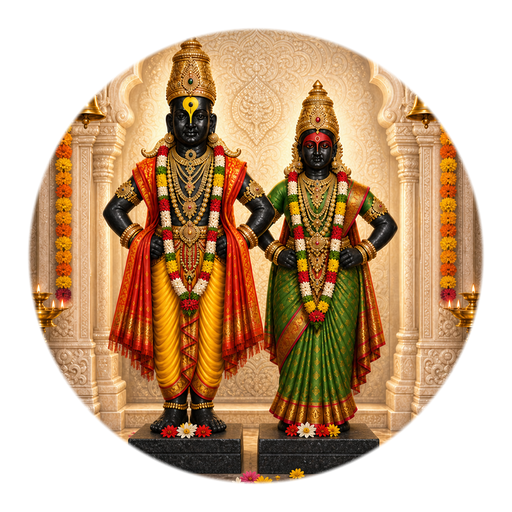
In this same month of Ashadha, Maharashtra's largest devotional festival — Ashadhi Ekadashi/the Pandharpur Wari — falls about nine days after the Rath Yatra, on 25 July. Vitthal is regarded as a form of Krishna; so a Marathi devotee can draw an emotional connection between Jagannath (Krishna) and Vitthal — this is a connective observation, not a claim of shared legend.
Fasting
There is no universal household fasting rule for this festival (it is not a household vrat). Devotees may keep a voluntary fast or a sattvic diet, but this is not a fixed rule. Puri's mahaprasad is famous — it is a Puri-specific detail.
Mantra
Devotees' rallying cry is "Jai Jagannath" — meaning "Victory to Jagannath" — chanted during darshan and the procession. "Jagannath Swami Nayanapathagami Bhavatu Me," a well-known verse from the Jagannath Ashtakam, means roughly "May Lord Jagannath come within the path of my eyes" — a prayer to be blessed with his darshan.
A folk belief found in some sources holds that "dying under the chariot grants moksha" — this is recorded as a belief, not as a fact.
Good to know
- The Puri and ISKCON Rath Yatras draw enormous crowds — the elderly, children, and those with health concerns should take extra care and follow organisers' instructions.
- Actual temple timings and specific rituals should be checked with the Puri temple committee (SJTA) — this page does not imply any official association with any temple administration.
- Details like chariot height and the number of days at Gundicha vary slightly by source — treat them as approximate statements.
FAQ
- When is Jagannath Rath Yatra in 2026?
- 16 July 2026 (Ashadha Shukla Dwitiya); the return Bahuda Yatra will be on 24 July.
- Why is Jagannath Rath Yatra celebrated?
- Jagannath leaves the sanctum and comes among the people to give everyone equal darshan; the journey to the Gundicha temple (his "aunt's house") is regarded as the reason behind the yatra.
- How many chariots are there in the Puri Rath Yatra, and what are their names?
- Three — Nandighosh (Jagannath), Taladhwaja (Balabhadra), and Darpadalana (Subhadra).
- Why are the idols of Jagannath, Balabhadra, and Subhadra unfinished?
- While Vishwakarma was carving the idols on condition of secrecy, the king and queen opened the door too soon, leaving the idols unfinished — they are worshipped in that very form.
- What is the Bahuda Yatra?
- The return journey after the stay at the Gundicha temple (Ashadha Shukla Dashami).
- What are Snana Purnima and the Anasar period?
- After the bath, the deities are believed to fall "ill" → about 14-15 days of seclusion → darshan resumes with the Netrotsav → then the Rath Yatra.
- Where is Rath Yatra celebrated in Maharashtra?
- Mainly through the ISKCON Rath Yatras in Mumbai (Juhu) and Pune.