Lalita Panchami
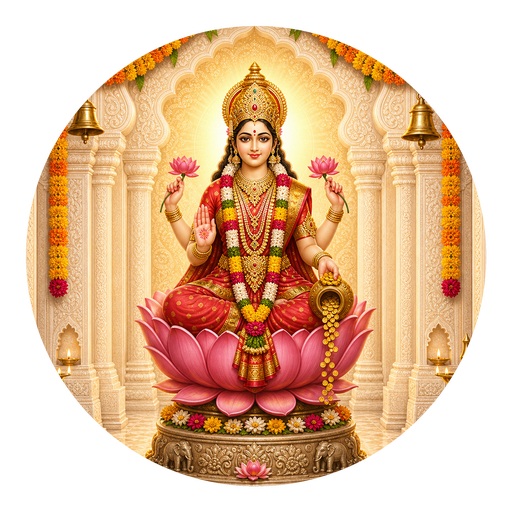
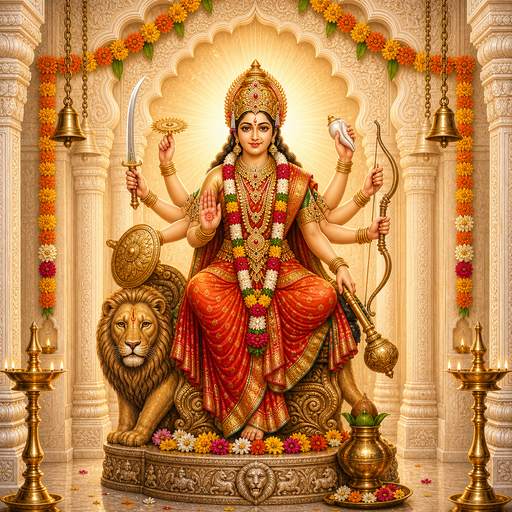
Lalita Panchami falls on Ashwin Shukla Panchami — Sharad Navratri's fifth day. On this day, the Goddess's Upang Lalita (Tripura Sundari) form is worshipped through the Upang Lalita vrat. In 2026, this tithi falls on Thursday, 15 October. Goddess Lalita is Tripura Sundari, Shodashi, and Rajarajeshwari — one of the Dus Mahavidyas. A distinctive Maharashtra feature: in Kolhapur, on this very day, Ambabai (Mahalakshmi) visits her friend Goddess Tryamboli — a palanquin procession and the kohla-phod (pumpkin-breaking) ceremony.
This year's dates (2026)
Significance
Lalita Panchami is a day of worship of Adi Shakti's Lalita/Tripura Sundari form — a prominent stage of Devi devotion within Navratri's nine days. Observing the Upang Lalita vrat is believed to bring happiness, knowledge, good fortune, and prosperity.
This vrat is especially prevalent in Gujarat and Maharashtra; in some places, women perform a collective puja together. Falling within the autumn Navratri period, this day is considered part of Devi darshan and kuladevi worship — particularly a major festival at Shaktipeeth sites like Kolhapur.
The legend
Goddess Lalita (Tripura Sundari) is believed to have manifested to slay the demon Bhandasura. Bhandasura was a demon born from Kamadeva's ashes; as his tyranny grew, the gods and sages prayed, and Goddess Lalita manifested to slay him — truth's victory over falsehood. One sub-legend also holds that when a disc released by Brahma began destroying the netherworld, the Goddess manifested and stopped that destructive disc.
By tradition, the Goddess is believed to have manifested after Bhandasura's slaying; Lalita Jayanti (Magh Purnima) is regarded as a separate day of her manifestation.
Who observes it
Devi devotees — both women and men can observe the Upang Lalita vrat; in practice, it is mainly observed by women and Devi devotees. It is especially prevalent in Gujarat and Maharashtra; in some places, a collective women's puja is also held. Devotees from Kolhapur and the surrounding region participate in large numbers in the Ambabai-Tryamboli meeting festival.
Puja vidhi
A bath is taken early in the morning; in some traditions, teeth are cleaned with an aghada twig. The Goddess's murti/image is installed on a clean chaurang or wooden plank; in some traditions, a karandak (box) lid is taken as a symbol of the Goddess in worship. A canopy (makhar) of banana-tree pillars and flower garlands is set up, and a shodashopachar puja is performed. A garland of durva grass, or 48 durva blades (with sandal paste and rice), are offered to the Goddess — a distinctive practice of Lalita worship. Naivedya includes kheer, ladoo, vada, and gharge. A night vigil and recitation of the Lalita legend follow; immersion takes place the next day.
What you need
The Goddess's murti/image, a chaurang or wooden plank, a karandak (lid as symbol), banana-tree pillars, flower garlands, durva grass (garland/blades), turmeric-kumkum, unbroken rice, sandal paste, incense-lamps, and a nandadeep lamp. For naivedya: kheer, ladoo, vada/gharge, and seasonal fruit. The list varies by local tradition.
 Chaurang (wooden plank)
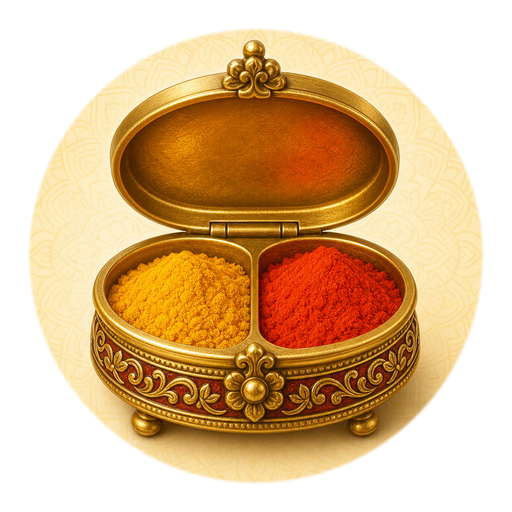 Karandak (lid as symbol)
 Banana-tree pillars
 Flower garlands
 Durva grass
 Turmeric-kumkum
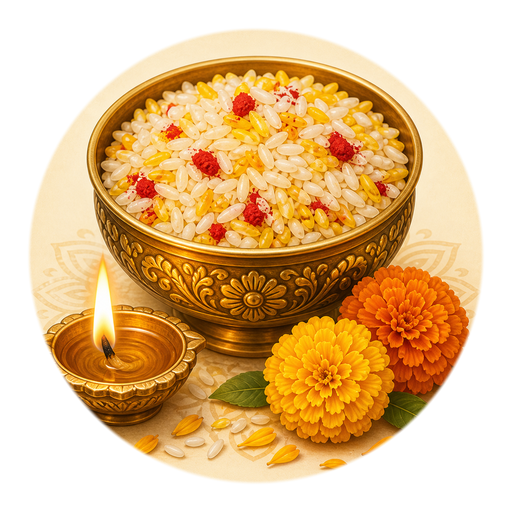 Unbroken rice (akshata)
 Sandal paste
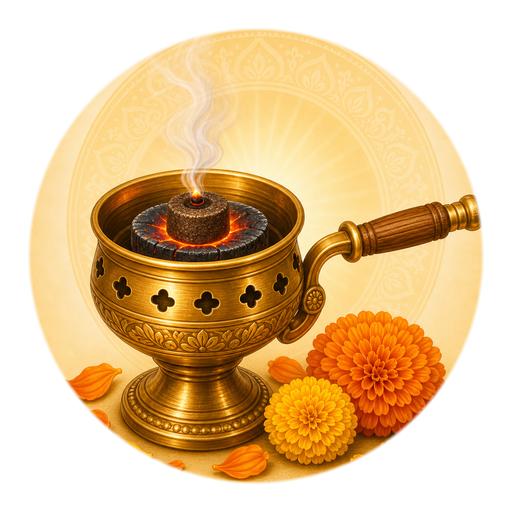 Incense
 Lamp
Lamp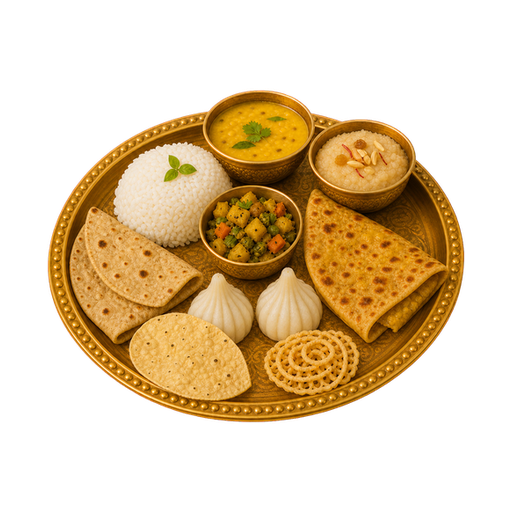 Naivedya (kheer, ladoo)
 Seasonal fruit
Fasting
Many devotees keep a fast or a fruit-only diet on this day — some observe the vrat on just fruit or milk. Those observing the Navratri fast continue it. Avoiding onion-garlic and tamasik food is a common practice — these rules vary by household and tradition.
Mantra & stotra
Recitation of the Lalita Sahasranama (the Goddess's thousand names) and the Lalitopakhyan/Lalita Trishati is considered central on this day. Tripura Sundari's commonly used seed-mantra is "Om Aim Hreem Shreem Tripurasundaryai Namah." The opening line of Lalita's dhyana shloka is found as "Neel Kausheyavasanam…" — the essence of its meaning is praise of and surrender to the Goddess's beauty, power, and compassion.
Regional customs
Every year on Lalita Panchami, Kolhapur's Mahalakshmi (Ambabai) travels in a palanquin procession to the Tryamboli (Temblai) temple on a hill about five kilometres east of the city, to meet her friend Goddess Tryamboli. Per the legend in the Karvir Mahatmya tradition, during the victory celebrations after a demon's slaying, Ambabai forgot to invite Tryamboli; Tryamboli, offended, withdrew to the eastern hill; Ambabai went with her attendants to console her and promised, "I will come to meet you every year" — which is why this meeting festival takes place every Lalita Panchami.
During this meeting festival, a kohla (white pumpkin) is broken — regarded as a symbol of the demon Kolhasura's slaying; by tradition, a girl from a particular family (such as the Gurav family) breaks it, and devotees take the pieces as prasad.
Versions of the legend differ in detail — accounts disagree on which demon is involved (one version gives a fuller story in which the demon Kamaksha turned the gods into sheep, and Tryamboli seized his yoga-danda staff and killed him); Tryamboli's own origin is also given differently (Mahalakshmi's maid-servant/a cursed young girl of Sage Kaundinya, versus simply "a friend"). The invitation being forgotten, the offence, Ambabai's consolation, and the annual promise stay the same across versions.
All of this belongs to the Karvir Mahatmya/Kolhapur Mahatmya tradition and is Kolhapur-specific — elsewhere, Lalita Panchami is mainly observed as a household Upang Lalita vrat. The exact timing and route of the palanquin/meeting festival, and the family that performs the kohla-phod, can vary year to year.
Good to know
- Perform the vrat/puja on 15 October itself — even though the tithi ends toward dawn, Panchami prevails during the day; avoid confusion.
- Decide on fasting based on health — those with diabetes, pregnant women, and the elderly should follow medical advice.
- Kolhapur's Ambabai-Tryamboli meeting festival draws huge crowds — check the palanquin timing, route, and kohla-phod ritual with the temple committee/local sources.
- Lalita Sahasranama/seed-mantra practice follows guru tradition — no specific tantric prescription should be taken as universal.
FAQ
- When is Lalita Panchami in 2026?
- Thursday, 15 October 2026 (Ashwin Shukla Panchami) — Sharad Navratri's fifth day.
- What is the Upang Lalita vrat, and which goddess is it for?
- The vrat for the Goddess's Upang Lalita (Tripura Sundari) form; she is one of the Dus Mahavidyas. Observed for happiness, knowledge, and prosperity.
- How is Lalita Panchami's puja performed?
- Installing the Goddess (a karandak lid as symbol in some traditions), a shodashopachar puja, a durva garland, kheer-ladoo naivedya, a night vigil and recitation of the legend; immersion the next day.
- What is the legend behind Lalita Panchami?
- Goddess Lalita is believed to have manifested to slay the demon Bhandasura (born from Kamadeva's ashes) — the exact tithi is disputed, with some traditions treating Lalita Jayanti (Magh) as a separate occasion.
- Are Lalita and Tripura Sundari the same?
- Yes — Lalita is Tripura Sundari, Shodashi, and Rajarajeshwari, one goddess among the Dus Mahavidyas.
- Why does the Ambabai-Tryamboli meeting and kohla-phod happen in Kolhapur?
- Per the Karvir Mahatmya, Ambabai forgot to invite her friend Tryamboli during a victory celebration, so she visits every Lalita Panchami to console her; the kohla-phod is regarded as a symbol of the demon Kolhasura's slaying.
- What's the difference between Lalita Panchami and Lalita Jayanti?
- Lalita Panchami falls on Ashwin Shukla Panchami (during Navratri); Lalita Jayanti falls on Magh Purnima — both connected to Tripura Sundari but on different days.