Mahavir Jayanti
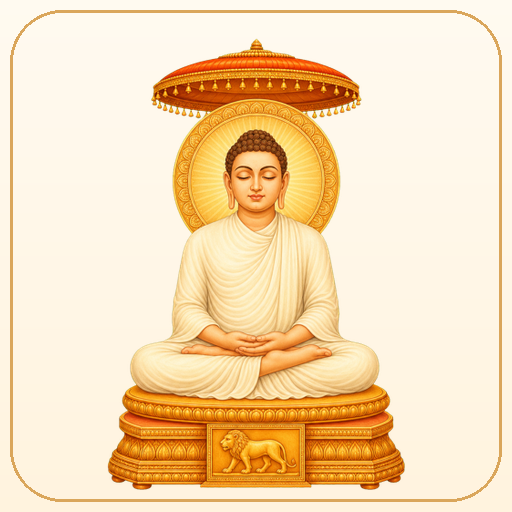
Mahavir Jayanti marks the Janma Kalyanak — the birth anniversary — of Lord Mahavir (Vardhaman), the 24th and last Tirthankara of Jainism, celebrated on Chaitra Shukla Trayodashi. In 2026, this tithi falls on Tuesday, 31 March. The day is observed with murti abhishek at temples, decorated rath yatras, scripture recitation, meditation, fasting, and charity. Mahavir's message of ahimsa (non-violence), satya (truth), and aparigraha (non-possession) is widely remembered even today.
This year's dates (2026)
Significance
Mahavir is believed to have been born on Chaitra Shukla Trayodashi — hence this day is known as Mahavir Jayanti, or Mahavir Janma Kalyanak.
Mahavir is the propounder of the five great vows — ahimsa, satya, asteya, brahmacharya, and aparigraha — of which ahimsa is considered the core of Jainism. He is said to have added brahmacharya as an additional vow to the existing tradition. He is the 24th and last Tirthankara of the current avasarpini time-cycle, successor to the 23rd Tirthankara, Parshvanath.
Mahavir's life journey is recorded as follows: renunciation at age 30, roughly twelve and a half years of severe austerity, then attainment of Kevalgyan (omniscience), and finally nirvana at Pavapuri. The foundation of his teaching is the Triratna — samyak darshan (right faith), samyak gyan (right knowledge), and samyak charitra (right conduct).
This day isn't observed only by the Jain community — it's widely regarded as a reminder of the universal value of non-violence.
The birth legend
Lord Mahavir was born to King Siddhartha and Queen Trishala at Kundagram/Kshatriyakund (near Vaishali, Bihar). His birth name was Vardhaman ("one who grows"). During the pregnancy, his mother is said to have seen auspicious dreams, taken as a sign of the coming Tirthankara. After the birth, Indra, king of the gods, is said to have performed an abhishek on Mount Sumeru — the second of the Tirthankara's five kalyanaks (auspicious events), the Janma Kalyanak.
At age thirty, Mahavir renounced worldly life and undertook severe austerity; upon attaining Kevalgyan, he preached ahimsa and truth. He finally attained nirvana at Pavapuri.
Jainism's two major sects — Shvetambar and Digambar — differ on some details of this legend, and neither version should be treated as universal or final:
- Garbha-parivartan (embryo transfer): per Shvetambar tradition, Mahavir's embryo was first in the womb of the Brahmin woman Devananda; on Indra's command, the god Harinaigamesin transferred it to the womb of the Kshatriya queen Trishala — because it's held that a Tirthankara cannot be born to a Brahmin mother. Digambar tradition rejects this — Mahavir descended directly into Trishala's womb; Trishala is his natural mother.
- Number of dreams: 14 dreams in the Shvetambar tradition; 16 dreams in the Digambar tradition — said to have been interpreted by King Siddhartha.
- Marriage: per Shvetambar tradition, Mahavir married Yashoda and had a daughter, Priyadarshana; per Digambar tradition, Mahavir remained unmarried.
- Year of nirvana: 527 BCE per the Shvetambar tradition; 510 BCE per the Digambar tradition.
Sources also differ on the birth year — most sources give roughly 599 BCE, while one source gives a different year, 540 BCE.
Most sources describe Mahavir's clan as the Nay/Jnatri Kshatriya clan (connected to the Licchavis); one source instead mentions the "Ikshvaku dynasty," which isn't consistent with the majority/academic sources.
Who observes it
The entire Jain community — both the Digambar and Shvetambar sects — observes this day through temple visits, abhishek, rath yatras, scripture recitation, meditation, fasting, and charity. Many non-Jains also take part, joining awareness rallies and programs inspired by the day's message of ahimsa.
How it's observed
In Jain tradition, the day's observance is better described as abhishek, devotion, and restraint-driven charity rather than "puja vidhi" in the Hindu ritual sense.
- The day begins at temples with dawn prayers and recitation of the Namokar (Navkar) mantra.
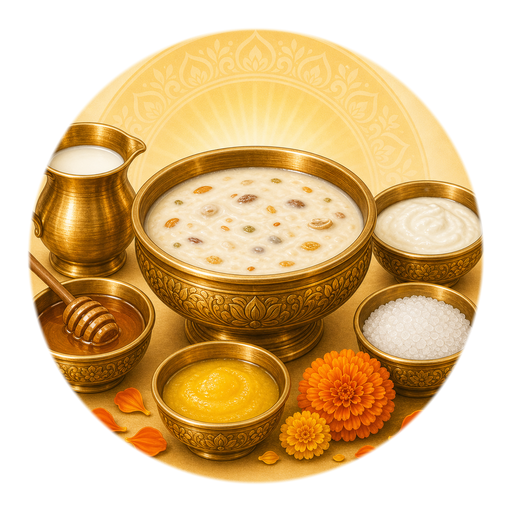
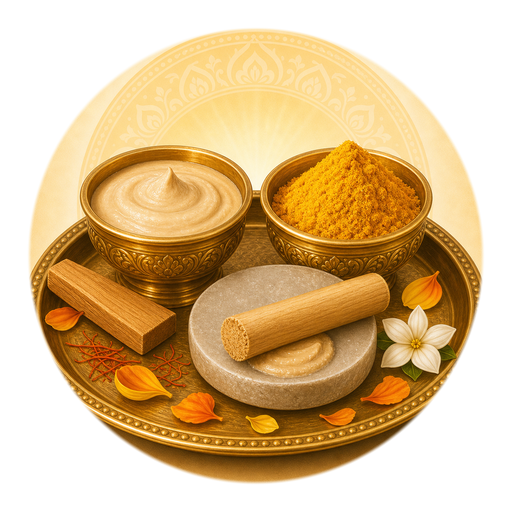
- An abhishek (with water/panchamrit, along with saffron and sandal paste) is performed on Mahavir's murti — regarded as a symbol of his birth-abhishek, recalling Indra's abhishek on Mount Sumeru.
- A decorated rath yatra carries the murti in procession — devotional stavans (hymns) are sung along the way.
- Scripture recitation, discourse, and meditation recall Mahavir's teachings.
- Charity — food, clothing, and medicine — is given to those in need; ahimsa-awareness programs and rallies are organised.
- Many devotees keep a fast or observe restraint, eating simple, sattvic food.
Since this is a single-day Janma Kalyanak, there is no separate udyapan ritual, as with Hindu vrats.
What you need
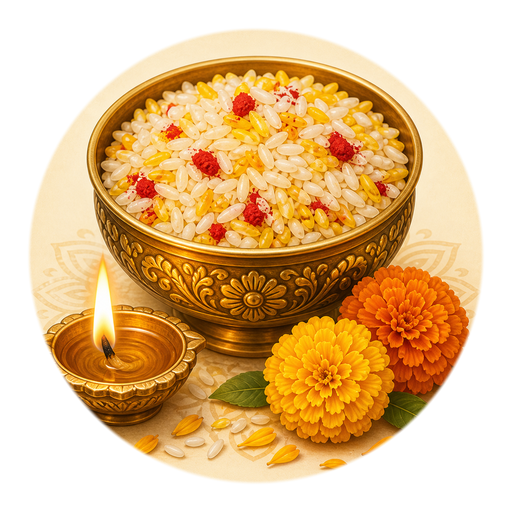
A Mahavir murti/image, pure water/panchamrit and saffron-sandal paste for the abhishek, the ashtadravya (eight items used in Jain puja — water, sandal, unbroken rice, flowers, naivedya, lamp, incense, fruit), decoration for the rath yatra, and scripture/stavan collections. Jain puja items can vary by sect.
 Panchamrit
 Saffron-sandal paste
 Unbroken rice
 Flowers
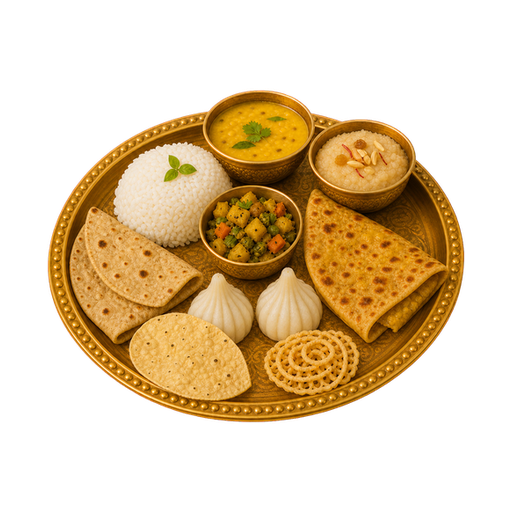 Naivedya
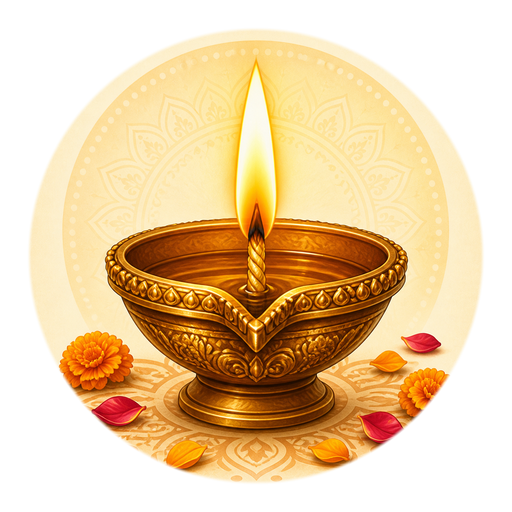 Lamp
Lamp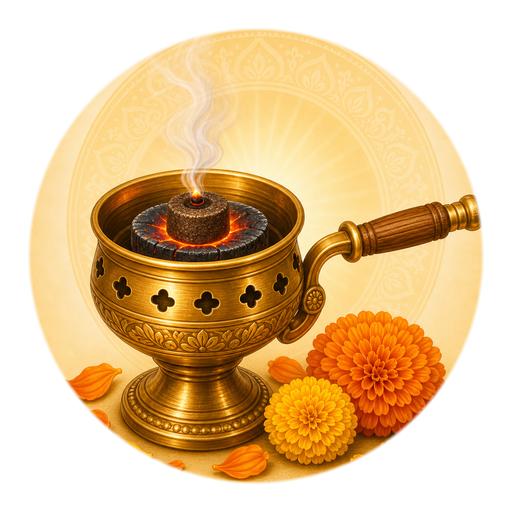 Incense
 Fruit
Fruit Scripture/stavan collections
Fasting
Many devotees keep a fast or observe restraint — a sattvic, vegetarian diet is followed, often avoiding onion, garlic, and root vegetables. Those who follow an ahimsa-based diet in Jain tradition (avoiding food after dark, drinking only filtered water, and so on) tend to observe it more strictly on this day. How strict or relaxed the fasting/diet is varies by sect and family tradition.
Mantra
Jainism's most important and foundational mantra is the Namokar (Navkar, or Panch Namaskar) mantra. Without naming any single person or deity, it pays homage to the five supreme beings — Arihant, Siddha, Acharya, Upadhyaya, and Sadhu — that is, to spiritually elevated qualities; its goal is moksha (liberation). Its recognisable opening line is "Namo Arihantanam."
Regional customs
Mahavir Jayanti is observed pan-India within the Jain community, in the same spirit everywhere — it doesn't have a striking Maharashtra-specific differentiator the way Gudi Padwa does. In Maharashtra, Mahavir Jayanti is gazetted as a public holiday.
Jainism has ancient roots in Maharashtra — the Namokar mantra is said to appear in some of the state's oldest inscriptions. Major Jain pilgrimage sites in the state include Kumbhoj-Bahubali (Kolhapur), Kunthalgiri (Dharashiv), and Gajpantha and Mangitungi (near Nashik). Some of these sites are said to hold local programs for the Jayanti — exact schedules and details should be verified with the respective temple committee. Jain communities in cities take out decorated rath yatras and ahimsa-awareness processions.
The panchang separately records "Mahavir Nirvana Din" in November and "Mahavir Dikshotsav" in December as distinct Jain observances — these are different occasions and shouldn't be merged with this birth Jayanti.
Good to know
- The exact sunrise/tithi-end times vary by city and date — check the 31 March day page for these.
- Fasting/restraint is optional — those with health conditions like diabetes should take appropriate care.
- In large rath yatra processions, take care of senior citizens and children; check local advisories.
- This day carries a message of ahimsa — many observe it as a reminder of vegetarianism and compassion.
FAQ
- When is Mahavir Jayanti in 2026?
- Tuesday, 31 March 2026 (Chaitra Shukla Trayodashi).
- Why is Mahavir Jayanti celebrated?
- As the birth anniversary (Janma Kalyanak) of Lord Mahavir, Jainism's 24th Tirthankara — in remembrance of his teachings on ahimsa and truth.
- Who was Lord Mahavir?
- The son of King Siddhartha and Queen Trishala (birth name Vardhaman); the 24th and last Tirthankara of Jainism, and a propounder of ahimsa.
- How is Mahavir Jayanti celebrated?
- Through murti abhishek at temples, decorated rath yatras, scripture recitation, meditation, fasting, and charity.
- On which tithi was Mahavir born?
- Chaitra Shukla Trayodashi — falling on 31 March in 2026.
- What are Mahavir's teachings?
- The five vows — ahimsa, satya, asteya, brahmacharya, and aparigraha; and the path of samyak darshan-gyan-charitra (the Triratna).
- Is Mahavir Jayanti a holiday?
- Yes, it's a gazetted public holiday across India, including Maharashtra.
- What is the Namokar (Navkar) mantra?
- Jainism's foundational mantra — paying homage to the five supreme beings (Arihant, Siddha, Acharya, Upadhyaya, Sadhu); its opening line is "Namo Arihantanam."