Chaitra Navratri (Vasant Navratri)
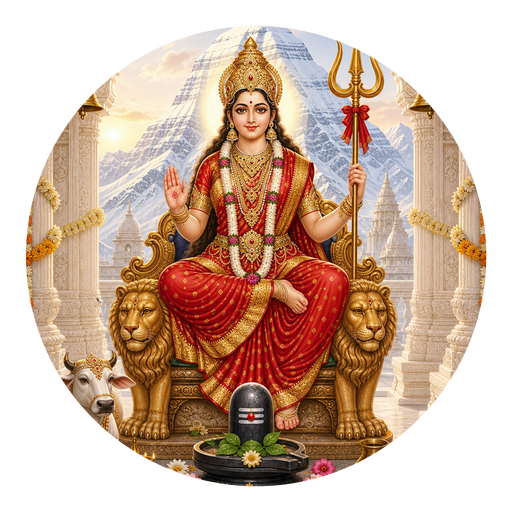
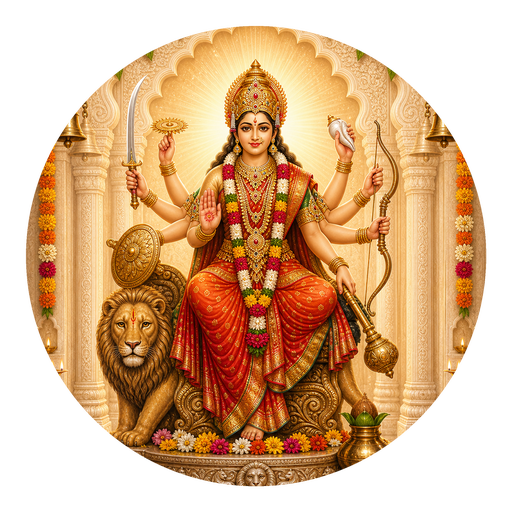
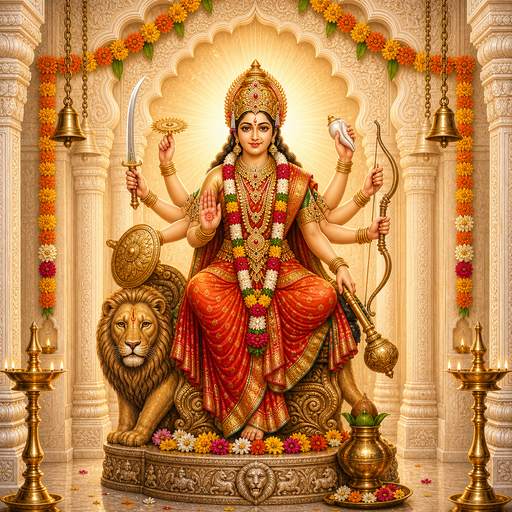
Chaitra Navratri (Vasant Navratri) is nine nights and days of worship of Adishakti Durga, from Chaitra Shukla Pratipada to Chaitra Shukla Navami, in the spring — with ghatasthapana on the first day. This year (2026), Day 1 is Thursday, 19 March (ghatasthapana = Gudi Padwa); it culminates on Thursday, 26 March — Shri Ram Navami.
This year's dates (2026)
- Day 1 — Ghatasthapana / start of Vasant Navratri; also Gudi Padwa (Marathi new year)19 Mar
- Day 220 Mar
- Day 3 — Chaitragaur begins (a month-long observance from this Tritiya)21 Mar
- Day 422 Mar
- Day 523 Mar
- Day 624 Mar
- Day 725 Mar
- Day 8/culmination — Shri Ram Navami (Ram's birth at midday; Navami by the madhyahna rule)26 Mar
- The Navami tithi completes in the morning (by udaya-tithi reckoning, this is Navami day)27 Mar
Of the four seasonal Navratris in a year (some traditions count five), Chaitra (Vasant) and Ashwin (Sharadiya) are the two major ones; Magha and Ashadha are called "Gupt Navratri" (secret Navratri). In Maharashtra, Chaitra Navratri is tied to the Marathi new year (Gudi Padwa); across these nine days, the visible household arc runs Chaitragaur (from Tritiya) through to the culminating Ram Navami.
Significance
Chaitra Navratri is the period of Devi worship at the start of spring (hence "Vasant" — spring); it is distinct from the Sharadiya Navratri in Ashwin. Chaitra Shukla Pratipada is regarded as the start of the Hindu/Marathi new year — celebrated in Maharashtra as Gudi Padwa and in Andhra/Telangana as Ugadi on the same day. Chaitra Navratri is thus seen as a symbol of new beginnings, resolutions, and fresh energy.
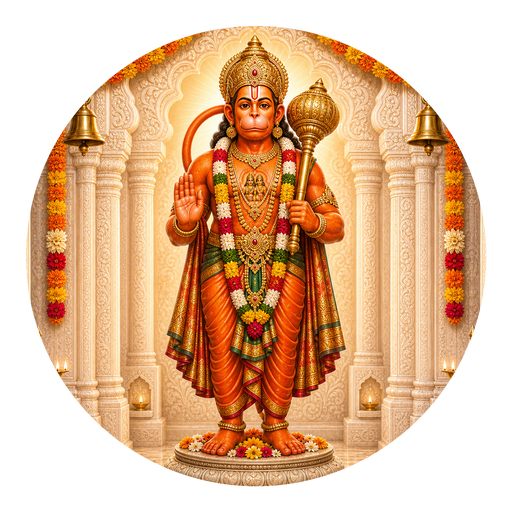
The nine nights of Devi worship culminate in Ram Navami (Chaitra Shukla Navami) — Shakti worship resolving into the birth celebration of Dharma/Maryada Purushottam Ram is what gives this Navratri its distinctive meaning.
Sharadiya Navratri is the most widely celebrated, with Chaitra Navratri regarded as the second-most celebrated. The emphasis on Chaitra is found mainly in Maharashtra, Andhra, Telangana, Karnataka, and parts of North India; Sharadiya is celebrated especially widely in Gujarat and Bengal — this is a regional observation, not a universal claim.
The legend (katha)
The shared core of Navratri is the Devi Mahatmya/Mahishasuramardini legend — Durga, manifested from the combined radiance of the gods, fought the demon Mahishasura and others over nine days and slew them. The full story and its version differences are given on the Sharadiya Navratri page.
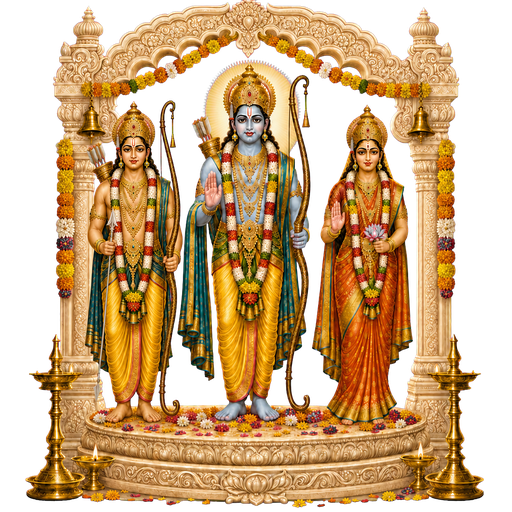
Chaitra Navratri's own distinctiveness lies in its culmination — Lord Ram (the seventh avatar of Vishnu) is believed to have been born at midday on Chaitra Shukla Navami, which is why the last day of Chaitra Navratri is celebrated as Ram Navami. The full story of Ram's birth is on the Ram Navami page.
Sharadiya Navratri culminates in Devi's victory (Vijayadashami), while Chaitra Navratri's Devi worship culminates in Ram's birth.
Who observes it
Devi devotee families observe worship/fasting over the nine days; some perform ghatasthapana. In Maharashtra, this period is observed in households mainly through the Marathi new year (Gudi Padwa), the turmeric-vermilion gatherings of Chaitragaur, and the Ram Navami birth celebration. It cannot be clearly stated that daily household ghatasthapana/Navadurga worship in Chaitra is as universal in Maharashtra as it is during Sharadiya Navratri — many devotees do observe this period, but that isn't a claim that "everyone" does.
Deities such as Ram, Krishna, Datta, and Khandoba also have their own separate Navratri observances — the concept of a "Ram Navratri" in Chaitra complements this.
Puja vidhi
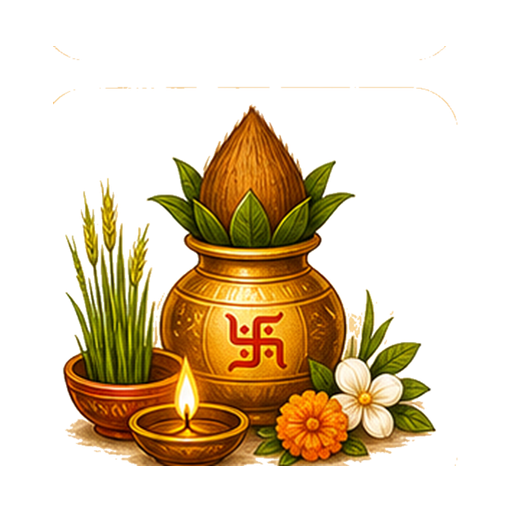
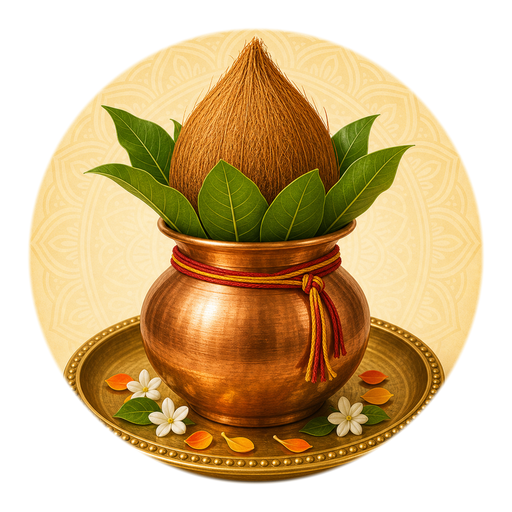
- Ghatasthapana (Day 1) — in a clean spot, wheat is sown on a small mound of earth, and a clay kalash filled with water is placed on it to install the Devi.
- Over the nine days, Devi is worshipped, an unbroken lamp is kept lit, and a garland is offered to the kalash/Devi daily.
- The nine forms of Devi (Navadurga) are remembered/worshipped; in some places a havan/homa and a reading of the Saptashati are also performed.
- Culmination (Ram Navami, 26 March) — the Ram Navami birth celebration is observed on Navami, with Ram's birth at midday, a cradle ceremony, and sunthavada prasad; details are on the Ram Navami page.
The exact time for ghatasthapana and the Ram Navami midday muhurat can be checked on the 19 March and 26 March day pages respectively. The sequence of worship varies by family and local tradition.
The day-by-day mapping of the nine forms of Devi (Shailaputri, Brahmacharini, Chandraghanta, Kushmanda, Skandamata, Katyayani, Kalaratri, Mahagauri, Siddhidatri) to specific tithis is primarily a North Indian/Shaiva tradition; it isn't the case that this daily tithi-wise worship is universally observed in Maharashtrian households during Chaitra.
What you need
A clay kalash, a mound of earth, wheat (for sowing), water, mango leaves, a coconut, an unbroken lamp with oil/ghee wick, turmeric-vermilion, flowers/garlands, akshata, incense-lamp, an offering, and an image/idol of Devi. This list varies by local tradition.
 Clay kalash/ghat
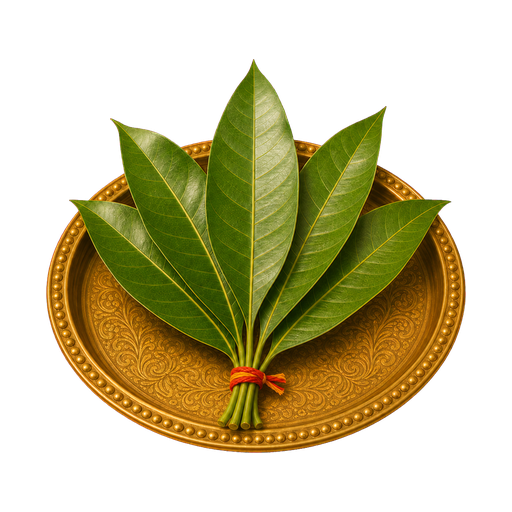 Mango leaves
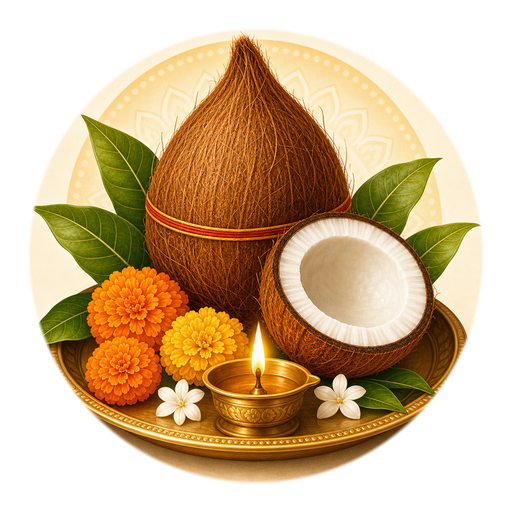 Coconut
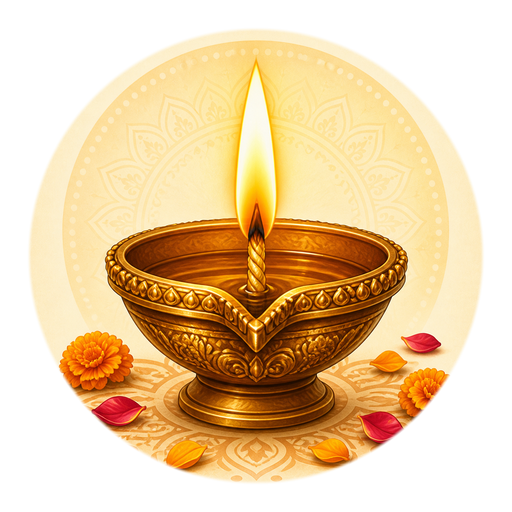 Unbroken lamp
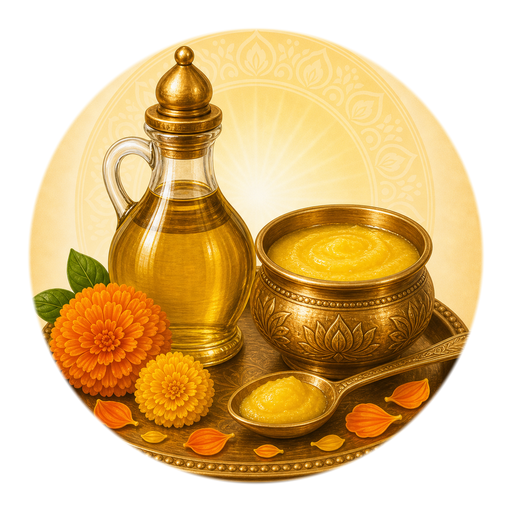 Oil/ghee wick
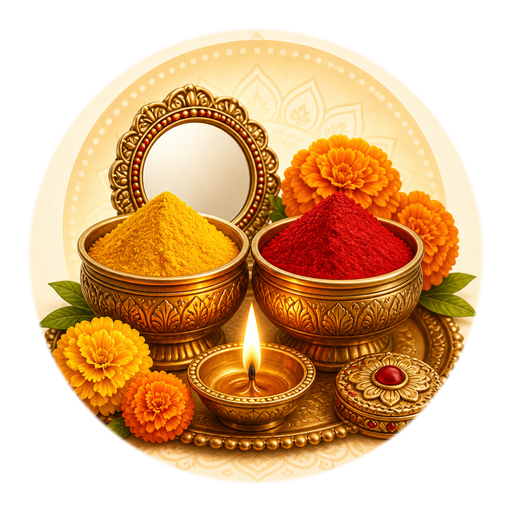 Turmeric-vermilion
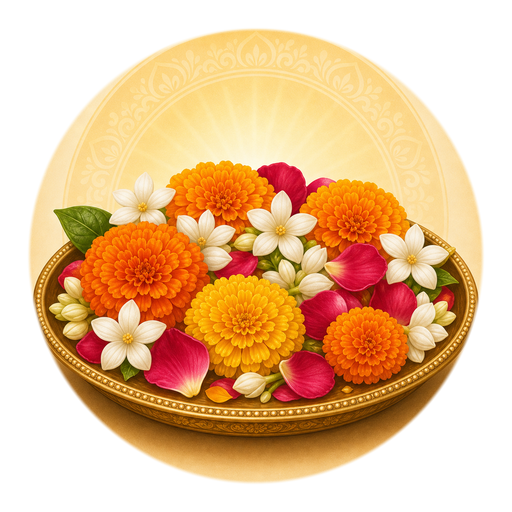 Flowers
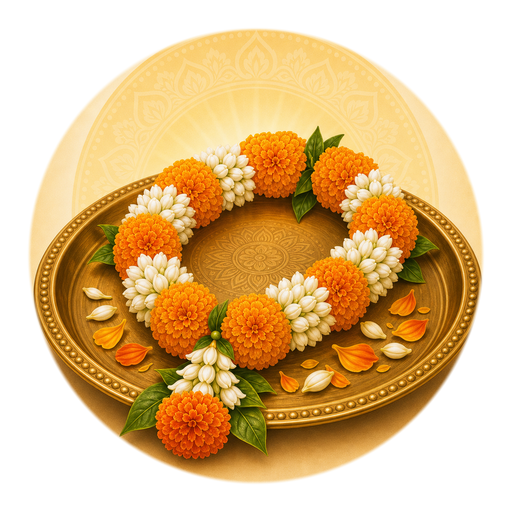 Garland
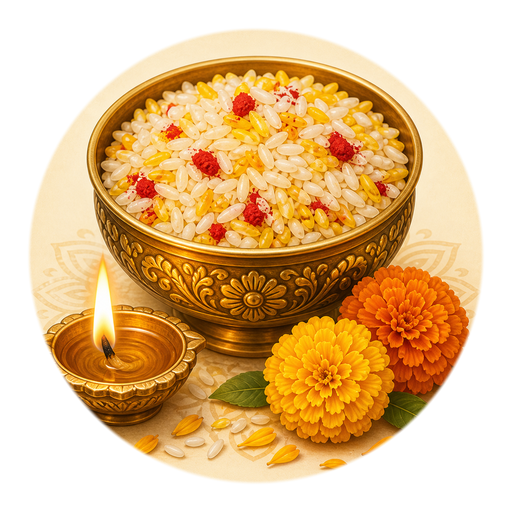 Akshata
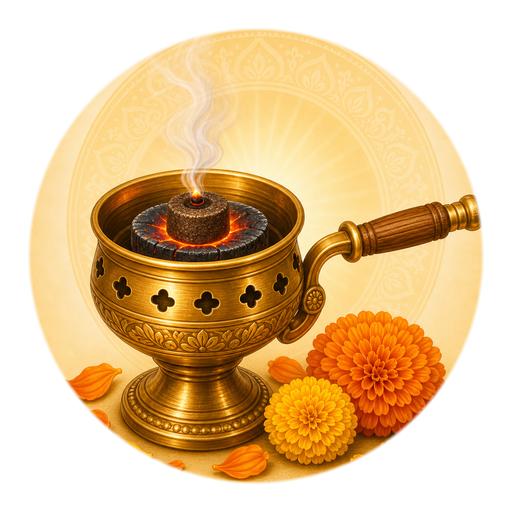 Incense
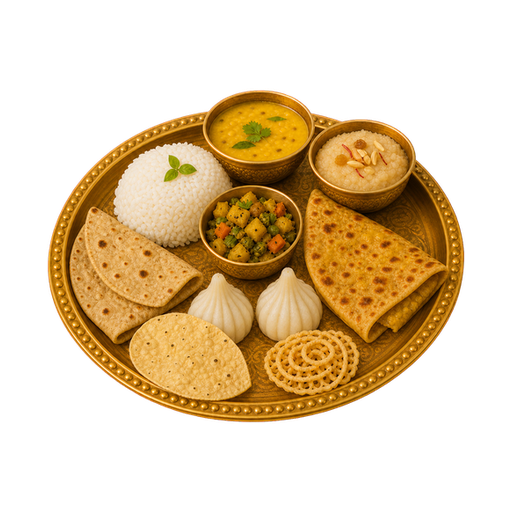 Naivedya
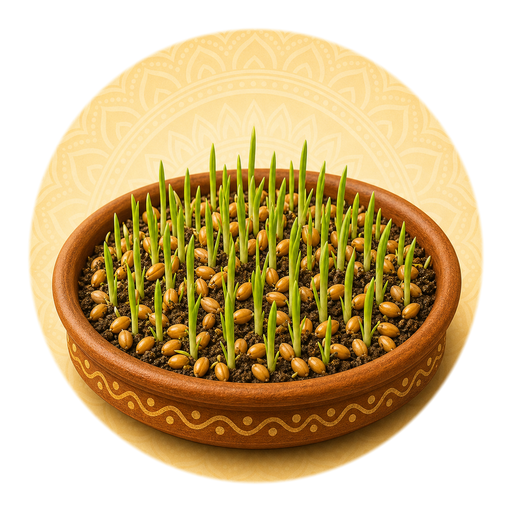 Sown grains/javare (sprouted)
Fasting
Many devotees observe a fast over the nine days — fasting-appropriate foods/fruits; avoiding tamasic food, onion-garlic, and meat-alcohol is a common practice. Sources disagree on whether the Chaitra observance is one of "strict fasting/introspection" or a more "festive" one like Sharadiya — both Navratris involve fasting and worship, with the emphasis and nature varying by tradition.
Mantra
The Devi Mahatmya/Durga Saptashati reading is central during Navratri; on the culminating Ram Navami, chants such as the Ram Raksha are recited. The opening line of Devi's well-known aarti — "Durge Durghat Bhaari, Tujvin Sansaari…" — is recited during the Navratri aarti; its sense is roughly "O Durga, this worldly life is exceedingly hard without you" — an appeal to the Goddess's grace to see devotees through life's difficulties.
Regional customs — the Maharashtra core
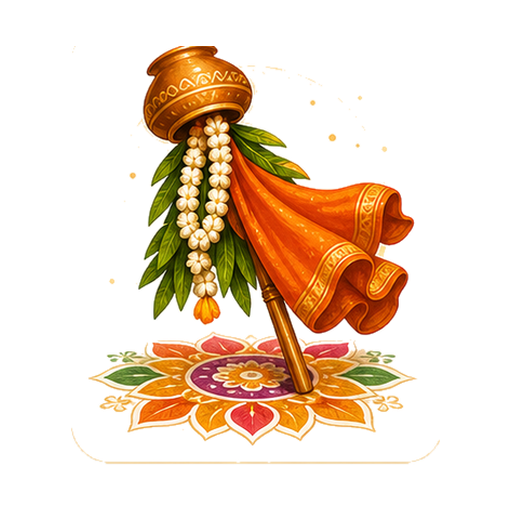
Marathi new year = ghatasthapana day: Chaitra Shukla Pratipada is Gudi Padwa itself — so in Maharashtra, Day 1 of Chaitra Navratri is the start of the new year and the day households raise the Gudi. Details are on the Gudi Padwa page.
Chaitragaur: From Chaitra Shukla Tritiya (Day 3), a month-long observance of turmeric-vermilion gatherings for Chaitragaur — a special women's Chaitra custom that begins within this Navratri arc. Details are on the Chaitragaur page.
Ram Navami culmination: Navratri concludes with the Ram-birth celebration — kirtans of Ram's birth in temples, a cradle ceremony, sunthavada. Details are on the Ram Navami page.
Comparative emphasis: In Maharashtra, Sharadiya Navratri (Devi ghatasthapana, garba, the Sade-Teen Shakti Peeth pilgrimages) is considered more visible/public; Chaitra Navratri is considered more household- and new-year-centred. This is a regional observation, not a universal claim.
Good to know
- The Ram Navami date can appear as 26 or 27 March depending on the panchang — 26 March (the madhyahna rule) is authoritative on this site.
- Fast according to your health — those with diabetes, pregnant women, and the elderly should decide with medical advice. Keep the unbroken lamp fire-safe.
- Rituals and observance vary by region/tradition — don't treat them as universal.
FAQ
- When is Chaitra Navratri 2026? When is ghatasthapana?
- Day 1 is 19 March (Thursday, Gudi Padwa); it culminates on 26 March — Ram Navami.
- What's the difference between Chaitra and Sharadiya Navratri?
- Chaitra falls in spring (March–April), Ashwin/Sharadiya falls in autumn (September–October); Chaitra culminates in Ram Navami, Sharadiya in Vijayadashami.
- How many Navratris are there in a year? What is Gupt Navratri?
- Four seasonal Navratris (some traditions count five): Chaitra, Ashadha, Ashwin, Magha; of these, Magha and Ashadha are called "Gupt Navratri."
- How does Chaitra Navratri culminate?
- With Ram Navami — Chaitra Shukla Navami is regarded as Lord Ram's birthday.
- What does "Vasant Navratri" mean?
- From "vasant" (spring); the Navratri that falls in Chaitra, during spring, is called Vasant Navratri.
- What is the connection between Chaitra Navratri and Gudi Padwa?
- Chaitra Shukla Pratipada is both the ghatasthapana day and Gudi Padwa (the Marathi new year) — both fall on the same day.
- What should be done during Chaitra Navratri?
- Ghatasthapana/Devi worship, fasting, remembering Navadurga; in Maharashtra, the household arc of the new year (Gudi), Chaitragaur, and Ram Navami is observed.