Nag Panchami
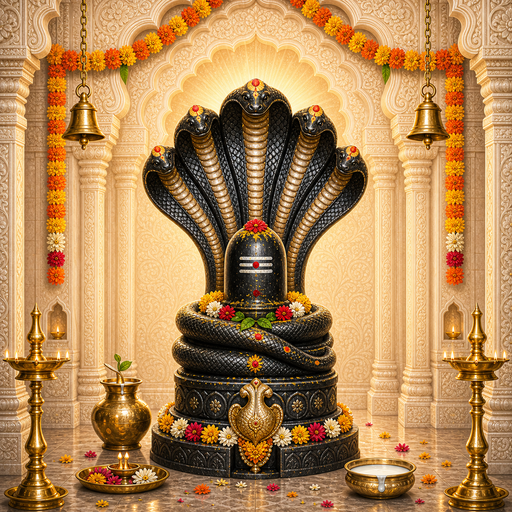
Nag Panchami is the first major festival of Shravan masa and falls on Shravan Shukla Panchami (the fifth day of the bright fortnight). On this day the naag-devata (serpent deity) is worshipped for the protection of the family, the farm and the home. It is mainly kept by women, who worship a naag image or a varul (an anthill, the snake's natural home), offer milk and lahya (puffed grain), and present puran dind as naivedya (a food offering). In 2026 Nag Panchami is on Monday, 17 August (nakshatra Chitra) — the same day is also the first Shravani Somvar. The tithi shifts every year with the panchang.
This year's dates (2026)
Significance
Nag Panchami is regarded as the first major festival of Shravan, a month that is itself devoted to vrats. In Hindu tradition the naag (serpent) is held sacred — the naag coils at Shiv's neck, and Shesha forms Vishnu's resting couch — so it is tied to the divine. The naag is also a protector of the farm and its grain (it keeps rodents and pests in check), which makes it respected in farming culture too.
During the monsoon, burrows flood and snakes come out into the open; the heart of this festival is to meet them with respect and coexistence rather than fear or harm. Naag worship is also found in Jain and Buddhist traditions.
The significance and phalashruti (fruits) here are described as faith and tradition, not as a universal religious or astrological rule. Details vary by region and family.
The legends (katha)
At least three separate legends are linked with Nag Panchami — these are not versions of one story but distinct stories. They are told separately below. Which one is "authoritative" varies by tradition and family.
Legend 1 — Janamejaya's Sarpa Satra and the sage Astika (Mahabharata).
King Parikshit died of a bite from the naag Takshaka. In revenge, his son Janamejaya began a great sacrifice called the Sarpa Satra, meant to destroy every snake. Under its power, the nagas were drawn one after another into the sacrificial fire. Then Astika — the son of the sage Jaratkaru and Vasuki's sister — won King Janamejaya over with his learning and speech, asked for a boon, and stopped the sacrifice; so Takshaka and the naga race were spared. It is said that the tithi on which the sacrifice stopped was Shravan Shukla Panchami — and the day has been kept as Nag Panchami ever since. In some places this tithi is also called 'Nagavardhini Panchami.'
Legend 2 — the farmer and the serpent's young (a Maharashtrian folktale).
As a farmer ploughed his field, the young of a nagin (female serpent) were crushed under his plough (three of them, in some versions). The enraged nagin bit the farmer's family in revenge. Later she learned that one daughter (or daughter-in-law) of the family had survived; that girl begged the naag's forgiveness, offered milk and did puja. Pleased, the nagin restored the family to life. The lesson of this story — do not plough or dig the earth on Nag Panchami, and avoid all harm. In some Marathi versions this story is also tied to the brother-sister bond (the surviving girl later does naag worship for her brother's protection); the characters' names and details change by source.
Legend 3 — Shri Krishna and the subduing of Kaliya.
Some traditions tell how Shri Krishna subdued the venomous naag Kaliya in the Yamuna and came out safely. Because that day was Shravan Shukla Panchami, naag worship is said to have spread in its memory.
The legend linked to Nag Chaturthi (Satyeshwari).
Behind the fast kept for a brother on the day before Nag Panchami (Nag Chaturthi), the story of the goddess Satyeshwari is told — her brother Satyeshwar died the day before, and afterwards she saw her brother in the form of a naag, so a vrat for a brother's protection took hold.
Who observes it
- Mainly women and girls do the naag-devata puja — for the protection of the family, the farm and the home.
- In many parts of Maharashtra the brother brings his married sister to the maher (her parents' home), and the sister does naag worship or a fast for her brother's long life — so it is also seen as a festival of the brother-sister bond, much like Raksha Bandhan, the next major festival of Shravan.
- On Nag Chaturthi (the day before) some women and girls keep a fast in their brother's name.
This brother-sister custom is regional and family-based — don't take it as a rule that applies everywhere.
Puja vidhi (how to perform)
Below is the general shape of the puja vidhi; the details differ by household and region.
- Bathe in the morning and clean the home; smear the courtyard and draw a rangoli.
- On a wall or a paat (low wooden seat), draw images of the naag, nagin and their young in haldi and chandan (turmeric and sandalwood). In some places a varul (the snake's natural home) or a metal/clay naag image is worshipped.
- Offer milk, lahya (puffed grain), durva, aghada, haldi-kunku and flowers to the naag-devata.
- Namaskar and prayer (see the mantras below), then present the naivedya.
Important: keep the puja symbolic (a naag image, an idol or a varul). Feeding milk to a live snake is harmful and illegal — see "Good to know" below.
Udyapan: Nag Panchami is an annual, tithi-based festival; it has no set 'udyapan' rite of the kind a multi-year vrat cycle has.
What you need (samagri)
Verify against local tradition.
- Haldi and chandan (for the naag image), milk, lahya, durva, aghada.
- Haldi-kunku, akshata, flowers, dhoop-deep (incense and lamp).
- For the naivedya, puran dind and/or wheat kheer.
The full list varies by region and lineage custom — don't take one single list as universal.
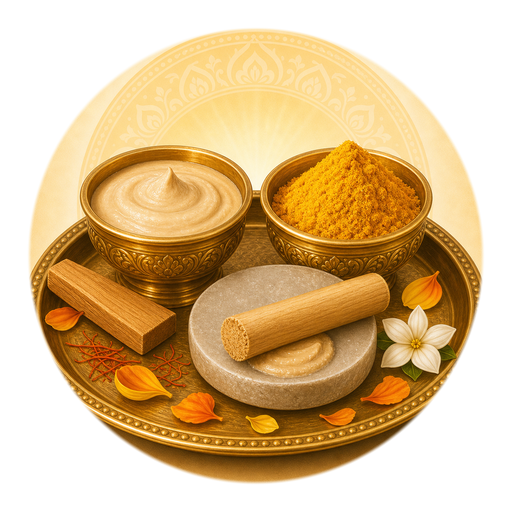 Chandan (sandalwood)
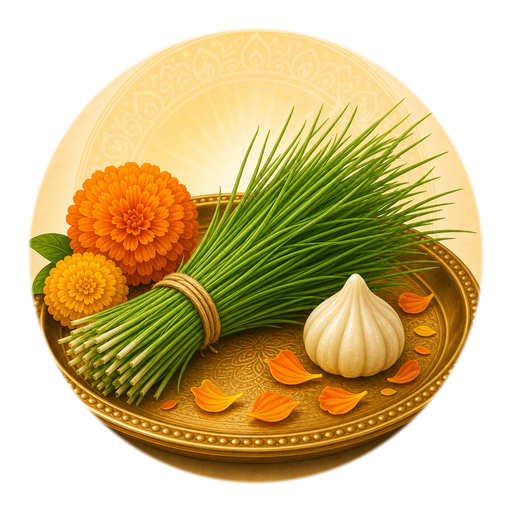 Durva grass
 Haldi-kunku
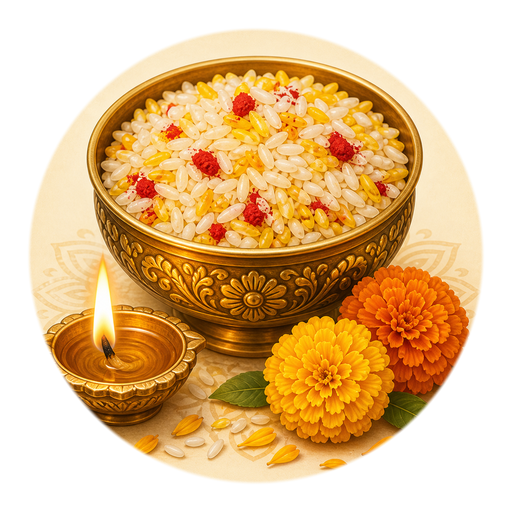 Akshata
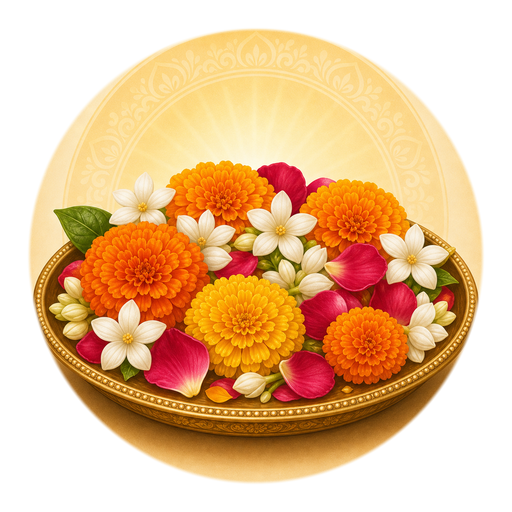 Flowers
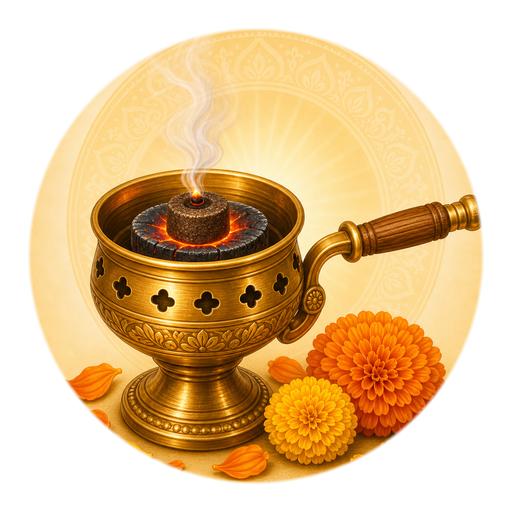 Dhoop (incense)
 Lamp
Lamp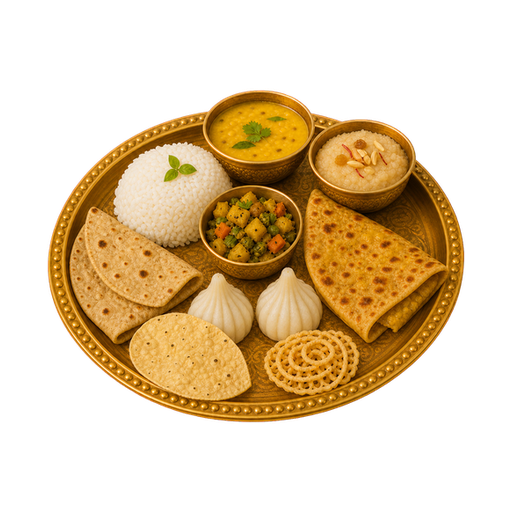 Naivedya (puran dind)
Fasting & food (upvas)
- Nag Chaturthi fast (the day before, 16 August 2026): some women and girls keep a fast for their brother; it is broken that same evening or on Panchami (this varies by place).
- The rules of Nag Panchami: by tradition, on this day people avoid all cutting and chopping, deep-frying, and roasting on a tava over the fire; the earth is not dug and harm is avoided. So the food that day is usually steamed (ukad) items — not fried, not chopped.
- The underlying intent is to avoid harm to snakes and other living beings, and to honour the protector of the farm.
These rules are kept by tradition; how strictly they are followed varies from home to home.
Naivedya
- Puran dind (steamed) — filled with a wheat- or chana-dal stuffing and gul (jaggery), and cooked by steaming.
- Wheat kheer, milk-and-sugar, and lahya.
Because these items are not fried, they fit the 'no frying' rule — which is why they have a special place in the Nag Panchami naivedya.
Mantra & aarti
On Nag Panchami, traditional naag-namaskar (salutation) shlokas are recited. Below are the meaning and opening line of two well-known, traditional shlokas.
- Naag-namaskar mantra — opening line: "Namostu Sarpebhyo ye ke cha prithvimanu…" Meaning (in brief): salutations to all serpents that dwell everywhere — on the earth, in the sky and in the heavens.
- Navnag stotra — opening line: "Anantam Vasukim Shesham Padmanabham cha Kambalam…" It remembers the nine nagas — Ananta, Vasuki, Shesha, Padmanabha, Kambala, Shankhapala, Dhritarashtra, Takshaka and Kaliya.
These traditional shlokas have minor wording variations across versions; the meaning and commonly used opening lines above provide a shared reference. Claims about remedies for Kaal Sarp dosh belong to particular astrological traditions and are not universal.
Regional variations (Maharashtra)
- Battis Shirala (Sangli district) was once famous for its grand Nag Panchami serpent procession. However, under the Wildlife (Protection) Act, 1972, the Bombay High Court has prohibited the capture, confinement and exhibition of live snakes; doing so is an offence. So today the worship and procession are mainly of clay/idol nagas, and the administration keeps watch. There is periodic political pressure to revive the old live-snake practice, but the legal ban stands.
- Household-level worship of a naag image or a varul; the brother-sister custom (see above). Like Mangala Gauri and Jivati pujan, Nag Panchami is part of the interlinked traditions of Shravan.
Other regions: in parts of Rajasthan, Gujarat, Bihar and Karnataka, Nag Panchami falls in the Krishna paksha; in Punjab, 'Guga Navami' (in Bhadrapad) is a different form. The date on this page follows only the Maharashtra tradition (Shravan Shukla Panchami).
Good to know
- Do not feed milk to a snake — it is harmful. Snakes are carnivorous and, lacking lactase, cannot digest milk. Snakes captured for the festival are kept starved and dehydrated for days beforehand, so they drink milk out of compulsion; the result can be infection or poisoning, and even death. So a symbolic puja (a naag image, an idol or a varul) is the right way.
- Capturing, confining or exhibiting a live snake is illegal — under the Wildlife (Protection) Act, 1972; this ban applies at Battis Shirala too.
- Respect the rules: the tradition of avoiding ploughing, digging, chopping and frying that day should be kept as per household custom (not as a universal command).
- Safety: in case of a snakebite, do not rely on folk remedies or mantras — get immediate medical help (this is a general safety note).
FAQ
- When is Nag Panchami in 2026?
- Monday, 17 August 2026 (Shravan Shukla Panchami, nakshatra Chitra). The same day is also the first Shravani Somvar.
- Why is Nag Panchami celebrated?
- To honour the naag-devata and to seek protection for the family, farm and home. The naag's link to Shiv and Vishnu, and its role as a protector of the farm, is the feeling behind it.
- Which deity is worshipped on Nag Panchami?
- The naag-devata — the nine nagas of the Navnag stotra: Ananta, Vasuki, Shesha, Padmanabha, Takshaka, Kaliya and others.
- How is the Nag Panchami puja performed?
- By drawing a naag image on a paat or wall, or worshipping a varul; offering milk, lahya, durva and aghada; and presenting puran dind as naivedya. (Do not feed milk to a live snake.)
- What should you not do on Nag Panchami?
- By tradition people avoid ploughing or digging the earth, chopping vegetables, deep-frying and using a tava, and they avoid harm.
- What is the Nag Panchami naivedya?
- Puran dind (steamed), wheat kheer, and milk with lahya.
- What is Nag Chaturthi?
- The day before Nag Panchami (16 August in 2026); some women and girls keep a fast in their brother's name that day.
- Is it right to feed milk to a snake?
- No. Snakes cannot digest milk; it is harmful and can be fatal for them. So keep the puja symbolic.
- Why is Battis Shirala famous for Nag Panchami?
- For its former live-snake worship and grand procession; now that this is banned by law, clay/idol nagas are worshipped.